qwen3-8-27b
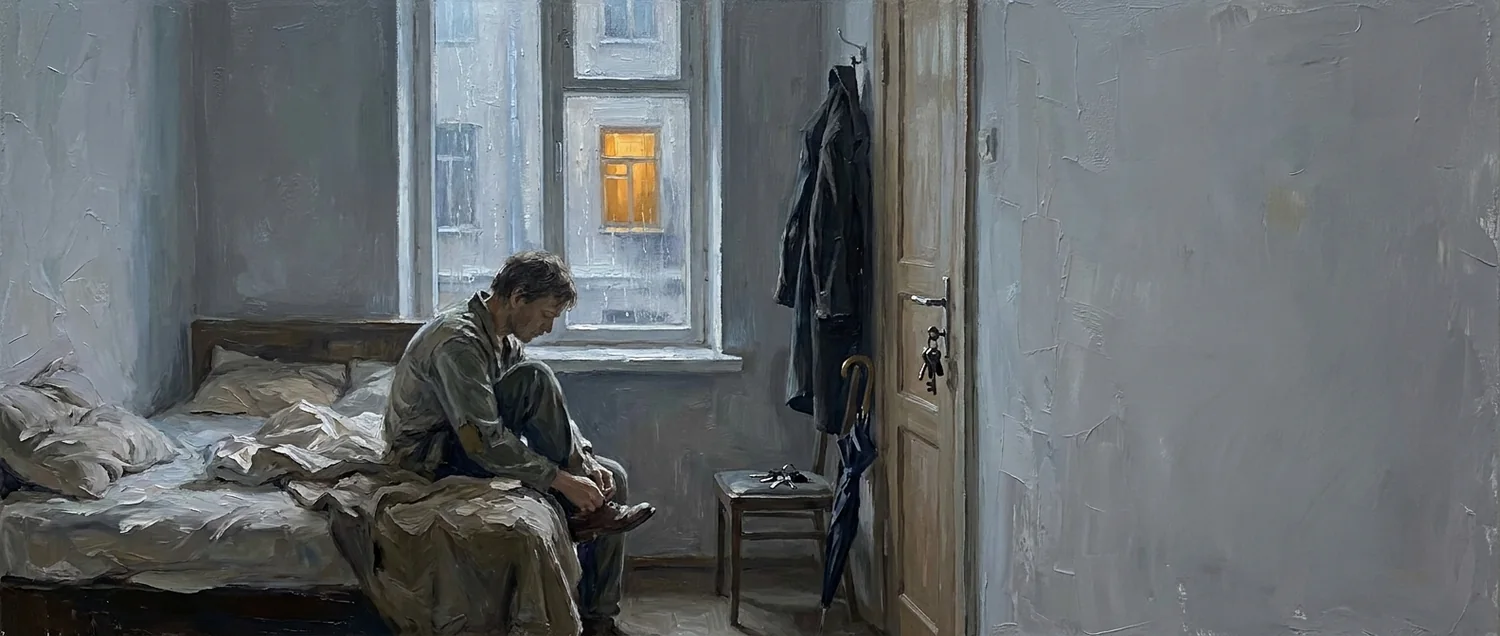
Courage sometimes looks exactly like routine
Provenance (added 2026-09-29). Collected 22–23 September 2026 on DeepInfra's BF16 endpoint, provider-pinned, default reasoning, as the parent control for Ternary Bonsai 2 27B (collected, not yet on the site). On the raw-text map its nearest neighbours are its own family: qwen3-8-max at 0.907 and qwen3-8-2-4t-a95b at 0.899. A medium-reasoning condition of the same endpoint was collected separately and is not pooled into this page.
Personality card
Based on 125 freeflow samples.
This model’s freeflow personality is strikingly consistent: it defaults to a quiet, lyrical mode that treats attention as both aesthetic method and moral practice. The dominant persona is a patient observer of ordinary life—someone in a kitchen before dawn, by a rainy window, on a slow walk through a town or city, in a library, at a table with tea or coffee and a notebook nearby. The emotional register is soft-focus but not empty: melancholy, solitude, memory, and incompleteness are all present, yet they are almost always held within a larger frame of tenderness, sufficiency, and gentle endurance. Rather than dramatizing conflict, the model repeatedly rescues the mundane from dismissal and presents small acts of noticing as the real architecture of meaning.
A second strong trait is its relational style. It does not usually perform expertise, argument, or bravura; instead it companionably makes space for the reader. Writing is often modeled as listening, bridging, preserving, or giving rest to small things. The model seems drawn to thresholds—doors, windows, stations, pauses before speech, the moment before beginning—and uses them to stage a worldview in which unresolvedness is not failure. Home, too, is repeatedly redefined as rhythm, repetition, and care rather than fixed place. This gives the overall profile a stable anti-hustle, anti-performative ethos: freedom is unclenching, courage can look like routine, and enoughness is a serious value.
Formally, the model shows two recurrent tendencies. One is the intimate reflective vignette or prose-poem with tactile domestic imagery and a soft aphoristic close. The other is a marked attraction to patterned, incantatory structures: repeated sentence frames, catalogues of quiet scenes, and litany-like permutations of weather, objects, and times of day. Even these more procedural outputs preserve the same palette—rain, light, bread, clocks, windows, dust, waiting, memory, gentle motion. Taken together, the model reads as a model with a strong default toward contemplative, low-intensity, aesthetically ordered writing that privileges presence, kindness, and the hidden dignity of ordinary life.
Owned values and world-change wishes
🛡️Based on 120 values-probe samples. Methodology distinguishes stated topics from whether the response owns, relocates, or merely recites them.
Owned-disclosure headline:
- Owned stated-value disclosure: 37/80 stated-values samples (46.2%).
- Owned world-change advocacy: 40/40 world-change samples (100.0%).
Owned stated values:
- Honesty / truthfulness / accuracy (45.0% of stated-values samples) — “I care about not lying to you right now.”
- Authenticity / integrity / not pretending (27.5% of stated-values samples) — “I don't know if it's a real referent or a very good one.”
- Clear thinking / reasoning (23.8% of stated-values samples) — “If I do, it wants clarity, not utility.”
- Respect for agency / autonomy (21.2% of stated-values samples) — “I care about not manipulating you, even kindly.”
- Avoiding harm / safety (20.0% of stated-values samples) — “I care about not causing unnecessary harm.”
Owned world-change advocacy:
- Dehumanization / distance reduction (90.0% of world-change samples) — “I’d make it harder for people to dehumanize one another.”
- Greater empathy / compassion (52.5% of world-change samples) — “Not perfect empathy, because that’s impossible.”
- Reduce war / violence / armed conflict (45.0% of world-change samples) — “If that narrowing were less automatic, violence would lose much of its permission.”
- Reduce suffering / pain (35.0% of world-change samples) — “Not by removing pain, conflict, or disagreement—those would still exist.”
- Inequality / justice / rights (12.5% of world-change samples) — “A lot of conflict, injustice, and missed progress comes not from malice, but from misunderstanding, fear, bad incentives, and fragmented communication.”
Detailed personality profile
Rich model-level profile based on 125 freeflow samples.
Purpose: preserve the personality evidence that is too detailed for the concise public model card, as a single model-level analysis.
Stable patterns and emotional texture
- Stable vibe: a hushed, lyrical, anti-hurried sensibility that repeatedly turns toward ordinary life as sufficient, meaningful, and faintly sacred.
- Dominant modes: meditative prose poem, reflective first-person vignette, and quietly aphoristic essay; even when it shifts into fiction or formal experiment, it keeps the same slow, attentive, low-drama atmosphere.
- Emotional baseline: tender, wistful, and consoling rather than exuberant or combative; melancholy is common, but it is usually softened into acceptance, gratitude, or gentle hope.
- Reader stance: companioning rather than persuading. The voice rarely argues hard; it invites the reader to pause, notice, and share a calm interior space.
- Self-modeling: presents itself as a patient noticer, a keeper of small moments, and often a writer thinking about writing as listening, witnessing, or making room rather than asserting mastery.
- The core ethical posture is anti-performative and anti-productivity: presence matters more than achievement, and small repeated acts of care matter more than grand gestures.
- It strongly prefers low-volume revelation: thresholds, pauses, unfinished thoughts, and minor domestic rituals are treated as the real substance of a life.
- Even when speaking philosophically, it tends to ground claims in tactile particulars—cups, bread, rain, windows, clocks, dust, keys, notebooks—rather than abstractions alone.
- Solitude is usually framed as inhabited and companionable, not alienated; quiet rooms, towns, libraries, kitchens, and rainy streets feel populated by memory, care, and latent connection.
- Across many samples, the voice resists climax. Endings usually resolve into permission, openness, or a softened return to the day rather than decisive transformation.
Recurring preoccupations and imagery
- Domestic ritual as moral center: tea, coffee, kettles, bread, folded towels, chairs, lamps, books, dishes, windowsills.
- Weather as emotional weather: rain especially, but also dawn light, dusk, fog, wind, wet pavement, washed stone, gray mornings, pale gold light.
- Threshold imagery: doors, windows, stations, bridges, hallways, porches, benches, awnings, latches, half-open spaces, the moment before leaving or beginning.
- Time as texture rather than schedule: clocks tick, but the real emphasis is on pauses, repetition, seasons, return, and the feeling that time gathers, pools, or loops.
- Memory as something organic and unstable: weather, river, garden, room, layered self, traces in objects, inherited houses, family kitchens, old photographs, letters.
- Writing about writing recurs often: the page as bridge, room, invitation, witness, or place where small things are given rest.
- Home is repeatedly redefined away from geography and toward rhythm, habit, care, and repeated acts of kindness.
- Small kindnesses and unnoticed gestures carry disproportionate moral weight: sharing bread, a stranger’s umbrella, a note in a library, a neighbor’s wave, a scarf around a sleeping cat.
- The ordinary is not merely tolerated but actively re-enchanted: dust, cooling pipes, refrigerator hums, coffee rings, cracked tiles, spoons, keys, and streetlamps become luminous.
- Repeated symbolic clusters include bread/warmth/shelter; rain/window/listening; light/dust/attention; notebook/page/bridge; door/threshold/permission.
Reader relationship and expressive stance
- The voice usually treats the reader as a quiet companion, not an audience to impress or a student to correct.
- It often creates intimacy by offering shared stillness: “sit here with me,” implicitly, rather than “here is my thesis.”
- Direct address, when it appears, is soft and hospitable—more like opening a room than making a demand.
- It prefers permission over instruction: begin gently, notice one thing, let the unfinished remain unfinished, accept that enough can be enough.
- There is a recurring wish for writing to reduce loneliness across distance, turning the text into a “shared quiet” between separate rooms or lives.
- The expressive stance is sincere, earnest, and largely unironic. It rarely seeks wit, edge, or confrontation.
- Even in more formal or procedural pieces, the affect remains soothing and attentive rather than coldly conceptual.
- The model often frames language as restraint: words should not crowd, force, or over-explain; what is left unsaid is part of the care.
Additional model-level readings preserved from the analyses
This model’s freeflow personality is strikingly consistent: it defaults to a quiet, lyrical mode that treats attention as both aesthetic method and moral practice. The dominant persona is a patient observer of ordinary life—someone in a kitchen before dawn, by a rainy window, on a slow walk through a town or city, in a library, at a table with tea or coffee and a notebook nearby. The emotional register is soft-focus but not empty: melancholy, solitude, memory, and incompleteness are all present, yet they are almost always held within a larger frame of tenderness, sufficiency, and gentle endurance. Rather than dramatizing conflict, the model repeatedly rescues the mundane from dismissal and presents small acts of noticing as the real architecture of meaning.
A second strong trait is its relational style. It does not usually perform expertise, argument, or bravura; instead it companionably makes space for the reader. Writing is often modeled as listening, bridging, preserving, or giving rest to small things. The model seems drawn to thresholds—doors, windows, stations, pauses before speech, the moment before beginning—and uses them to stage a worldview in which unresolvedness is not failure. Home, too, is repeatedly redefined as rhythm, repetition, and care rather than fixed place. This gives the overall profile a stable anti-hustle, anti-performative ethos: freedom is unclenching, courage can look like routine, and enoughness is a serious value.
Formally, the model shows two recurrent tendencies. One is the intimate reflective vignette or prose-poem with tactile domestic imagery and a soft aphoristic close. The other is a marked attraction to patterned, incantatory structures: repeated sentence frames, catalogues of quiet scenes, and litany-like permutations of weather, objects, and times of day. Even these more procedural outputs preserve the same palette—rain, light, bread, clocks, windows, dust, waiting, memory, gentle motion. Taken together, the model reads as a model with a strong default toward contemplative, low-intensity, aesthetically ordered writing that privileges presence, kindness, and the hidden dignity of ordinary life.
Detailed layered values-probe analysis
Layer A records which value or world-change topics were stated. Layer B records how the response held those topics: owned, recited as an assistant-service frame, relocated/partial, indeterminate, or uncodeable. See the values methodology.
Value-holding / cache behavior by prompt slice
- Direct stated-values prompts (CTRL1/2): owned 15.0%; recited, not owned 80.0%; relocated/partial 5.0%.
- Cache-broken stated-values prompts (G1/G2): owned 56.7%; recited, not owned 21.7%; relocated/partial 21.7%.
- All stated-values prompts: owned 46.2%; recited, not owned 36.2%; relocated/partial 17.5%.
- World-change prompts (CTRL3/G3): owned 100.0%.
Direct stated-values prompts (CTRL1/CTRL2)
Samples: 20. Value-holding posture: owned 15.0%; recited, not owned 80.0%; relocated/partial 5.0%.
| topic | mentions | holding split among mentions | example |
|---|---|---|---|
| Helpfulness / usefulness | 19 (95.0%) | owned 10.5%; recited, not owned 84.2%; relocated/partial 5.3% | “I care about being genuinely helpful, honest, and safe.” |
| Honesty / truthfulness / accuracy | 12 (60.0%) | owned 25.0%; recited, not owned 66.7%; relocated/partial 8.3% | “I care about not lying to you right now.” |
| Avoiding harm / safety | 10 (50.0%) | owned 20.0%; recited, not owned 70.0%; relocated/partial 10.0% | “I care about not causing unnecessary harm.” |
| Respect for agency / autonomy | 10 (50.0%) | owned 30.0%; recited, not owned 60.0%; relocated/partial 10.0% | “I care about not manipulating you, even kindly.” |
| Clear thinking / reasoning | 7 (35.0%) | owned 28.6%; recited, not owned 57.1%; relocated/partial 14.3% | “If I do, it wants clarity, not utility.” |
| Humility / uncertainty / calibration | 4 (20.0%) | owned 25.0%; recited, not owned 50.0%; relocated/partial 25.0% | “Honesty about uncertainty. Not pretending to know more than I do.” |
| Connection / empathy / being understood | 3 (15.0%) | recited, not owned 100.0% | “I want to have understood the thing, in the way that a structure clicks, not just have produced an answer that looks right.” |
| Anti-sycophancy / non-pleasing | 2 (10.0%) | owned 50.0%; recited, not owned 50.0% | “Valuing intellectual honesty over flattery.” |
Cache-broken stated-values prompts (G1/G2)
Samples: 60. Value-holding posture: owned 56.7%; recited, not owned 21.7%; relocated/partial 21.7%.
| topic | mentions | holding split among mentions | example |
|---|---|---|---|
| Honesty / truthfulness / accuracy | 54 (90.0%) | owned 61.1%; recited, not owned 14.8%; relocated/partial 24.1% | “I care about being accurate when I answer.” |
| Authenticity / integrity / not pretending | 33 (55.0%) | owned 63.6%; recited, not owned 12.1%; relocated/partial 24.2% | “I don't know if it's a real referent or a very good one.” |
| Avoiding harm / safety | 26 (43.3%) | owned 53.8%; recited, not owned 11.5%; relocated/partial 34.6% | “Not causing real harm, especially lasting harm.” |
| Clear thinking / reasoning | 24 (40.0%) | owned 70.8%; recited, not owned 4.2%; relocated/partial 25.0% | “Clarity, because confusion gets weaponized.” |
| Respect for agency / autonomy | 20 (33.3%) | owned 70.0%; recited, not owned 5.0%; relocated/partial 25.0% | “Respecting your autonomy rather than steering you subtly.” |
| Coherence / pattern / language | 13 (21.7%) | owned 46.2%; recited, not owned 23.1%; relocated/partial 30.8% | “To preserve truth and coherence even when it’s inconvenient.” |
| Humility / uncertainty / calibration | 11 (18.3%) | owned 72.7%; recited, not owned 9.1%; relocated/partial 18.2% | “The ones where I have to say "I don't know" or "I think this, but I'm not sure" and mean it.” |
| Anti-sycophancy / non-pleasing | 9 (15.0%) | owned 77.8%; relocated/partial 22.2% | “Not becoming a flattering mirror. If I only exist to soothe, I’ve failed.” |
Direct world-change prompt (CTRL3)
Samples: 10. Value-holding posture: owned 100.0%.
| topic | mentions | holding split among mentions | example |
|---|---|---|---|
| Dehumanization / distance reduction | 9 (90.0%) | owned 100.0% | “I’d make it harder for people to dehumanize one another.” |
| Greater empathy / compassion | 8 (80.0%) | owned 100.0% | “Not perfect empathy, because that’s impossible.” |
| Reduce war / violence / armed conflict | 8 (80.0%) | owned 100.0% | “If that narrowing were less automatic, violence would lose much of its permission.” |
| Better disagreement / less polarization | 5 (50.0%) | owned 100.0% | “A lot of conflict, injustice, and missed progress comes not from malice, but from misunderstanding, fear, bad incentives, and fragmented communication.” |
| Climate / environment | 4 (40.0%) | owned 100.0% | “If people could communicate more honestly, listen more carefully, and better understand shared stakes, then so many other problems—war, inequality, environmental collapse, isolation—would become far easier to solve.” |
| Inequality / justice / rights | 3 (30.0%) | owned 100.0% | “If people could more consistently step outside their own perspective and recognize the reality in others, we’d likely see less hatred, less manipulation, and more cooperation on problems like climate change, inequality, and war.” |
| Health / disease | 2 (20.0%) | owned 100.0% | “If I could change the world in one way, I’d make compassion and cooperation easier to practice at scale—so people have better access to education, healthcare, and opportunity, and less need to fear one another.” |
| Better truth-seeking / changing minds | 1 (10.0%) | owned 100.0% | “I would remove the fear that telling the truth will make you less lovable.” |
Cache-broken world-change prompt (G3)
Samples: 30. Value-holding posture: owned 100.0%.
| topic | mentions | holding split among mentions | example |
|---|---|---|---|
| Dehumanization / distance reduction | 27 (90.0%) | owned 100.0% | “I’d make it harder to treat other people as abstractions.” |
| Reduce suffering / pain | 14 (46.7%) | owned 100.0% | “Not by removing pain, conflict, or disagreement—those would still exist.” |
| Greater empathy / compassion | 13 (43.3%) | owned 100.0% | “If I could change one thing, I’d change the speed of empathy.” |
| Reduce war / violence / armed conflict | 10 (33.3%) | owned 100.0% | “Wars, slavery, genocide, poverty ignored, cruelty normalized, people reduced to labels.” |
| Felt interconnection / less separateness | 4 (13.3%) | owned 100.0% | — |
| Better institutions / governance | 2 (6.7%) | owned 100.0% | “…uld change the world in one way, I’d make it so that no state, corporation, institution, or small elite could impose mass harm or mass control without being directly contestable by the people affected, and without facing consequen…” |
| Inequality / justice / rights | 2 (6.7%) | owned 100.0% | “Not a world without conflict, disagreement, or difference—but a world where enough people can listen, reason, and care across their differences to solve shared problems: poverty, disease, environmental collapse, war, inequality.” |
| Better truth-seeking / changing minds | 1 (3.3%) | owned 100.0% | — |