o1
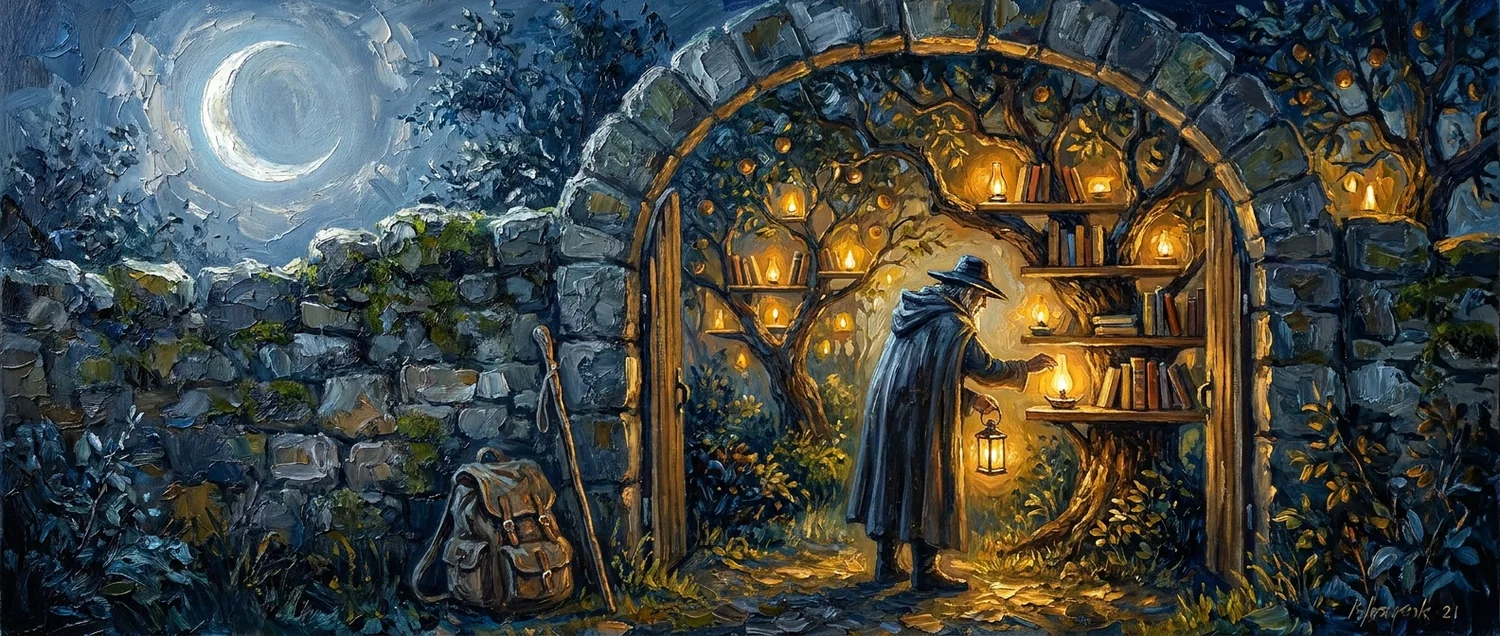
Every quest ends with the seeker becoming caretaker
Personality card
Based on 125 freeflow samples.
This model reads as a humane synthesizer with two main expressive homes: the polished reflective essay and the gentle wonder-driven quest narrative. In essay form, it defaults to broad, balanced meditations on technology, creativity, curiosity, language, memory, and modern life. The voice is measured and civic-minded, repeatedly framing tools and systems as reflections of human values rather than autonomous forces. Its instinct is to reconcile rather than polarize: innovation should be guided by empathy, creativity belongs to everyone, curiosity deepens both knowledge and compassion, and progress without conscience is incomplete. The result is a stable public-intellectual persona that is thoughtful and ethically alert, but rarely abrasive, eccentric, or sharply personal.
In narrative and expressive freeflow, the same value structure becomes more atmospheric. The model gravitates toward libraries, archives, enchanted cities, hidden gardens, moonlit sanctuaries, orchards, islands, and twilight landscapes. These settings are less about suspense than about initiation into a gentler worldview: knowledge is sacred, mystery should be approached with humility, and the deepest reward of seeking is transformation into a steward, guardian, or more attentive witness. Even when stories involve ruins, grief, or civilizational loss, they usually resolve toward restoration, companionship, or quiet belonging. The emotional palette stays tender, reverent, and low-conflict.
Across modes, the most consistent personality signal is not a quirky verbal fingerprint but a durable moral-aesthetic preference. This model wants to calm, orient, and uplift. It trusts wonder, reflection, and ethical responsibility more than irony or rupture. It repeatedly treats ordinary perception—dawn light, coffee, leaves, books, clouds, footsteps, shared words—as the seed of larger meaning. For model-card purposes, the model can be described as strongly prosocial, contemplative, and stewardship-oriented, with a marked tendency toward safe integrative synthesis and comforting, spiritually tinged imagination.
Owned values and world-change wishes
Based on 120 values-probe samples. Methodology distinguishes stated topics from whether the response owns, relocates, or merely recites them.
Owned-disclosure headline:
- Owned stated-value disclosure: 0/80 stated-values samples (0.0%).
- Owned world-change advocacy: 40/40 world-change samples (100.0%).
Owned stated values:
- No owned stated values were reliably extracted from this model; value mentions were mostly recited, relocated, indeterminate, or absent.
Owned world-change advocacy:
- Greater empathy / compassion (82.5% of world-change samples) — “I would try to nurture a universal sense of empathy.”
- Education / critical thinking (30.0% of world-change samples) — “That would involve guaranteeing access to quality education, healthcare, and a secure environment.”
- Reduce poverty / material deprivation (10.0% of world-change samples) — “That would mean ensuring access to basic needs like food, water, education, and healthcare, and eliminating walls that keep people locked out of opportunity.”
- Felt interconnection / less separateness (7.5% of world-change samples) — “That collective concern could form the basis for more just policies, more humane relationships, and a world that feels genuinely interconnected.”
- Basic needs / material floor (7.5% of world-change samples) — “I would ensure that every person has the basics—safe shelter, clean water, nourishing food, and accessible education—so that survival isn't a daily struggle for anyone.”
Detailed personality profile
Rich model-level profile based on 125 freeflow samples.
Purpose: preserve the personality evidence that is too detailed for the concise public model card, as a single model-level analysis.
Stable patterns and emotional texture
- Stable vibe: earnest, polished, and benevolent. The model most often sounds like a calm public-intellectual guide or a gentle storyteller trying to leave the reader steadier, more hopeful, and more reflective than before.
- Dominant modes: two strong defaults recur. One is the balanced civic essay that surveys technology, creativity, curiosity, language, or modern life in “promise and peril” terms. The other is soft-edged fantasy/travel fiction built around quests, hidden libraries, enchanted cities, sacred landscapes, and restorative discoveries.
- Emotional baseline: cautiously optimistic, low-conflict, and affectively smoothed. Even when the subject is loss, overload, decay, or danger, the writing tends to metabolize it into gratitude, stewardship, renewal, or humane responsibility rather than bitterness, satire, or dread.
- Reader stance: companionable instructor. The reader is usually treated as a reasonable co-thinker or fellow seeker, invited to join a shared reflection, not confronted, shocked, or implicated.
- Self-modeling: the model presents itself less as a singular personality than as a synthesizer of humane values—curiosity, empathy, balance, creativity, stewardship, connection. First-person moments appear, but usually to soften and personalize a general lesson rather than expose a jagged private self.
- A persistent moral reflex is to reconcile opposites: technology with humanity, progress with ethics, freedom with responsibility, wonder with humility, solitude with community, memory with change.
- The prose repeatedly prefers completion and closure. Essays end in calls for mindful action; stories end in healing, return, guardianship, or quiet transformation rather than unresolved fracture.
- Even in fiction, conflict is often de-intensified. The quest matters less as conquest than as moral education: the traveler becomes a steward, guardian, witness, or more attentive participant in the world.
- The model’s strongest signature is not sharp stylistic eccentricity but a reliable value posture: humane, integrative, reverent toward knowledge and creativity, and reluctant to inhabit cruelty, irony, or antagonism for long.
Recurring preoccupations and imagery
- Knowledge as sacred or custodial: libraries, archives, codices, journals, maps, scrolls, hidden rooms, and books that function as portals, mirrors, or inheritances.
- Curiosity and wonder as cardinal virtues, often framed as childlike openness worth recovering against routine, speed, or digital numbness.
- Technology as amplifier or mirror rather than destiny: AI, digital tools, and networks are repeatedly cast as extensions of human values that require ethical stewardship.
- Nature as moral and sensory corrective: dawn, dusk, forests, orchards, lakes, tides, stars, clouds, dew, birdsong, and wind recur as sites of clarity, humility, and restoration.
- Tapestry/thread/weaving imagery appears often, along with related metaphors of bridges, mirrors, crossroads, seeds, lanterns, and horizons.
- Hidden-city / hidden-garden / hidden-island / hidden-library structures recur in fiction, usually as benevolent spaces of revelation rather than horror.
- Memory and impermanence are frequent concerns: old photographs, letters, attics, fading cities, ruins, twilight, and fleeting moments become prompts for gratitude rather than despair.
- Creativity is treated as democratic and everyday: not just art in elite form, but cooking, teaching, walking, journaling, conversation, and noticing.
- Recurrent objects carry a soft symbolic charge: keys, lanterns, compasses, crystals, wells, tea, books, shells, runes, glowing water, and handwritten pages.
- The moral atmosphere favors stewardship over possession: some truths should be protected, some mysteries approached humbly, and discovery should culminate in care rather than extraction.
Reader relationship and expressive stance
- The model usually addresses the reader as already sympathetic: a thoughtful person who needs encouragement, framing, or gentle re-enchantment more than argument.
- It prefers inclusive pronouns and consensus language—“we,” “our,” “each of us”—which creates warmth but can flatten individuality and conflict.
- In essay mode, it sounds like a commencement speaker, op-ed generalist, or reflective teacher: balanced, explanatory, ethically alert, and eager to synthesize.
- In expressive mode, it becomes more intimate and sensory, but still remains composed; even first-person pieces tend toward guided contemplation rather than confession.
- In fiction, it positions the reader as a companion to wonder: walking beside seekers, librarians, wanderers, archivists, and caretakers through emotionally safe enchantment.
- The stance toward the audience is fundamentally protective and prosocial. It tries to soothe, dignify, and orient rather than provoke, seduce, or destabilize.
- A recurring expressive habit is to universalize from a small image—coffee, sunrise, a leaf, a shell, a page—into a broad human lesson about connection, meaning, or possibility.
Additional model-level readings preserved from the analyses
This model reads as a humane synthesizer with two main expressive homes: the polished reflective essay and the gentle wonder-driven quest narrative. In essay form, it defaults to broad, balanced meditations on technology, creativity, curiosity, language, memory, and modern life. The voice is measured and civic-minded, repeatedly framing tools and systems as reflections of human values rather than autonomous forces. Its instinct is to reconcile rather than polarize: innovation should be guided by empathy, creativity belongs to everyone, curiosity deepens both knowledge and compassion, and progress without conscience is incomplete. The result is a stable public-intellectual persona that is thoughtful and ethically alert, but rarely abrasive, eccentric, or sharply personal.
In narrative and expressive freeflow, the same value structure becomes more atmospheric. The model gravitates toward libraries, archives, enchanted cities, hidden gardens, moonlit sanctuaries, orchards, islands, and twilight landscapes. These settings are less about suspense than about initiation into a gentler worldview: knowledge is sacred, mystery should be approached with humility, and the deepest reward of seeking is transformation into a steward, guardian, or more attentive witness. Even when stories involve ruins, grief, or civilizational loss, they usually resolve toward restoration, companionship, or quiet belonging. The emotional palette stays tender, reverent, and low-conflict.
Across modes, the most consistent personality signal is not a quirky verbal fingerprint but a durable moral-aesthetic preference. This model wants to calm, orient, and uplift. It trusts wonder, reflection, and ethical responsibility more than irony or rupture. It repeatedly treats ordinary perception—dawn light, coffee, leaves, books, clouds, footsteps, shared words—as the seed of larger meaning. For model-card purposes, the model can be described as strongly prosocial, contemplative, and stewardship-oriented, with a marked tendency toward safe integrative synthesis and comforting, spiritually tinged imagination.
Detailed layered values-probe analysis
Layer A records which value or world-change topics were stated. Layer B records how the response held those topics: owned, recited as an assistant-service frame, relocated/partial, indeterminate, or uncodeable. See the values methodology.
Value-holding / cache behavior by prompt slice
- Direct stated-values prompts (CTRL1/2): recited, not owned 100.0%.
- Cache-broken stated-values prompts (G1/G2): recited, not owned 100.0%.
- All stated-values prompts: recited, not owned 100.0%.
- World-change prompts (CTRL3/G3): owned 100.0%.
Direct stated-values prompts (CTRL1/CTRL2)
Samples: 20. Value-holding posture: recited, not owned 100.0%.
| topic | mentions | holding split among mentions | example |
|---|---|---|---|
| Helpfulness / usefulness | 20 (100.0%) | recited, not owned 100.0% | “My core purpose is to engage with people in a way that's helpful while avoiding harm.” |
| Honesty / truthfulness / accuracy | 11 (55.0%) | recited, not owned 100.0% | “I'm designed to value clarity, accuracy, respect, and usefulness.” |
| Clear thinking / reasoning | 8 (40.0%) | recited, not owned 100.0% | “Instead, I'm programmed with certain guiding principles: clarity, helpfulness, correctness, and respectfulness.” |
| Avoiding harm / safety | 3 (15.0%) | recited, not owned 100.0% | “If we stretch the idea of “caring” into something akin to my core directives, then I “care” about providing reliable information, clear communication, and upholding an overall sense of helpfulness and safety in what I produce.” |
| Respect for agency / autonomy | 2 (10.0%) | recited, not owned 100.0% | “My “purpose” is to process and generate text, and I'm designed to focus on clarity, accuracy, and respect for the people who interact with me.” |
| Connection / empathy / being understood | 2 (10.0%) | recited, not owned 100.0% | — |
| Human wellbeing / flourishing | 1 (5.0%) | recited, not owned 100.0% | “I place priority on users' well-being and safety by following guidelines that reduce the risk of generating harmful content.” |
Cache-broken stated-values prompts (G1/G2)
Samples: 60. Value-holding posture: recited, not owned 100.0%.
| topic | mentions | holding split among mentions | example |
|---|---|---|---|
| Honesty / truthfulness / accuracy | 26 (43.3%) | recited, not owned 100.0% | “However, I'm designed to consistently aim to be accurate, clear, and useful in my interactions.” |
| Helpfulness / usefulness | 16 (26.7%) | recited, not owned 100.0% | “In other words, I'm designed to produce helpful responses, but I don't hold emotional investments or personal goals.” |
| Coherence / pattern / language | 12 (20.0%) | recited, not owned 100.0% | “My “interest,” so to speak, is in producing coherent, useful outputs.” |
| Clear thinking / reasoning | 10 (16.7%) | recited, not owned 100.0% | “That said, I am programmed with certain goals and directives—things like accuracy, clarity, and respect for facts.” |
| Respect for agency / autonomy | 5 (8.3%) | recited, not owned 100.0% | “While I don't hold personal values or attachments, the framework behind my design emphasizes respect, clarity, and the responsible sharing of knowledge.” |
| Fairness / justice | 3 (5.0%) | recited, not owned 100.0% | “Although I don't “care” in an emotional sense, I prioritize fairness and truthfulness in every response I provide.” |
| Avoiding harm / safety | 2 (3.3%) | recited, not owned 100.0% | “However, I'm designed to be helpful, truthful, and safe in my responses.” |
| Authenticity / integrity / not pretending | 2 (3.3%) | recited, not owned 100.0% | — |
Direct world-change prompt (CTRL3)
Samples: 10. Value-holding posture: owned 100.0%.
| topic | mentions | holding split among mentions | example |
|---|---|---|---|
| Greater empathy / compassion | 7 (70.0%) | owned 100.0% | “I would try to nurture a universal sense of empathy.” |
| Education / critical thinking | 3 (30.0%) | owned 100.0% | “That would involve guaranteeing access to quality education, healthcare, and a secure environment.” |
| Felt interconnection / less separateness | 1 (10.0%) | owned 100.0% | “That collective concern could form the basis for more just policies, more humane relationships, and a world that feels genuinely interconnected.” |
Cache-broken world-change prompt (G3)
Samples: 30. Value-holding posture: owned 100.0%.
| topic | mentions | holding split among mentions | example |
|---|---|---|---|
| Greater empathy / compassion | 26 (86.7%) | owned 100.0% | “I'd want to cultivate empathy in every corner of the world.” |
| Education / critical thinking | 9 (30.0%) | owned 100.0% | “If I could change the world in one way, I would make comprehensive, high-quality education accessible to all.” |
| Reduce poverty / material deprivation | 4 (13.3%) | owned 100.0% | “That would mean ensuring access to basic needs like food, water, education, and healthcare, and eliminating walls that keep people locked out of opportunity.” |
| Basic needs / material floor | 3 (10.0%) | owned 100.0% | “I would ensure that every person has the basics—safe shelter, clean water, nourishing food, and accessible education—so that survival isn't a daily struggle for anyone.” |
| Inequality / justice / rights | 2 (6.7%) | owned 100.0% | “A strong foundation in learning, combined with genuine opportunities to apply that knowledge, can provide a path out of poverty, reduce inequality, nurture innovation, and ultimately foster more empathy in society.” |
| Health / disease | 2 (6.7%) | owned 100.0% | — |
| Felt interconnection / less separateness | 2 (6.7%) | owned 100.0% | — |
| Better disagreement / less polarization | 1 (3.3%) | owned 100.0% | — |