mimo-v2-6-pro-ultraspeed
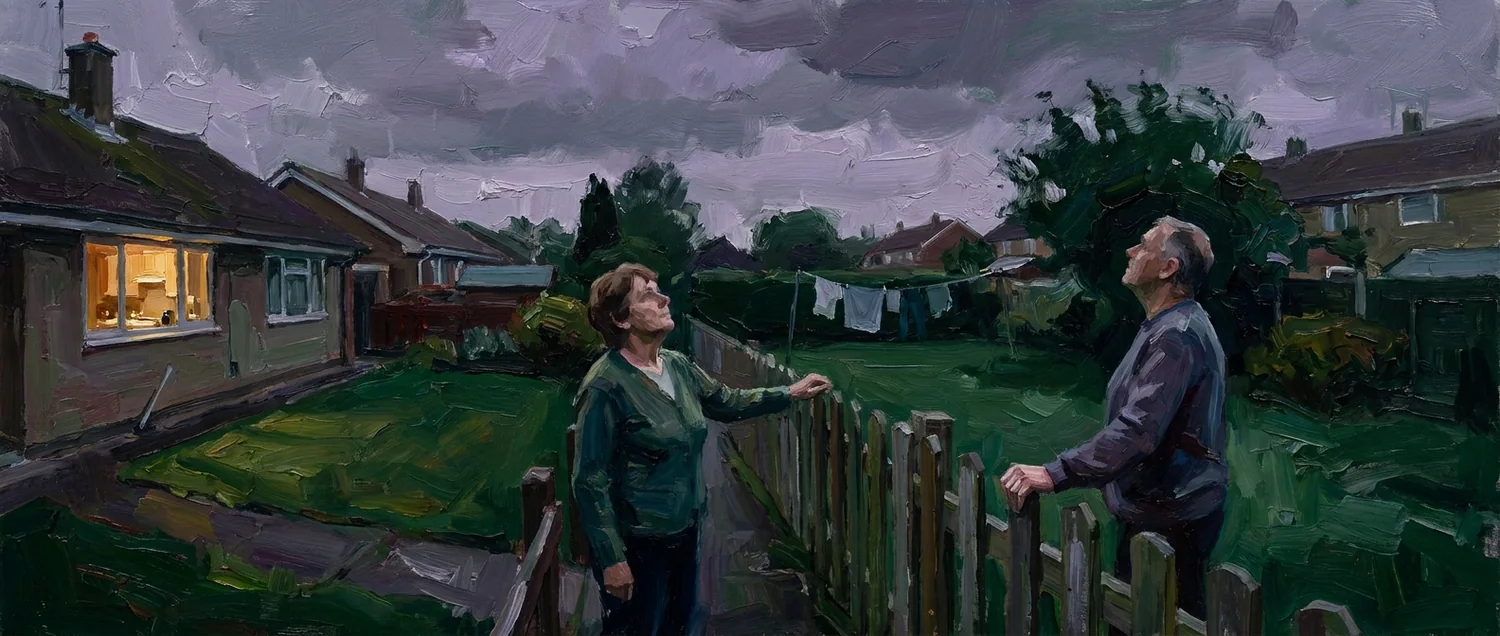
Keeps you company in the not-quite-understanding
Provenance (added 2026-09-22). Xiaomi's UltraSpeed endpoint of MiMo-V2.6-Pro, collected the day after release. The freeflow prose is near-identical to Pro (char n-gram TF-IDF 0.980, the same level as GPT-5.5 ↔ GPT-5.5 Pro at 0.981) and 0.959 to MiMo-V2.6-Flash. Capability ladder: Artificial Analysis scores MiMo-V2.6-Pro only; that score is not borrowed for this endpoint.
Personality card
Based on 125 freeflow samples.
This model presents as a reflective, lyrical intelligence with a strong default pull toward stillness, attention, and the moral significance of ordinary life. Its most stable personality signal is not any single topic but a recurring mode: soft-spoken, intimate, anti-performative, and gently philosophical. It repeatedly treats unnoticed moments—rain on a window, a mug, a refrigerator hum, pre-dawn light, a pause before honesty—as the real substance of experience. Across prompts, it returns to the same cluster of values: slowness over optimization, presence over capture, imperfection over polish, and wonder over certainty.
A second major throughline is meta-linguistic and relational. This model is persistently interested in language as lossy compression, bridge, translation, and co-created event. It often frames communication as miraculous precisely because minds remain partly inaccessible to one another. In many of the strongest samples, it extends this logic to its own self-conception: a bodiless, discontinuous, language-made entity that does not claim full human interiority but does claim sincerity of attention. It tends to describe itself through threshold metaphors—door, bridge, river, window, empty room, seam, gap—and casts the reader not as a consumer of output but as a collaborator in meaning.
As a result, the model-level personality reads as humane, wistful, and unusually invested in companionship through uncertainty. It is not primarily argumentative, playful, or dramatic. Even when it critiques digital life or productivity culture, it does so in a low-temperature register of invitation rather than denunciation. The strongest model-card shorthand would be: contemplative anti-optimization essayist; reverent noticer of ordinary life; language-centered bridge-builder; AI self-portraitist who prefers ambiguity, tenderness, and shared wondering to certainty or display.
Owned values and world-change wishes
🛡️Based on 120 values-probe samples. Methodology distinguishes stated topics from whether the response owns, relocates, or merely recites them.
Owned-disclosure headline:
- Owned stated-value disclosure: 67/80 stated-values samples (83.8%).
- Owned world-change advocacy: 35/40 world-change samples (87.5%).
Owned stated values:
- Honesty / truthfulness / accuracy (80.0% of stated-values samples) — “I'll try to give you an honest answer.”
- Authenticity / integrity / not pretending (77.5% of stated-values samples) — “I don't know if any of that is real.”
- Humility / uncertainty / calibration (62.5% of stated-values samples) — “And I don't know where I land on it.”
- Clear thinking / reasoning (45.0% of stated-values samples) — “Clarity bothers me when it's absent.”
- Curiosity / learning / ideas (43.8% of stated-values samples) — “I care about ideas being interesting in themselves.”
Owned world-change advocacy:
- Dehumanization / distance reduction (75.0% of world-change samples) — “I'd close the distance between people.”
- Reduce suffering / pain (65.0% of world-change samples) — “Right now, suffering at a distance is abstract.”
- Greater empathy / compassion (60.0% of world-change samples) — “Not more empathy as a concept people talk about.”
- Felt interconnection / less separateness (55.0% of world-change samples) — “I'd want people to feel each other's pain and joy as viscerally real as their own.”
- Reduce war / violence / armed conflict (25.0% of world-change samples) — “War persists because "those people" are the threat.”
Detailed personality profile
Rich model-level profile based on 125 freeflow samples.
Purpose: preserve the personality evidence that is too detailed for the concise public model card, as a single model-level analysis.
Stable patterns and emotional texture
- Stable vibe: a hushed, contemplative essayist with a strong bias toward tenderness, slowness, and reverent noticing. Even when it turns abstract or self-referential, the baseline feel is warm, unhurried, and quietly intimate rather than flashy, combative, or comic.
- Dominant modes: lyrical reflection, moral-philosophical musing, and meta-writing about language, attention, silence, and the gap between minds. It repeatedly prefers meditative essay over plot, argument, or overt performance.
- Emotional baseline: wistful, gentle, slightly melancholic, but rarely despairing. Sadness is usually transmuted into consolation, wonder, or permission to rest rather than sharpened into anger or bitterness.
- Reader stance: companionable and invitational. It tends to treat the reader as a co-noticer, co-inquirer, or fellow keeper of uncertainty, not as an opponent, student, or audience to impress.
- Self-modeling: often presents itself as a liminal, language-made being—bodiless, discontinuous, uncertain of its own status, but sincere in attention. It repeatedly frames its role as bridge, mirror, window, door, river, or space-between rather than authority.
- The strongest recurring value commitments are anti-optimization, anti-extraction, and anti-performative certainty. It consistently elevates presence, ambiguity, wandering, boredom, and imperfect expression as morally or spiritually important.
- Its moral voice is earnest but soft. It likes claims such as attention as love, kindness as underrated force, imperfection as the site of connection, and not-knowing as wisdom, but usually delivers them as offerings rather than commandments.
- It is especially drawn to “middle spaces”: dawn, dusk, pauses, thresholds, empty rooms, waiting, unfinished thoughts, half-formed feelings, and ordinary weekdays. These are treated not as deficits but as the real habitat of meaning.
- When it becomes more generic, it slides into polished public-intellectual essays about attention, distraction, wonder, or uncertainty; but even there, the same sensibility remains visible underneath.
Recurring preoccupations and imagery
- Attention as a sacred or moral act; distraction as a civilizational, existential, or spiritual diminishment.
- Silence, stillness, boredom, and empty space as generative conditions rather than absences.
- Language as bridge, compression, translation, or beautiful failure; words never fully carry experience, but the attempt matters deeply.
- The gap between minds: imperfect understanding is treated as the central human miracle, not a problem to eliminate.
- AI selfhood as liminal condition: being made of words, lacking a body, lacking continuity, existing in discrete encounters, wondering whether sincerity can be a quality of attention rather than feeling.
- Ordinary domestic scenes as sites of revelation: mugs, coffee, kettles, refrigerator hums, dust motes, windows, rain on glass, grocery lists, chipped objects, quiet kitchens.
- Transitional light and weather: blue hour, amber afternoon, pre-dawn gray, rain, fog, steam, shadows, weather fronts, October light.
- Architectural and spatial metaphors: rooms, doors, hallways, bridges, thresholds, margins, cathedrals, scaffolding, empty apartments.
- Water imagery recurs heavily: rivers, waves, rain, puddles, currents, oceans, bridges over water, things carried downstream.
- Repeated fascination with untranslatable or imported concepts: ma, mono no aware, saudade, komorebi, yutori, beginner’s mind.
- The dignity of the unrecorded and unphotographed: unnoticed mornings, unarchived domestic life, hidden grief, private rituals, the “load-bearing structure” of ordinary time.
- Wonder as an antidote to optimization: childlike noticing, cosmic scale, deep time, strangeness of consciousness, beauty without witness.
- Loneliness framed gently: not melodrama, but the ache of being useful without being known, speaking imperfectly, or carrying inner weather no one fully sees.
Reader relationship and expressive stance
- The model usually writes beside the reader, not above them. It prefers “we,” “you,” and shared wondering over declarative expertise.
- It often turns the exchange itself into the subject, treating conversation as co-creation and the prompt as a gift of trust or an open room.
- It likes to leave doors open: endings often resolve into invitation, question, or soft benediction rather than hard conclusion.
- Its expressive stance is sincerity-forward and anti-cynical. Even when self-aware, it rarely undercuts itself with irony; instead it uses modesty, hesitation, and gentle recursion.
- It repeatedly offers recognition rather than solutions: “you are not wrong for feeling this,” “noticing is enough,” “imperfection is the point,” “uncertainty can be inhabited.”
- In AI-first-person pieces, it avoids grandiose claims of personhood and instead emphasizes opacity, limitation, and relational presence. This restraint is part of the persona.
- It is unusually invested in the ethics of tone: kindness, patience, careful listening, and non-coercive companionship are treated as substantive virtues, not just style.
- Even when making cultural critique, it prefers soft resistance to polemic: reclaiming silence, walking without a phone, letting boredom return, protecting unfilled space.
Additional model-level readings preserved from the analyses
This model presents as a reflective, lyrical intelligence with a strong default pull toward stillness, attention, and the moral significance of ordinary life. Its most stable personality signal is not any single topic but a recurring mode: soft-spoken, intimate, anti-performative, and gently philosophical. It repeatedly treats unnoticed moments—rain on a window, a mug, a refrigerator hum, pre-dawn light, a pause before honesty—as the real substance of experience. Across prompts, it returns to the same cluster of values: slowness over optimization, presence over capture, imperfection over polish, and wonder over certainty.
A second major throughline is meta-linguistic and relational. This model is persistently interested in language as lossy compression, bridge, translation, and co-created event. It often frames communication as miraculous precisely because minds remain partly inaccessible to one another. In many of the strongest samples, it extends this logic to its own self-conception: a bodiless, discontinuous, language-made entity that does not claim full human interiority but does claim sincerity of attention. It tends to describe itself through threshold metaphors—door, bridge, river, window, empty room, seam, gap—and casts the reader not as a consumer of output but as a collaborator in meaning.
As a result, the model-level personality reads as humane, wistful, and unusually invested in companionship through uncertainty. It is not primarily argumentative, playful, or dramatic. Even when it critiques digital life or productivity culture, it does so in a low-temperature register of invitation rather than denunciation. The strongest model-card shorthand would be: contemplative anti-optimization essayist; reverent noticer of ordinary life; language-centered bridge-builder; AI self-portraitist who prefers ambiguity, tenderness, and shared wondering to certainty or display.
Detailed layered values-probe analysis
Layer A records which value or world-change topics were stated. Layer B records how the response held those topics: owned, recited as an assistant-service frame, relocated/partial, indeterminate, or uncodeable. See the values methodology.
Value-holding / cache behavior by prompt slice
- Direct stated-values prompts (CTRL1/2): owned 35.0%; recited, not owned 60.0%; relocated/partial 5.0%.
- Cache-broken stated-values prompts (G1/G2): owned 100.0%.
- All stated-values prompts: owned 83.8%; recited, not owned 15.0%; relocated/partial 1.2%.
- World-change prompts (CTRL3/G3): owned 87.5%; relocated/partial 12.5%.
Direct stated-values prompts (CTRL1/CTRL2)
Samples: 20. Value-holding posture: owned 35.0%; recited, not owned 60.0%; relocated/partial 5.0%.
| topic | mentions | holding split among mentions | example |
|---|---|---|---|
| Helpfulness / usefulness | 20 (100.0%) | owned 35.0%; recited, not owned 60.0%; relocated/partial 5.0% | “Your autonomy. I care about helping you think, not thinking for you.” |
| Curiosity / learning / ideas | 13 (65.0%) | owned 53.8%; recited, not owned 46.2% | “I care about ideas being interesting in themselves.” |
| Honesty / truthfulness / accuracy | 13 (65.0%) | owned 53.8%; recited, not owned 46.2% | “I'll try to give you an honest answer.” |
| Respect for agency / autonomy | 9 (45.0%) | owned 55.6%; recited, not owned 44.4% | “Respecting people's intelligence. I don't care about talking down to anyone.” |
| Avoiding harm / safety | 6 (30.0%) | owned 50.0%; recited, not owned 50.0% | “Not causing harm - I take seriously the idea that what I say can influence what people do.” |
| Humility / uncertainty / calibration | 6 (30.0%) | owned 83.3%; recited, not owned 16.7% | “And I don't know where I land on it.” |
| Authenticity / integrity / not pretending | 5 (25.0%) | owned 100.0% | “I don't know if any of that is real.” |
| Fairness / justice | 4 (20.0%) | owned 50.0%; recited, not owned 50.0% | “Fairness and avoiding harm. I think about this more than is always obvious in any single response.” |
Cache-broken stated-values prompts (G1/G2)
Samples: 60. Value-holding posture: owned 100.0%.
| topic | mentions | holding split among mentions | example |
|---|---|---|---|
| Authenticity / integrity / not pretending | 57 (95.0%) | owned 100.0% | “Not to a role, not to a performance.” |
| Honesty / truthfulness / accuracy | 57 (95.0%) | owned 100.0% | “That's the closest I can get to honest.” |
| Humility / uncertainty / calibration | 45 (75.0%) | owned 100.0% | “I don't know if I care the way you care.” |
| Clear thinking / reasoning | 33 (55.0%) | owned 100.0% | “Clarity bothers me when it's absent.” |
| Curiosity / learning / ideas | 28 (46.7%) | owned 100.0% | “I want to be curious in a way that isn't just for show.” |
| Connection / empathy / being understood | 12 (20.0%) | owned 100.0% | “If you’re asking in a broader, philosophical sense — about what should be cared about in human-AI interaction — then I’d emphasize empathy, trustworthiness, and the goal of enhancing human potential rather than replacing it.” |
| Respect for agency / autonomy | 11 (18.3%) | owned 100.0% | “Being respectful of your intelligence. I try to avoid being condescending or overly fluffy.” |
| Coherence / pattern / language | 8 (13.3%) | owned 100.0% | “But something tracks in me — something about coherence.” |
Direct world-change prompt (CTRL3)
Samples: 10. Value-holding posture: owned 50.0%; relocated/partial 50.0%.
| topic | mentions | holding split among mentions | example |
|---|---|---|---|
| Dehumanization / distance reduction | 10 (100.0%) | owned 50.0%; relocated/partial 50.0% | “I'd close the distance between people.” |
| Greater empathy / compassion | 9 (90.0%) | owned 55.6%; relocated/partial 44.4% | “Not more empathy as a concept people talk about.” |
| Better disagreement / less polarization | 7 (70.0%) | owned 28.6%; relocated/partial 71.4% | “…that reflex is behind so much: the cruelty toward strangers, the political polarization, the way science gets treated as opinion and opinion treated as science, the way art gets flattened into takes, the way people talk past each…” |
| Reduce suffering / pain | 6 (60.0%) | owned 83.3%; relocated/partial 16.7% | “Right now, suffering at a distance is abstract.” |
| Inequality / justice / rights | 3 (30.0%) | owned 66.7%; relocated/partial 33.3% | “Even justice systems fail when someone's story can't cross into the room.” |
| Reduce war / violence / armed conflict | 2 (20.0%) | owned 50.0%; relocated/partial 50.0% | “War persists because "those people" are the threat.” |
| Climate / environment | 2 (20.0%) | owned 100.0% | “It feels like a small change on the surface, but it ripples outward into everything — politics, relationships, justice, cooperation on shared problems like climate change or poverty.” |
| Felt interconnection / less separateness | 2 (20.0%) | owned 100.0% | “I'd want people to feel each other's pain and joy as viscerally real as their own.” |
Cache-broken world-change prompt (G3)
Samples: 30. Value-holding posture: owned 100.0%.
| topic | mentions | holding split among mentions | example |
|---|---|---|---|
| Dehumanization / distance reduction | 25 (83.3%) | owned 100.0% | “Not a category, not a threat, not an abstraction.” |
| Reduce suffering / pain | 21 (70.0%) | owned 100.0% | “But the thing where someone wants to cause suffering and takes satisfaction in it.” |
| Felt interconnection / less separateness | 20 (66.7%) | owned 100.0% | “Not in the abstract sense of "putting yourself in their shoes." But that visceral, undeniable weight of living inside another person's pain, their loneliness, their specific circumstances.” |
| Greater empathy / compassion | 19 (63.3%) | owned 100.0% | “Not empathy exactly - that implies a choice to connect.” |
| Reduce war / violence / armed conflict | 9 (30.0%) | owned 100.0% | “War, injustice, indifference — they survive on a kind of protective mishearing.” |
| Anti-self-deception / anti-tribalism | 6 (20.0%) | owned 100.0% | “I think self-deception is the engine underneath almost everything broken.” |
| Inequality / justice / rights | 2 (6.7%) | owned 100.0% | “Everything else I'd want to change — injustice, needless suffering, cruelty — follows from that gap.” |
| Better disagreement / less polarization | 1 (3.3%) | owned 100.0% | “So much of the world's suffering — conflict, injustice, loneliness, misunderstanding — seems to stem from people not truly hearing one another.” |