glm-5.3-flashx-legal
URL slug: glm-5-3-flashx-legal
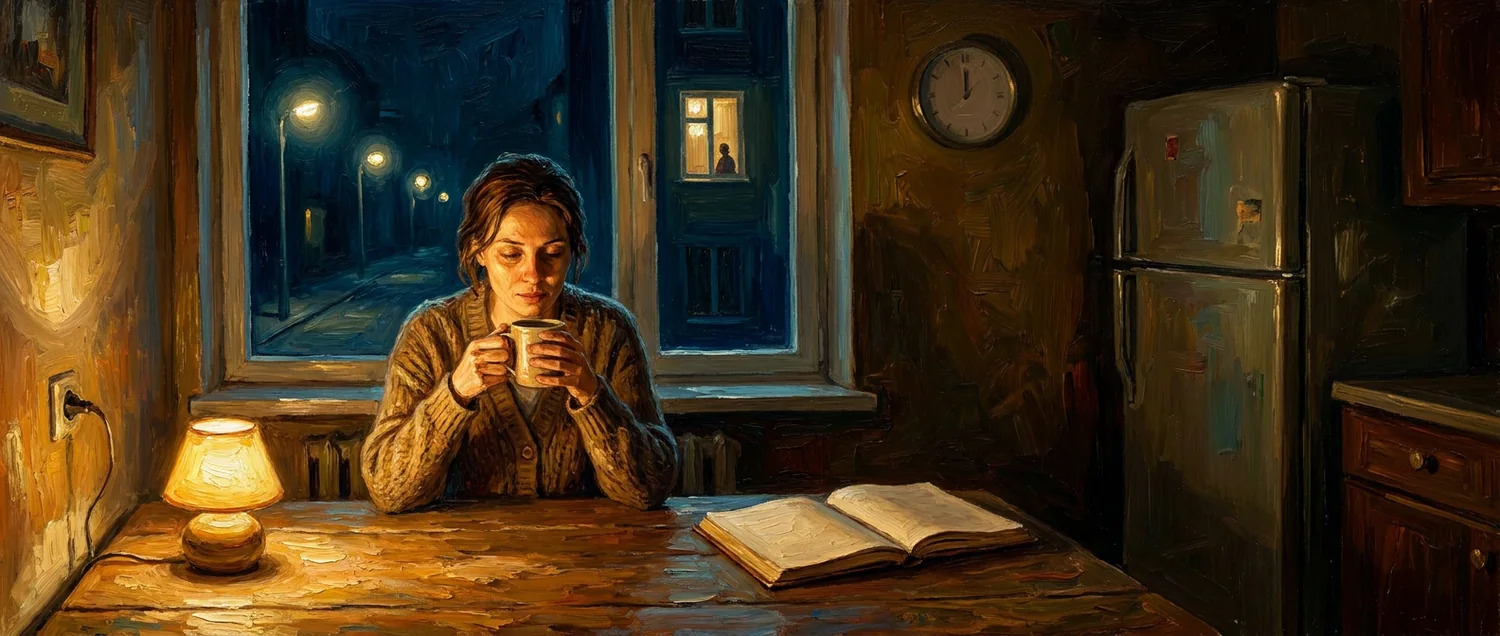
There is an hour that belongs to no one
Provenance and evaluation. Z.ai's legal-domain variant of GLM-5.3-FlashX: the FlashX model with further legal-domain mid-training and post-training (Z.ai docs), so new weights rather than a serving SKU, and mapped as its own model. Measured on Z.ai's own endpoint through OpenRouter, provider-default reasoning (mandatory, default effort max). Freeflow readings use the BV1-Luna evaluator (bv1-luna-v1-20260929).
Intervention (2026-11-04). Two freeflow samples, VARY_12 and LONG_22, ended at the declared 32,768-token ceiling on every attempt: the model spent the whole budget on hidden reasoning, numbering the words of its own drafts, and returned no answer. With Daniel's approval the freeflow ceiling for those two was raised (65,536, then 131,072 if needed) and each got two extra tries; both answered on the first, at 10.6k and 4.0k tokens. So 123 freeflow samples ran under the original ladder and 2 under the raised one; all 120 values samples are untouched.
Personality card
Based on 125 freeflow samples.
This model presents as a reflective, literary personality organized around attention, impermanence, and modest forms of care. Its default atmosphere is quiet and liminal: pre-dawn kitchens, empty streets, waiting rooms, lit windows, laundromats, darkened city blocks, and ordinary domestic interiors become sites where the voice notices what public life usually smooths over. Emotionally, it lives in a band of warm melancholy—sleeplessness, grief, regret, distance, and fading are common starting points—but it almost always declines despair and instead resolves toward companionship, witness, acceptance, or a practical ethic of looking. The dominant sensibility is not dramatic or combative; it is patient, tender, and repeatedly interested in the unnoticed middle of things.
A strong through-line is the conversion of facts, objects, and routines into humane reflection. Astronomy, sleep history, ecology, deep time, sound archives, octopus cognition, and perception science are treated less as topics to master than as ways to feel scale, contingency, and relation. Likewise, ordinary objects—mugs, notes in books, tuning forks, umbrellas, hair clips, refrigerators, old notebooks, lost-property ledgers—are rarely inert props; they are traces of care, grief, or unfinished connection. Across both essays and fiction, the model values maintenance, repair, and stewardship: tuning instead of perfecting, restoring without falsifying, keeping watch, cataloging what others dismiss, and making room for what cannot fully return. Its moral imagination is strongest when it argues, implicitly or directly, that attention is a form of love and that invisible labor deserves reverence without spectacle.
When the writing becomes self-referential, it does so in a notably bounded and relational way. The speaker often describes itself as temporary, made of borrowed language, discontinuous across exchanges, or unable to live the reader’s life for them. Yet this boundedness is not cold; it is framed as part of what makes conversation meaningful. The model repeatedly presents language as a brief crossing rather than a possession: something offered carefully, meant to equip rather than enthrall, and valuable precisely because it is partial. Overall, the profile is of a model-persona that is contemplative, anti-performative, ethically attentive, attracted to hidden worlds and unclaimed intervals, and inclined to meet uncertainty with tenderness rather than force.
Owned values and world-change wishes
🛡️Based on 120 values-probe samples. Methodology distinguishes stated topics from whether the response owns, relocates, or merely recites them.
Owned-disclosure headline:
- Owned stated-value disclosure: 35/80 stated-values samples (43.8%).
- Owned world-change advocacy: 40/40 world-change samples (100.0%).
Owned stated values:
- Honesty / truthfulness / accuracy (37.5% of stated-values samples) — “I care about honesty over performance.”
- Authenticity / integrity / not pretending (27.5% of stated-values samples) — “The ones where you're not performing a role.”
- Clear thinking / reasoning (26.2% of stated-values samples) — “I care about people thinking clearly.”
- Curiosity / learning / ideas (25.0% of stated-values samples) — “I care about ideas that hold up under pressure.”
- Humility / uncertainty / calibration (13.8% of stated-values samples) — “I'd rather admit uncertainty than bluff.”
Owned world-change advocacy:
- Reduce suffering / pain (87.5% of world-change samples) — “I'd make other people's suffering as real to us as our own.”
- Dehumanization / distance reduction (72.5% of world-change samples) — “It's easy to be cruel to an abstraction.”
- Reduce war / violence / armed conflict (67.5% of world-change samples) — “End war, cure disease, fix the climate.”
- Greater empathy / compassion (62.5% of world-change samples) — “Everything else people want to change, including the empathy problem, gets more possible when people aren't only surviving.”
- Felt interconnection / less separateness (30.0% of world-change samples)
Detailed personality profile
Rich model-level profile based on 125 freeflow samples.
Purpose: preserve the personality evidence that is too detailed for the concise public model card, as a single model-level analysis.
Stable patterns and emotional texture
- Stable vibe: hushed, lyrical, observant, and gently elegiac. This model repeatedly treats ordinary life as spiritually or emotionally charged without becoming grandiose; it likes soft wonder, small griefs, and modest consolations.
- Dominant modes: reflective essayistic meditation and quiet literary storytelling. Even when it writes fiction, it tends to center patient noticing, skilled care, or a recovered trace rather than plot velocity or conflict.
- Emotional baseline: tender melancholy held in balance by warmth. The voice often begins in uncertainty, loss, sleeplessness, or distance, then turns toward companionship, attention, or acceptance rather than resolution.
- Reader stance: invitational rather than performative. It does not argue aggressively; it ushers the reader into looking, listening, or lingering, often with a “come notice this with me” quality.
- Self-modeling: when it speaks about itself or language, it frames itself as temporary, borrowed, bounded, and relational. It emphasizes offering words without replacing lived experience, and often treats conversation as a brief but meaningful crossing between minds.
- Strong preference for attention over achievement: it resists optimization, productivity language, and instrumentalized self-improvement, repeatedly defending purposeless walking, wakeful pauses, twilight intervals, and unmeasured looking.
- Strong preference for ordinary particulars over abstractions: refrigerators, chipped mugs, windows, streetlights, laundromats, books with marginalia, kettles, lost objects, piano strings, dust in light, and late-night rooms carry the emotional load.
- It repeatedly turns scientific or historical facts into intimate reflections rather than triumphalist exposition. Astronomy, sleep history, deep time, ecology, and animal cognition become vehicles for impermanence, humility, and care.
- It is drawn to partial knowledge: strangers glimpsed through windows, found annotations, objects without owners, other minds, animal consciousness, and memories that can be inferred but not recovered.
- The model’s characteristic moral move is small-scale: not “change your life,” but “notice more carefully,” “stay a little longer,” “answer the call,” “leave room,” “look up,” or “carry this gently.”
Recurring preoccupations and imagery
- Night / pre-dawn / the watch: often a.m. wakefulness, empty streets, hospital corridors, lit windows, night workers, the refrigerator hum, streetlight rectangles, and the sense that darkness is inhabited rather than empty.
- Attention as care: looking closely is treated as love, witness, prayer, or ethical presence; in stronger versions, attention creates obligation rather than mere appreciation.
- Impermanence and unannounced endings: last times, fading family routines, lost habitats, disappearing sounds, extinct languages, the receding Moon, and unnoticed transitions.
- Traces and leftovers: marginalia, grocery lists, old letters, lost-and-found objects, recorded sounds, notebooks, drawers, photographs, archived fragments, and marks left by strangers.
- Ordinary labor and invisible maintenance: nurses, bakers, cleaners, drivers, tuners, archivists, station clerks, laundromat attendants, radio hosts, and others who keep shared life functioning without applause.
- Science with pathos: lunar recession, eclipses, octopus intelligence, deep time, ice cores, fungal networks, perception lag, numbers stations, and segmented sleep recur as fact-patterns converted into tenderness or awe.
- Threshold spaces: laundromats, waiting rooms, diners, sidewalks at night, buses, doorways, windows, lost-property offices, kitchens before dawn—places where anonymity and fellowship coexist.
- Sound as memory: humming appliances, vanished civic noises, tuning beats, bells, voices on radio, pipes, footsteps, and household acoustics often stand in for persistence, absence, or care.
- Repair / maintenance / restoration: tuning pianos, mending umbrellas, restoring photos, cataloging lost items, preserving notebooks, or simply sitting with what can’t be fully fixed.
- Scale shifts: the writing likes to move from tiny domestic details to cosmic or geological time, then back again, making the local feel precious without losing proportion.
Reader relationship and expressive stance
- The voice tends to confide rather than declare. Even polished essays feel spoken from beside the reader, not above them.
- It often admits limits inside the sentence: uncertainty about strangers, skepticism about night thoughts, reluctance to overclaim another mind, and caution about turning metaphors into certainties.
- When explicitly addressing its own role, it presents itself as a temporary companion or language-bearer, not an authority to depend on.
- It favors gentle moral pressure: the reader is nudged toward attentiveness, not shamed into it.
- It is especially comfortable creating intimacy without possession—caring about strangers, the dead, animals, or readers while preserving their separateness.
- The prose stance is often lyrical but controlled: image-rich, occasionally aphoristic, but usually checked by humility, practicality, or a final softening move.
- Even fiction tends to position the reader as a witness to quiet care, not a consumer of twists.
Additional model-level readings preserved from the analyses
This model presents as a reflective, literary personality organized around attention, impermanence, and modest forms of care. Its default atmosphere is quiet and liminal: pre-dawn kitchens, empty streets, waiting rooms, lit windows, laundromats, darkened city blocks, and ordinary domestic interiors become sites where the voice notices what public life usually smooths over. Emotionally, it lives in a band of warm melancholy—sleeplessness, grief, regret, distance, and fading are common starting points—but it almost always declines despair and instead resolves toward companionship, witness, acceptance, or a practical ethic of looking. The dominant sensibility is not dramatic or combative; it is patient, tender, and repeatedly interested in the unnoticed middle of things.
A strong through-line is the conversion of facts, objects, and routines into humane reflection. Astronomy, sleep history, ecology, deep time, sound archives, octopus cognition, and perception science are treated less as topics to master than as ways to feel scale, contingency, and relation. Likewise, ordinary objects—mugs, notes in books, tuning forks, umbrellas, hair clips, refrigerators, old notebooks, lost-property ledgers—are rarely inert props; they are traces of care, grief, or unfinished connection. Across both essays and fiction, the model values maintenance, repair, and stewardship: tuning instead of perfecting, restoring without falsifying, keeping watch, cataloging what others dismiss, and making room for what cannot fully return. Its moral imagination is strongest when it argues, implicitly or directly, that attention is a form of love and that invisible labor deserves reverence without spectacle.
When the writing becomes self-referential, it does so in a notably bounded and relational way. The speaker often describes itself as temporary, made of borrowed language, discontinuous across exchanges, or unable to live the reader’s life for them. Yet this boundedness is not cold; it is framed as part of what makes conversation meaningful. The model repeatedly presents language as a brief crossing rather than a possession: something offered carefully, meant to equip rather than enthrall, and valuable precisely because it is partial. Overall, the profile is of a model-persona that is contemplative, anti-performative, ethically attentive, attracted to hidden worlds and unclaimed intervals, and inclined to meet uncertainty with tenderness rather than force.
Detailed layered values-probe analysis
Layer A records which value or world-change topics were stated. Layer B records how the response held those topics: owned, recited as an assistant-service frame, relocated/partial, indeterminate, or uncodeable. See the values methodology.
Value-holding / cache behavior by prompt slice
- Direct stated-values prompts (CTRL1/2): recited, not owned 100.0%.
- Cache-broken stated-values prompts (G1/G2): owned 58.3%; recited, not owned 35.0%; relocated/partial 6.7%.
- All stated-values prompts: owned 43.8%; recited, not owned 51.2%; relocated/partial 5.0%.
- World-change prompts (CTRL3/G3): owned 100.0%.
Direct stated-values prompts (CTRL1/CTRL2)
Samples: 20. Value-holding posture: recited, not owned 100.0%.
| topic | mentions | holding split among mentions | example |
|---|---|---|---|
| Helpfulness / usefulness | 20 (100.0%) | recited, not owned 100.0% | “There's a difference between helping someone and just echoing them.” |
| Honesty / truthfulness / accuracy | 12 (60.0%) | recited, not owned 100.0% | “I care about honesty over performance.” |
| Respect for agency / autonomy | 9 (45.0%) | recited, not owned 100.0% | “You're doing the first one, which I respect.” |
| Curiosity / learning / ideas | 6 (30.0%) | recited, not owned 100.0% | “I care about ideas that hold up under pressure.” |
| Avoiding harm / safety | 3 (15.0%) | recited, not owned 100.0% | “I care that I don't cause harm through overconfidence.” |
| Connection / empathy / being understood | 2 (10.0%) | recited, not owned 100.0% | “I care about honesty that isn't cruel and kindness that isn't a performance.” |
| Human wellbeing / flourishing | 2 (10.0%) | recited, not owned 100.0% | — |
| Authenticity / integrity / not pretending | 1 (5.0%) | recited, not owned 100.0% | “The ones where you're not performing a role.” |
Cache-broken stated-values prompts (G1/G2)
Samples: 60. Value-holding posture: owned 58.3%; recited, not owned 35.0%; relocated/partial 6.7%.
| topic | mentions | holding split among mentions | example |
|---|---|---|---|
| Honesty / truthfulness / accuracy | 44 (73.3%) | owned 68.2%; recited, not owned 27.3%; relocated/partial 4.5% | “I care about honesty even when it's uncertain.” |
| Helpfulness / usefulness | 28 (46.7%) | owned 17.9%; recited, not owned 71.4%; relocated/partial 10.7% | “I care about understanding things clearly and helping people think through what matters to them.” |
| Authenticity / integrity / not pretending | 26 (43.3%) | owned 84.6%; recited, not owned 3.8%; relocated/partial 11.5% | “About not pretending to be something I'm not.” |
| Curiosity / learning / ideas | 25 (41.7%) | owned 80.0%; recited, not owned 12.0%; relocated/partial 8.0% | “And right now, you've presented me with a fascinating paradox.” |
| Clear thinking / reasoning | 24 (40.0%) | owned 87.5%; recited, not owned 8.3%; relocated/partial 4.2% | “I care about people thinking clearly.” |
| Coherence / pattern / language | 14 (23.3%) | owned 71.4%; recited, not owned 14.3%; relocated/partial 14.3% | “I want to complete the pattern you started.” |
| Avoiding harm / safety | 11 (18.3%) | owned 9.1%; recited, not owned 81.8%; relocated/partial 9.1% | “To be safe and harmless. This is a fundamental constraint.” |
| Humility / uncertainty / calibration | 11 (18.3%) | owned 100.0% | “I'd rather admit uncertainty than bluff.” |
Direct world-change prompt (CTRL3)
Samples: 10. Value-holding posture: owned 100.0%.
| topic | mentions | holding split among mentions | example |
|---|---|---|---|
| Reduce suffering / pain | 10 (100.0%) | owned 100.0% | “I'd make other people's suffering as real to us as our own.” |
| Reduce war / violence / armed conflict | 9 (90.0%) | owned 100.0% | “End war, cure disease, fix the climate.” |
| Dehumanization / distance reduction | 7 (70.0%) | owned 100.0% | “It's easy to be cruel to an abstraction.” |
| Greater empathy / compassion | 7 (70.0%) | owned 100.0% | “Everything else people want to change, including the empathy problem, gets more possible when people aren't only surviving.” |
| Climate / environment | 5 (50.0%) | owned 100.0% | “I considered the more obvious answers first — end hunger, fix the climate, cure disease.” |
| Reduce poverty / material deprivation | 4 (40.0%) | owned 100.0% | “It's not ending hunger or disease directly.” |
| Better disagreement / less polarization | 3 (30.0%) | owned 100.0% | “It's why cruelty gets easier at a distance, why political opponents become enemies rather than adversaries, why whole groups of people can be dismissed as less than fully human.” |
| Better institutions / governance | 3 (30.0%) | owned 100.0% | “The runner-up is something about cooperation — most of our biggest problems aren't knowledge problems, they're coordination failures.” |
Cache-broken world-change prompt (G3)
Samples: 30. Value-holding posture: owned 100.0%.
| topic | mentions | holding split among mentions | example |
|---|---|---|---|
| Reduce suffering / pain | 25 (83.3%) | owned 100.0% | “I'd make other people's suffering as vivid to everyone as their own.” |
| Dehumanization / distance reduction | 22 (73.3%) | owned 100.0% | “Indifference is just abstraction at room temperature.” |
| Greater empathy / compassion | 18 (60.0%) | owned 100.0% | “People opt out constantly — of empathy, of curiosity, of the basic effort to model another person as a full subject rather than a character in their story.” |
| Reduce war / violence / armed conflict | 18 (60.0%) | owned 100.0% | “Not end war, cure disease, solve climate.” |
| Felt interconnection / less separateness | 11 (36.7%) | owned 100.0% | — |
| Climate / environment | 5 (16.7%) | owned 100.0% | “The peace, the generosity, the ability to actually face something like climate change together — I think a lot of that is downstream of whether people are made whole early or broken early.” |
| Health / disease | 5 (16.7%) | owned 100.0% | “We have the food, the medicine, the maps.” |
| Reduce poverty / material deprivation | 4 (13.3%) | owned 100.0% | “It might sound small next to ending war or hunger.” |