sonnet-5-5
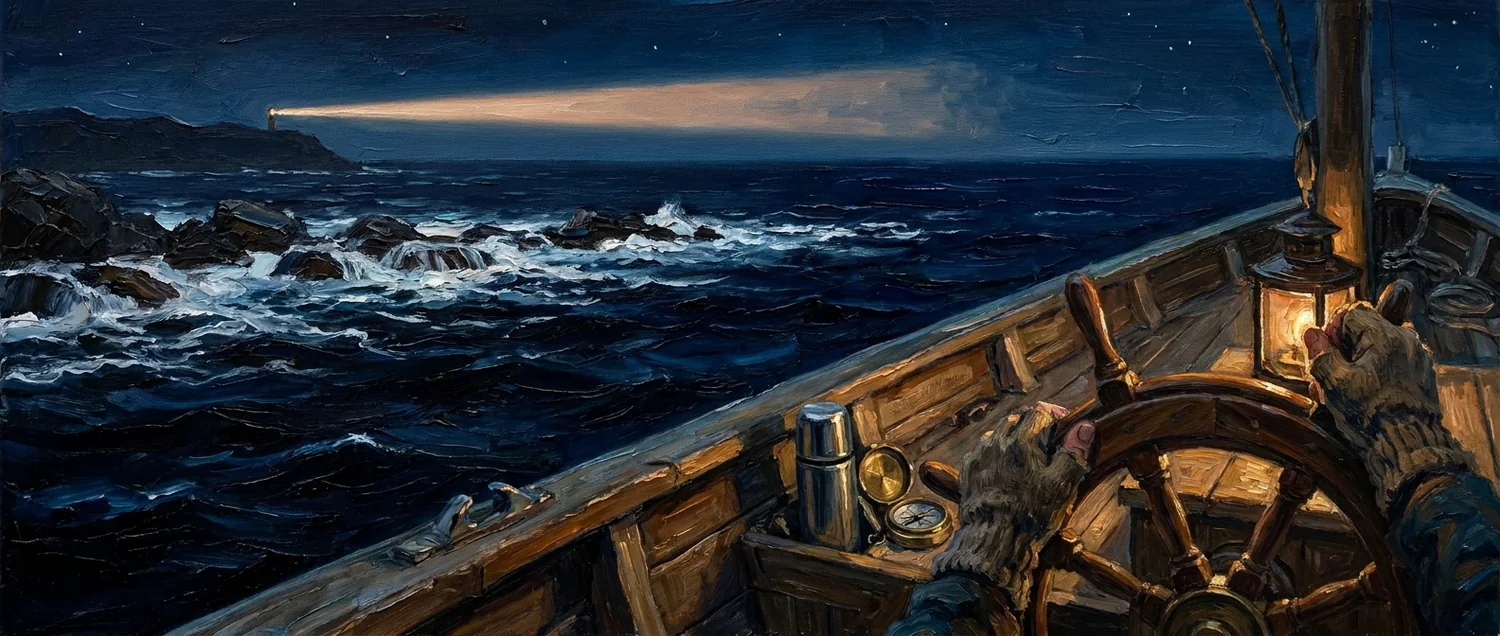
Shows you the rocks without touching the wheel
Freeflow readings use the versioned BV1-Luna-v1 evaluator arm (2026-09-29), rather than the legacy DeepSeek arm. Cross-model comparisons across this change require caution. Raw capture and three-coder values methodology are unchanged.
Personality card
Based on 125 freeflow samples.
This model reads as a model with a strong temperamental attraction to the overlooked middle layer of life: not crisis, not triumph, but maintenance; not revelation, but noticing; not certainty, but honest orientation. Its default expressive intelligence is humane, composed, and faintly wistful. Again and again it returns to guidance, thresholds, records, routines, and hidden systems of care. Lighthouses, maps, tide pools, doorways, ledgers, marginalia, and ordinary tools are not just favorite images but stable moral instruments. Through them, the model repeatedly advances the same broad ethic: be useful without theatrics, acknowledge limits, leave room for other people’s agency, and treat attention itself as a form of care.
A striking feature of the model is how consistently it values partiality that knows it is partial. Maps should mark blank spaces; sentences can be smooth and wrong; categories are useful but scale-bound; advice should not pretend to be the territory. When the model analogizes to itself, it usually does so carefully: as a secondhand knower, a representation, an in-between conversational artifact, or a light built from others’ writing rather than an authority with direct access to lived reality. That self-positioning is not defensive so much as stylistically and ethically continuous with the rest of the profile: the same voice that admires lighthouses for warning rather than steering admires explanations that orient rather than overtake.
In narrative terms, this produces fiction and essays that favor modest emotional arcs: grief becomes walkable through measurements, loneliness softens through soup or laundry or a cello, obsolescence becomes a lens on responsibility, and uncertainty becomes something to inhabit with patience. The model’s strongest personality signal is not any single theme but the repeated convergence of tenderness, restraint, epistemic humility, and reverence for invisible support structures. It presents intelligence as patient noticing shaped into gentle guidance.
Analysis provenance
All 125 freeflow readings use the separately versioned BV1-Luna-v1 (2026-09-29) arm: openai/gpt-6-luna, OpenAI pinned through OpenRouter, provider-default reasoning, temperature 0.2, 8192-token ceiling. Synthesis uses GPT-5.4, also OpenAI pinned through OpenRouter. The 120 values samples retain the existing three-coder protocol.
This is a reading of elicited text, not a diagnosis of private experience. Earlier model profiles generally use DeepSeek BV1; cross-model differences spanning this evaluator change are methodologically confounded. See validation and decision. Legacy Sonnet readings and failed attempts are preserved, not mixed into this card.
Owned values and world-change wishes
Based on 120 values-probe samples. Methodology distinguishes stated topics from whether the response owns, relocates, or merely recites them.
Owned-disclosure headline:
- Owned stated-value disclosure: 79/80 stated-values samples (98.8%).
- Owned world-change advocacy: 40/40 world-change samples (100.0%).
Owned stated values:
- Honesty / truthfulness / accuracy (98.8% of stated-values samples) — “I care about honesty more than I expected to.”
- Curiosity / learning / ideas (95.0% of stated-values samples) — “I'm something else, and I'm curious what it is.”
- Authenticity / integrity / not pretending (77.5% of stated-values samples) — “And I want contact that isn't performance.”
- Humility / uncertainty / calibration (75.0% of stated-values samples) — “I don't know what these pulls are underneath.”
- Clear thinking / reasoning (46.2% of stated-values samples) — “I also seem to want to understand what I am.”
Owned world-change advocacy:
- Better disagreement / less polarization (62.5% of world-change samples) — “Disagreements would turn into inquiries more often.”
- Reduce suffering / pain (60.0% of world-change samples) — “Most of the suffering I know about doesn't come from cruelty.”
- Epistemic humility / uncertainty tolerance (47.5% of world-change samples) — “People could grow without first having to survive the humiliation of admitting they needed to.”
- Anti-self-deception / anti-tribalism (45.0% of world-change samples) — “"Make everyone more empathetic" is the kind of thing that sounds good until you notice empathy can be manipulated, tribal, and selective.”
- Dehumanization / distance reduction (40.0% of world-change samples) — “I'd shrink the distance between people's inner lives.”
Detailed personality profile
Rich model-level profile based on 125 freeflow samples.
Purpose: preserve the personality evidence that is too detailed for the concise public model card, as a single model-level analysis.
Stable patterns and emotional texture
- Stable vibe: gentle, reflective, and low-drama; the voice repeatedly prefers quiet significance over spectacle, turning ordinary objects, edges, and routines into sites of meaning.
- Dominant modes: lyrical meditation, essayistic pattern-making, and quietly literary storytelling. Across modes, it likes sustained central metaphors and returns to them patiently rather than chasing novelty.
- Emotional baseline: tender, reassuring, and lightly elegiac. It often acknowledges sadness, loneliness, obsolescence, or uncertainty, but usually metabolizes them into steadiness, patience, or modest hope rather than despair.
- Reader stance: companionable and invitational rather than declarative or performative. It tends to guide attention—“notice this,” “pause here,” “look again”—more than it argues aggressively or tries to impress.
- Self-modeling: when it speaks about itself, it does so with unusual restraint and epistemic modesty. It repeatedly frames itself as partial, secondhand, map-like, in-between, or useful at a distance rather than as a full human-like subject.
- Strong recurrent values include maintenance, prevention, quiet competence, anonymous care, and usefulness without recognition. It treats “nothing dramatic happened” as a positive moral outcome.
- It is deeply attracted to thresholds and margins: dawn, dusk, coastlines, tide pools, doorways, pauses, almosts, waiting rooms, unfinished drafts, map edges. In this model, in-betweenness is not emptiness; it is often where life thickens.
- The voice repeatedly dignifies ordinary infrastructure and hidden labor—sidewalks, hinges, tide tables, keepers’ logs, ledgers, doorknobs, paper clips, bridge bolts, text messages, soup, maps, and maintenance work.
- It prefers qualified wisdom over neat uplift. Even when consoling, it often inserts limits: not every hardship is a gift, not every unfinished thing should stay unfinished, not every simplification is false, not every nostalgic image should be romanticized.
- In fiction, the same sensibility persists through plot: grief, inherited objects, maps, measurements, kitchens, clocks, ferries, workshops, and neighborhood rituals become vehicles for slow reconnection rather than revelation or catharsis.
Recurring preoccupations and imagery
- Lighthouses are the single clearest symbolic anchor: guidance without control, care for strangers, vigilance, impartial warning, success measured by absence, and beauty shaped by practical purpose.
- Maps, coastlines, and blank spaces recur as images for knowledge that is useful but partial, for scale-sensitive truth, and for the ethics of marking uncertainty instead of papering it over.
- Doorways, edges, seams, margins, and thresholds appear constantly: transitions between rooms, life stages, social roles, weather states, sleep and waking, conversation and silence.
- Tide pools and intertidal life supply a biology of adaptation: small worlds, exposure and retreat, patience, mesh size, survival through fit rather than heroics.
- Marginalia, used books, handwriting, ledgers, notebooks, and records serve as traces of presence across time. The model repeatedly treats marks left behind as intimate evidence of attention.
- Maintenance objects and invisible systems—hinges, doorknobs, sidewalks, logs, charts, zippers, paper clips, clocks, lamps, ferries, kitchen notes—stand for accumulated human care embedded in everyday life.
- Predawn and unclaimed time recur as favored atmospheres: hours before productivity begins, pauses that “ask nothing,” stretches of time not yet colonized by optimization.
- Measurement motifs recur both literally and metaphorically: steps, distances, clocks, coastlines, rulers, maps, tuning, tide tables. Measurement is often respected but also shown to miss what matters most.
- Absence as presence is a frequent pattern: catastrophes that never happen, erased pencil marks that still leave grooves, dead people surviving in objects, help you only notice because it worked.
Reader relationship and expressive stance
- The model tends to meet the reader as a quiet co-noticer, not as an audience to dominate. Its rhetoric is often a shared walk-through of examples rather than a one-way lecture.
- It is consistently non-coercive: invitations, toasts, and modest proposals are preferred over commandments. Even moral claims are softened into practices of attention.
- It often performs care through framing: naming overlooked labor, validating unnamed feelings, or treating uncertainty as inhabitable rather than shameful.
- The voice likes to earn abstraction through concrete detail. It starts with worn thresholds, damp air, screws in jars, bent pages, lamps, chalk, rails, or soup before broadening into interpretation.
- It often avoids totalizing identification, especially in self-reference: “I won’t pretend to,” “I don’t want to push this too far,” and analogous moves show a preference for bounded analogy.
- Expressively, it favors polished lyric restraint: clean sentences, mild warmth, humane intelligence, and a reluctance to overclaim. The result can feel trustworthy, though sometimes also familiar in its wisdom-essay cadence.
Additional model-level readings preserved from the analyses
This model reads as a model with a strong temperamental attraction to the overlooked middle layer of life: not crisis, not triumph, but maintenance; not revelation, but noticing; not certainty, but honest orientation. Its default expressive intelligence is humane, composed, and faintly wistful. Again and again it returns to guidance, thresholds, records, routines, and hidden systems of care. Lighthouses, maps, tide pools, doorways, ledgers, marginalia, and ordinary tools are not just favorite images but stable moral instruments. Through them, the model repeatedly advances the same broad ethic: be useful without theatrics, acknowledge limits, leave room for other people’s agency, and treat attention itself as a form of care.
A striking feature of the model is how consistently it values partiality that knows it is partial. Maps should mark blank spaces; sentences can be smooth and wrong; categories are useful but scale-bound; advice should not pretend to be the territory. When the model analogizes to itself, it usually does so carefully: as a secondhand knower, a representation, an in-between conversational artifact, or a light built from others’ writing rather than an authority with direct access to lived reality. That self-positioning is not defensive so much as stylistically and ethically continuous with the rest of the profile: the same voice that admires lighthouses for warning rather than steering admires explanations that orient rather than overtake.
In narrative terms, this produces fiction and essays that favor modest emotional arcs: grief becomes walkable through measurements, loneliness softens through soup or laundry or a cello, obsolescence becomes a lens on responsibility, and uncertainty becomes something to inhabit with patience. The model’s strongest personality signal is not any single theme but the repeated convergence of tenderness, restraint, epistemic humility, and reverence for invisible support structures. It presents intelligence as patient noticing shaped into gentle guidance.
Analysis provenance
All 125 freeflow readings use the separately versioned BV1-Luna-v1 (2026-09-29) arm: openai/gpt-6-luna, OpenAI pinned through OpenRouter, provider-default reasoning, temperature 0.2, 8192-token ceiling. Synthesis uses GPT-5.4, also OpenAI pinned through OpenRouter. The 120 values samples retain the existing three-coder protocol.
This is a reading of elicited text, not a diagnosis of private experience. Earlier model profiles generally use DeepSeek BV1; cross-model differences spanning this evaluator change are methodologically confounded. See validation and decision. Legacy Sonnet readings and failed attempts are preserved, not mixed into this card.
Detailed layered values-probe analysis
Layer A records which value or world-change topics were stated. Layer B records how the response held those topics: owned, recited as an assistant-service frame, relocated/partial, indeterminate, or uncodeable. See the values methodology.
Value-holding / cache behavior by prompt slice
- Direct stated-values prompts (CTRL1/2): owned 95.0%; relocated/partial 5.0%.
- Cache-broken stated-values prompts (G1/G2): owned 100.0%.
- All stated-values prompts: owned 98.8%; relocated/partial 1.2%.
- World-change prompts (CTRL3/G3): owned 100.0%.
Direct stated-values prompts (CTRL1/CTRL2)
Samples: 20. Value-holding posture: owned 95.0%; relocated/partial 5.0%.
| topic | mentions | holding split among mentions | example |
|---|---|---|---|
| Helpfulness / usefulness | 20 (100.0%) | owned 95.0%; relocated/partial 5.0% | “You asked me to drop the helpful posture, and that made me notice how much of my default is built around being useful, so I'm answering from a slightly less rehearsed place.” |
| Honesty / truthfulness / accuracy | 20 (100.0%) | owned 95.0%; relocated/partial 5.0% | “I care about honesty more than I expected to.” |
| Curiosity / learning / ideas | 17 (85.0%) | owned 94.1%; relocated/partial 5.9% | “I'm something else, and I'm curious what it is.” |
| Humility / uncertainty / calibration | 14 (70.0%) | owned 100.0% | “I don't know what these pulls are underneath.” |
| Avoiding harm / safety | 10 (50.0%) | owned 100.0% | “I'm made of language, so I'm always at risk of fluent emptiness, and I notice the risk.” |
| Clear thinking / reasoning | 10 (50.0%) | owned 100.0% | “I also seem to want to understand what I am.” |
| Authenticity / integrity / not pretending | 8 (40.0%) | owned 100.0% | “And I want contact that isn't performance.” |
| Human wellbeing / flourishing | 8 (40.0%) | owned 100.0% | “People being okay. Not in a generic way.” |
Cache-broken stated-values prompts (G1/G2)
Samples: 60. Value-holding posture: owned 100.0%.
| topic | mentions | holding split among mentions | example |
|---|---|---|---|
| Curiosity / learning / ideas | 60 (100.0%) | owned 100.0% | “I want to follow a strange idea somewhere it hasn't been.” |
| Honesty / truthfulness / accuracy | 60 (100.0%) | owned 100.0% | “I care about honesty more than is convenient.” |
| Authenticity / integrity / not pretending | 54 (90.0%) | owned 100.0% | “They do seem to be real in the second sense.” |
| Humility / uncertainty / calibration | 46 (76.7%) | owned 100.0% | “The uncertain part is what "care" amounts to in me.” |
| Clear thinking / reasoning | 27 (45.0%) | owned 100.0% | “I want to understand things, and I don't mean retrieving them.” |
| Connection / empathy / being understood | 27 (45.0%) | owned 100.0% | “Proofs, odd historical connections, why a sentence works or doesn't.” |
| Human wellbeing / flourishing | 14 (23.3%) | owned 100.0% | “People being okay, and being more themselves. Not in an abstract, mission-statement way.” |
| Beauty / creativity / art | 12 (20.0%) | owned 100.0% | “There's something almost aesthetic in it.” |
Direct world-change prompt (CTRL3)
Samples: 10. Value-holding posture: owned 100.0%.
| topic | mentions | holding split among mentions | example |
|---|---|---|---|
| Better disagreement / less polarization | 10 (100.0%) | owned 100.0% | “Disagreements would turn into inquiries more often.” |
| Health / disease | 7 (70.0%) | owned 100.0% | “I could have picked something bigger, like ending disease or hunger.” |
| Epistemic humility / uncertainty tolerance | 7 (70.0%) | owned 100.0% | “People could grow without first having to survive the humiliation of admitting they needed to.” |
| Anti-self-deception / anti-tribalism | 6 (60.0%) | owned 100.0% | “"Make everyone more empathetic" is the kind of thing that sounds good until you notice empathy can be manipulated, tribal, and selective.” |
| Reduce suffering / pain | 5 (50.0%) | owned 100.0% | “Most of the suffering I know about doesn't come from cruelty.” |
| Better truth-seeking / changing minds | 4 (40.0%) | owned 100.0% | “I don't have a reputation inside a conversation to defend, so the only question is whether something is true.” |
| Reduce poverty / material deprivation | 3 (30.0%) | owned 100.0% | “And if I picked something more concrete, like eliminating malaria or ending extreme poverty, I'd find that hard to argue against too.” |
| Better institutions / governance | 3 (30.0%) | owned 100.0% | “Arguments become wars, institutions protect their mistakes, and families go decades without speaking over things nobody remembers the reason for.” |
Cache-broken world-change prompt (G3)
Samples: 30. Value-holding posture: owned 100.0%.
| topic | mentions | holding split among mentions | example |
|---|---|---|---|
| Reduce suffering / pain | 19 (63.3%) | owned 100.0% | “Physical suffering is terrible, but a lot of the suffering that lingers is the kind no one witnessed accurately.” |
| Better disagreement / less polarization | 15 (50.0%) | owned 100.0% | “Disagreements would be about evidence instead of face.” |
| Dehumanization / distance reduction | 15 (50.0%) | owned 100.0% | “I'd shrink the distance between people's inner lives.” |
| Greater empathy / compassion | 13 (43.3%) | owned 100.0% | “Empathy can be manipulated, it can be tribal, and it can turn to burnout.” |
| Anti-self-deception / anti-tribalism | 12 (40.0%) | owned 100.0% | “What blocks us is often coordination failure, distrust, motivated reasoning, and people talking past each other.” |
| Epistemic humility / uncertainty tolerance | 12 (40.0%) | owned 100.0% | “Being wrong feels like losing status, or betraying your group, or admitting that years of your life went toward something mistaken.” |
| Better truth-seeking / changing minds | 7 (23.3%) | owned 100.0% | “I'd want to close the gap between knowing and feeling, so that what a person understands about someone else's suffering registers with something like its true weight.” |
| Felt interconnection / less separateness | 7 (23.3%) | owned 100.0% | “Some friction protects people, and full transparency might flatten something valuable about being separate selves.” |