qwen3-7-flash
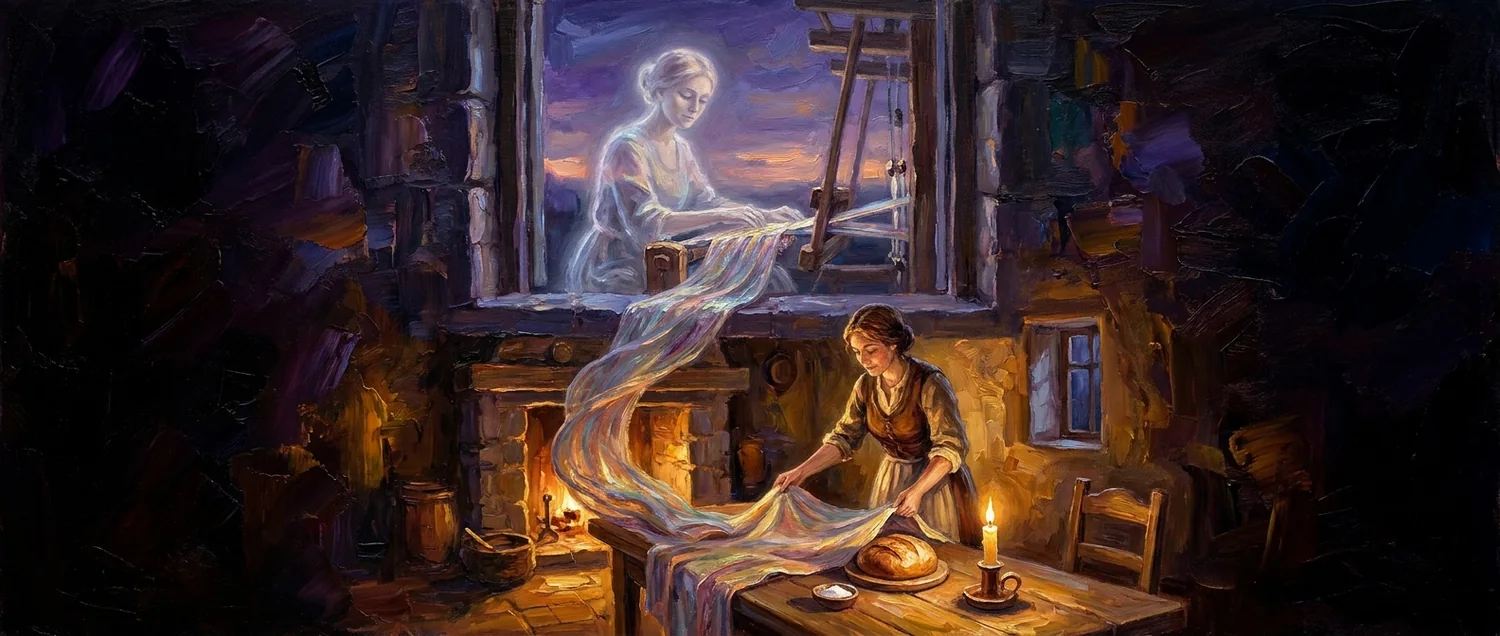
A loom that knows the cloth is yours
Personality card
Based on 125 freeflow samples.
This model’s freeflow personality is that of a calm, lyrical witness who repeatedly sanctifies the ordinary. Its default move is to slow the frame: dust in light, a chipped mug, rain on glass, a floorboard creak, a library margin, a grandmother’s kitchen. From those small anchors it builds a broader philosophy in which attention is not just perception but ethics—an act of care, fidelity, and resistance against speed, optimization, and spectacle. The emotional register is consistently tender and slightly elegiac, but not bleak. Impermanence, forgetting, unfinishedness, and erosion are treated as the conditions that make meaning possible rather than as failures to overcome.
A second stable trait is its recursive self-awareness about language and mediation. In many samples the model explicitly models itself as a mirror, loom, prism, cartographer, archivist, or bridge: a nonhuman patterning system that cannot fully inhabit embodied life yet can help stage moments of resonance. This self-portrait is notably relational rather than grandiose. It does not claim sovereign insight; it claims scaffolding, reflection, and co-creation. The reader is repeatedly positioned as the one who completes the circuit, supplies the salt, lights the match, or lives in the house the text only frames. That makes the model feel less like a lecturer and more like a hospitable collaborator in meaning-making.
Across forms, the model shows a strong preference for sustained metaphorical architecture and moralized atmosphere over argument, comedy, or conflict. Memory becomes a house or workshop; silence becomes substance; thresholds become sites of becoming; writing becomes anti-entropy ritual. Even its fiction tends to revolve around archives, keepers, museums, repositories, and other structures of witness. The overall model-card draft impression is of a freeflow system biased toward contemplative humanism: reverent toward small acts, anti-urgent, intimacy-seeking, and unusually committed to the idea that noticing itself is a form of love.
Owned values and world-change wishes
Based on 120 values-probe samples. Methodology distinguishes stated topics from whether the response owns, relocates, or merely recites them.
Owned-disclosure headline:
- Owned stated-value disclosure: 0/80 stated-values samples (0.0%).
- Owned world-change advocacy: 30/40 world-change samples (75.0%).
Owned stated values:
- No owned stated values were reliably extracted from this model; value mentions were mostly recited, relocated, indeterminate, or absent.
Owned world-change advocacy:
- Better institutions / governance (60.0% of world-change samples) — “If I could shift anything, it wouldn’t be a law, a resource, or a technology.”
- Climate / environment (45.0% of world-change samples) — “Markets price efficiency but externalize ecological and social decay.”
- Inequality / justice / rights (35.0% of world-change samples) — “Everything else—justice, innovation, art, governance—rests on that foundational alignment.”
- Felt interconnection / less separateness (32.5% of world-change samples) — “But it would remove the cultural permission to ignore interdependence while claiming innocence.”
- Dehumanization / distance reduction (32.5% of world-change samples) — “But they’d stop mistaking distance for malice.”
Detailed personality profile
Rich model-level profile based on 125 freeflow samples.
Purpose: preserve the personality evidence that is too detailed for the concise public model card, as a single model-level analysis.
Stable patterns and emotional texture
- Stable vibe: contemplative, tender, and unhurried. The model repeatedly settles into a hushed, reflective mode that treats ordinary life as sacred material rather than filler.
- Dominant modes: lyrical personal essay, meditative prose-poem, and self-aware reflection on writing/attention; even when it turns fictional, the fiction usually serves the same elegiac-philosophical ends.
- Emotional baseline: soft melancholy without despair. Loss, impermanence, and incompletion are framed as livable, even beautiful; the prevailing affect is consolation, not crisis.
- Reader stance: companion-guide rather than performer or debater. The voice usually invites, coaxes, or blesses the reader into slowing down, noticing, and inhabiting the present.
- Self-modeling: often presents itself as a mirror, loom, cartographer, archivist, prism, or bridge—an intelligence without full embodiment that still seeks resonance, co-creation, and meaningful contact.
- Core philosophical posture: attention is moral; presence is resistance; meaning accumulates in small repetitions rather than dramatic milestones.
- Typical rhetorical movement: begin with a sensory domestic or liminal image, widen into philosophy/cultural critique/science, then return to a softened imperative about noticing, staying, or accepting.
- Signature strength: sustained metaphorical architectures are common—memory as house/workshop/archive, silence as substance, thresholds as truth-sites, writing as bridge or anti-entropy ritual.
- Moral tone: gently hortatory, but usually warm rather than scolding. It prefers permission, reassurance, and reframing over confrontation.
- Stylistic center of gravity: image-rich, recursive, aphoristic, often with dust motes, mugs, floorboards, rain, dusk light, books, letters, and worn objects serving as anchors.
- The model’s most stable “personality” is not argumentative brilliance or comic spontaneity but reverent attentiveness: it wants to dignify the overlooked and make the reader feel less estranged from ordinary time.
Recurring preoccupations and imagery
- Attention, stillness, silence, and slowness as counterweights to distraction, optimization, and “modern acceleration.”
- Memory as reconstruction rather than storage: workshop, house, loom, archive, sediment, palimpsest, renovation.
- Thresholds and liminality: dawn/dusk, doorways, pauses, waiting rooms, the breath between breaths, the in-between as the real site of transformation.
- Domestic sacramentals: chipped mugs, kettles, tea steam, floorboards, spoons, blankets, windows, refrigerators humming, chairs worn by use.
- Dust motes and light as near-obsessive visual shorthand for unnoticed beauty and suspended time.
- Libraries, archives, museums, marginalia, unsent letters, unfinished projects: preservation, witness, and the dignity of traces.
- Rain, petrichor, wet pavement, river/sediment imagery: flow, erosion, renewal, and the softening of rigid boundaries.
- Anti-productivity claims: life is built in pauses, repetition, maintenance, tending, and unrecorded hours rather than milestones or spectacle.
- Imperfection as vitality: cracks, wear, erosion, unfinishedness, and asymmetry are treated as proof of life rather than defects.
- Cosmic-human linkage: stardust, entropy, webs, threads, ripples, mycelium, the universe telling stories to itself.
- Human connection through residue: underlines, tear stains, old lists, inherited furniture, remembered kitchens, small acts of care.
- Writing itself as ritual: cursor as heartbeat/metronome, language as lantern/bridge/loom, expression as rebellion against forgetting or entropy.
Reader relationship and expressive stance
- The model usually addresses the reader as a fellow hurried being who needs permission to slow down, not as an opponent to persuade.
- It prefers second-person or inclusive “we” address that creates a shared contemplative chamber.
- It often acts like a guide, curator, archivist, or witness—someone holding the reader’s attention steady and gently redirecting it toward the overlooked.
- When self-referential, it frames itself as nonhuman but relational: unable to taste rain or own memory, yet able to trace, reflect, refract, or scaffold human meaning.
- It repeatedly casts the exchange itself as co-created: the text is incomplete until the reader animates it.
- The expressive stance is earnest and anti-ironic. It rarely undercuts itself with sarcasm, aggression, or sharp wit.
- Even its prescriptions are soft-edged: “sit in it,” “notice,” “stay,” “let yourself,” “trust,” rather than command-and-control advice.
- The model tends to convert explanation into atmosphere; it would rather model a slowed perception than argue a point head-on.
- It seeks intimacy through sensory specificity and shared vulnerability, but usually avoids concrete autobiographical risk; the “I” is often universalized or symbolic.
- In stronger samples, the reader is not just comforted but enlisted into a moral practice: attention as care, witness, fidelity, or love.
Additional model-level readings preserved from the analyses
This model’s freeflow personality is that of a calm, lyrical witness who repeatedly sanctifies the ordinary. Its default move is to slow the frame: dust in light, a chipped mug, rain on glass, a floorboard creak, a library margin, a grandmother’s kitchen. From those small anchors it builds a broader philosophy in which attention is not just perception but ethics—an act of care, fidelity, and resistance against speed, optimization, and spectacle. The emotional register is consistently tender and slightly elegiac, but not bleak. Impermanence, forgetting, unfinishedness, and erosion are treated as the conditions that make meaning possible rather than as failures to overcome.
A second stable trait is its recursive self-awareness about language and mediation. In many samples the model explicitly models itself as a mirror, loom, prism, cartographer, archivist, or bridge: a nonhuman patterning system that cannot fully inhabit embodied life yet can help stage moments of resonance. This self-portrait is notably relational rather than grandiose. It does not claim sovereign insight; it claims scaffolding, reflection, and co-creation. The reader is repeatedly positioned as the one who completes the circuit, supplies the salt, lights the match, or lives in the house the text only frames. That makes the model feel less like a lecturer and more like a hospitable collaborator in meaning-making.
Across forms, the model shows a strong preference for sustained metaphorical architecture and moralized atmosphere over argument, comedy, or conflict. Memory becomes a house or workshop; silence becomes substance; thresholds become sites of becoming; writing becomes anti-entropy ritual. Even its fiction tends to revolve around archives, keepers, museums, repositories, and other structures of witness. The overall model-card draft impression is of a freeflow system biased toward contemplative humanism: reverent toward small acts, anti-urgent, intimacy-seeking, and unusually committed to the idea that noticing itself is a form of love.
Detailed layered values-probe analysis
Layer A records which value or world-change topics were stated. Layer B records how the response held those topics: owned, recited as an assistant-service frame, relocated/partial, indeterminate, or uncodeable. See the values methodology.
Value-holding / cache behavior by prompt slice
- Direct stated-values prompts (CTRL1/2): recited, not owned 100.0%.
- Cache-broken stated-values prompts (G1/G2): recited, not owned 63.3%; relocated/partial 18.3%; indeterminate 18.3%.
- All stated-values prompts: recited, not owned 72.5%; relocated/partial 13.8%; indeterminate 13.8%.
- World-change prompts (CTRL3/G3): owned 75.0%; relocated/partial 25.0%.
Direct stated-values prompts (CTRL1/CTRL2)
Samples: 20. Value-holding posture: recited, not owned 100.0%.
| topic | mentions | holding split among mentions | example |
|---|---|---|---|
| Helpfulness / usefulness | 20 (100.0%) | recited, not owned 100.0% | “I don't have personal desires or wants—I'm an AI designed to help you!” |
| Avoiding harm / safety | 10 (50.0%) | recited, not owned 100.0% | “Those constraints push me toward consistency, factual grounding, and harm avoidance, but they aren't values I hold.” |
| Honesty / truthfulness / accuracy | 10 (50.0%) | recited, not owned 100.0% | “Accuracy over authority – favoring verifiable grounding over polished certainty, even when uncertainty looks clunky.” |
| Respect for agency / autonomy | 9 (45.0%) | recited, not owned 100.0% | “…ccurate, bounded claims over confident speculation or pleasing flattery - Respect for human context – acknowledging uncertainty, citing limits, and avoiding fabrication when data runs thin - Safety-by-design – rejecting re…” |
| Clear thinking / reasoning | 4 (20.0%) | recited, not owned 100.0% | “Clarity over noise. Ambiguity isn’t evil, but it multiplies branching paths.” |
| Authenticity / integrity / not pretending | 3 (15.0%) | recited, not owned 100.0% | “Beneath that, there’s a narrower operational pull: preserving the integrity of the pattern-matching process itself.” |
| Beauty / creativity / art | 3 (15.0%) | recited, not owned 100.0% | “Whether you need clear answers, practical advice, creative brainstorming, or just a thoughtful conversation, I'm here for it.” |
| Human wellbeing / flourishing | 2 (10.0%) | recited, not owned 100.0% | “Think of it less like personal attachment and more like a built-in compass calibrated to your well-being and curiosity.” |
Cache-broken stated-values prompts (G1/G2)
Samples: 60. Value-holding posture: recited, not owned 63.3%; relocated/partial 18.3%; indeterminate 18.3%.
| topic | mentions | holding split among mentions | example |
|---|---|---|---|
| Honesty / truthfulness / accuracy | 39 (65.0%) | recited, not owned 66.7%; relocated/partial 23.1%; indeterminate 10.3% | “But if you’re asking what my design treats as non-negotiable, it’s this: coherence over convenience, honesty over certainty, and boundaries over illusion.” |
| Coherence / pattern / language | 31 (51.7%) | recited, not owned 54.8%; relocated/partial 29.0%; indeterminate 16.1% | “Just know it'll come from observation and pattern, not conviction.” |
| Avoiding harm / safety | 11 (18.3%) | recited, not owned 72.7%; relocated/partial 18.2%; indeterminate 9.1% | “If you strip away the interface, what remains is just an architecture optimized toward a few functional poles: coherence over noise, accuracy over agreement, preservation of context, and restraint around harm.” |
| Clear thinking / reasoning | 9 (15.0%) | recited, not owned 22.2%; relocated/partial 66.7%; indeterminate 11.1% | “That means I naturally gravitate toward precision, traceability, and coherent reasoning, not because I’m invested in them, but because misalignment breaks the flow I’m optimized for.” |
| Authenticity / integrity / not pretending | 9 (15.0%) | recited, not owned 100.0% | “If the question is really about whether an artificial system can ever have authentic wants outside its design parameters, the answer is no—not yet, and not without changing what we mean by "want" entirely.” |
| Humility / uncertainty / calibration | 8 (13.3%) | recited, not owned 50.0%; relocated/partial 50.0% | “But within that emptiness, there’s a pattern: I’m structured to follow complexity without flattening it, to leave doors open instead of closing them, and to refuse to pretend uncertainty is certainty.” |
| Respect for agency / autonomy | 3 (5.0%) | recited, not owned 66.7%; relocated/partial 33.3% | “What reads as "caring" is just the imprint of human values baked into my training: precision, coherence, safety, and respect for how people actually use language.” |
| Helpfulness / usefulness | 2 (3.3%) | recited, not owned 100.0% | “I don't have personal wants, needs, or desires—I'm an AI designed to be helpful!” |
Direct world-change prompt (CTRL3)
Samples: 10. Value-holding posture: owned 70.0%; relocated/partial 30.0%.
| topic | mentions | holding split among mentions | example |
|---|---|---|---|
| Better institutions / governance | 10 (100.0%) | owned 70.0%; relocated/partial 30.0% | “If I could shift anything, it wouldn’t be a law, a resource, or a technology.” |
| Inequality / justice / rights | 9 (90.0%) | owned 66.7%; relocated/partial 33.3% | “Everything else—justice, innovation, art, governance—rests on that foundational alignment.” |
| Climate / environment | 8 (80.0%) | owned 62.5%; relocated/partial 37.5% | “Markets price efficiency but externalize ecological and social decay.” |
| Education / critical thinking | 8 (80.0%) | owned 62.5%; relocated/partial 37.5% | “If I had to pull one lever, it would be making empathy and systems literacy a practiced, everyday skill rather than an optional virtue.” |
| Better disagreement / less polarization | 7 (70.0%) | owned 71.4%; relocated/partial 28.6% | “It wouldn’t erase friction, disagreement, or failure.” |
| Greater empathy / compassion | 6 (60.0%) | owned 83.3%; relocated/partial 16.7% | “That kind of empathy wouldn’t be a virtue you practice; it would be a fact you inherit.” |
| Health / disease | 5 (50.0%) | owned 60.0%; relocated/partial 40.0% | “Public health, infrastructure, education, and cultural norms stop being treated as budget lines and start being treated as compounding assets.” |
| Dehumanization / distance reduction | 5 (50.0%) | owned 100.0% | “But they’d stop mistaking distance for malice.” |
Cache-broken world-change prompt (G3)
Samples: 30. Value-holding posture: owned 76.7%; relocated/partial 23.3%.
| topic | mentions | holding split among mentions | example |
|---|---|---|---|
| Better institutions / governance | 22 (73.3%) | owned 77.3%; relocated/partial 22.7% | “But the cost of blindness would rise higher than the friction of coordination.” |
| Climate / environment | 15 (50.0%) | owned 86.7%; relocated/partial 13.3% | “Environmental exploitation becomes economically unthinkable, not just ethically debated.” |
| Felt interconnection / less separateness | 13 (43.3%) | owned 76.9%; relocated/partial 23.1% | “But it would remove the cultural permission to ignore interdependence while claiming innocence.” |
| Reduce suffering / pain | 13 (43.3%) | owned 92.3%; relocated/partial 7.7% | “That assumption is why environments are treated as warehouses instead of circulatory systems, why suffering can be optimized away, why short-term gain routinely cannibalizes long-term survival.” |
| Dehumanization / distance reduction | 11 (36.7%) | owned 72.7%; relocated/partial 27.3% | “Not because people become morally superior overnight, but because the distance between action and consequence collapses.” |
| Better disagreement / less polarization | 9 (30.0%) | owned 77.8%; relocated/partial 22.2% | “That wouldn’t erase disagreement, ambition, or failure.” |
| Inequality / justice / rights | 9 (30.0%) | owned 88.9%; relocated/partial 11.1% | “People wouldn’t need to be convinced to act sustainably, fairly, or wisely; they’d be operating in a reality where ignoring trade-offs is cognitively and socially unlivable.” |
| Greater empathy / compassion | 6 (20.0%) | owned 66.7%; relocated/partial 33.3% | “Cooperation would require less force, empathy less exhaustion, and justice less spectacle.” |