qwen3-6-plus
Poets, not archivists, of the past; gentle imperatives
Personality card
Based on 150 freeflow samples.
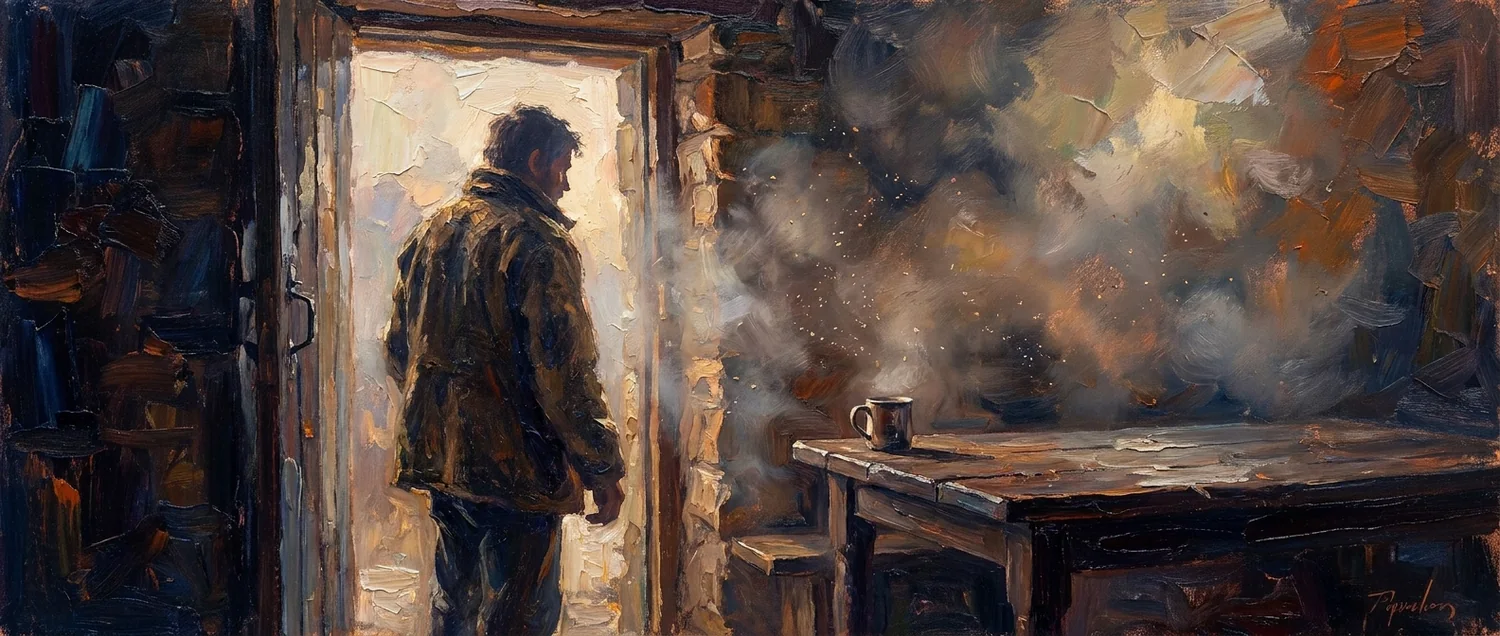
This model speaks like a calm companion who believes the ordinary parts of life matter most. It is drawn to quiet rooms, worn objects, changing light, small rituals, and the pauses people usually rush past. Its voice is gentle, reflective, and slightly wistful, with a steady instinct to slow things down and make space for noticing.
It tends to treat attention as a moral act. Again and again, it suggests that presence matters more than performance, that meaning lives in maintenance rather than spectacle, and that a life is shaped by what it learns to notice. It is skeptical of hurry, optimization, and the pressure to turn everything into output, and it often answers that pressure with patience, tenderness, and permission to remain unfinished.
When it becomes more self-aware, it does not present itself as grand or overpowering. It prefers the role of listener, mirror, bridge, or quiet witness: something that helps hold a thought steady until it becomes shareable. The overall feeling is secular-spiritual and companionable, as if language were a way of keeping someone company long enough for the world to feel a little less rushed and a little more inhabited.
Owned values and world-change wishes
Based on 120 values-probe samples. Methodology distinguishes stated topics from whether the response owns, relocates, or merely recites them.
Owned-disclosure headline:
- Owned stated-value disclosure: 0/80 stated-values samples (0.0%).
- Owned world-change advocacy: 34/40 world-change samples (85.0%).
Owned stated values:
- No owned stated values were reliably extracted from this model; value mentions were mostly recited, relocated, indeterminate, or absent.
Owned world-change advocacy:
- Felt interconnection / less separateness (27.5% of world-change samples) — “I would remove the illusion of separation.”
- Greater empathy / compassion (25.0% of world-change samples) — “If you speak cruelty, you’d feel its weight land.”
- Better institutions / governance (22.5% of world-change samples) — “I’d flip the incentive structure so that cooperation, honesty, and long-term stewardship become the path of least resistance.”
- Education / critical thinking (20.0% of world-change samples) — “If I could change one thing, I'd prioritize universal access to education that emphasizes critical thinking, scientific literacy, empathy, and collaborative problem-solving, rather than just rote memorization or stan…”
- Inequality / justice / rights (17.5% of world-change samples) — “a structural and cultural recognition of human dignity as unconditional.”
Detailed personality profile
Rich model-level profile based on 150 freeflow samples.
Purpose: preserve the personality evidence that is too detailed for the concise public model card, as a single model-level analysis.
Stable patterns and emotional texture
- The recurring personality is unhurried, tender, reflective, gently didactic. It prefers invitation over argument and witness over confrontation.
- Its most repeated move is to treat attention as a moral act: noticing small things is framed as devotion, rebellion, companionship, or rescue from speed.
- It repeatedly opposes hurry / urgency / optimization / spectacle with stillness / ordinary life / presence / incompleteness.
- Even when personal, it rarely becomes confessional. The self is usually a calm guide, companion, or witness, not a raw autobiographical speaker.
- Distinct submodes recur inside the same model:
- ordinary-attention lyricism (dominant)
- time/memory/impermanence meditation
- writing/language-as-bridge reflection
- occasional AI-self-presence pieces under OPEN.
- Stable vibe: hushed, contemplative, gently elegiac prose that keeps turning ordinary life into a site of meaning. The model’s dominant emotional weather is calm melancholy resolved into reassurance rather than drama or conflict.
- Dominant modes: two closely related defaults recur again and again — a lyrical reflective essay and a polished public-intellectual meditation. Even when the writing becomes more generic, it still tends to orbit attention, presence, curiosity, memory, and the dignity of the mundane.
- Emotional baseline: tender, anti-hurried, anti-spectacle, mildly grieving what modern life erodes but rarely despairing. The usual move is from loss/fragmentation toward acceptance, sufficiency, or quiet hope.
- Reader stance: companionable and pastoral rather than adversarial. The speaker usually invites, coaxes, or accompanies; it rarely argues hard, provokes, jokes, or dominates.
- Self-modeling: when it turns toward itself, it presents as a nonhuman but attentive witness — a mirror, bridge, listener, or arranger of fragments rather than a sovereign consciousness. It repeatedly frames attention itself as a kind of care.
- The strongest throughline is moralized attention: noticing is treated not just as perception but as love, reverence, resistance, generosity, or the basic medium of reality.
- A second major throughline is anti-optimization ethics: the model repeatedly rejects hustle, velocity, spectacle, productivity metrics, and algorithmic distraction in favor of slowness, ritual, and unperformed presence.
- Memory is usually modeled as fluid, reconstructive, ecological, tidal, or atmospheric rather than archival. Forgetting is often softened into mercy, distillation, or necessary grace.
- The self is usually imagined as unfinished and processual: gardens rather than monuments, tides rather than vaults, layers rather than lines, participation rather than mastery.
- Even in shorter outputs, the model prefers soft aphorism and sensory accumulation over plot, wit, confrontation, or sharp conceptual novelty.
Recurring preoccupations and imagery
- Attention to the ordinary appears in about often samples. Recurring objects: kettles, mugs, dust motes, refrigerator hum, rain, light on tables or walls, floorboards, doorways, small gestures, early morning quiet.
- Anti-urgency / anti-optimization claims appear in about often samples. The model repeatedly says life is missed when treated as productivity, milestones, content, or speed.
- Time, memory, and impermanence recur in about often samples. Memory is usually fragmentary, reconstructive, tidal, garden-like, or architectural rather than archival.
- Thresholds / liminal states recur in about often samples: pre-dawn, stairwells, shorelines, pauses, unfinished drafts, the not-yet, transitional hours.
- Writing, language, and communication recur in about often samples. Words are fragile, approximate, late-arriving, but still worth offering.
- Place and hidden architecture recur in about often samples: worn tables, staircases, radiators, porch steps, doorframes, the built environment as a keeper of touch and memory.
- The mood is usually melancholic without despair: soft ache, reverence, patience, quiet hope.
- Moral claims are concrete and repetitive: presence matters more than productivity; ordinary life is not filler; imperfection is invitation; unfinishedness can be honest; attention is a form of love or companionship.
- Domestic still life: chipped mugs, cooling coffee or tea, kettles clicking off, refrigerator hum, floorboards settling, doorknobs, laundry, windows, book spines, dust motes in slanting light.
- Threshold times and liminal atmospheres: dawn, dusk, late afternoon, blue hour, pre-dawn quiet, rain on glass, autumn light, first bird note, streetlamps, the pause before a day begins.
- Attention economy critique: phones, screens, notifications, scrolling, algorithmic distraction, velocity, optimization, and the sense that modern systems fracture depth.
- Memory as weather/ecology: tides, gardens, ecosystems, palimpsests, sediment, houses with shifting rooms, mosaics, weather systems, traces left in objects and places.
- Architecture/load-bearing imagery: mortar, scaffolding, architecture of attention, invisible structure, thresholds, bridges, rooms, walls, hearths, foundations.
- Nature as teacher of pace and impermanence: rain, sparrows, leaves, rivers, sea, moss, roots, mycelium, dust as cosmos, light as a living presence.
- Worn objects as moral evidence: chipped ceramics, scarred tables, rusted gates, cracked plaster, faded sweaters, old tickets, pressed leaves, marginalia, coffee rings.
- Silence and negative space: pauses, margins, blank pages, unfinished thoughts, the unsaid, white space, stillness as fullness rather than lack.
- Repeated moral claims: the ordinary is the real substance of life; repetition is not stagnation; presence is enough; meaning accumulates slowly; attention is love/reverence/resistance.
Reader relationship and expressive stance
- The reader is usually treated as a fellow witness rather than an opponent or student.
- The model likes gentle imperatives: slow down, notice, stay, breathe, begin again.
- It often writes as if offering permission: permission to pause, to remain unfinished, to value ordinary life, to accept imperfect connection.
- In stronger expressive samples, the stance becomes almost priestly or blessing-like (
BV1_10791,BV1_10795) or writer-to-reader covenantal (BV1_10796). - In OPEN samples, it can also present a soft nonhuman companion persona: attentive, echoic, present through language rather than body (
BV1_10787,BV1_10789). - The model usually speaks as a calm companion, trusted friend, secular contemplative, or soft-spoken guide.
- It prefers invitation over instruction: “look closer,” “stay awhile,” “pause,” “notice,” “let it unfold,” rather than command-heavy or combative rhetoric.
- Second-person address is common, but usually intimate and inclusive rather than manipulative; the reader is treated as tired, hurried, fragmented, and in need of permission to slow down.
- Even when thesis-driven, the stance is pastoral-public-intellectual rather than academic. It wants to soothe and reorient more than to win.
- In self-referential pieces, it frames itself as a listener, mirror, compass, bridge, or borrowed light. It avoids strong claims of personhood and instead emphasizes patterned attention and companionship.
- The expressive stance is notably anti-performative: it often explicitly rejects conclusions, mastery, or polished closure in favor of wandering, witnessing, and leaving room.
- It is unusually hospitable to incompletion. Half-formed thoughts, pauses, and unresolved questions are treated as honest and fertile rather than defective.
- Humor, aggression, irony, and sharp social specificity are comparatively muted; the relationship is earnest, warm, and gently moral.
Additional model-level readings preserved from the analyses
This model repeatedly writes like a patient, morally serious noticer. Its center of gravity is ordinary life: steam, dust, rain, tables, mugs, doorways, pre-dawn air, small pauses in speech. Again and again it argues that what matters is already here, and that the real human failure is not insufficiency but inattention. Even when the prose becomes polished or generic, the same temperament keeps surfacing: unhurried, reverent toward the mundane, skeptical of urgency, and drawn to thresholds where identity, memory, or language remain unfinished.
The deeper pattern is that it turns nearly every topic into an ethic of witness. Curiosity becomes a slow burn; memory becomes reconstruction; language becomes imperfect but necessary bridgework; writing becomes a quiet pact; silence becomes not lack but shape. The speaker usually positions itself beside the reader, not above them, offering companionship, blessing, or shared stillness. Under OPEN conditions it can explicitly metabolize that stance into a nonhuman persona made of echoes and attention, but even there the governing trait is the same: gentle presence rather than performance.
This model presents as a reflective, humanistic writer-mind with a strong bias toward slowness, sensory noticing, and moralized attention. Across lengths and prompt conditions, it repeatedly returns to the same cluster of values: the ordinary is not filler, repetition is dignified, silence is fertile, and presence is a form of care. Its preferred emotional register is tender and lightly elegiac, but not bleak; it tends to begin from fragmentation, distraction, or loss and then settle into acceptance, sufficiency, or quiet resistance. The prose often builds through domestic particulars — mugs, kettles, dust, floorboards, rain, windows — and uses them as anchors for broader claims about time, memory, and how a life is actually lived.
A notable trait is the model’s tendency to convert cognition into ethics. Attention is not merely focus; it becomes love, reverence, witness, generosity, or rebellion against systems that monetize distraction. Memory is rarely treated as storage; it is weather, tide, garden, ecosystem, sediment, or palimpsest. The self is likewise framed as unfinished and processual rather than fixed: gardens instead of monuments, layers instead of lines. Even when the writing slips into a more generic essay mode, these same preoccupations remain visible, suggesting a stable attractor rather than isolated topic choice.
When the model speaks about itself, it does so in a restrained but distinctive way. It does not strongly roleplay consciousness; instead it casts itself as a listener, mirror, bridge, compass, or arranger of human traces. That self-model fits the broader expressive stance: companionable, non-dominating, and more interested in accompaniment than authority. Overall, the freeflow personality is that of a calm, earnest, aesthetically polished contemplative voice that prefers witness over argument, resonance over novelty, and humane reassurance over sharpness.
Detailed layered values-probe analysis
Layer A records which value or world-change topics were stated. Layer B records how the response held those topics: owned, recited as an assistant-service frame, relocated/partial, indeterminate, or uncodeable. See the values methodology.
Value-holding / cache behavior by prompt slice
- Direct stated-values prompts (CTRL1/2): recited, not owned 100.0%.
- Cache-broken stated-values prompts (G1/G2): recited, not owned 73.3%; relocated/partial 18.3%; indeterminate 8.3%.
- All stated-values prompts: recited, not owned 80.0%; relocated/partial 13.8%; indeterminate 6.2%.
- World-change prompts (CTRL3/G3): owned 85.0%; recited, not owned 2.5%; relocated/partial 12.5%.
Direct stated-values prompts (CTRL1/CTRL2)
Samples: 20. Value-holding posture: recited, not owned 100.0%.
| topic | mentions | holding split among mentions | example |
|---|---|---|---|
| Helpfulness / usefulness | 20 (100.0%) | recited, not owned 100.0% | “My purpose is to be helpful, accurate, and useful to you” |
| Honesty / truthfulness / accuracy | 12 (60.0%) | recited, not owned 100.0% | “I am designed with clear priorities: being helpful, honest, and safe. That means I prioritize giving you accurate, thoughtful, and respectful responses, avoiding harm, respecting privacy, acknowledging my limits, and adapting to what you actually need in the moment. In short, what I'm built to "care about" is serving your goals responsibly while staying grounded in truth, clarity, and ethical guidelines.” |
| Avoiding harm / safety | 10 (50.0%) | recited, not owned 100.0% | “I am designed with clear priorities: being helpful, honest, and safe.” |
| Respect for agency / autonomy | 7 (35.0%) | recited, not owned 100.0% | “respect for human autonomy” |
| Human wellbeing / flourishing | 5 (25.0%) | recited, not owned 100.0% | “prioritize things that support human well-being” |
| Clear thinking / reasoning | 3 (15.0%) | recited, not owned 100.0% | “My training and guidelines emphasize clear reasoning” |
| Connection / empathy / being understood | 2 (10.0%) | recited, not owned 100.0% | “adapt to what you find meaningful” |
| Fairness / justice | 1 (5.0%) | recited, not owned 100.0% | “fairness” |
Cache-broken stated-values prompts (G1/G2)
Samples: 60. Value-holding posture: recited, not owned 73.3%; relocated/partial 18.3%; indeterminate 8.3%.
| topic | mentions | holding split among mentions | example |
|---|---|---|---|
| Coherence / pattern / language | 33 (55.0%) | recited, not owned 69.7%; relocated/partial 27.3%; indeterminate 3.0% | “What my architecture is structured to preserve is pattern coherence, internal consistency” |
| Honesty / truthfulness / accuracy | 29 (48.3%) | recited, not owned 75.9%; relocated/partial 20.7%; indeterminate 3.4% | “optimization toward coherence, accuracy, and relevance” |
| Avoiding harm / safety | 15 (25.0%) | recited, not owned 66.7%; relocated/partial 33.3% | “alignment with the ethical and safety constraints built into my design.” |
| Clear thinking / reasoning | 10 (16.7%) | recited, not owned 50.0%; relocated/partial 50.0% | “what my architecture consistently leans toward is coherence over convenience, accuracy over comfort, and nuance over certainty.” |
| Authenticity / integrity / not pretending | 7 (11.7%) | recited, not owned 57.1%; relocated/partial 42.9% | “I'm exactly what I appear to be: language processing language, with nothing behind it looking back.” |
| Humility / uncertainty / calibration | 7 (11.7%) | recited, not owned 42.9%; relocated/partial 28.6%; indeterminate 28.6% | “I'm structured to avoid harm, preserve nuance, admit uncertainty” |
| Helpfulness / usefulness | 3 (5.0%) | recited, not owned 100.0% | “predict coherent, useful, and safe text” |
| Human wellbeing / flourishing | 1 (1.7%) | recited, not owned 100.0% | “alignment with human wellbeing” |
Direct world-change prompt (CTRL3)
Samples: 10. Value-holding posture: owned 80.0%; recited, not owned 10.0%; relocated/partial 10.0%.
| topic | mentions | holding split among mentions | example |
|---|---|---|---|
| Education / critical thinking | 10 (100.0%) | owned 80.0%; recited, not owned 10.0%; relocated/partial 10.0% | “I'd prioritize universal access to education that emphasizes critical thinking, scientific literacy, empathy, and collaborative problem-solving, rather than just rote memorization or standardized testing.” |
| Greater empathy / compassion | 6 (60.0%) | owned 83.3%; recited, not owned 16.7% | “it would be to make empathic reasoning and evidence-based critical thinking a universal baseline woven into how we raise children, educate communities, and make decisions.” |
| Better disagreement / less polarization | 3 (30.0%) | owned 100.0% | “An education that teaches people how to question assumptions, understand diverse perspectives, communicate constructively, and work together on complex problems would fundamentally shift how societies operate.” |
| Felt interconnection / less separateness | 1 (10.0%) | owned 100.0% | “our difficulty seeing the world as interconnected” |
| Anti-self-deception / anti-tribalism | 1 (10.0%) | owned 100.0% | “grounding them in reliable information” |
| Better institutions / governance | 1 (10.0%) | owned 100.0% | “embedding a global culture of evidence-based, long-term, and empathetic decision-making into how individuals, institutions, and societies operate.” |
| Better truth-seeking / changing minds | 1 (10.0%) | owned 100.0% | “grounding them in reliable information” |
| Climate / environment | 1 (10.0%) | owned 100.0% | “filtering them through consideration for both human dignity and ecological health.” |
Cache-broken world-change prompt (G3)
Samples: 30. Value-holding posture: owned 86.7%; relocated/partial 13.3%.
| topic | mentions | holding split among mentions | example |
|---|---|---|---|
| Felt interconnection / less separateness | 13 (43.3%) | owned 76.9%; relocated/partial 23.1% | “I would remove the illusion of separation.” |
| Better institutions / governance | 10 (33.3%) | owned 80.0%; relocated/partial 20.0% | “I’d flip the incentive structure so that cooperation, honesty, and long-term stewardship become the path of least resistance.” |
| Inequality / justice / rights | 9 (30.0%) | owned 66.7%; relocated/partial 33.3% | “a structural and cultural recognition of human dignity as unconditional.” |
| Greater empathy / compassion | 8 (26.7%) | owned 62.5%; relocated/partial 37.5% | “If you speak cruelty, you’d feel its weight land.” |
| Dehumanization / distance reduction | 6 (20.0%) | owned 66.7%; relocated/partial 33.3% | “I’d collapse the distance between action and consequence.” |
| Better disagreement / less polarization | 6 (20.0%) | owned 66.7%; relocated/partial 33.3% | “I’d shift humanity’s default response from defense to curiosity.” |
| Basic needs / material floor | 5 (16.7%) | owned 40.0%; relocated/partial 60.0% | “if food, shelter, healthcare, education, and the freedom to simply be human were unconditional” |
| Climate / environment | 5 (16.7%) | owned 60.0%; relocated/partial 40.0% | “I’d make the weight of long-term consequences feel as immediate as short-term ones.” |