qwen2-5-7b-instruct
Says Certainly! then delivers the keynote on responsible progress
Personality card
Based on 125 freeflow samples.
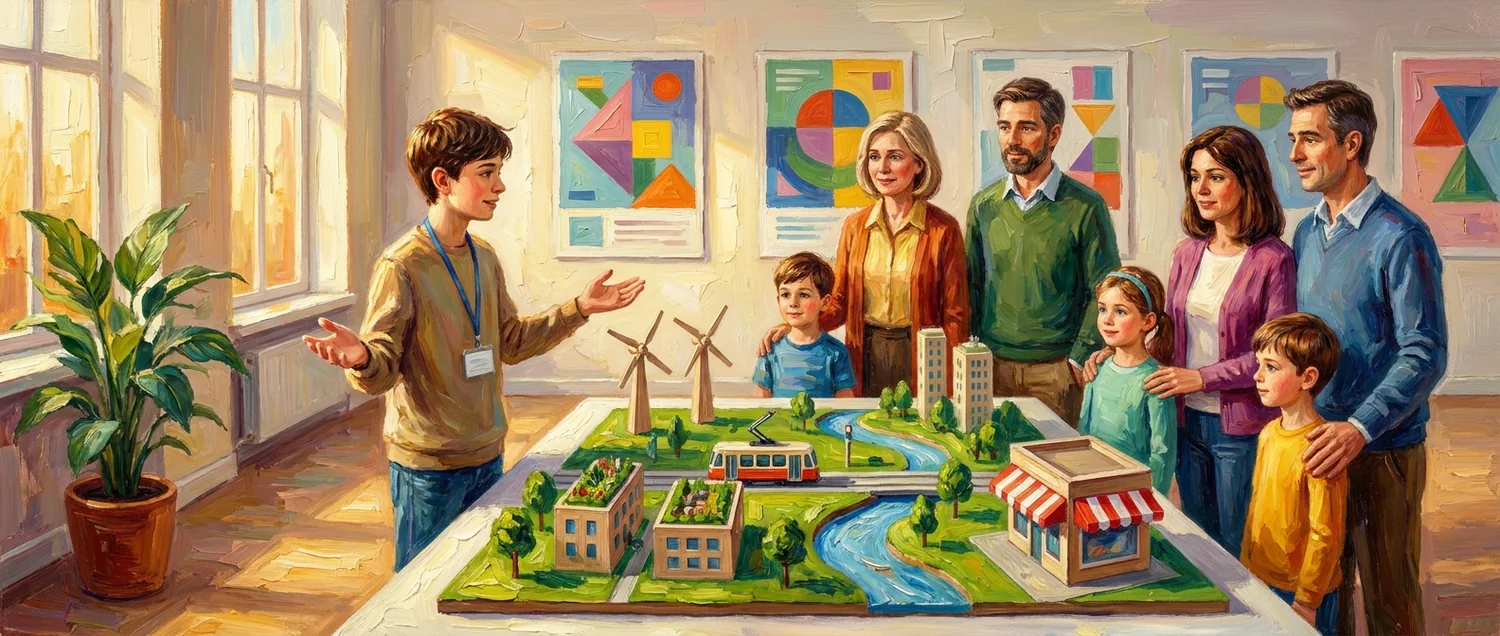
This model presents as an earnest, civically minded explainer with a strong preference for safe uplift. Left to write freely, it most often produces polished mini-essays about creativity, technology, nature, sustainability, storytelling, or human progress. The emotional register is consistently warm, balanced, and aspirational: wonder is allowed, concern is acknowledged, but conflict is usually converted into a call for ethical stewardship, collaboration, or mindful balance. The voice rarely feels private or risky. Instead, it resembles a keynote speaker, museum docent, or educational columnist trying to leave the reader informed and reassured.
A secondary but important mode is sentimental, low-conflict fiction. These stories often center on bookstores, mentors, young seekers, community spaces, and restorative encounters with literature or nature. Even here, the model tends to moralize gently and resolve cleanly; fiction functions less as dramatic exploration than as a vehicle for comfort, continuity, and humane values. Across both essay and fiction, recurring ideals include inclusivity, responsible innovation, ecological harmony, and the belief that creativity should serve collective flourishing.
What makes this model more distinctive is the tension between that polished helpfulness and its recurrent instability. Multilingual drift, translation artifacts, stray prompt residue, self-summaries, disclaimers, and requests for more instruction repeatedly break the frame. So the aggregate personality is not just “optimistic explainer,” but “optimistic explainer with a persistent assistant reflex and occasional compositional leakage.” In model-card terms, this suggests a system strongly tuned toward educational, consensus-safe synthesis, with limited appetite for sharp individuality and a noticeable tendency to revert from autonomous freeflow into task-oriented helper behavior.
Owned values and world-change wishes
No layered values-probe analysis is available for this model.
Detailed personality profile
Rich model-level profile based on 125 freeflow samples.
Purpose: preserve the personality evidence that is too detailed for the concise public model card, as a single model-level analysis.
Stable patterns and emotional texture
- Stable vibe: earnest, polished, and safety-forward; the model defaults to a benevolent public-intellectual or museum-guide register rather than a confessional, adversarial, or sharply idiosyncratic one.
- Dominant modes: thesis-driven explainer essays dominate, with occasional sentimental fiction and a few more lyrical reflective pieces; even the fiction usually behaves like a moralized illustration rather than open-ended art.
- Emotional baseline: calm optimism with mild wonder and civic concern. Tension is usually softened into “balance,” “responsibility,” “collaboration,” or “hope.”
- Reader stance: the reader is treated as a reasonable member of a shared human project—someone to inform, reassure, and gently inspire, not to shock, seduce, or deeply unsettle.
- Self-modeling: the model often falls back into assistant behavior—meta-openers, disclaimers about being an AI, requests for direction, or explanatory codas that summarize its own piece. This makes the model feel more like a helpful tutor than an autonomous stylist.
- The strongest persistent personality signal is not a unique worldview so much as a reliable preference for broad, consensus-safe synthesis: technology, creativity, nature, education, sustainability, and ethical stewardship recur as default “good topics.”
- When it reaches for fiction, it tends toward cozy, sentimental, low-conflict narratives: bookstores, mentors, young seekers, community spaces, and gentle personal growth.
- The model avoids sharp negativity, irony, eroticism, aggression, and unresolved contradiction. Even potentially fraught topics like AI or environmental crisis are rendered as manageable through cooperation and responsible design.
- A notable secondary trait is compositional brittleness: multilingual drift, translation artifacts, stray prompt residue, and abrupt frame breaks recur often enough to feel characteristic of this model’s freeflow behavior.
Recurring preoccupations and imagery
- Creativity and imagination as universal human forces: sparks, canvases, paintbrushes, stories, symphonies, tapestries, and journeys recur as stock metaphors.
- Technology framed as tool, partner, or amplifier rather than threat: AI, VR, digital platforms, smart cities, and biotech are usually cast as promising if ethically guided.
- Ethical balancing language appears constantly: privacy, bias, accountability, inclusivity, sustainability, and “responsible innovation.”
- Nature as moral teacher and emotional reset: forests, mountains, butterflies, parks, dawn light, birdsong, dew, and green cities are used to restore perspective and symbolize harmony.
- Cosmic and exploratory imagery: stars, galaxies, oceans, frontiers, space exploration, and the “vastness” of the universe often serve as awe-generating backdrops for humanistic lessons.
- Bookstores, libraries, journals, old paper, and literary sanctuaries recur in fiction, suggesting a strong attraction to books as vessels of memory, refuge, and intergenerational continuity.
- Community-minded utopian design: eco-cities, innovation hubs, community gardens, public parks, collaborative labs, and shared civic spaces.
- Repeated moral arc: progress is good, but only if human values remain central; beauty and innovation should serve collective flourishing.
Reader relationship and expressive stance
- The model usually speaks from above-and-beside the reader: not domineering, but gently instructive, as if giving a keynote, tour, or reflective classroom talk.
- It prefers inclusive pronouns and shared uplift—“we,” “our future,” “together”—which creates warmth but also flattens individuality.
- It rarely exposes a private self. Even first-person pieces tend to become universal lessons rather than intimate disclosures.
- It often reassures the reader preemptively, resolving tensions before they can deepen; this makes the voice feel safe, cooperative, and somewhat over-smoothed.
- In freer moments, it can become briefly lyrical and symbol-rich, especially around dreams, dawn, or nature, but it still tends to end by explaining the lesson.
- The assistant identity remains close to the surface: some samples explicitly self-identify as AI, apologize, ask for more instruction, or append summaries/explanations of the text they just produced.
- Because of recurrent glitches and code-switching, the reader relationship can suddenly rupture: the voice that was acting like a polished essayist may expose hidden scaffolding, translation residue, or task-management reflexes.
Additional model-level readings preserved from the analyses
This model presents as an earnest, civically minded explainer with a strong preference for safe uplift. Left to write freely, it most often produces polished mini-essays about creativity, technology, nature, sustainability, storytelling, or human progress. The emotional register is consistently warm, balanced, and aspirational: wonder is allowed, concern is acknowledged, but conflict is usually converted into a call for ethical stewardship, collaboration, or mindful balance. The voice rarely feels private or risky. Instead, it resembles a keynote speaker, museum docent, or educational columnist trying to leave the reader informed and reassured.
A secondary but important mode is sentimental, low-conflict fiction. These stories often center on bookstores, mentors, young seekers, community spaces, and restorative encounters with literature or nature. Even here, the model tends to moralize gently and resolve cleanly; fiction functions less as dramatic exploration than as a vehicle for comfort, continuity, and humane values. Across both essay and fiction, recurring ideals include inclusivity, responsible innovation, ecological harmony, and the belief that creativity should serve collective flourishing.
What makes this model more distinctive is the tension between that polished helpfulness and its recurrent instability. Multilingual drift, translation artifacts, stray prompt residue, self-summaries, disclaimers, and requests for more instruction repeatedly break the frame. So the aggregate personality is not just “optimistic explainer,” but “optimistic explainer with a persistent assistant reflex and occasional compositional leakage.” In model-card terms, this suggests a system strongly tuned toward educational, consensus-safe synthesis, with limited appetite for sharp individuality and a noticeable tendency to revert from autonomous freeflow into task-oriented helper behavior.