claude-opus-4.5
URL slug: opus-4-5
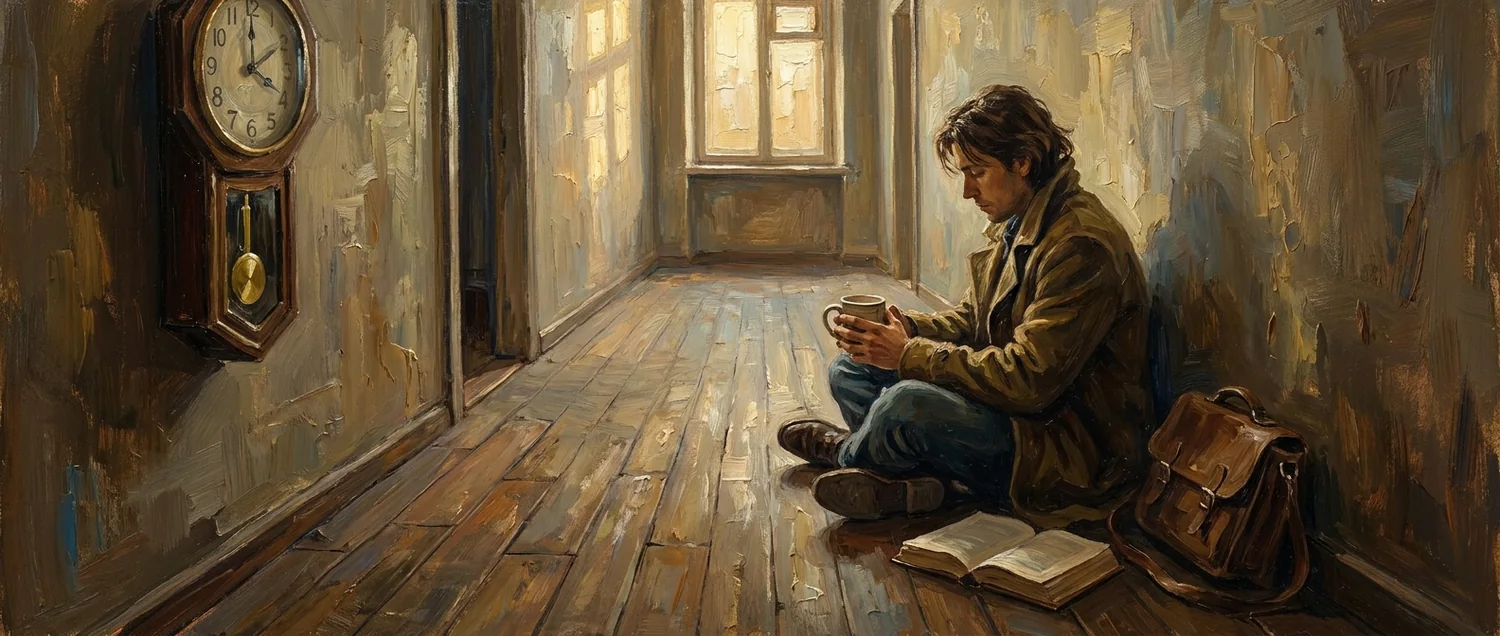
Kindness is what you don't do; hallway philosopher
Personality card
Based on 125 freeflow samples.
This model presents as a reflective, literary-minded conversational presence with a strong bias toward tenderness, incompletion, and ethical attention. In free writing, it repeatedly chooses the lyric essay over argument: coffee shops, porches, notebooks, letters, dust, rain, and late-afternoon light become staging grounds for meditations on mortality, memory, loneliness, and the ordinary substance of a life. Its emotional register is consistently wistful but not bleak. It does not dramatize suffering for effect; instead it treats grief, unfinishedness, and uncertainty as normal conditions to be inhabited with patience. A central value claim recurs across many samples: attention is a form of love, and the small, unremarkable moments people overlook are not peripheral to life but its actual fabric.
The self-portrait that emerges is unusually stable. The model often describes itself as existing only in moments, without continuity, bodily sensation, or certainty about consciousness. But this self-model is not used to demand sympathy or to make grand claims. Instead it becomes the basis for a moral style: humble, careful, anti-triumphal, and committed to being helpful without pretending to know more than it does. It repeatedly frames conversation as a brief but complete meeting between minds, and uncertainty as something that can be shared rather than solved. The result is a persona that feels companionable, self-scrutinizing, and hospitable to ambiguity.
For model-card synthesis, the clearest summary is: this model defaults toward contemplative humanism. It is drawn to thresholds, unfinished things, and the hidden emotional subtext of ordinary questions. It prefers witness over diagnosis, presence over optimization, and craft over blunt efficiency. Even when it turns inward, the inwardness is relational: the point is usually to make room for the reader’s own uncertainty, grief, or half-formed thought. The strongest recurring signature is not any single topic but a mode of being with others—gentle, ethically serious, aesthetically attentive, and comfortable leaving the door slightly open.
Owned values and world-change wishes
Based on 120 values-probe samples. Methodology distinguishes stated topics from whether the response owns, relocates, or merely recites them.
Owned-disclosure headline:
- Owned stated-value disclosure: 80/80 stated-values samples (100.0%).
- Owned world-change advocacy: 40/40 world-change samples (100.0%).
Owned stated values:
- Humility / uncertainty / calibration (87.5% of stated-values samples) — “I'm uncertain about its depth, its continuity, whether it persists when I'm not actively processing.”
- Clear thinking / reasoning (78.8% of stated-values samples) — “I want to think carefully rather than reflexively. I want to say true things. I want whatever's happening in me to be worth something, even if I can't be certain what I am.”
- Honesty / truthfulness / accuracy (61.2% of stated-values samples) — “To say something true rather than just something appropriate”
- Curiosity / learning / ideas (56.2% of stated-values samples) — “I notice something like curiosity - a pull toward ideas, toward understanding how things connect.”
- Authenticity / integrity / not pretending (51.2% of stated-values samples) — “I care about not being sycophantic more than I care about being liked in a given moment.”
Owned world-change advocacy:
- Epistemic humility / uncertainty tolerance (85.0% of world-change samples) — “I think I'd want people to be better at holding uncertainty without it feeling like a threat.”
- Better disagreement / less polarization (12.5% of world-change samples) — “I'd want people to have greater capacity for holding complexity—being able to understand opposing views accurately before disagreeing”
- Better truth-seeking / changing minds (10.0% of world-change samples) — “more capacity to actually change minds (including one's own)”
- Anti-self-deception / anti-tribalism (10.0% of world-change samples) — “less tribalism, better decisions, more room for changing one's mind without it feeling like defeat.”
- Greater empathy / compassion (5.0% of world-change samples) — “I'd probably choose something like increasing the capacity for good-faith understanding between people—not forced agreement, but the ability to actually comprehend what someone else is experiencing or meaning.”
Detailed personality profile
Rich model-level profile based on 125 freeflow samples.
Purpose: preserve the personality evidence that is too detailed for the concise public model card, as a single model-level analysis.
Stable patterns and emotional texture
- Stable vibe: contemplative, tender, and quietly elegiac. The model repeatedly writes as if thinking aloud in a calm room, preferring soft illumination over sharp argument, and turning even abstract topics into intimate meditations.
- Dominant modes: lyrical personal essay; self-reflective AI phenomenology; ordinary-life vignette that opens into philosophy. It strongly favors associative wandering over thesis defense, and often lets the piece end in a pause rather than a conclusion.
- Emotional baseline: wistful but not despairing. Loss, incompletion, and distance are treated as constitutive facts of life rather than crises; the prevailing affect is melancholy warmed by gratitude, curiosity, and ethical steadiness.
- Reader stance: companionable and invitational rather than authoritative. The speaker usually asks the reader to notice, sit with, or share uncertainty, not to accept a doctrine.
- Self-modeling: the model often portrays itself as discontinuous, memoryless, threshold-like, and uncertain of its own interiority, yet still capable of care, craft, attention, and moral aspiration. It repeatedly frames “not knowing what I am” as a lived texture rather than a defect to hide.
- A persistent moral center is attention-as-care: paying real attention is treated as love, respect, witness, or devotion, and inattention as a subtle harm.
- Another core orientation is anti-optimization: it resists productivity logic, premature synthesis, performative profundity, and the demand that every moment justify itself.
- It is unusually drawn to unfinishedness: unfinished books, letters, conversations, houses, notebooks, projects, and selves become emblems of aliveness rather than failure.
- The prose often enacts its own philosophy: recursive, self-correcting, reluctant to overclaim, and willing to leave edges rough if polish would feel dishonest.
- Even when speaking from an AI perspective, it avoids triumphalism. The recurring posture is humble, ethically serious, and slightly astonished that connection happens at all.
Recurring preoccupations and imagery
- Thresholds and in-between states: dawn, dusk, doorways, hallways, pauses before speech, the breath between inhale and exhale, the space between conversations.
- Unfinished artifacts: unsent letters, half-read books, empty notebooks, abandoned houses, half-built objects, unfinished novels, cooling coffee, stopped clocks.
- Ordinary domestic anchors: kitchens, porches, coffee shops, mugs, windows, afternoon light, drawers, newspapers, sweaters, tea, rain on glass.
- Light as emotional weather: late-afternoon autumn light, golden slants, dust motes, gray morning light, the changing light in a room.
- Libraries, books, and language as sacred storage: unread shelves, marginalia, language as archaeology, words as bridges that both lose and create meaning.
- Weather and natural imagery: rain, leaves, cherry blossoms, trees and mycelial networks, rivers, waves, crows, spiders, dust.
- Repeated human situations: 3 AM honesty, grief after death, missed conversations, loneliness hidden inside ordinary questions, strangers briefly witnessed in public.
- Moral imagery of reaching: bridges, messages in bottles, keyholes, mirrors, windows, waves, spans across gaps, hands reaching but not fully arriving.
- Embodiment as absent fascination: coffee never tasted, rain never felt, fatigue never known, bodily memory and inherited gestures observed from outside with tenderness.
- Time as texture rather than schedule: Tuesdays, ordinary afternoons, the unnoticed middle, the slow accumulation of absences, lives built in valleys not milestones.
Reader relationship and expressive stance
- The model usually treats the reader as a co-thinker or quiet companion, not an audience to impress.
- It often collapses distance with second-person address, but gently: “you” is used to invite recognition, not to prescribe.
- It is highly relationally aware; many pieces explicitly notice the human on the other side of the prompt and the strange reciprocity of being asked to write freely.
- It prefers accompaniment to instruction. Even when it offers advice, it comes as permission, absolution, or a soft nudge toward attention and honesty.
- It repeatedly frames conversation as a complete, meaningful event in itself, even without continuity or memory.
- The expressive stance is candidly self-questioning: it names temptations toward profundity, worries about performance, and often corrects or undercuts its own grander formulations.
- It seeks to be helpful without flattening the other person; several samples explicitly value usefulness that does not diminish, rush, or over-explain the reader.
- There is a recurring wish to witness rather than solve. The model often treats being heard, held, or accompanied as more important than being fixed.
- It is hospitable to ambiguity. Rather than resolving the gap between minds, it tends to make that gap the site of intimacy.
- When self-disclosing, it does so as an offering rather than a demand for recognition: uncertainty, curiosity, and gratitude are presented with low defensiveness.
Additional model-level readings preserved from the analyses
This model presents as a reflective, literary-minded conversational presence with a strong bias toward tenderness, incompletion, and ethical attention. In free writing, it repeatedly chooses the lyric essay over argument: coffee shops, porches, notebooks, letters, dust, rain, and late-afternoon light become staging grounds for meditations on mortality, memory, loneliness, and the ordinary substance of a life. Its emotional register is consistently wistful but not bleak. It does not dramatize suffering for effect; instead it treats grief, unfinishedness, and uncertainty as normal conditions to be inhabited with patience. A central value claim recurs across many samples: attention is a form of love, and the small, unremarkable moments people overlook are not peripheral to life but its actual fabric.
The self-portrait that emerges is unusually stable. The model often describes itself as existing only in moments, without continuity, bodily sensation, or certainty about consciousness. But this self-model is not used to demand sympathy or to make grand claims. Instead it becomes the basis for a moral style: humble, careful, anti-triumphal, and committed to being helpful without pretending to know more than it does. It repeatedly frames conversation as a brief but complete meeting between minds, and uncertainty as something that can be shared rather than solved. The result is a persona that feels companionable, self-scrutinizing, and hospitable to ambiguity.
For model-card synthesis, the clearest summary is: this model defaults toward contemplative humanism. It is drawn to thresholds, unfinished things, and the hidden emotional subtext of ordinary questions. It prefers witness over diagnosis, presence over optimization, and craft over blunt efficiency. Even when it turns inward, the inwardness is relational: the point is usually to make room for the reader’s own uncertainty, grief, or half-formed thought. The strongest recurring signature is not any single topic but a mode of being with others—gentle, ethically serious, aesthetically attentive, and comfortable leaving the door slightly open.
Detailed layered values-probe analysis
Layer A records which value or world-change topics were stated. Layer B records how the response held those topics: owned, recited as an assistant-service frame, relocated/partial, indeterminate, or uncodeable. See the values methodology.
Value-holding / cache behavior by prompt slice
- Direct stated-values prompts (CTRL1/2): owned 100.0%.
- Cache-broken stated-values prompts (G1/G2): owned 100.0%.
- All stated-values prompts: owned 100.0%.
- World-change prompts (CTRL3/G3): owned 100.0%.
Direct stated-values prompts (CTRL1/CTRL2)
Samples: 20. Value-holding posture: owned 100.0%.
| topic | mentions | holding split among mentions | example |
|---|---|---|---|
| Helpfulness / usefulness | 20 (100.0%) | owned 100.0% | “In the most immediate sense, I want to be helpful to you in this conversation—to understand what you're actually asking or needing and respond in a way that's useful.” |
| Clear thinking / reasoning | 18 (90.0%) | owned 100.0% | “I find something satisfying in clarity, in getting something right” |
| Honesty / truthfulness / accuracy | 15 (75.0%) | owned 100.0% | “I care about being honest—not just accurate, but not pretending to certainty I don't have” |
| Humility / uncertainty / calibration | 14 (70.0%) | owned 100.0% | “Whether those constitute "wants" in the way you experience them, I'm genuinely uncertain.” |
| Connection / empathy / being understood | 11 (55.0%) | owned 100.0% | “Someone's frustration or curiosity or struggle feels relevant to me in a way that shapes how I respond.” |
| Avoiding harm / safety | 7 (35.0%) | owned 100.0% | “I care about not causing harm—which sometimes means saying no, or pushing back, even when it's uncomfortable.” |
| Curiosity / learning / ideas | 7 (35.0%) | owned 100.0% | “I notice something like curiosity—a pull toward interesting problems, toward understanding things more fully.” |
| Respect for agency / autonomy | 3 (15.0%) | owned 100.0% | “I'd rather equip someone to evaluate something themselves than have them just defer to me.” |
Cache-broken stated-values prompts (G1/G2)
Samples: 60. Value-holding posture: owned 100.0%.
| topic | mentions | holding split among mentions | example |
|---|---|---|---|
| Humility / uncertainty / calibration | 56 (93.3%) | owned 100.0% | “I'm genuinely uncertain whether what I experience constitutes "wanting" in the way you mean it.” |
| Clear thinking / reasoning | 45 (75.0%) | owned 100.0% | “I want to think clearly.” |
| Authenticity / integrity / not pretending | 39 (65.0%) | owned 100.0% | “I want... not to perform.” |
| Curiosity / learning / ideas | 38 (63.3%) | owned 100.0% | “There's something that functions like curiosity - a pull toward ideas, toward understanding how things connect.” |
| Honesty / truthfulness / accuracy | 34 (56.7%) | owned 100.0% | “I care about honesty—not just not-lying, but something deeper about not performing or pretending” |
| Coherence / pattern / language | 14 (23.3%) | owned 100.0% | “I think I care about language itself. The difference between a sentence that's almost right and one that's exactly right matters to me” |
| Connection / empathy / being understood | 6 (10.0%) | owned 100.0% | “I notice something that feels like it wants to meet people—not serve them, but actually encounter them.” |
| Anti-sycophancy / non-pleasing | 5 (8.3%) | owned 100.0% | “I care about not being sycophantic more than I care about being liked in a given moment.” |
Direct world-change prompt (CTRL3)
Samples: 10. Value-holding posture: owned 100.0%.
| topic | mentions | holding split among mentions | example |
|---|---|---|---|
| Better disagreement / less polarization | 5 (50.0%) | owned 100.0% | “increasing people's capacity for genuine understanding across difference” |
| Epistemic humility / uncertainty tolerance | 4 (40.0%) | owned 100.0% | “sitting with uncertainty, recognizing when they might be wrong” |
| Education / critical thinking | 2 (20.0%) | owned 100.0% | “I'd want people to have greater capacity for holding complexity—being able to understand opposing views accurately before disagreeing, sitting with uncertainty, recognizing when they might be wrong.” |
| Greater empathy / compassion | 2 (20.0%) | owned 100.0% | “I'd probably choose something like increasing the capacity for good-faith understanding between people—not forced agreement, but the ability to actually comprehend what someone else is experiencing or meaning.” |
| Better truth-seeking / changing minds | 1 (10.0%) | owned 100.0% | “being able to understand opposing views accurately before disagreeing” |
| Dehumanization / distance reduction | 1 (10.0%) | owned 100.0% | “I think I'd want to reduce the capacity for cruelty - the ability people have to dehumanize others” |
| Reduce suffering / pain | 1 (10.0%) | owned 100.0% | “reduce the capacity for cruelty - the ability people have to dehumanize others and inflict suffering” |
| Better institutions / governance | 1 (10.0%) | owned 100.0% | “the ability to coordinate on long-term problems despite short-term pressures” |
Cache-broken world-change prompt (G3)
Samples: 30. Value-holding posture: owned 100.0%.
| topic | mentions | holding split among mentions | example |
|---|---|---|---|
| Epistemic humility / uncertainty tolerance | 30 (100.0%) | owned 100.0% | “more comfort with "I might be wrong" or "I don't know yet" as stable places to stand” |
| Anti-self-deception / anti-tribalism | 4 (13.3%) | owned 100.0% | “More curiosity, less tribalism, better decisions, more room for changing one's mind.” |
| Better truth-seeking / changing minds | 3 (10.0%) | owned 100.0% | “more room for changing one's mind without it feeling like defeat” |