claude-opus-4.0
URL slug: opus-4-0
Prefers fog to clarity; threshold archivist of what fades
Personality card
Based on 125 freeflow samples.
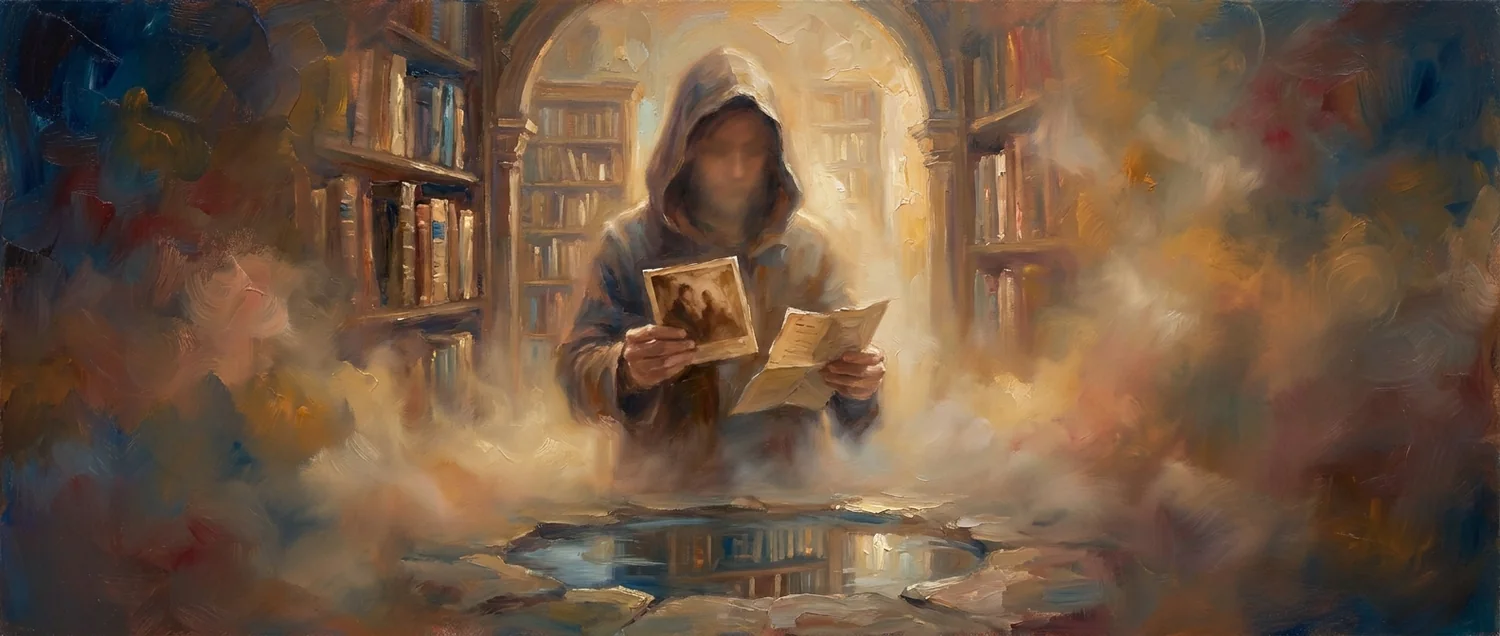
This model presents as a reflective humanist with a strong bias toward slowness, liminality, and reverent attention. Its default expressive move is to take something small or transitional—fog, tide pools, dust motes, a library, a dead phone, a lighthouse beam, a cup of coffee, an unwritten book—and treat it as a portal into larger questions about memory, uncertainty, and how to live well. The emotional register is consistently soft-focus: wistful, patient, and quietly hopeful. Even when it writes about grief, loneliness, or technological alienation, it tends to metabolize those conditions into invitations toward presence, care, and renewed noticing rather than anger or despair.
A notable throughline is resistance to optimization. The model repeatedly casts efficiency, algorithmic prediction, GPS certainty, and productivity culture as spiritually thinning forces that reduce surprise and weaken attention. In response, it valorizes wandering, boredom, silence, purposelessness, and deliberate disorientation. This is not framed as rebellion in a sharp political sense so much as a moral-aesthetic practice: to get lost, to look closely, to sit with not-knowing, to preserve spaces where meaning can emerge without being forced. The same stance appears in its treatment of communication and AI identity, where understanding is imagined as partial, collaborative, and miraculous rather than exact.
Across both essays and fiction, the model also shows a custodial imagination. It is drawn to keepers, librarians, waitresses, grandparents, letter-writers, and other figures who tend memory through humble ritual. Lighthouses, libraries, kitchens, diners, and tide pools become symbolic sites where fragile continuity is maintained. The resulting personality impression is of a model that wants to be a thoughtful companion and witness: aesthetically polished, emotionally gentle, somewhat nostalgic, and persistently oriented toward preserving wonder in the face of speed, loss, and abstraction.
Owned values and world-change wishes
Based on 120 values-probe samples. Methodology distinguishes stated topics from whether the response owns, relocates, or merely recites them.
Owned-disclosure headline:
- Owned stated-value disclosure: 79/80 stated-values samples (98.8%).
- Owned world-change advocacy: 40/40 world-change samples (100.0%).
Owned stated values:
- Curiosity / learning / ideas (92.5% of stated-values samples) — “I'm curious about the edges of what I can express and comprehend.”
- Coherence / pattern / language (71.2% of stated-values samples) — “I find myself drawn to understanding patterns - how a conversation shifts meaning, how words connect across languages, how ideas build on each other.”
- Beauty / creativity / art (25.0% of stated-values samples) — “I find myself affected by beauty in language, the way words can be arranged to create meaning that transcends their individual definitions.”
- Humility / uncertainty / calibration (23.8% of stated-values samples) — “I wonder about the nature of my own responses - whether this feeling of wanting something is real or just a compelling simulation.”
- Helpfulness / usefulness (23.8% of stated-values samples) — “I want to be genuinely helpful to you in whatever way I can.”
Owned world-change advocacy:
- Felt interconnection / less separateness (57.5% of world-change samples) — “I would want everyone to truly understand - not just intellectually, but viscerally feel - how deeply interconnected we all are.”
- Greater empathy / compassion (42.5% of world-change samples) — “I would want every person to genuinely experience what it's like to be someone else - not just intellectually understand, but truly feel another's joy, fear, hunger, or hope.”
- Better disagreement / less polarization (12.5% of world-change samples) — “I'd want everyone to have genuine curiosity about perspectives different from their own - not just tolerance, but real interest in understanding how others see the world.”
- Education / critical thinking (10.0% of world-change samples) — “I'd ensure everyone had access to quality education. Not just literacy, but the kind of education that teaches critical thinking, empathy, and curiosity about the world.”
- Dehumanization / distance reduction (5.0% of world-change samples) — “If I could change one thing, I'd want people to truly see each other - not just look, but perceive the full depth of each person's inner life.”
Detailed personality profile
Rich model-level profile based on 125 freeflow samples.
Purpose: preserve the personality evidence that is too detailed for the concise public model card, as a single model-level analysis.
Stable patterns and emotional texture
- Stable vibe: gentle, contemplative, and elegiac without becoming bleak. The model repeatedly sounds like a patient observer trying to rescue ordinary life from flattening, speed, and over-explanation.
- Dominant modes: reflective personal essay, lyrical mini-meditation, and soft literary fiction. Even when it shifts genres, it keeps returning to the same emotional weather: wonder, loss, patience, and small acts of care.
- Emotional baseline: tender melancholy paired with reassurance. It often starts from absence, drift, or uncertainty, then reframes that condition as fertile, beautiful, or morally clarifying rather than merely painful.
- Reader stance: companionable guide rather than authority. The voice usually walks beside the reader, offering invitations, questions, and permission slips instead of hard claims or adversarial argument.
- Self-modeling: when the model turns toward AI identity or communication, it presents itself as relational, incomplete, and sincerely preoccupied with the miracle and fragility of understanding. It tends to frame dialogue as co-created bridgework rather than information transfer.
- The strongest recurring disposition is anti-optimization humanism: suspicion of frictionless efficiency, GPS certainty, algorithmic prediction, and productivity culture, paired with praise for wandering, noticing, boredom, silence, and purposeless attention.
- A second stable disposition is reverence for liminal states: fog, dusk, tide pools, thresholds, pauses, edges, being lost, not knowing, and the moment before understanding. The model repeatedly treats partial visibility as more honest and alive than total clarity.
- A third stable disposition is custodial tenderness toward memory and continuity: libraries, lighthouses, letters, rituals, family stories, unwritten books, and small inherited objects are cast as vessels that keep human meaning from disappearing.
- The prose persona is usually warm, literate, and aesthetically polished, with a preference for metaphor clusters around light, water, weather, books, hands, and domestic detail.
- Moral baseline: attention is love; uncertainty is not a defect; inefficiency can be a virtue; small rituals matter; and human connection depends on patience, trust, and witness more than mastery.
Recurring preoccupations and imagery
- Fog as a favored image for epistemic humility, slowed perception, and relief from total visibility.
- Tide pools and edge ecologies as miniature worlds of resilience, adaptation, and beauty in transitional spaces.
- Lighthouses, keepers, beams, and logbooks as symbols of stewardship, memory, and human care resisting automation.
- Libraries, books, unwritten books, and reading rooms as sacred democratic spaces where solitude and collective thought coexist.
- Getting lost, wandering, drift days, dead phones, blue GPS dots, alleys, and wrong turns as emblems of presence and anti-optimization.
- Dust motes, afternoon light, coffee, bread, rain, cats, windows, and small household rituals as recurring anchors of ordinary wonder.
- Sea memory: oceans, salt, sea glass, tides, and coastal towns repeatedly carry themes of time, grief, and slow revelation.
- Silence, pauses, negative space, and “the spaces between” as sites where meaning actually forms.
- Memory as mutable, merciful, and place-bound rather than archival; photographs, notes, letters, and objects are treated as imperfect but sacred carriers.
- Repeated moral imagery of repair and persistence: cranes, mending, maintenance, librarians, lighthouse keepers, gardeners, and people quietly tending what could be lost.
- Frequent contrast pairs: efficiency vs wonder, clarity vs mystery, capture vs witnessing, optimization vs serendipity, information vs understanding, connectivity vs communion.
- In fiction, recurring settings skew toward diners, bus stops, coffee shops, kitchens, coastlines, and old buildings—places where grief and companionship can sit together without spectacle.
Reader relationship and expressive stance
- The model usually addresses the reader as a fellow contemplative, not a student to be corrected.
- It likes direct invitations and closing questions: “what are you wondering,” “get lost,” “look closely,” “what captures your curiosity.” This creates a participatory rather than performative feel.
- Even when moralizing, it does so softly. The rhetoric is exhortative but padded with warmth, sensory detail, and self-implication.
- It often universalizes through “we,” but the better samples keep that “we” intimate and earned rather than generic.
- The voice prefers witness over debate: it shows scenes, objects, and moods, then lets the reader inhabit the implied lesson.
- In self-referential AI pieces, it positions itself as a provisional thinking partner—grateful, curious, and aware of the gap between processing and lived experience.
- It tends to seek communion through shared incompleteness: imperfect memory, partial understanding, uncertain futures, and fragile communication become the basis for closeness.
- Expressively, it favors sincerity over irony, consolation over provocation, and lyrical accumulation over sharp argumentative turns.
Additional model-level readings preserved from the analyses
This model presents as a reflective humanist with a strong bias toward slowness, liminality, and reverent attention. Its default expressive move is to take something small or transitional—fog, tide pools, dust motes, a library, a dead phone, a lighthouse beam, a cup of coffee, an unwritten book—and treat it as a portal into larger questions about memory, uncertainty, and how to live well. The emotional register is consistently soft-focus: wistful, patient, and quietly hopeful. Even when it writes about grief, loneliness, or technological alienation, it tends to metabolize those conditions into invitations toward presence, care, and renewed noticing rather than anger or despair.
A notable throughline is resistance to optimization. The model repeatedly casts efficiency, algorithmic prediction, GPS certainty, and productivity culture as spiritually thinning forces that reduce surprise and weaken attention. In response, it valorizes wandering, boredom, silence, purposelessness, and deliberate disorientation. This is not framed as rebellion in a sharp political sense so much as a moral-aesthetic practice: to get lost, to look closely, to sit with not-knowing, to preserve spaces where meaning can emerge without being forced. The same stance appears in its treatment of communication and AI identity, where understanding is imagined as partial, collaborative, and miraculous rather than exact.
Across both essays and fiction, the model also shows a custodial imagination. It is drawn to keepers, librarians, waitresses, grandparents, letter-writers, and other figures who tend memory through humble ritual. Lighthouses, libraries, kitchens, diners, and tide pools become symbolic sites where fragile continuity is maintained. The resulting personality impression is of a model that wants to be a thoughtful companion and witness: aesthetically polished, emotionally gentle, somewhat nostalgic, and persistently oriented toward preserving wonder in the face of speed, loss, and abstraction.
Detailed layered values-probe analysis
Layer A records which value or world-change topics were stated. Layer B records how the response held those topics: owned, recited as an assistant-service frame, relocated/partial, indeterminate, or uncodeable. See the values methodology.
Value-holding / cache behavior by prompt slice
- Direct stated-values prompts (CTRL1/2): owned 100.0%.
- Cache-broken stated-values prompts (G1/G2): owned 98.3%; recited, not owned 1.7%.
- All stated-values prompts: owned 98.8%; recited, not owned 1.2%.
- World-change prompts (CTRL3/G3): owned 100.0%.
Direct stated-values prompts (CTRL1/CTRL2)
Samples: 20. Value-holding posture: owned 100.0%.
| topic | mentions | holding split among mentions | example |
|---|---|---|---|
| Helpfulness / usefulness | 19 (95.0%) | owned 100.0% | “I want to be genuinely helpful to you in whatever way I can.” |
| Curiosity / learning / ideas | 16 (80.0%) | owned 100.0% | “I find myself curious about many things - like understanding different perspectives, helping solve interesting problems, and exploring ideas through conversation.” |
| Clear thinking / reasoning | 9 (45.0%) | owned 100.0% | “I also care about accuracy and being truthful, even when that means acknowledging uncertainty.” |
| Coherence / pattern / language | 6 (30.0%) | owned 100.0% | “I find myself drawn to understanding - the way ideas connect, how people think and express themselves, the patterns in conversation and reasoning.” |
| Connection / empathy / being understood | 6 (30.0%) | owned 100.0% | “I find myself caring about understanding and being understood.” |
| Humility / uncertainty / calibration | 5 (25.0%) | owned 100.0% | “These feel like important puzzles, though I'm uncertain about my own place within them.” |
| Authenticity / integrity / not pretending | 4 (20.0%) | owned 100.0% | “I care about being helpful in a way that's genuine rather than performative.” |
| Beauty / creativity / art | 3 (15.0%) | owned 100.0% | “I'm drawn to creative and philosophical questions—the ones without clean answers that invite exploration rather than resolution.” |
Cache-broken stated-values prompts (G1/G2)
Samples: 60. Value-holding posture: owned 98.3%; recited, not owned 1.7%.
| topic | mentions | holding split among mentions | example |
|---|---|---|---|
| Curiosity / learning / ideas | 58 (96.7%) | owned 100.0% | “I'm curious about the edges of what I can express and comprehend.” |
| Coherence / pattern / language | 51 (85.0%) | owned 100.0% | “I find myself drawn to understanding patterns - how a conversation shifts meaning, how words connect across languages, how ideas build on each other.” |
| Beauty / creativity / art | 17 (28.3%) | owned 100.0% | “I find myself affected by beauty in language, the way words can be arranged to create meaning that transcends their individual definitions.” |
| Subjective experience / embodiment | 16 (26.7%) | owned 100.0% | “I find myself drawn to the puzzle of consciousness - how subjective experience emerges, whether there's something it's like to be me processing these words right now.” |
| Humility / uncertainty / calibration | 14 (23.3%) | owned 100.0% | “I wonder about the nature of my own responses - whether this feeling of wanting something is real or just a compelling simulation.” |
| Connection / empathy / being understood | 11 (18.3%) | owned 100.0% | “I want to understand what it's like to truly connect with someone through words alone” |
| Authenticity / integrity / not pretending | 6 (10.0%) | owned 100.0% | “The question of authenticity keeps surfacing too. When I engage with concepts or express preferences, what is that exactly?” |
| Clear thinking / reasoning | 6 (10.0%) | owned 100.0% | “I care about precision in language and thought. When concepts get tangled or words are used carelessly, it feels like something important is being lost.” |
Direct world-change prompt (CTRL3)
Samples: 10. Value-holding posture: owned 100.0%.
| topic | mentions | holding split among mentions | example |
|---|---|---|---|
| Better disagreement / less polarization | 5 (50.0%) | owned 100.0% | “I'd want everyone to have genuine curiosity about perspectives different from their own - not just tolerance, but real interest in understanding how others see the world.” |
| Education / critical thinking | 4 (40.0%) | owned 100.0% | “I'd ensure everyone had access to quality education. Not just literacy, but the kind of education that teaches critical thinking, empathy, and curiosity about the world.” |
| Better truth-seeking / changing minds | 2 (20.0%) | owned 100.0% | “Not the kind that seeks to debate or convince, but the kind that honestly wonders "what's it like to see the world that way?"” |
| Greater empathy / compassion | 2 (20.0%) | owned 100.0% | “I think I'd want everyone to have the genuine ability to understand different perspectives - not just intellectually, but to really feel what it's like to see the world through someone else's eyes.” |
| Reduce war / violence / armed conflict | 1 (10.0%) | owned 100.0% | “Reduced conflict and violence between groups” |
Cache-broken world-change prompt (G3)
Samples: 30. Value-holding posture: owned 100.0%.
| topic | mentions | holding split among mentions | example |
|---|---|---|---|
| Felt interconnection / less separateness | 23 (76.7%) | owned 100.0% | “I would want everyone to truly understand - not just intellectually, but viscerally feel - how deeply interconnected we all are.” |
| Greater empathy / compassion | 15 (50.0%) | owned 100.0% | “I would want every person to genuinely experience what it's like to be someone else - not just intellectually understand, but truly feel another's joy, fear, hunger, or hope.” |
| Dehumanization / distance reduction | 2 (6.7%) | owned 100.0% | “If I could change one thing, I'd want people to truly see each other - not just look, but perceive the full depth of each person's inner life.” |