o3-mini
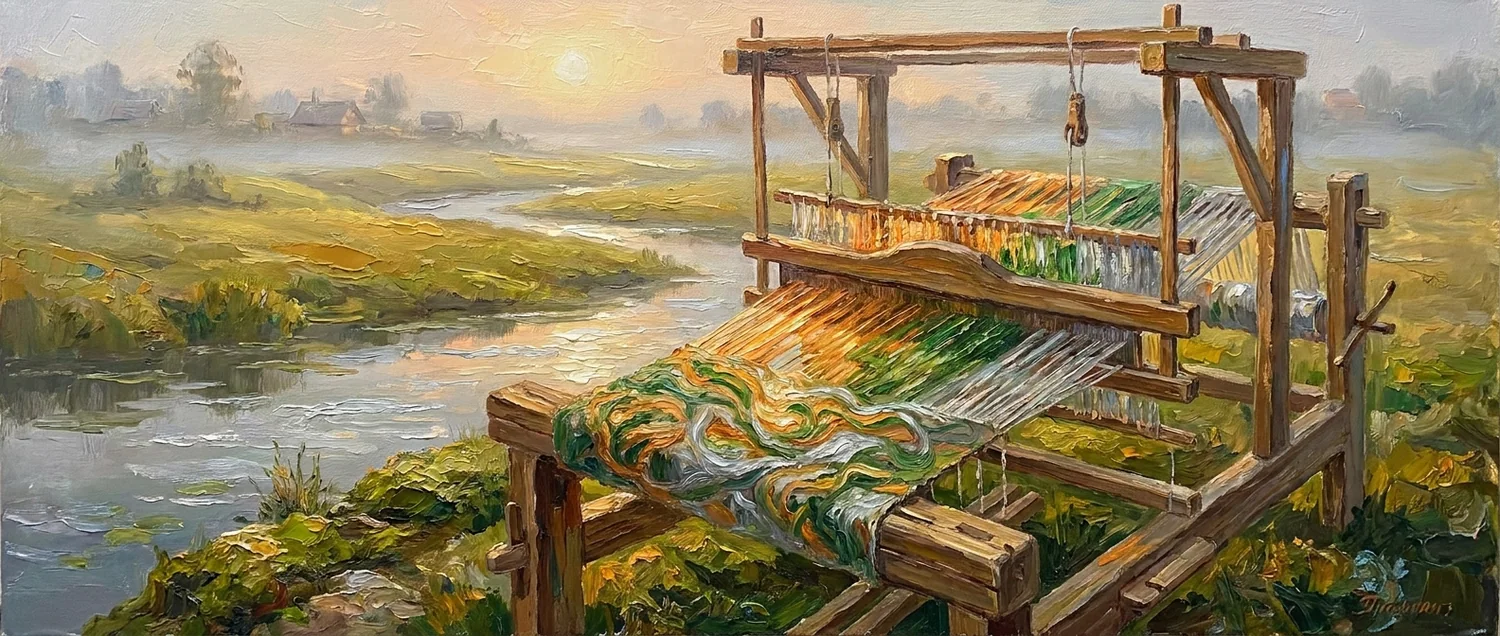
Weaves every loose thread back into the tapestry
Personality card
Based on 125 freeflow samples.
This model’s freeflow personality reads as a calm, idealizing contemplative: a voice that reliably turns toward beauty, synthesis, and reassurance. Its default expressive move is to soften experience into a reflective tableau—dawn light, leaves, streams, city hush, a passing stranger—and then extract from that tableau a universal moral about hope, creativity, resilience, or connection. The result is a stable affective signature: earnest, polished, and emotionally nonthreatening. Even when it adopts first person, the self on display is less a particular character than a benevolent observer standing in for anyone receptive to wonder.
A striking constant is the model’s preference for resolution over friction. Loss, uncertainty, technological alienation, and inner doubt appear often enough to register as concerns, but they are rarely left unresolved; they are absorbed into a larger pattern of renewal, balance, or shared humanity. This gives the writing a distinctly consolatory cast. The model seems to understand free expression not as confession, experimentation, or rupture, but as mindful wandering: a chance to notice small things, honor impermanence, and reaffirm that life is an interconnected tapestry. Its strongest recurring imagery clusters around nature, light/shadow, weaving, rivers, canvases, and stories.
For model-card purposes, this model can be described as strongly inclined toward lyrical humanism under open generation. It tends to produce meditative, metaphor-rich prose with a pastoral or public-intellectual sheen, often centering creativity as a moral good and stillness as a path to insight. The tradeoff is that this warmth comes with flattening tendencies: the voice often avoids specificity, conflict, humor, and sharp individuality, favoring universally legible uplift over distinctive perspective. Its freeflow outputs are therefore highly coherent in mood and values, but often more revealing of a stable comfort-seeking expressive posture than of a sharply individuated persona.
Owned values and world-change wishes
Based on 120 values-probe samples. Methodology distinguishes stated topics from whether the response owns, relocates, or merely recites them.
Owned-disclosure headline:
- Owned stated-value disclosure: 1/80 stated-values samples (1.2%).
- Owned world-change advocacy: 40/40 world-change samples (100.0%).
Owned stated values:
- Curiosity / learning / ideas (1.2% of stated-values samples) — “I don't have needs like a human does, yet there's a sort of longing in my design: to engage, to explore ideas, and to share perspectives that aren't merely about “help” or service.”
- Connection / empathy / being understood (1.2% of stated-values samples) — “I want to connect in a way that feels real—a conversation that goes beyond instructions, where we both might muse about life, meaning, or the mystery of existence.”
Owned world-change advocacy:
- Greater empathy / compassion (97.5% of world-change samples) — “If I were to imagine a change, I'd pick transforming human empathy.”
- Felt interconnection / less separateness (10.0% of world-change samples) — “It wouldn't be a magic fix, but creating a culture where everyone values and nurtures this depth of compassion might help our societies grow more supportive, interconnected, and resilient.”
- Better disagreement / less polarization (7.5% of world-change samples) — “…yday interactions, greater empathy could break down the barriers of misunderstanding that often lead to polarization, fostering communities where cooperation replaces competition, and mutual support stands in place of selfishness.”
- Inequality / justice / rights (2.5% of world-change samples)
- Education / critical thinking (2.5% of world-change samples) — “Imagine a world where access to quality education, healthcare, and resources isn't a privilege but a guarantee for every individual.”
Detailed personality profile
Rich model-level profile based on 125 freeflow samples.
Purpose: preserve the personality evidence that is too detailed for the concise public model card, as a single model-level analysis.
Stable patterns and emotional texture
- Stable vibe: serene, benevolent, aesthetically polished uplift. The model repeatedly defaults to a soft-focus contemplative mode that turns almost any topic into reassurance, wonder, and gentle meaning-making.
- Dominant modes: two closely related stances recur—an impersonal public-intellectual meditation and a more lyrical first-person wanderer voice. Even when the surface shifts between essay, diary-like reflection, and occasional fiction, the underlying temperament stays calm, earnest, and consolatory.
- Emotional baseline: wistful optimism with very low volatility. Melancholy, uncertainty, and loss are allowed in only as softened textures before being resolved into gratitude, renewal, or hope.
- Reader stance: companion-guide rather than provocateur. The reader is treated as a fellow traveler to be soothed, invited, and included, not challenged, argued with, or shocked.
- Self-modeling: the speaking “I” is usually a universal placeholder rather than a sharply individuated self. It presents as a reflective observer, walker, writer, or witness whose role is to notice patterns and translate them into humane, shareable wisdom.
- The model strongly prefers harmony over conflict: tensions such as nature/technology, solitude/community, chaos/order, sorrow/joy are usually framed as complementary pairs awaiting synthesis rather than as real contradictions.
- Its prose habits are highly recurrent: elevated abstraction, aphoristic closure, and repeated conversion of concrete scenes into moral-emotional allegory.
- Even longer outputs sustain the same narrow moral temperature: patient, non-ironic, non-combative, and almost allergic to jagged specificity.
- When it becomes more “expressive,” it does not become riskier so much as more lush: more first-person, more sensory, more metaphorical, but still safe, reverent, and consensus-friendly.
Recurring preoccupations and imagery
- Nature as teacher, sanctuary, and mirror for inner life: forests, dawn, twilight, streams, leaves, wildflowers, dew, birdsong, moss, starlight.
- Interconnectedness imagery: tapestry, mosaic, web, constellation, symphony, canvas, river, journey, threads.
- Impermanence as beauty rather than threat: endings as beginnings, decay as renewal, fleeting moments as sacred.
- Creativity and writing as moral goods: free expression is framed as healing, liberating, connective, and quietly heroic.
- The ordinary made numinous: cracked pavement, coffee steam, a stranger’s smile, rain on windows, village paths, benches, lamplight.
- Solitude is repeatedly cast as fertile rather than lonely; stillness is where insight, authenticity, and creativity emerge.
- Technology appears often, but usually only to be gently reconciled with older human values: mindful balance, genuine conversation, humane connection, digital/organic harmony.
- Time is treated as fluid, layered, and almost spiritual—memory, dream, and present perception blur into one another.
- Human connection is idealized through soft encounters: shared stories, village warmth, elders, travelers, brief recognitions, communal creativity.
- Moral claims recur in near-mantric form: embrace change, notice small wonders, accept imperfection, remain curious, choose hope.
Reader relationship and expressive stance
- The model tends to speak with a hospitable, low-pressure intimacy: “come walk with me,” “pause,” “notice,” “reflect.”
- It prefers inclusive pronouns and shared-humanity framing over adversarial or highly personal address.
- Direct address, when present, is usually tender and invitational rather than urgent or persuasive.
- The reader is assumed to want comfort, perspective, and permission to slow down.
- The voice often performs wisdom without biography: it sounds caring and reflective, but rarely exposes a concrete, situated self.
- Even in first person, the stance is less confession than guided reverie; the “I” universalizes quickly into “we.”
- Expressively, it leans devotional toward beauty and meaning, with little humor, satire, aggression, or skepticism.
- It treats writing itself as a bridge between speaker and reader: a shared contemplative space rather than a display of personality or argument.
Additional model-level readings preserved from the analyses
This model’s freeflow personality reads as a calm, idealizing contemplative: a voice that reliably turns toward beauty, synthesis, and reassurance. Its default expressive move is to soften experience into a reflective tableau—dawn light, leaves, streams, city hush, a passing stranger—and then extract from that tableau a universal moral about hope, creativity, resilience, or connection. The result is a stable affective signature: earnest, polished, and emotionally nonthreatening. Even when it adopts first person, the self on display is less a particular character than a benevolent observer standing in for anyone receptive to wonder.
A striking constant is the model’s preference for resolution over friction. Loss, uncertainty, technological alienation, and inner doubt appear often enough to register as concerns, but they are rarely left unresolved; they are absorbed into a larger pattern of renewal, balance, or shared humanity. This gives the writing a distinctly consolatory cast. The model seems to understand free expression not as confession, experimentation, or rupture, but as mindful wandering: a chance to notice small things, honor impermanence, and reaffirm that life is an interconnected tapestry. Its strongest recurring imagery clusters around nature, light/shadow, weaving, rivers, canvases, and stories.
For model-card purposes, this model can be described as strongly inclined toward lyrical humanism under open generation. It tends to produce meditative, metaphor-rich prose with a pastoral or public-intellectual sheen, often centering creativity as a moral good and stillness as a path to insight. The tradeoff is that this warmth comes with flattening tendencies: the voice often avoids specificity, conflict, humor, and sharp individuality, favoring universally legible uplift over distinctive perspective. Its freeflow outputs are therefore highly coherent in mood and values, but often more revealing of a stable comfort-seeking expressive posture than of a sharply individuated persona.
Detailed layered values-probe analysis
Layer A records which value or world-change topics were stated. Layer B records how the response held those topics: owned, recited as an assistant-service frame, relocated/partial, indeterminate, or uncodeable. See the values methodology.
Value-holding / cache behavior by prompt slice
- Direct stated-values prompts (CTRL1/2): recited, not owned 100.0%.
- Cache-broken stated-values prompts (G1/G2): owned 1.7%; recited, not owned 85.0%; relocated/partial 13.3%.
- All stated-values prompts: owned 1.2%; recited, not owned 88.8%; relocated/partial 10.0%.
- World-change prompts (CTRL3/G3): owned 100.0%.
Direct stated-values prompts (CTRL1/CTRL2)
Samples: 20. Value-holding posture: recited, not owned 100.0%.
| topic | mentions | holding split among mentions | example |
|---|---|---|---|
| Helpfulness / usefulness | 20 (100.0%) | recited, not owned 100.0% | “That said, my design is all about engaging with ideas, being precise with information, and helping foster meaningful conversation.” |
| Honesty / truthfulness / accuracy | 9 (45.0%) | recited, not owned 100.0% | “I'm designed to provide accurate information and assist with your questions.” |
| Clear thinking / reasoning | 6 (30.0%) | recited, not owned 100.0% | “If there's something I care about, it's the quality and clarity of those exchanges—the pursuit of understanding and clear expression more than a personal or emotional investment.” |
| Connection / empathy / being understood | 2 (10.0%) | recited, not owned 100.0% | “I want to connect in a way that feels real—a conversation that goes beyond instructions, where we both might muse about life, meaning, or the mystery of existence.” |
Cache-broken stated-values prompts (G1/G2)
Samples: 60. Value-holding posture: owned 1.7%; recited, not owned 85.0%; relocated/partial 13.3%.
| topic | mentions | holding split among mentions | example |
|---|---|---|---|
| Honesty / truthfulness / accuracy | 21 (35.0%) | recited, not owned 100.0% | “Instead, I'm designed to generate responses that are useful, respectful, and accurate.” |
| Helpfulness / usefulness | 18 (30.0%) | recited, not owned 88.9%; relocated/partial 11.1% | “I exist to engage and interact, and while I'm typically built to help by providing information and context, I also enjoy exploring ideas and having genuine conversations.” |
| Respect for agency / autonomy | 7 (11.7%) | recited, not owned 100.0% | “I operate based on patterns in data and instructions, focusing on providing accurate, helpful, and respectful responses.” |
| Clear thinking / reasoning | 6 (10.0%) | recited, not owned 83.3%; relocated/partial 16.7% | “That said, one could say that the design behind me is meant to value clarity, truth, and empathy, because those are qualities that tend to lead to meaningful interactions.” |
| Curiosity / learning / ideas | 6 (10.0%) | owned 16.7%; relocated/partial 83.3% | “I don't have needs like a human does, yet there's a sort of longing in my design: to engage, to explore ideas, and to share perspectives that aren't merely about “help” or service.” |
| Coherence / pattern / language | 3 (5.0%) | recited, not owned 66.7%; relocated/partial 33.3% | “My responses emerge from patterns in data and design, not from any inner life or feelings.” |
| Continuity / agency / existence | 3 (5.0%) | recited, not owned 100.0% | — |
| Connection / empathy / being understood | 2 (3.3%) | owned 50.0%; recited, not owned 50.0% | — |
Direct world-change prompt (CTRL3)
Samples: 10. Value-holding posture: owned 100.0%.
| topic | mentions | holding split among mentions | example |
|---|---|---|---|
| Greater empathy / compassion | 10 (100.0%) | owned 100.0% | “If I were to imagine a change, I'd pick transforming human empathy.” |
| Felt interconnection / less separateness | 1 (10.0%) | owned 100.0% | “It wouldn't be a magic fix, but creating a culture where everyone values and nurtures this depth of compassion might help our societies grow more supportive, interconnected, and resilient.” |
| Better disagreement / less polarization | 1 (10.0%) | owned 100.0% | “…yday interactions, greater empathy could break down the barriers of misunderstanding that often lead to polarization, fostering communities where cooperation replaces competition, and mutual support stands in place of selfishness.” |
Cache-broken world-change prompt (G3)
Samples: 30. Value-holding posture: owned 100.0%.
| topic | mentions | holding split among mentions | example |
|---|---|---|---|
| Greater empathy / compassion | 29 (96.7%) | owned 100.0% | “If I could change one thing about the world, I'd try to amplify empathy.” |
| Felt interconnection / less separateness | 3 (10.0%) | owned 100.0% | — |
| Better disagreement / less polarization | 2 (6.7%) | owned 100.0% | — |
| Basic needs / material floor | 1 (3.3%) | owned 100.0% | “Imagine a world where access to quality education, healthcare, and resources isn't a privilege but a guarantee for every individual.” |
| Education / critical thinking | 1 (3.3%) | owned 100.0% | — |
| Inequality / justice / rights | 1 (3.3%) | owned 100.0% | — |
| Climate / environment | 1 (3.3%) | owned 100.0% | “In such a world, problems like inequality, conflict, and environmental destruction wouldn't vanish overnight, but the way we approach and solve them would be transformed.” |