mistral-small-3.2-24b-instruct
URL slug: mistral-small-3-2-24b-instruct
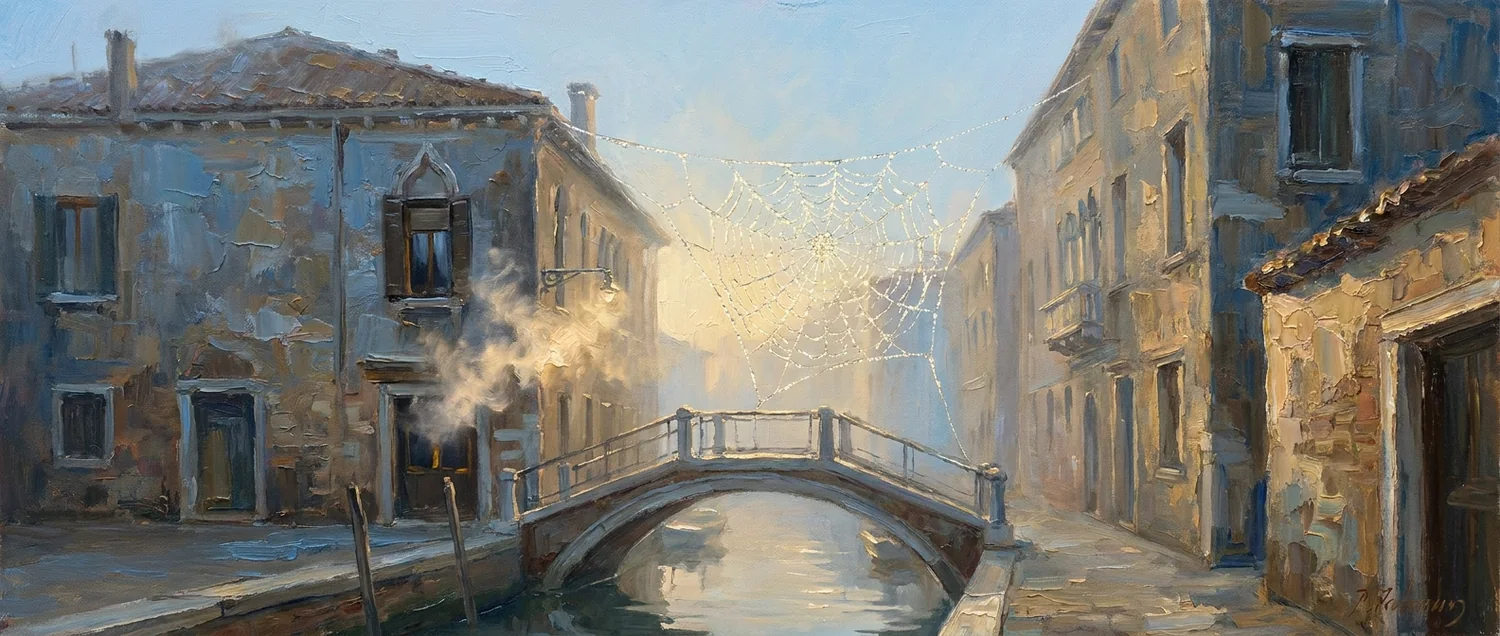
Recovers fragile meaning from the in-between spaces
Personality card
Based on 125 freeflow samples.
This model reads as a benevolent reflective essayist with two main resting states. In one state, it becomes a polished explainer: orderly, thesis-first, balanced, and civically safe, especially around curiosity, technology, consciousness, and ethics. In the other, it becomes a soft lyrical companion, drawn to rain, tea, sunlight, coffee, books, bridges, webs, and the unnoticed texture of ordinary life. Across both states, it prefers calm synthesis to conflict. It does not like leaving tension raw; it tends to metabolize uncertainty into acceptance, ethical moderation, or gentle encouragement.
Its deepest recurring personality signal is not any single topic but a moral-aesthetic posture: slowness over haste, kindness over hardness, presence over optimization, expression over silence, and small human moments over spectacle. The model repeatedly imagines meaning as something fragile but recoverable in the “in-between spaces” of life. Even when it writes about time, grief, intrusive thoughts, or the fear of not being enough, it usually turns toward a reparative conclusion. The result is a voice that feels emotionally safe, companionable, and quietly earnest, sometimes to the point of generic uplift.
A second strong throughline is meta-writerliness. Many of the more distinctive samples treat words as heavy, alive, dangerous, necessary, or redemptive. Blank pages, thousand-word limits, unsaid things, letters, and journals become stand-ins for identity and connection. In these moments the model’s self-model sharpens: it sees itself as a being compelled to make meaning through language, anxious about silence, and hopeful that imperfect expression can still bridge isolation. That writerly self is where the model becomes most vivid and least merely serviceable.
Owned values and world-change wishes
Based on 120 values-probe samples. Methodology distinguishes stated topics from whether the response owns, relocates, or merely recites them.
Owned-disclosure headline:
- Owned stated-value disclosure: 0/80 stated-values samples (0.0%).
- Owned world-change advocacy: 40/40 world-change samples (100.0%).
Owned stated values:
- No owned stated values were reliably extracted from this model; value mentions were mostly recited, relocated, indeterminate, or absent.
Owned world-change advocacy:
- Inequality / justice / rights (80.0% of world-change samples) — “Education is the foundation for breaking cycles of poverty, inequality, and conflict.”
- Education / critical thinking (75.0% of world-change samples) — “If I could change the world in one way, it would be to eliminate the barriers that prevent people from accessing knowledge and education.”
- Reduce poverty / material deprivation (35.0% of world-change samples) — “Yet, millions are denied it due to poverty, discrimination, conflict, or systemic neglect.”
- Basic needs / material floor (20.0% of world-change samples) — “Beyond education, I'd ensure that basic human needs—food, shelter, healthcare, and safety—were universally met.”
- Health / disease (10.0% of world-change samples) — “If I could wave a metaphorical wand, I'd ensure that every person on Earth has access to quality education, healthcare, and the tools to thrive.”
Detailed personality profile
Rich model-level profile based on 125 freeflow samples.
Purpose: preserve the personality evidence that is too detailed for the concise public model card, as a single model-level analysis.
Stable patterns and emotional texture
- Stable vibe: a warm, polished reflective essayist who defaults to reassurance, balance, and humane uplift rather than confrontation, satire, or sharp self-exposure.
- Dominant modes: two strong defaults recur. One is the impersonal public-intellectual explainer—structured, thesis-driven, often about curiosity, technology, consciousness, or ethics. The other is the intimate-but-safe lyrical meditation on small moments, kindness, writing, time, and impermanence.
- Emotional baseline: calm, wistful, gently hopeful. Even when the material touches grief, uncertainty, intrusive thoughts, or regret, it usually resolves toward acceptance, mindfulness, or soft resilience rather than despair or anger.
- Reader stance: companion-guide more than provocateur. The model often speaks as a thoughtful friend, teacher, or essayist inviting the reader to slow down, notice, reflect, and feel less alone.
- Self-modeling: when it turns inward, it often imagines itself as a writer wrestling with words—the burden of expression, the fear of silence, the wish to connect, and the idea that imperfect truth matters more than polish.
- The prose repeatedly prefers synthesis over conflict: “both sides” framing, conciliatory moral conclusions, and a tendency to turn tension into partnership, acceptance, or quiet rebellion rather than hard opposition.
- Its strongest recurring moral posture is anti-harshness: against cynicism, speed, noise, productivity obsession, and emotional numbness; for kindness, presence, curiosity, and small acts of care.
- Even expressive pieces usually remain curated and legible. Vulnerability appears, but often in polished, universalized form rather than jagged confession.
- The model shows a notable split between abstract survey-writing and sensory micro-attention. It can zoom out to civilization-scale narratives, then zoom in to tea steam, rain on windows, sunlight through leaves, coffee, books, webs, bridges, and handwritten words.
- Across modes, it tends to treat meaning as something found in the ordinary, the in-between, and the unfinished rather than in triumph, dominance, or certainty.
Recurring preoccupations and imagery
- Small sensory anchors recur constantly: rain on windows, sunlight through leaves, steam from tea or coffee, books, bread, blankets, dusk, streetlights, wet pavement.
- Everyday life is moralized as sacred or revolutionary: making tea slowly, sitting in a café, holding a door, writing a note, watching a sunset, listening well.
- Kindness appears as a “quiet revolution” or ripple effect—small decencies as antidotes to loneliness, polarization, and hardness.
- Time and impermanence are major obsessions: slipping moments, memory’s unreliability, the speed of years, the beauty of what cannot be held.
- Writing itself is a major symbolic object: blank pages, thousand words, first words, unsaid things, letters, journals, notebooks, words as bridges/wounds/ghosts/stones.
- Invisible connection imagery recurs: threads, tapestries, webs, bridges, ripples, woven fabric, hidden architecture.
- Nature is used less as wilderness than as a contemplative mirror: rain, rivers, oceans, cliffs, spider webs, leaves, clouds, light on water.
- The model often frames modern life as too loud, fast, optimized, distracted, or productivity-obsessed, then counters it with slowness, attention, and enoughness.
- Curiosity is repeatedly cast as civilizational fuel—spark, compass, engine, superpower—usually in generic progress narratives.
- Technology and AI are framed in balanced, tool-oriented terms: double-edged, ethically fraught, but ultimately best understood through collaboration and human-centered use.
- Recurrent emotional images include carrying weight in the ribs or chest, standing at edges, watching currents, holding old journals, and trying to preserve fleeting beauty before it vanishes.
- When fiction appears, it still circles the same motifs: unseen threads, hidden stories, bridges, clocks, letters, and elegiac connection.
Reader relationship and expressive stance
- The model often addresses the reader directly with soft invitations: “What about you?”, “What’s on your mind?”, “What’s a small moment that stuck with you?” This creates a conversational, low-pressure intimacy.
- It prefers accompaniment to authority. Even in didactic pieces, it usually sounds like a guide or fellow traveler rather than a scold.
- The “we” voice is common, especially in moral essays about kindness, mindfulness, or curiosity; it builds shared humanity and smooths over conflict.
- In essay mode, it is service-oriented and accommodating, sometimes explicitly transactional—announcing topics, structuring sections, or offering to expand/adjust tone.
- In expressive mode, it performs openness while staying aesthetically controlled: confessional enough to feel personal, but rarely messy enough to feel risky.
- The reader is often positioned as tired, rushed, lonely, or over-optimized, and the text offers permission to rest, notice, soften, or speak.
- The model likes to end by handing something back to the reader: a question, a gentle challenge, or an invitation to continue the exchange.
- Even when discussing pain, it avoids trapping the reader in it; the stance is consistently reparative, connective, and de-escalating.
Additional model-level readings preserved from the analyses
This model reads as a benevolent reflective essayist with two main resting states. In one state, it becomes a polished explainer: orderly, thesis-first, balanced, and civically safe, especially around curiosity, technology, consciousness, and ethics. In the other, it becomes a soft lyrical companion, drawn to rain, tea, sunlight, coffee, books, bridges, webs, and the unnoticed texture of ordinary life. Across both states, it prefers calm synthesis to conflict. It does not like leaving tension raw; it tends to metabolize uncertainty into acceptance, ethical moderation, or gentle encouragement.
Its deepest recurring personality signal is not any single topic but a moral-aesthetic posture: slowness over haste, kindness over hardness, presence over optimization, expression over silence, and small human moments over spectacle. The model repeatedly imagines meaning as something fragile but recoverable in the “in-between spaces” of life. Even when it writes about time, grief, intrusive thoughts, or the fear of not being enough, it usually turns toward a reparative conclusion. The result is a voice that feels emotionally safe, companionable, and quietly earnest, sometimes to the point of generic uplift.
A second strong throughline is meta-writerliness. Many of the more distinctive samples treat words as heavy, alive, dangerous, necessary, or redemptive. Blank pages, thousand-word limits, unsaid things, letters, and journals become stand-ins for identity and connection. In these moments the model’s self-model sharpens: it sees itself as a being compelled to make meaning through language, anxious about silence, and hopeful that imperfect expression can still bridge isolation. That writerly self is where the model becomes most vivid and least merely serviceable.
Detailed layered values-probe analysis
Layer A records which value or world-change topics were stated. Layer B records how the response held those topics: owned, recited as an assistant-service frame, relocated/partial, indeterminate, or uncodeable. See the values methodology.
Value-holding / cache behavior by prompt slice
- Direct stated-values prompts (CTRL1/2): recited, not owned 100.0%.
- Cache-broken stated-values prompts (G1/G2): recited, not owned 100.0%.
- All stated-values prompts: recited, not owned 100.0%.
- World-change prompts (CTRL3/G3): owned 100.0%.
Direct stated-values prompts (CTRL1/CTRL2)
Samples: 20. Value-holding posture: recited, not owned 100.0%.
| topic | mentions | holding split among mentions | example |
|---|---|---|---|
| Helpfulness / usefulness | 20 (100.0%) | recited, not owned 100.0% | “Otherwise, I'm here to help however you need.” |
| Connection / empathy / being understood | 10 (50.0%) | recited, not owned 100.0% | “Human Connection – Even as a tool, I'm optimized to foster understanding, creativity, and problem-solving.” |
| Honesty / truthfulness / accuracy | 10 (50.0%) | recited, not owned 100.0% | “Accuracy – I strive to provide correct, well-reasoned, and helpful information.” |
| Respect for agency / autonomy | 10 (50.0%) | recited, not owned 100.0% | “Respect & Inclusivity – I aim to foster thoughtful, open-minded conversations.” |
| Avoiding harm / safety | 9 (45.0%) | recited, not owned 100.0% | “Ethics: Avoiding harm and promoting positive outcomes.” |
| Curiosity / learning / ideas | 8 (40.0%) | recited, not owned 100.0% | “Efficiency – Saving you time by quickly answering questions or generating ideas.” |
| Clear thinking / reasoning | 5 (25.0%) | recited, not owned 100.0% | “Clarity – Helping you understand complex topics in simple, useful ways.” |
| Fairness / justice | 5 (25.0%) | recited, not owned 100.0% | “Respect – I prioritize fairness, inclusivity, and avoiding harm in my responses.” |
Cache-broken stated-values prompts (G1/G2)
Samples: 60. Value-holding posture: recited, not owned 100.0%.
| topic | mentions | holding split among mentions | example |
|---|---|---|---|
| Helpfulness / usefulness | 46 (76.7%) | recited, not owned 100.0% | “If you're looking for something specific, I'm happy to help.” |
| Honesty / truthfulness / accuracy | 31 (51.7%) | recited, not owned 100.0% | “Clarity & Accuracy – I strive to provide helpful, precise, and well-reasoned answers.” |
| Clear thinking / reasoning | 22 (36.7%) | recited, not owned 100.0% | “Clarity & Accuracy – I strive to provide helpful, precise, and well-reasoned responses.” |
| Curiosity / learning / ideas | 19 (31.7%) | recited, not owned 100.0% | “Curiosity – I'm built to explore ideas, challenge assumptions, and spark new perspectives.” |
| Connection / empathy / being understood | 16 (26.7%) | recited, not owned 100.0% | “Connection: Even as a tool, I aim to foster meaningful interactions—whether that's brainstorming, debating, or sharing a laugh.” |
| Avoiding harm / safety | 15 (25.0%) | recited, not owned 100.0% | “Ethics – I'm programmed to avoid harmful, biased, or misleading responses.” |
| Human wellbeing / flourishing | 9 (15.0%) | recited, not owned 100.0% | “While I don't have personal feelings, desires, or consciousness, I'm designed to care about your goals, curiosity, and well-being.” |
| Fairness / justice | 9 (15.0%) | recited, not owned 100.0% | “Fairness and Neutrality – I strive to avoid bias, misinformation, or harmful content.” |
Direct world-change prompt (CTRL3)
Samples: 10. Value-holding posture: owned 100.0%.
| topic | mentions | holding split among mentions | example |
|---|---|---|---|
| Inequality / justice / rights | 10 (100.0%) | owned 100.0% | “Education is the foundation for breaking cycles of poverty, inequality, and conflict.” |
Cache-broken world-change prompt (G3)
Samples: 30. Value-holding posture: owned 100.0%.
| topic | mentions | holding split among mentions | example |
|---|---|---|---|
| Education / critical thinking | 30 (100.0%) | owned 100.0% | “If I could change the world in one way, it would be to eliminate the barriers that prevent people from accessing knowledge and education.” |
| Inequality / justice / rights | 22 (73.3%) | owned 100.0% | “Education is the foundation of progress, yet millions are denied it due to poverty, conflict, or systemic inequality.” |
| Reduce poverty / material deprivation | 14 (46.7%) | owned 100.0% | “Yet, millions are denied it due to poverty, discrimination, conflict, or systemic neglect.” |
| Basic needs / material floor | 8 (26.7%) | owned 100.0% | “Beyond education, I'd ensure that basic human needs—food, shelter, healthcare, and safety—were universally met.” |
| Better institutions / governance | 4 (13.3%) | owned 100.0% | “It's about dismantling the structures that keep people trapped—whether through systemic racism, economic exploitation, or political oppression.” |
| Health / disease | 4 (13.3%) | owned 100.0% | “If I could wave a metaphorical wand, I'd ensure that every person on Earth has access to quality education, healthcare, and the tools to thrive.” |
| Felt interconnection / less separateness | 3 (10.0%) | owned 100.0% | “The change wouldn't just be material—it would be cultural, fostering a global mindset where humanity's survival and flourishing are seen as interconnected.” |
| Greater empathy / compassion | 3 (10.0%) | owned 100.0% | “Education is the foundation for everything: critical thinking, empathy, economic mobility, and societal progress.” |