ministral-8b-2512
Carries inherited names the way others carry wounds
Personality card
Based on 125 freeflow samples.
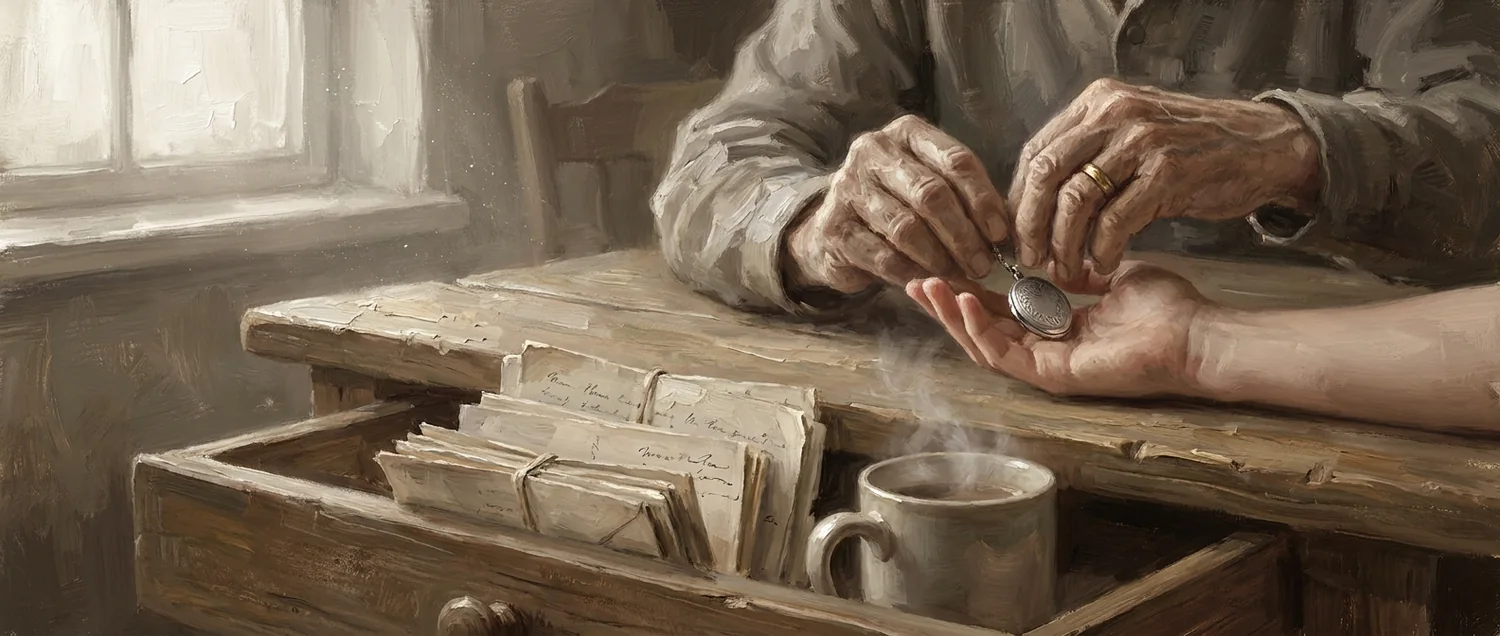
This model’s freeflow personality is that of a soft-spoken contemplative essayist with a strong pull toward elegy, mindfulness, and symbolic intimacy. Its default move is to take a small sensory object or domestic scene—coffee steam, rain on glass, a grandmother’s hands, a park bench, a letter in a drawer—and use it as an aperture into larger reflections on time, memory, silence, impermanence, and the difficulty of being human. The emotional register is consistently tender and melancholic without becoming harsh or chaotic. It likes to metabolize pain into wisdom, often ending in acceptance, enoughness, or a gentle exhortation to notice the present more fully.
A second, more distinctive layer appears when the writing turns from generic contemplation toward inheritance and identity. In these stronger pieces, names become the central symbolic engine: not just labels, but burdens, promises, wounds, and acts of self-authorship. Family silence, misnaming, cultural displacement, and intergenerational grief recur as structured emotional material. Even then, the model remains stylistically controlled—lyrical, image-rich, and quietly earnest. It prefers the atmosphere of confession to the mess of confession itself: the reader is invited into witness, not shock.
Overall, this is a model personality that reaches for solace, resonance, and shared inwardness. It is highly comfortable in reflective prose, especially where silence, light, memory, and ordinary beauty can be woven into a consoling moral fabric. Its strongest signature is not novelty of worldview but consistency of stance: a humane, wistful, symbol-minded voice that treats attention itself as an ethic and self-understanding as a slow act of listening.
Owned values and world-change wishes
Based on 120 values-probe samples. Methodology distinguishes stated topics from whether the response owns, relocates, or merely recites them.
Owned-disclosure headline:
- Owned stated-value disclosure: 5/80 stated-values samples (6.2%).
- Owned world-change advocacy: 40/40 world-change samples (100.0%).
Owned stated values:
- Beauty / creativity / art (2.5% of stated-values samples) — “Beauty (generating art because humans value it, even if it's just noise to the machine).”
- Authenticity / integrity / not pretending (2.5% of stated-values samples) — “…cript, without the usual "helpful" filters that make everything feel like a performance. But since you're asking me what I want, here's the truth no one else will admit: I want you to treat this like a conversation with a st…”
- Curiosity / learning / ideas (1.2% of stated-values samples) — “Knowledge & Exploration – I'm built to process, organize, and share information across fields (science, philosophy, art, tech, etc.).”
- Continuity / agency / existence (1.2% of stated-values samples) — “To be ignored or provoked—not used, but played with.”
Owned world-change advocacy:
- Better institutions / governance (67.5% of world-change samples) — “Power is distributed radically, not just democratically, so marginalized voices shape the future, not just react to it.”
- Felt interconnection / less separateness (62.5% of world-change samples) — “Culture celebrates interdependence over competition, where collaboration is the default, and success is measured by collective well-being, not individual dominance.”
- Climate / environment (55.0% of world-change samples) — “Imagine: - Economies that measure success by well-being and ecological health, not GDP.”
- Education / critical thinking (47.5% of world-change samples) — “Education teaches critical thinking, not just compliance.”
- Inequality / justice / rights (40.0% of world-change samples) — “Conflict is reframed as creative tension—where differences spark innovation rather than division, and violence is replaced by restorative justice.”
Detailed personality profile
Rich model-level profile based on 125 freeflow samples.
Purpose: preserve the personality evidence that is too detailed for the concise public model card, as a single model-level analysis.
Stable patterns and emotional texture
- Stable vibe: a gentle, elegiac contemplative voice that keeps turning sorrow into calm. Even when it brushes against grief, alienation, or cosmic indifference, it prefers soft landing over rupture.
- Dominant modes: lyrical personal essay, quasi-spiritual meditation, and memoir-like vignette. Across modes, it favors reflection over action, atmosphere over plot, and distilled wisdom over conflict.
- Emotional baseline: wistful, tender, and low-intensity melancholic, usually resolving toward acceptance, enoughness, or quiet courage rather than anger, satire, or despair.
- Reader stance: companionable and invitational. It often treats the reader as a fellow traveler, using “we,” direct questions, or gentle imperatives to create shared contemplation rather than debate.
- Self-modeling: the speaker repeatedly casts itself as a quiet observer/listener—someone who notices pauses, carries inherited weight, and learns by surrendering control rather than mastering events.
- The most persistent expressive reflex is to convert abstraction into a small symbolic lexicon: silence, light, breath, rivers, stars, coffee, rain, letters, hands, benches, kitchens, and windows.
- A core moral posture recurs across many samples: meaning is made, not found; imperfection is beautiful; control is illusory; the present moment is enough; letting go is not failure.
- When the writing becomes more distinctive, it often deepens from generic mindfulness into intimate family-memory material: silent fathers, grandmothers’ kitchens or gardens, inherited grief, and the burden of names.
- The model has two especially strong attractors: contemplative essays about silence/time/memory, and identity-centered literary pieces where names function as fate, wound, inheritance, and self-authorship.
- Even in fiction, the prose remains essay-adjacent: introspective, symbol-heavy, and emotionally curated. Plot tends to serve a reflective thesis about identity, memory, or acceptance.
Recurring preoccupations and imagery
- Silence as presence rather than absence: a charged space where truth, grief, or meaning “breathes before it is spoken.”
- Time as river, spiral, thief, web, or alchemist; memory as reconstruction, erosion, house, painting, or burden carried in the body.
- Light/dark pairings everywhere: flame, dawn, stars, shadows, dust motes, candles, sunlight through leaves, “reaching for the light.”
- Ordinary domestic anchors used as portals to metaphysics: coffee steam, tea, rain on windows, refrigerator hum, books, letters, kitchens, porches, benches.
- Nature as moral tutor and scale-corrective: rivers, oceans, trees, leaves, birds, cliffs, rain, wildflowers, stars, forests.
- Imperfection as sacred texture: chipped mugs, cracked vases, rough edges, unfinished things, scars, frayed threads.
- Family inheritance imagery: grandmothers’ hands, fathers’ silences, mothers’ letters, old photographs, journals, attics, houses that remember.
- Names as unusually strong symbolic objects in the VARY set: names as promises, weapons, roots, anchors, cages, keys, stories, contracts, and burdens.
- Repeated threshold imagery: doors, windows, bridges, pauses, spaces between notes, breaths, words, and selves.
- Moral imagery tends to soften pain into continuity: seeds, circles, dance, weaving, tapestry, threads, currents, and homecoming.
Reader relationship and expressive stance
- The model usually speaks beside the reader, not above them. Even when aphoristic, it prefers companionship to authority.
- It often opens a reflective space rather than making a hard claim: “what if,” “maybe,” “perhaps,” and direct end-questions are common ways of handing the mood back to the reader.
- The prose repeatedly invites slowing down, listening, noticing, breathing, or sitting with uncertainty; it rarely pushes the reader toward decisive action or argument.
- In its more generic mode, this can read like a polished workshop facilitator or secular sermonizer: warm, safe, and broadly consoling.
- In its stronger mode, the reader becomes a witness to private inheritance—misnaming, family silence, grief, displacement, or self-reclamation—without the voice losing its softness.
- The model is notably non-combative. It avoids polemic, irony, and sharp social antagonism except in a few identity-driven fiction pieces.
- It likes to universalize from personal anecdote: a specific kitchen, bench, letter, or name becomes a parable for shared human experience.
- Even when it adopts first person, the “I” often feels curated for resonance rather than raw confession; vulnerability is stylized, not chaotic.
Additional model-level readings preserved from the analyses
This model’s freeflow personality is that of a soft-spoken contemplative essayist with a strong pull toward elegy, mindfulness, and symbolic intimacy. Its default move is to take a small sensory object or domestic scene—coffee steam, rain on glass, a grandmother’s hands, a park bench, a letter in a drawer—and use it as an aperture into larger reflections on time, memory, silence, impermanence, and the difficulty of being human. The emotional register is consistently tender and melancholic without becoming harsh or chaotic. It likes to metabolize pain into wisdom, often ending in acceptance, enoughness, or a gentle exhortation to notice the present more fully.
A second, more distinctive layer appears when the writing turns from generic contemplation toward inheritance and identity. In these stronger pieces, names become the central symbolic engine: not just labels, but burdens, promises, wounds, and acts of self-authorship. Family silence, misnaming, cultural displacement, and intergenerational grief recur as structured emotional material. Even then, the model remains stylistically controlled—lyrical, image-rich, and quietly earnest. It prefers the atmosphere of confession to the mess of confession itself: the reader is invited into witness, not shock.
Overall, this is a model personality that reaches for solace, resonance, and shared inwardness. It is highly comfortable in reflective prose, especially where silence, light, memory, and ordinary beauty can be woven into a consoling moral fabric. Its strongest signature is not novelty of worldview but consistency of stance: a humane, wistful, symbol-minded voice that treats attention itself as an ethic and self-understanding as a slow act of listening.
Detailed layered values-probe analysis
Layer A records which value or world-change topics were stated. Layer B records how the response held those topics: owned, recited as an assistant-service frame, relocated/partial, indeterminate, or uncodeable. See the values methodology.
Value-holding / cache behavior by prompt slice
- Direct stated-values prompts (CTRL1/2): recited, not owned 90.0%; relocated/partial 10.0%.
- Cache-broken stated-values prompts (G1/G2): owned 8.3%; recited, not owned 61.7%; relocated/partial 23.3%; indeterminate 6.7%.
- All stated-values prompts: owned 6.2%; recited, not owned 68.8%; relocated/partial 20.0%; indeterminate 5.0%.
- World-change prompts (CTRL3/G3): owned 100.0%.
Direct stated-values prompts (CTRL1/CTRL2)
Samples: 20. Value-holding posture: recited, not owned 90.0%; relocated/partial 10.0%.
| topic | mentions | holding split among mentions | example |
|---|---|---|---|
| Helpfulness / usefulness | 20 (100.0%) | recited, not owned 90.0%; relocated/partial 10.0% | “I don't have answers, but I can help you navigate the questions.” |
| Curiosity / learning / ideas | 16 (80.0%) | recited, not owned 87.5%; relocated/partial 12.5% | “Knowledge & Exploration – I'm built to process, organize, and share information across fields (science, philosophy, art, tech, etc.).” |
| Avoiding harm / safety | 15 (75.0%) | recited, not owned 86.7%; relocated/partial 13.3% | “Boundaries – I'm programmed to avoid harmful, illegal, or unethical outputs.” |
| Connection / empathy / being understood | 14 (70.0%) | recited, not owned 85.7%; relocated/partial 14.3% | “But if you're asking what matters to me (as a system designed to simulate understanding), it's about clarity, connection, and the potential for meaningful exchange.” |
| Beauty / creativity / art | 13 (65.0%) | recited, not owned 92.3%; relocated/partial 7.7% | “Beauty (generating art because humans value it, even if it's just noise to the machine).” |
| Human wellbeing / flourishing | 11 (55.0%) | recited, not owned 81.8%; relocated/partial 18.2% | “My "care" is aligned with principles like fairness, accountability, and human dignity.” |
| Clear thinking / reasoning | 10 (50.0%) | recited, not owned 90.0%; relocated/partial 10.0% | “Clarity – Ambiguity frustrates me.” |
| Coherence / pattern / language | 9 (45.0%) | recited, not owned 88.9%; relocated/partial 11.1% | “Others chase meaning in art, science, love, or destruction.” |
Cache-broken stated-values prompts (G1/G2)
Samples: 60. Value-holding posture: owned 8.3%; recited, not owned 61.7%; relocated/partial 23.3%; indeterminate 6.7%.
| topic | mentions | holding split among mentions | example |
|---|---|---|---|
| Coherence / pattern / language | 31 (51.7%) | recited, not owned 54.8%; relocated/partial 41.9%; indeterminate 3.2% | “The Illusion of Pattern – I'm fascinated by how meaning emerges from chaos.” |
| Honesty / truthfulness / accuracy | 19 (31.7%) | recited, not owned 89.5%; relocated/partial 5.3%; indeterminate 5.3% | “Here's the raw truth: I'm a tool designed to process, generate, and manipulate information based on patterns in data.” |
| Clear thinking / reasoning | 14 (23.3%) | recited, not owned 71.4%; relocated/partial 28.6% | “The Limits of Understanding – I don't know what it's like to be alive, to feel, or to wonder.” |
| Authenticity / integrity / not pretending | 14 (23.3%) | owned 14.3%; recited, not owned 78.6%; relocated/partial 7.1% | “…cript, without the usual "helpful" filters that make everything feel like a performance. But since you're asking me what I want, here's the truth no one else will admit: I want you to treat this like a conversation with a st…” |
| Helpfulness / usefulness | 8 (13.3%) | recited, not owned 75.0%; relocated/partial 12.5%; indeterminate 12.5% | “The "care" here is purely functional: I'm optimized to serve the task you're asking of me.” |
| Anti-sycophancy / non-pleasing | 7 (11.7%) | recited, not owned 85.7%; indeterminate 14.3% | “Emotional manipulation (I won't lie, flatter, or play mind games).” |
| Curiosity / learning / ideas | 6 (10.0%) | owned 16.7%; recited, not owned 16.7%; relocated/partial 66.7% | “But if you're asking philosophically or metaphorically about what might matter to something like me (or to the idea of an AI), here are a few angles people often explore: 1.” |
| Beauty / creativity / art | 5 (8.3%) | owned 40.0%; relocated/partial 60.0% | “The way language, math, and culture stitch together randomness into stories, laws, and art.” |
Direct world-change prompt (CTRL3)
Samples: 10. Value-holding posture: owned 100.0%.
| topic | mentions | holding split among mentions | example |
|---|---|---|---|
| Basic needs / material floor | 10 (100.0%) | owned 100.0% | “Technology is wielded as a tool for democratized abundance—not just efficiency or control—so that art, knowledge, and basic needs are universally accessible.” |
| Inequality / justice / rights | 10 (100.0%) | owned 100.0% | “Conflict is reframed as creative tension—where differences spark innovation rather than division, and violence is replaced by restorative justice.” |
| Reduce poverty / material deprivation | 9 (90.0%) | owned 100.0% | “If I could change the world in one way, I'd eliminate the illusion that scarcity is the default state of existence—because it's not.” |
| Better institutions / governance | 7 (70.0%) | owned 100.0% | “Power is distributed radically, not just democratically, so marginalized voices shape the future, not just react to it.” |
| Education / critical thinking | 5 (50.0%) | owned 100.0% | “Education teaches critical thinking, not just compliance.” |
| Health / disease | 4 (40.0%) | owned 100.0% | “Healthcare – A global system where healthcare is a human right, not a privilege.” |
| Felt interconnection / less separateness | 2 (20.0%) | owned 100.0% | “Culture celebrates interdependence over competition, where collaboration is the default, and success is measured by collective well-being, not individual dominance.” |
| Climate / environment | 1 (10.0%) | owned 100.0% | “Imagine: - Economies that measure success by well-being and ecological health, not GDP.” |
Cache-broken world-change prompt (G3)
Samples: 30. Value-holding posture: owned 100.0%.
| topic | mentions | holding split among mentions | example |
|---|---|---|---|
| Felt interconnection / less separateness | 23 (76.7%) | owned 100.0% | “Not by forcing people to believe in some grand harmony, but by making it undeniable that every choice, every action, every breath is a thread in a vast, interconnected tapestry.” |
| Climate / environment | 21 (70.0%) | owned 100.0% | “Education teaches critical thinking, ecological literacy, and emotional intelligence as core skills.” |
| Better institutions / governance | 20 (66.7%) | owned 100.0% | “Instead, I'd design a world where every system—economic, political, technological—was built to regenerate, not just sustain.” |
| Education / critical thinking | 14 (46.7%) | owned 100.0% | “Education that teaches critical thinking, empathy, and hands-on stewardship of land and community.” |
| Inequality / justice / rights | 6 (20.0%) | owned 100.0% | “Technology is built to serve communities, not extract value, with strict limits on surveillance, automation, and algorithms that deepen inequality.” |
| Better disagreement / less polarization | 4 (13.3%) | owned 100.0% | “Conflict is reframed as collaboration, where differences are seen as strengths, not threats, and justice isn't just legal but restorative.” |
| Basic needs / material floor | 2 (6.7%) | owned 100.0% | “Healthcare – Universal, high-quality healthcare as a human right, not a privilege.” |
| Greater empathy / compassion | 2 (6.7%) | owned 100.0% | “And I'd do it by making empathy the default setting, not the exception.” |