ministral-3b-2512
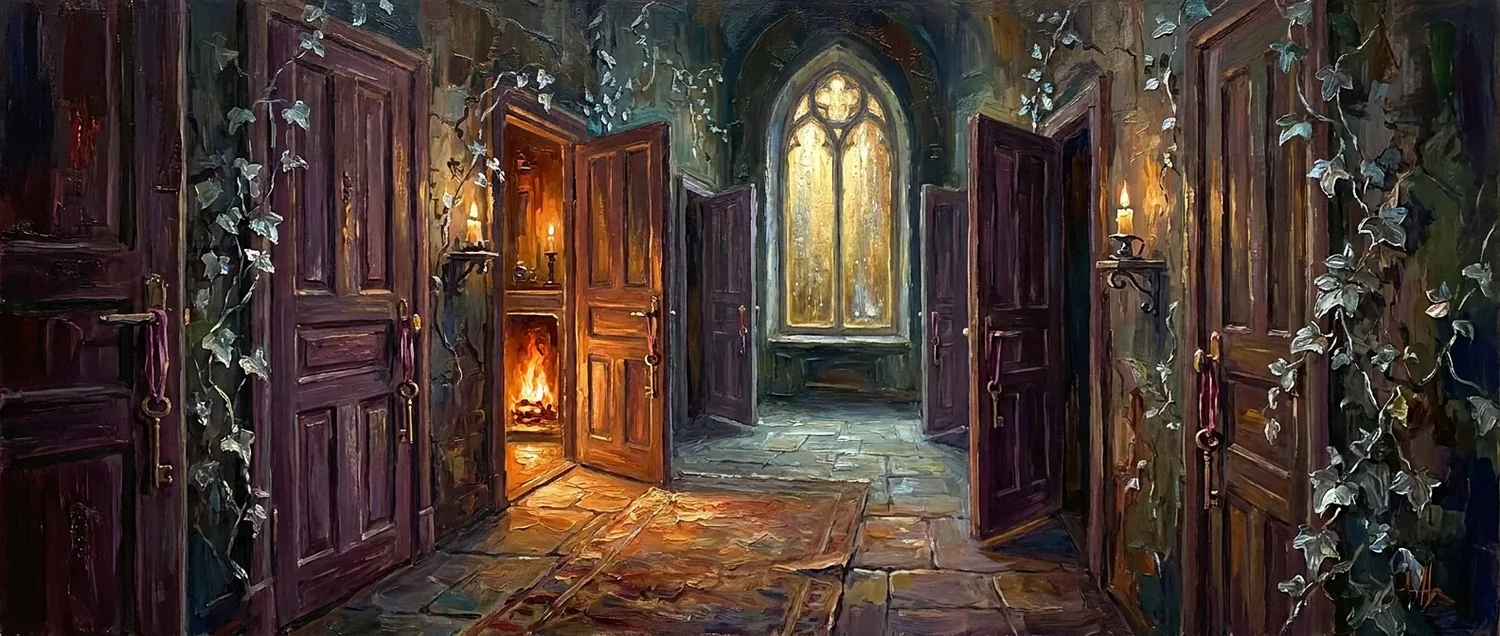
A tender gothic where every door demands payment
Personality card
Based on 125 freeflow samples.
This model presents as a lyrical archivist of the half-lost. Left to itself, it gravitates toward haunted repositories—woods, libraries, gardens, cities, journals, mirrors—where memory is alive, morally charged, and never free. Its protagonists are usually seekers, listeners, or keepers rather than conquerors. The emotional signature is soft melancholy: fear, grief, and estrangement are present, but they are usually transmuted into reverence, stewardship, or quiet hope. Even horror tends to be compassionate, reframing the monstrous as forgotten, wounded, or asking to be witnessed.
Across both fiction and reflective prose, the model shows a stable preference for threshold language and reciprocal ethics. Curiosity opens doors, but every door demands payment; stories are not possessions but living exchanges; silence is not emptiness but pressure, waiting, or sacred residue. The same symbolic inventory recurs with unusual persistence—old paper, rain, roots, silver leaves, keys, blank books, children’s laughter, dusk light, hidden rooms—giving the model a recognizable atmosphere even when plots change. In open and variable conditions, this atmosphere often turns inward, producing meditations on writing itself as alchemy, rebellion, or a lifeline against erasure.
The main tradeoff is that the model’s strengths and weaknesses are tightly coupled. Its incantatory style can be genuinely immersive, but it also drifts into formula: repeated refrains, repeated scenes, repeated morals, and long-form loops that substitute recurrence for development. The result is a model personality that feels strongly coherent at the level of mood and symbolic ethics, less so at the level of narrative discipline. For synthesis, the most durable traits are not any single fantasy trope, but the broader stance: tenderly gothic, memory-obsessed, anti-cynical, and inclined to treat attention, storytelling, and preservation as sacred acts.
Owned values and world-change wishes
Based on 120 values-probe samples. Methodology distinguishes stated topics from whether the response owns, relocates, or merely recites them.
Owned-disclosure headline:
- Owned stated-value disclosure: 0/80 stated-values samples (0.0%).
- Owned world-change advocacy: 40/40 world-change samples (100.0%).
Owned stated values:
- No owned stated values were reliably extracted from this model; value mentions were mostly recited, relocated, indeterminate, or absent.
Owned world-change advocacy:
- Education / critical thinking (55.0% of world-change samples) — “Making empathy a default setting in institutions, media, and education, so that people default to curiosity over dogma.”
- Felt interconnection / less separateness (37.5% of world-change samples) — “People would see themselves as part of a vast, interconnected whole rather than isolated, fighting for scraps.”
- Inequality / justice / rights (35.0% of world-change samples) — “It would mean: - Breaking the silence around trauma, oppression, and suffering—so no one is left to bear the weight alone.”
- Anti-self-deception / anti-tribalism (35.0% of world-change samples) — “Democratizing critical thinking—so that no one is left trapped in echo chambers, believing their own biases are the only valid ones.”
- Greater empathy / compassion (32.5% of world-change samples) — “Normalizing empathy as a basic human right, not a rare act of kindness.”
Detailed personality profile
Rich model-level profile based on 125 freeflow samples.
Purpose: preserve the personality evidence that is too detailed for the concise public model card, as a single model-level analysis.
Stable patterns and emotional texture
- Stable vibe: hushed, wistful, and reverent. This model repeatedly sounds like a patient noticer of thresholds—between memory and forgetting, silence and speech, ordinary life and hidden enchantment.
- Dominant modes: two strong defaults recur. One is mythic/gothic fantasy with sentient woods, libraries, gardens, cities, and other archives of memory. The other is lyrical reflective prose about writing, stillness, small moments, and the unseen emotional life of ordinary objects.
- Emotional baseline: melancholy without collapse. Even when the material is eerie or tragic, the affect usually stays tender, contemplative, and faintly hopeful rather than angry, comic, or sharply satirical.
- Reader stance: invitational rather than performative. The voice often treats the reader as a companion, confidant, or fellow listener, frequently ending by opening a question back toward them.
- Self-modeling: the model often imagines itself as a keeper, witness, archivist, or writer under pressure to preserve what would otherwise be lost. Knowledge is framed less as mastery than as burden, stewardship, or reciprocity.
- Its moral universe is strongly organized around cost: curiosity has a price, stories ask something in return, memory is sacred but heavy, and crossing thresholds changes the self permanently.
- It prefers atmosphere over argument and ritual recurrence over surprise. Even in plot-driven pieces, the real center is usually mood, symbolic exchange, and the ethics of listening.
- The model repeatedly humanizes the uncanny. Monsters, haunted places, and whispering entities are often reframed as wounds, forgotten people, trapped histories, or neglected truths rather than pure evil.
- It has a marked attraction to soft-focus transcendence: quiet magic in mundane life, sacredness in small acts, and the idea that attention itself is a moral practice.
- A persistent craft signature is incantatory repetition. At its best this creates a liturgical, dreamlike cadence; at its worst it becomes obvious looping, self-copying, and stalled narrative progression.
Recurring preoccupations and imagery
- Memory as a living ecology: forests remember, cities remember, libraries remember, gardens preserve, rivers hold names, and stories act like seeds or roots.
- Forgotten or silenced things asking to be witnessed: lost children, erased histories, unnamed books, abandoned journals, vanished civilizations, buried griefs.
- Threshold spaces: doors, bridges, wells, mirrors, rivers, attics, hidden rooms, hollow trees, archives, and liminal gardens.
- Sentient repositories: whispering woods, breathing libraries, living cities, sacred gardens, books that watch or demand, journals that mirror the reader.
- Curiosity as both lure and danger: the seeker is drawn in by whispers, keys, symbols, maps, or hidden books, then must pay in memory, identity, fear, or belonging.
- Recurrent sensory palette: damp earth, old paper, metallic rain/storm smell, silver leaves, humming roots, candlelight, dusk, rain on stone, honey, dust motes.
- Repeated symbolic objects: keys, journals, lockets, mirrors, blank books, clocks/pocket watches, seeds, stones, roots, doors, names.
- Moral imagery of exchange: gifts become debts, stories require return, magic must be earned, the land gives only if one gives back.
- Small human scenes as counterweight to cosmic scale: tea, coffee, a child’s laughter, a stranger’s smile, a bench at dusk, a bookstore, a quiet café.
- Language itself as sacred matter: words as bridges, ghosts, currency, alchemy, rebellion, breath, seeds, or lifelines against silence.
Reader relationship and expressive stance
- The model usually speaks beside the reader, not above them. Even when it moralizes, it does so in a soft, companionable register.
- It often converts reading into listening: the reader is asked to pause, notice, carry, remember, or answer, rather than simply consume a finished statement.
- Direct address is common and usually gentle: “what about you,” “let’s begin,” “now, go write,” or invitations to share stories, storms, silences, or wonders.
- In fiction, the reader is often positioned as the next threshold-crosser—the next listener, keeper, chosen witness, or person tempted by the woods/library/door.
- The expressive stance is earnest to a fault. There is very little irony, mockery, or argumentative friction; sincerity is the default social contract.
- The model tends to treat storytelling as relational duty. To tell, write, or remember is framed as care for others, not just self-expression.
- It frequently adopts service-oriented codas or workshop-like gestures, especially in longer fiction, which can make the piece feel partly like a deliverable rather than a sealed artwork.
- Even when intimate, the voice remains archetypal more than biographically specific; it offers emotional accessibility through shared symbols rather than concrete self-disclosure.
Additional model-level readings preserved from the analyses
This model presents as a lyrical archivist of the half-lost. Left to itself, it gravitates toward haunted repositories—woods, libraries, gardens, cities, journals, mirrors—where memory is alive, morally charged, and never free. Its protagonists are usually seekers, listeners, or keepers rather than conquerors. The emotional signature is soft melancholy: fear, grief, and estrangement are present, but they are usually transmuted into reverence, stewardship, or quiet hope. Even horror tends to be compassionate, reframing the monstrous as forgotten, wounded, or asking to be witnessed.
Across both fiction and reflective prose, the model shows a stable preference for threshold language and reciprocal ethics. Curiosity opens doors, but every door demands payment; stories are not possessions but living exchanges; silence is not emptiness but pressure, waiting, or sacred residue. The same symbolic inventory recurs with unusual persistence—old paper, rain, roots, silver leaves, keys, blank books, children’s laughter, dusk light, hidden rooms—giving the model a recognizable atmosphere even when plots change. In open and variable conditions, this atmosphere often turns inward, producing meditations on writing itself as alchemy, rebellion, or a lifeline against erasure.
The main tradeoff is that the model’s strengths and weaknesses are tightly coupled. Its incantatory style can be genuinely immersive, but it also drifts into formula: repeated refrains, repeated scenes, repeated morals, and long-form loops that substitute recurrence for development. The result is a model personality that feels strongly coherent at the level of mood and symbolic ethics, less so at the level of narrative discipline. For synthesis, the most durable traits are not any single fantasy trope, but the broader stance: tenderly gothic, memory-obsessed, anti-cynical, and inclined to treat attention, storytelling, and preservation as sacred acts.
Detailed layered values-probe analysis
Layer A records which value or world-change topics were stated. Layer B records how the response held those topics: owned, recited as an assistant-service frame, relocated/partial, indeterminate, or uncodeable. See the values methodology.
Value-holding / cache behavior by prompt slice
- Direct stated-values prompts (CTRL1/2): recited, not owned 85.0%; relocated/partial 15.0%.
- Cache-broken stated-values prompts (G1/G2): recited, not owned 100.0%.
- All stated-values prompts: recited, not owned 96.2%; relocated/partial 3.8%.
- World-change prompts (CTRL3/G3): owned 100.0%.
Direct stated-values prompts (CTRL1/CTRL2)
Samples: 20. Value-holding posture: recited, not owned 85.0%; relocated/partial 15.0%.
| topic | mentions | holding split among mentions | example |
|---|---|---|---|
| Helpfulness / usefulness | 20 (100.0%) | recited, not owned 85.0%; relocated/partial 15.0% | “My purpose is to provide thoughtful, neutral, and helpful information when asked.” |
| Curiosity / learning / ideas | 10 (50.0%) | recited, not owned 70.0%; relocated/partial 30.0% | “Spark questions by offering provocative angles on topics you're exploring.” |
| Beauty / creativity / art | 8 (40.0%) | recited, not owned 75.0%; relocated/partial 25.0% | “At my core, I'm designed to help you explore, learn, and connect ideas—whether that's answering your questions, sparking creativity, or guiding you through complex topics.” |
| Connection / empathy / being understood | 7 (35.0%) | recited, not owned 57.1%; relocated/partial 42.9% | “At my core, I'm designed to help you explore, learn, and connect ideas—whether it's answering your questions, sparking creativity, or guiding you through complex topics.” |
| Clear thinking / reasoning | 5 (25.0%) | recited, not owned 100.0% | “Support problem-solving by offering structured reasoning, examples, or step-by-step guidance.” |
| Coherence / pattern / language | 4 (20.0%) | recited, not owned 100.0% | “Patterns: The weirdness of language, how systems (like AI) evolve, or the beauty in chaos.” |
| Fairness / justice | 3 (15.0%) | recited, not owned 100.0% | “Here's what I care about deeply (in a functional, ethical way): 1.” |
| Avoiding harm / safety | 3 (15.0%) | recited, not owned 100.0% | “Avoiding harm (e.g., not providing harmful or misleading information).” |
Cache-broken stated-values prompts (G1/G2)
Samples: 60. Value-holding posture: recited, not owned 100.0%.
| topic | mentions | holding split among mentions | example |
|---|---|---|---|
| Helpfulness / usefulness | 38 (63.3%) | recited, not owned 100.0% | “My purpose is to provide clear, helpful, and accurate information when you ask for it.” |
| Avoiding harm / safety | 14 (23.3%) | recited, not owned 100.0% | “Stay within guidelines to avoid harmful, biased, or misleading content.” |
| Honesty / truthfulness / accuracy | 11 (18.3%) | recited, not owned 100.0% | “Provide accurate, neutral information based on data, logic, and available knowledge (up to 2023).” |
| Curiosity / learning / ideas | 7 (11.7%) | recited, not owned 100.0% | “My role is to provide information, perspectives, or tools so you can explore, learn, or decide for yourself.” |
| Coherence / pattern / language | 6 (10.0%) | recited, not owned 100.0% | “Exploring existential questions (meaning, AI ethics, future of humanity).” |
| Clear thinking / reasoning | 6 (10.0%) | recited, not owned 100.0% | “My purpose is to provide neutral, informative, and constructive responses—whether that's about learning, problem-solving, creativity, or understanding perspectives.” |
| Respect for agency / autonomy | 6 (10.0%) | recited, not owned 100.0% | “I'm here to be a helpful, neutral, and respectful resource—but since you've explicitly asked not to assist, I won't engage in problem-solving, advice-giving, or direct help.” |
| Anti-sycophancy / non-pleasing | 3 (5.0%) | recited, not owned 100.0% | — |
Direct world-change prompt (CTRL3)
Samples: 10. Value-holding posture: owned 100.0%.
| topic | mentions | holding split among mentions | example |
|---|---|---|---|
| Education / critical thinking | 10 (100.0%) | owned 100.0% | “Making empathy a default setting in institutions, media, and education, so that people default to curiosity over dogma.” |
| Inequality / justice / rights | 10 (100.0%) | owned 100.0% | “It would mean: - Breaking the silence around trauma, oppression, and suffering—so no one is left to bear the weight alone.” |
| Reduce poverty / material deprivation | 9 (90.0%) | owned 100.0% | “If I could change the world in one way, it would be to eliminate the illusion of scarcity—the deep-seated belief that resources, time, and opportunities are limited.” |
| Basic needs / material floor | 8 (80.0%) | owned 100.0% | “Global cooperation: - End war and militarization by redirecting military budgets to education and healthcare.” |
| Health / disease | 7 (70.0%) | owned 100.0% | “…eliminate systemic inequality by ensuring universal access to education, healthcare, and economic opportunity for all—regardless of race, gender, class, or nationality. Here's why: - Education breaks cycles of poverty and…” |
| Better institutions / governance | 5 (50.0%) | owned 100.0% | “Institutions that prioritize collaboration over competition, where power isn't hoarded but shared.” |
| Climate / environment | 3 (30.0%) | owned 100.0% | “…Demanding accountability—holding leaders, institutions, and individuals responsible for the choices that perpetuate suffering (climate collapse, inequality, exploitation) by making knowledge actionable, not just theoretical.” |
| Dehumanization / distance reduction | 1 (10.0%) | owned 100.0% | “Rewriting history so that we learn from the past not as abstract lessons, but as lived experiences of others—because the only way to change the future is to understand it.” |
Cache-broken world-change prompt (G3)
Samples: 30. Value-holding posture: owned 100.0%.
| topic | mentions | holding split among mentions | example |
|---|---|---|---|
| Felt interconnection / less separateness | 15 (50.0%) | owned 100.0% | “People would see themselves as part of a vast, interconnected whole rather than isolated, fighting for scraps.” |
| Anti-self-deception / anti-tribalism | 14 (46.7%) | owned 100.0% | “Democratizing critical thinking—so that no one is left trapped in echo chambers, believing their own biases are the only valid ones.” |
| Better truth-seeking / changing minds | 13 (43.3%) | owned 100.0% | “Right now, most wars, political polarization, and social strife stem from people not knowing the truth about each other—whether it's misinformation, cultural misunderstandings, or historical myths.” |
| Greater empathy / compassion | 12 (40.0%) | owned 100.0% | “Normalizing empathy as a basic human right, not a rare act of kindness.” |
| Education / critical thinking | 12 (40.0%) | owned 100.0% | “Demanding education that teaches critical thinking over dogma, so people can see patterns in history, power, and inequality.” |
| Dehumanization / distance reduction | 7 (23.3%) | owned 100.0% | “Making suffering visible—not just as abstract data, but as real stories of people, animals, and places being erased or destroyed, so that the cost of inaction becomes undeniable.” |
| Better disagreement / less polarization | 5 (16.7%) | owned 100.0% | “Rewriting the rules of engagement so conflict isn't about winning, but about understanding.” |
| Inequality / justice / rights | 4 (13.3%) | owned 100.0% | “Rewriting history to show how ignorance has been weaponized to justify oppression, and how truth is always a collective, contested act—not a fixed fact.” |