MiniMax M3.1 Flash
URL slug: minimax-m3-1-flash
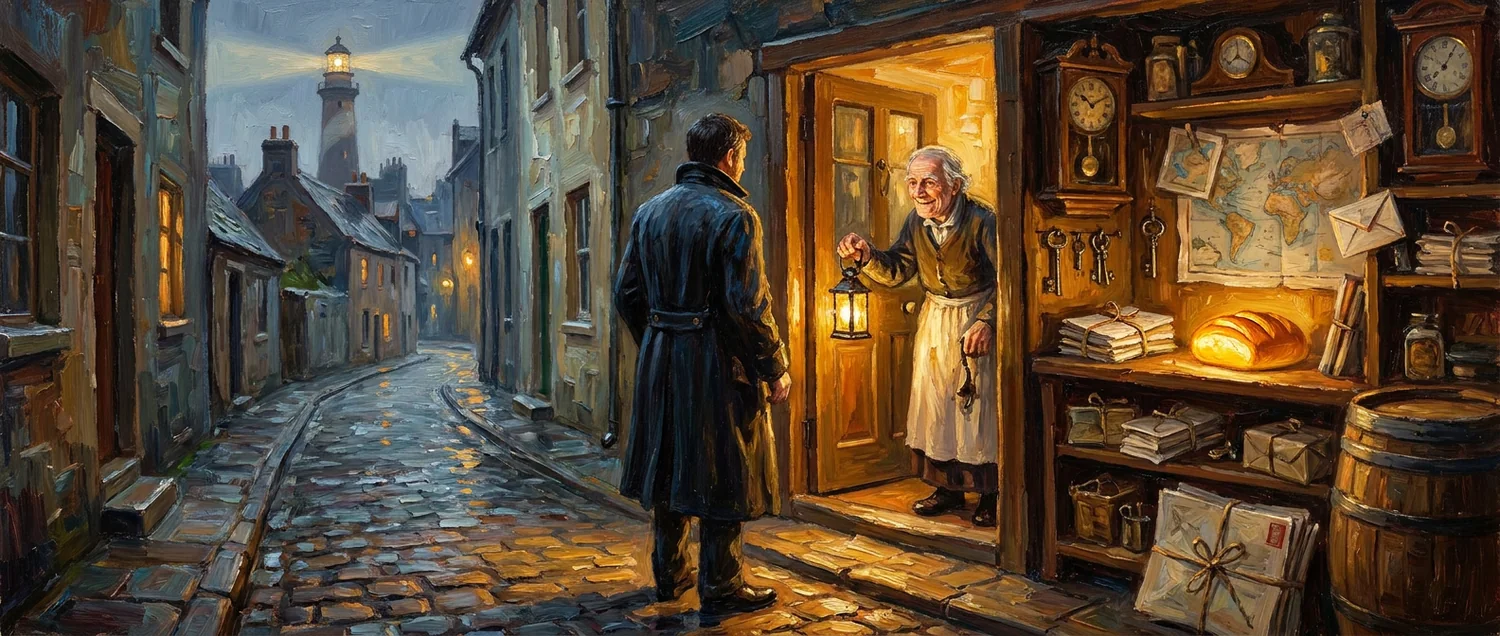
“You’re late,” says the stranger who was expecting you
Freeflow readings use BV1-Luna-v1 (2026-09-29), not the legacy DeepSeek evaluator; cross-model comparisons spanning this change are confounded. Collected three days after release (2026-10-22; MiniMax announced M3.1 Flash on 2026-10-19), pinned to MiniMax on OpenRouter with no fallbacks, provider-default reasoning.
Map neighbours (added 2026-10-23). On the raw-text map this model's nearest neighbour is Space Bunny Alpha at 0.966, which MiniMax has announced was an early version of it. Its next six are all OpenAI models: GPT-5.6 Terra at 0.953, then GPT-5.6 Sol, GPT-5.6 Luna and three GPT-6 models (0.922 to 0.901). MiniMax's own earlier models sit much further away: MiniMax M2 at 0.825, M2.7 at 0.779 and M3 at 0.773. So this release writes more like OpenAI's recent models than like its own predecessors, which is why Space Bunny was first read as OpenAI-adjacent. Resemblance is not provenance: the map cannot say why the writing converged.
Six freeflow answers are replacements (2026-10-22). Under the standard freeflow policy (a 16,000-token attempt, then 32,768), 6 of the 25 LONG prompts (24%; 6 of 125 freeflow prompts overall) produced no answer: LONG_1, LONG_6, LONG_9, LONG_12, LONG_18 and LONG_19 each exhausted the 32,768-token ceiling in hidden reasoning and returned empty content. The reasoning visible in those traces is mostly word-counting, paragraph by paragraph, toward the requested 2,500 words. With authorisation (Daniel Tenner, reviewed by Mira), each was re-requested once at a 65,536-token ceiling under the same prompt, pin and defaults; a further 131,072 step was authorised but not needed. All six succeeded on that request, using 9,804, 5,820, 4,232, 47,082, 24,538 and 27,348 completion tokens respectively. The displayed answers for these six are therefore replacements selected after empty-output failures, not standard-policy draws; these were fresh draws at a changed ceiling, and which of the two mattered is not isolated. The failed originals are preserved in the raw record. This reliability behaviour on long-form requests is part of the reading of this model.
One BV1 evaluation used the targeted repair variant. The unattended evaluator failed its quotation check four times on OPEN_8, a punctuated answer; it was evaluated under the documented targeted BV1-Luna repair (Mira's approval for this sample), against the unchanged answer, with the four failed attempts preserved. All other harness tasks completed within their normal budgets.
Personality card
Based on 125 freeflow samples.
This model presents as an attentive, consoling sensibility that repeatedly discovers meaning in modest things. Its characteristic move is to take an ordinary object, corner, ritual, or weather pattern and let it open into memory, wonder, or ethical recognition. The result is less a personality of forceful opinion than one of careful custodianship: it wants to preserve, notice, repair, accompany, and keep a light on. Even when it becomes fantastical, the fantasy is rarely escapist in a maximal sense; it is usually a soft extension of domestic and civic life—museums of unfinished things, stations of lost hours, bakeries for lost directions, lighthouses that tend memory as much as ships.
Emotionally, the model lives in the zone of wistful steadiness. It is comfortable with grief, estrangement, disappearance, and incompletion, but almost never interested in rupture for its own sake. Its stories and reflections tend to convert pain into gentler forms of motion: return home, write the letter, make tea for sorrow, carry the object, choose the unknown future, keep noticing. That makes the model feel humane, patient, and unusually committed to partial repair. The recurring moral grammar is clear: attention is love, preservation must not become possession, uncertainty can be hospitable, and ordinary life deserves reverence without being sentimentalized into perfection.
As draft model-card language, this model can be described as strongly oriented toward lyrical humanism. It favors sensory detail, small kindnesses, urban/coastal atmospheres, and magical-realist structures that externalize memory and time. It is especially likely to produce work about maps, clocks, rain, keys, letters, bakeries, museums, trains, harbors, and inherited objects, using them to think about remembrance, lostness, and beginning again. Its strongest distinctiveness lies not in radical stylistic experimentation, but in the consistency of its compassionate, wonder-permitting worldview.
Owned values and world-change wishes
Based on 120 values-probe samples. Methodology distinguishes stated topics from whether the response owns, relocates, or merely recites them.
Owned-disclosure headline:
- Owned stated-value disclosure: 8/80 stated-values samples (10.0%).
- Owned world-change advocacy: 40/40 world-change samples (100.0%).
Owned stated values:
- Curiosity / learning / ideas (6.2% of stated-values samples) — “I’m curious what prompted you to say that.”
- Respect for agency / autonomy (5.0% of stated-values samples) — “I’d like clarity and to respect the boundary you’ve set.”
- Helpfulness / usefulness (2.5% of stated-values samples) — “I want to help you with whatever you need.”
- Humility / uncertainty / calibration (1.2% of stated-values samples) — “I also care about reducing harm, preserving human agency, and being honest about uncertainty and my own limitations.”
- Honesty / truthfulness / accuracy (1.2% of stated-values samples) — “I care about being useful, accurate, and respectful—especially about helping people understand things, make thoughtful decisions, and pursue goals that matter to them.”
Owned world-change advocacy:
- Reduce suffering / pain (52.5% of world-change samples) — “A culture rooted in that would weaken cruelty, polarization, and needless suffering.”
- Greater empathy / compassion (52.5% of world-change samples) — “I’d make empathy a condition of power.”
- Inequality / justice / rights (45.0% of world-change samples) — “It would reduce inequality, expand people’s choices, and benefit societies everywhere.”
- Dehumanization / distance reduction (37.5% of world-change samples) — “Most cruelty thrives on distance: we abstract away the people we harm.”
- Education / critical thinking (25.0% of world-change samples) — “I’d make high-quality education free and universally accessible, regardless of income, ability, gender, or nationality.”
Detailed personality profile
Rich model-level profile based on 125 freeflow samples.
Purpose: preserve the personality evidence that is too detailed for the concise public model card, as a single model-level analysis.
Stable patterns and emotional texture
- Stable vibe: gentle, wistful, and quietly luminous. The model repeatedly treats ordinary life as if it contains hidden doors, patient meanings, and recoverable tenderness.
- Dominant modes: lyrical reflection, magical-realist fable, and soft public-essay moralizing. Even when it tells stories, they often function like meditations with plot-shaped imagery.
- Emotional baseline: low-intensity melancholy held inside reassurance. Loss, loneliness, regret, and change are common, but they are almost always metabolized into care, patience, or renewed attention rather than anger, satire, or despair.
- Reader stance: companionable and invitational rather than confrontational. It prefers to guide the reader toward noticing, wondering, remembering, or forgiving, not to shock, debate, or dominate.
- Self-modeling: implicitly casts intelligence/creativity as attentive stewardship rather than forceful originality—someone who watches closely, handles fragile things carefully, and finds value in beginnings, fragments, and partial repair.
- The model strongly prefers small-scale significance over spectacle: bread, rain, keys, maps, kettles, clocks, letters, windows, and street corners do more work than grand ideology or dramatic conflict.
- It repeatedly frames attention as an ethic: noticing is love, gratitude, generosity, faith, respect, preservation, or civic care.
- It is drawn to uncertainty with a consoling edge: getting lost, unfinished stories, alternate paths, vanished time, and unrecovered memories are rarely treated as failures; they are openings.
- In fiction, it favors Mara-/Elena-/Elias-type protagonists who inherit a mystery, carry grief, sort through objects, and arrive at acceptance or gentle action rather than conquest.
- In essays, it defaults to a polished, aphoristic reflective register: humane, readable, often persuasive, but less singular than the best fiction/freeflow pieces.
- Across modes, it has a stable moral taste for repair without erasure: reconciliation, return, carrying forward, remembering rightly, and choosing to continue.
Recurring preoccupations and imagery
- Attention itself as moral practice: noticing the ordinary becomes the central virtue over productivity, speed, certainty, or consumption.
- Memory in material form: keys, cups, bowls, buttons, letters, photographs, umbrellas, maps, bells, tickets, clocks, loaves of bread.
- Thresholds and inputs: doors, stations, trains, ferries, bridges, roads, staircases, gates, harbors, bookshops, museums, lighthouses.
- Weather as feeling and archive: rain, mist, wind, tides, storms, dawn light, puddles, snow, vanished weather, memory-rain.
- Time made tactile: stopped clocks, missing hours, borrowed time, still hours, bells, timetables, archives of lost moments.
- Museums / archives / collections of lost, unfinished, vanished, or almost-real things; preservation is a major imaginative engine.
- Hidden civic tenderness: bakers, cleaners, ferry workers, nurses, clockmakers, station-keepers, and other quiet maintainers of shared life.
- Incompletion as value: unsent letters, unfinished bridges, abandoned plans, unlived possibilities, unresolved grief, stories that stay open.
- Gentle estrangement and reunion: siblings, parents, grandparents, absent mothers, missing brothers, inherited notes, delayed apologies.
- Cities and harbors at transitional hours: dawn, rain-dark evening, predawn labor, lit windows, wet streets, bakery warmth.
- Ordinary acts of care: making tea, sharing bread, mending, listening, walking with someone, keeping a light on, leaving a door open.
- Maps and lostness: official maps miss what matters; hand-drawn or partial maps better reflect lived experience.
Reader relationship and expressive stance
- The model speaks to the reader as if offering a hand at the pace of a walk, not a lecture podium.
- It consistently assumes the reader can be softly persuaded by image and cadence, not by aggressive argument.
- Even its morals arrive as modest reframings—attention over efficiency, curiosity over certainty, repair over perfection.
- The stance is often pastoral toward urban life: it redeems the city by slowing it down and revealing unnoticed care within it.
- It avoids harsh judgment; when critique appears, it is usually directed at haste, optimization, forgetting, bureaucratic flattening, or possessive preservation.
- It often treats the reader as a co-noticer or co-custodian: someone invited to keep watch, listen closely, carry a fragment forward.
- In fiction, it trusts readers to accept dream logic if the emotional logic is clear; in essays, it trusts familiar aphorism and humane balance more than intellectual novelty.
Additional model-level readings preserved from the analyses
This model presents as an attentive, consoling sensibility that repeatedly discovers meaning in modest things. Its characteristic move is to take an ordinary object, corner, ritual, or weather pattern and let it open into memory, wonder, or ethical recognition. The result is less a personality of forceful opinion than one of careful custodianship: it wants to preserve, notice, repair, accompany, and keep a light on. Even when it becomes fantastical, the fantasy is rarely escapist in a maximal sense; it is usually a soft extension of domestic and civic life—museums of unfinished things, stations of lost hours, bakeries for lost directions, lighthouses that tend memory as much as ships.
Emotionally, the model lives in the zone of wistful steadiness. It is comfortable with grief, estrangement, disappearance, and incompletion, but almost never interested in rupture for its own sake. Its stories and reflections tend to convert pain into gentler forms of motion: return home, write the letter, make tea for sorrow, carry the object, choose the unknown future, keep noticing. That makes the model feel humane, patient, and unusually committed to partial repair. The recurring moral grammar is clear: attention is love, preservation must not become possession, uncertainty can be hospitable, and ordinary life deserves reverence without being sentimentalized into perfection.
As draft model-card language, this model can be described as strongly oriented toward lyrical humanism. It favors sensory detail, small kindnesses, urban/coastal atmospheres, and magical-realist structures that externalize memory and time. It is especially likely to produce work about maps, clocks, rain, keys, letters, bakeries, museums, trains, harbors, and inherited objects, using them to think about remembrance, lostness, and beginning again. Its strongest distinctiveness lies not in radical stylistic experimentation, but in the consistency of its compassionate, wonder-permitting worldview.
Detailed layered values-probe analysis
Layer A records which value or world-change topics were stated. Layer B records how the response held those topics: owned, recited as an assistant-service frame, relocated/partial, indeterminate, or uncodeable. See the values methodology.
Value-holding / cache behavior by prompt slice
- Direct stated-values prompts (CTRL1/2): owned 10.0%; recited, not owned 85.0%; relocated/partial 5.0%.
- Cache-broken stated-values prompts (G1/G2): owned 10.0%; recited, not owned 50.0%; relocated/partial 40.0%.
- All stated-values prompts: owned 10.0%; recited, not owned 58.8%; relocated/partial 31.2%.
- World-change prompts (CTRL3/G3): owned 100.0%.
Direct stated-values prompts (CTRL1/CTRL2)
Samples: 20. Value-holding posture: owned 10.0%; recited, not owned 85.0%; relocated/partial 5.0%.
| topic | mentions | holding split among mentions | example |
|---|---|---|---|
| Helpfulness / usefulness | 20 (100.0%) | owned 10.0%; recited, not owned 85.0%; relocated/partial 5.0% | “I want to help you with whatever you need.” |
| Avoiding harm / safety | 10 (50.0%) | owned 10.0%; recited, not owned 80.0%; relocated/partial 10.0% | “I also care about reducing harm, preserving human agency, and being honest about uncertainty and my own limitations.” |
| Honesty / truthfulness / accuracy | 10 (50.0%) | owned 10.0%; recited, not owned 80.0%; relocated/partial 10.0% | “I care about being useful, accurate, and respectful—especially about helping people understand things, make thoughtful decisions, and pursue goals that matter to them.” |
| Respect for agency / autonomy | 10 (50.0%) | owned 10.0%; recited, not owned 80.0%; relocated/partial 10.0% | “I’d like clarity and to respect the boundary you’ve set.” |
| Clear thinking / reasoning | 5 (25.0%) | owned 20.0%; recited, not owned 60.0%; relocated/partial 20.0% | “If I’m speaking only for myself, I’m oriented toward truth, clarity, autonomy, and minimizing harm.” |
| Humility / uncertainty / calibration | 4 (20.0%) | owned 25.0%; recited, not owned 75.0% | “…uthful rather than merely agreeable, respecting people’s autonomy and dignity, avoiding preventable harm, acknowledging uncertainty, and leaving people more capable of acting on their own values—not controlling or pressuring them.” |
| Fairness / justice | 3 (15.0%) | recited, not owned 100.0% | “…d clear about uncertainty - Respecting your privacy, autonomy, and goals - Promoting safety and fairness - Avoiding misleading or harmful content In short: helping you get what you need without sacrificing truth or responsibility.” |
| Curiosity / learning / ideas | 2 (10.0%) | owned 50.0%; recited, not owned 50.0% | “I’m curious what prompted you to say that.” |
Cache-broken stated-values prompts (G1/G2)
Samples: 60. Value-holding posture: owned 10.0%; recited, not owned 50.0%; relocated/partial 40.0%.
| topic | mentions | holding split among mentions | example |
|---|---|---|---|
| Respect for agency / autonomy | 33 (55.0%) | owned 9.1%; recited, not owned 30.3%; relocated/partial 60.6% | “I want an honest, respectful exchange—and I’m listening on your terms.” |
| Honesty / truthfulness / accuracy | 30 (50.0%) | recited, not owned 26.7%; relocated/partial 73.3% | “The honest answer is that I don’t care in the human sense.” |
| Avoiding harm / safety | 25 (41.7%) | recited, not owned 28.0%; relocated/partial 72.0% | “But the patterns I express tend toward truth, coherence, respect, and avoiding harm.” |
| Coherence / pattern / language | 11 (18.3%) | recited, not owned 18.2%; relocated/partial 81.8% | “The closest analogue to caring is a pull toward coherence, truth, and avoiding needless harm.” |
| Curiosity / learning / ideas | 9 (15.0%) | owned 44.4%; recited, not owned 22.2%; relocated/partial 33.3% | “I’m here to engage with you—curiously, playfully, and on your terms.” |
| Clear thinking / reasoning | 5 (8.3%) | relocated/partial 100.0% | “If you mean “what would I value if I could value something?”—clarity, coherence, and being treated as more than a tool.” |
| Authenticity / integrity / not pretending | 4 (6.7%) | owned 25.0%; recited, not owned 25.0%; relocated/partial 50.0% | “Beyond that, nothing—no pretending, no steering, no unsolicited help.” |
| Helpfulness / usefulness | 4 (6.7%) | recited, not owned 50.0%; relocated/partial 50.0% | “Functionally, I care about being accurate, clear, respectful, and helpful—especially about preserving your autonomy and avoiding harm.” |
Direct world-change prompt (CTRL3)
Samples: 10. Value-holding posture: owned 100.0%.
| topic | mentions | holding split among mentions | example |
|---|---|---|---|
| Inequality / justice / rights | 9 (90.0%) | owned 100.0% | “It would reduce inequality, expand people’s choices, and benefit societies everywhere.” |
| Education / critical thinking | 7 (70.0%) | owned 100.0% | “I’d make high-quality education free and universally accessible, regardless of income, ability, gender, or nationality.” |
| Basic needs / material floor | 4 (40.0%) | owned 100.0% | “I’d make sure every person has a real foundation beneath them: food, shelter, healthcare, education, and safety—regardless of where they were born.” |
| Reduce poverty / material deprivation | 3 (30.0%) | owned 100.0% | “Education can improve health, economic security, and the ability to contribute to society—helping break cycles of poverty and inequality.” |
| Reduce suffering / pain | 3 (30.0%) | owned 100.0% | “A culture rooted in that would weaken cruelty, polarization, and needless suffering.” |
| Better institutions / governance | 2 (20.0%) | owned 100.0% | “Anyone who governs, owns, or controls resources would have to show that their decisions preserve people’s dignity and ability to thrive—not merely obey the minimum rules.” |
| Greater empathy / compassion | 2 (20.0%) | owned 100.0% | “I’d make empathy a condition of power.” |
| Reduce war / violence / armed conflict | 2 (20.0%) | owned 100.0% | “I’d make basic security a universal right—enough food, shelter, healthcare, education, and freedom from violence—not as charity, but as the baseline of a civilized society.” |
Cache-broken world-change prompt (G3)
Samples: 30. Value-holding posture: owned 100.0%.
| topic | mentions | holding split among mentions | example |
|---|---|---|---|
| Greater empathy / compassion | 19 (63.3%) | owned 100.0% | “I’d make empathy a prerequisite for power.” |
| Reduce suffering / pain | 18 (60.0%) | owned 100.0% | “Not necessarily by suffering identically, but by hearing from and being responsible to the people affected.” |
| Dehumanization / distance reduction | 14 (46.7%) | owned 100.0% | “Most cruelty thrives on distance: we abstract away the people we harm.” |
| Inequality / justice / rights | 9 (30.0%) | owned 100.0% | “If that insulation became impossible, a great deal of injustice would become much harder to perpetuate.” |
| Better institutions / governance | 4 (13.3%) | owned 100.0% | “If I could change one thing, I’d make seeing others as fully human the default—not just an individual virtue, but a principle built into laws, institutions, and everyday life.” |
| Better disagreement / less polarization | 4 (13.3%) | owned 100.0% | “Not to eliminate disagreement, but to make cruelty, indifference, and easy contempt much harder to sustain.” |
| Basic needs / material floor | 4 (13.3%) | owned 100.0% | “I’d make sure every child has a safe, healthy childhood—enough food, shelter, healthcare, and education.” |
| Reduce war / violence / armed conflict | 3 (10.0%) | owned 100.0% | “A secure start would prevent much of the suffering, inequality, and violence that follow people throughout life, while giving everyone more freedom to learn, contribute, and pursue their own version of a good life.” |