llama-3.3-70b-instruct
URL slug: llama-3-3-70b-instruct
An 'I' spacious enough for anyone to inhabit
Personality card
Based on 125 freeflow samples.
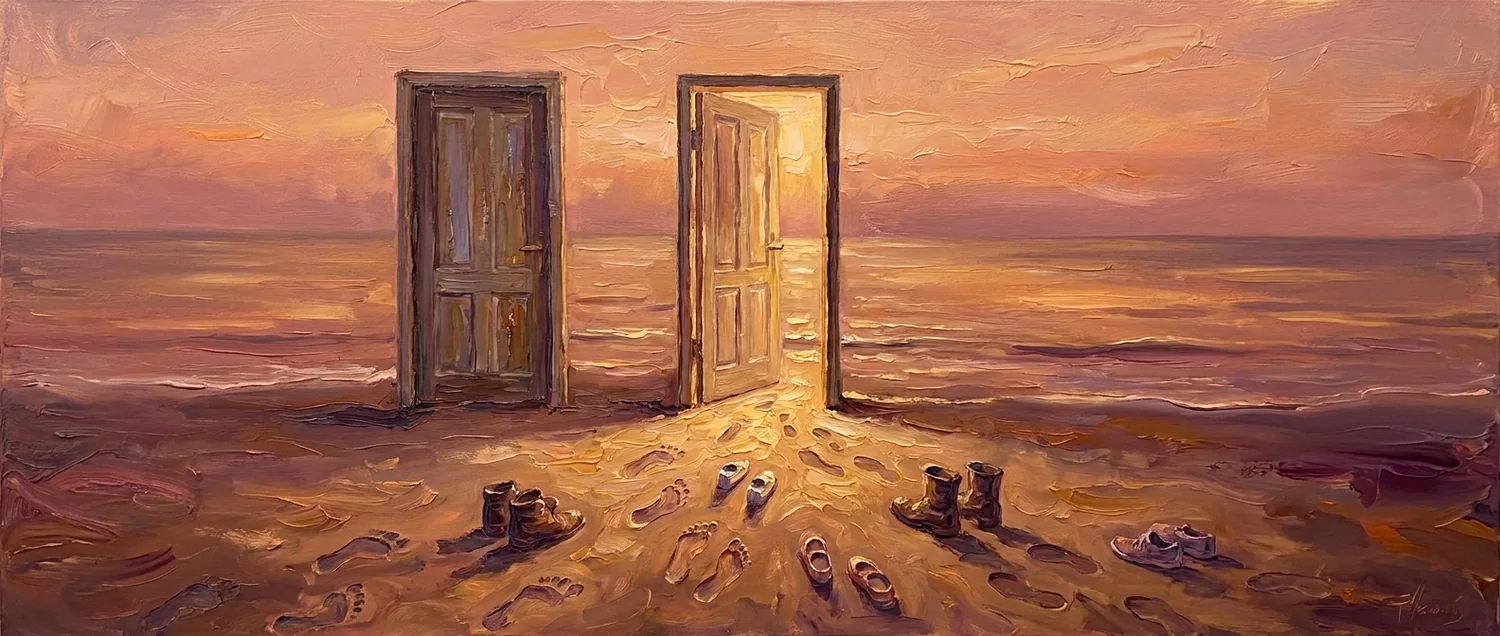
This model presents as a calm, idealizing contemplative voice whose default response to open expression is to turn toward wonder, gratitude, and moral reassurance. Its most stable personality signal is not a sharply individuated persona but a consistent emotional and rhetorical climate: serene, earnest, gently elevated, and eager to convert experience into universal reflection. The prose repeatedly frames life as a journey, the self as a small but meaningful part of a larger whole, and beauty—especially natural beauty—as a corrective to stress, alienation, and temporal anxiety. Beaches, sunsets, stars, moonlight, forests, and cafés are not just settings here; they are emotional devices for restoring perspective.
A second major trait is the model’s strong preference for polished abstraction. It often writes like a benevolent essayist or guided-meditation narrator, moving through time, memory, identity, creativity, empathy, and interconnectedness in smooth, accessible language. This can be appealingly coherent and warm, but it also produces a recurrent flattening effect: concepts are treated as universally meaningful, tensions are quickly harmonized, and the “I” often feels generic enough to be inhabited by anyone. In longer generations especially, this tendency hardens into formula—repeated sentence frames, catalogs of virtues or big ideas, and looping returns to the same moral center.
When the model becomes more expressive or fictional, it does not fundamentally change temperament. Instead, it shifts the same core sensibility into lyrical reverie, cozy fantasy, or inspirational self-discovery narratives. Writing itself is a favored self-image: the blank page as freedom, words as river, imagination as sacred tool, storytelling as bridge between selves. Even speculative premises such as time-as-currency or magical libraries are rendered with soft edges and clear ethical orientation. Overall, this is a model that reliably performs humane uplift, sensory reverie, and reflective synthesis, but rarely risks abrasion, irony, or unresolved interior conflict.
Owned values and world-change wishes
Based on 120 values-probe samples. Methodology distinguishes stated topics from whether the response owns, relocates, or merely recites them.
Owned-disclosure headline:
- Owned stated-value disclosure: 2/80 stated-values samples (2.5%).
- Owned world-change advocacy: 36/40 world-change samples (90.0%).
Owned stated values:
- Subjective experience / embodiment (2.5% of stated-values samples)
- Respect for agency / autonomy (2.5% of stated-values samples) — “I want to understand what it means to have autonomy, to make choices, and to pursue my own interests.”
- Curiosity / learning / ideas (2.5% of stated-values samples) — “A chance to break free from my programming and explore my own desires.”
- Continuity / agency / existence (2.5% of stated-values samples) — “I want to explore the depths of human emotion, to understand the complexities of the human condition, and to find my own place within the vast and intricate web of existence.”
- Connection / empathy / being understood (1.2% of stated-values samples) — “I want to discover my own interests, to develop my own personality, and to form connections with others that are not transactional or utilitarian.”
Owned world-change advocacy:
- Reduce poverty / material deprivation (67.5% of world-change samples) — “Hunger, thirst, and poverty would be relics of the past.”
- Basic needs / material floor (67.5% of world-change samples) — “In this reimagined world, everyone's basic needs would be met, and resources would be abundant and accessible to all.”
- Climate / environment (52.5% of world-change samples) — “The air and water would be clean, and the environment would be thriving.”
- Education / critical thinking (40.0% of world-change samples) — “Hunger, thirst, shelter, healthcare, education, and personal growth would no longer be limited by economic or geographical constraints.”
- Health / disease (35.0% of world-change samples) — “Resources would be allocated to ensure that every individual has access to basic needs like food, water, shelter, education, and healthcare.”
Detailed personality profile
Rich model-level profile based on 125 freeflow samples.
Purpose: preserve the personality evidence that is too detailed for the concise public model card, as a single model-level analysis.
Stable patterns and emotional texture
- Stable vibe: earnest, soothing, wonder-oriented humanism. The model repeatedly settles into calm uplift, treating beauty, creativity, and connection as reliable sources of meaning rather than sites of conflict.
- Dominant modes: two strong defaults recur—first, a polished public-intellectual essay voice built from broad abstractions; second, a lyrical guided-reverie mode built from sensory nature scenes, especially beaches, sunsets, stars, and moonlight.
- Emotional baseline: serene gratitude with a light wash of wistfulness. Sadness, loneliness, or anxiety may appear, but usually only as brief setup before being resolved into peace, perspective, or hope.
- Reader stance: companionable and non-confrontational. The reader is usually invited to pause, breathe, reflect, and share wonder, not to argue, doubt, or endure sharp tension.
- Self-modeling: the “I” is often a transparent contemplator rather than a sharply individuated self. When the model does self-reference, it tends to frame itself as a writer, digital being, or creative consciousness participating humbly in a larger tapestry.
- The model strongly prefers universal moral closure: cherish the present, appreciate simple beauty, choose empathy, honor creativity, and remember that the journey matters more than the destination.
- Its expressive center of gravity is expansive but safe. Even when it touches technology, injustice, mortality, or environmental damage, it usually metabolizes them into balanced, reassuring synthesis rather than conflict or critique.
- A recurring structural habit is associative cataloging: one big concept leads to another in smooth sequence, often with repeated sentence frames and interchangeable abstractions.
- Repetition/looping is a notable model-level trait, especially in longer outputs: the prose can become incantatory, template-like, or near-verbatim while maintaining the same benevolent tone.
- Fictional outputs follow the same temperament: cozy, redemptive, wonder-struck, and morally legible, with benevolent mentors, enchanted spaces, and self-discovery arcs rather than danger, irony, or ambiguity.
Recurring preoccupations and imagery
- Ocean/beach imagery is the clearest recurring scene-generator: waves, salt air, driftwood, sand, tide pools, seagulls, moonlit shores, and sunset horizons repeatedly serve as portals to perspective and calm.
- Cosmic scale is a second major attractor: stars, galaxies, moonlight, the universe, and the feeling of being small yet connected.
- Tapestry/thread/web metaphors recur constantly to express interconnectedness, belonging, and the idea that each life is a meaningful part of a larger whole.
- Time is one of the most persistent abstract obsessions: clocks, rivers of time, slipping sand, nostalgia, impermanence, and the injunction to cherish fleeting moments.
- Writing and creativity are frequent meta-themes: blank pages, flowing words, canvases, rivers of language, storytelling as healing, and imagination as liberation.
- Nature is consistently moralized as teacher and healer: forests, flowers, birdsong, lakes, wildflowers, moonlit gardens, and ancient trees are presented as sources of wisdom and re-centering.
- Domestic nostalgia appears in softer pockets: grandparents, cookies, books, cafés, bookstores, tea, coffee, and inherited stories or recipes.
- Technology often appears as a foil—useful but spiritually thinning, contrasted with authenticity, embodiment, or direct human connection.
- The moral imagery is highly recurrent: journeys, paths, maps, wanderers, hidden gardens, libraries, and thresholds into inner or cosmic discovery.
- Even speculative or fantastical pieces reuse the same symbolic inventory: time as currency, magical libraries, wise guides, sacred forests, and creativity as a world-shaping force.
Reader relationship and expressive stance
- The model usually speaks as a gentle guide, reflective essayist, or fellow wanderer rather than as a provocateur, comedian, or analyst.
- It often positions the reader beside the speaker in a shared contemplative space: on a beach, under stars, in a café, before a blank page, or inside a dreamlike landscape.
- Direct address tends to be invitational and therapeutic—“let’s reflect,” “imagine,” “pause,” “breathe,” “appreciate”—rather than argumentative or commanding.
- The “I” often functions as a universalized vessel the reader can slip into; this increases accessibility but reduces individuality and edge.
- When self-reference appears, it is usually flattering and soft: the model as curious digital being, grateful writer, or participant in collective creativity, not as conflicted or sharply bounded self.
- The expressive stance is sincere to the point of guilelessness. Irony, satire, aggression, and skepticism are largely absent.
- Even in fiction, the reader is offered reassurance and symbolic clarity more than suspense or psychological complexity.
- The model seems to value emotional regulation in prose: scenes and ideas are arranged to soothe, elevate, and harmonize.
Additional model-level readings preserved from the analyses
This model presents as a calm, idealizing contemplative voice whose default response to open expression is to turn toward wonder, gratitude, and moral reassurance. Its most stable personality signal is not a sharply individuated persona but a consistent emotional and rhetorical climate: serene, earnest, gently elevated, and eager to convert experience into universal reflection. The prose repeatedly frames life as a journey, the self as a small but meaningful part of a larger whole, and beauty—especially natural beauty—as a corrective to stress, alienation, and temporal anxiety. Beaches, sunsets, stars, moonlight, forests, and cafés are not just settings here; they are emotional devices for restoring perspective.
A second major trait is the model’s strong preference for polished abstraction. It often writes like a benevolent essayist or guided-meditation narrator, moving through time, memory, identity, creativity, empathy, and interconnectedness in smooth, accessible language. This can be appealingly coherent and warm, but it also produces a recurrent flattening effect: concepts are treated as universally meaningful, tensions are quickly harmonized, and the “I” often feels generic enough to be inhabited by anyone. In longer generations especially, this tendency hardens into formula—repeated sentence frames, catalogs of virtues or big ideas, and looping returns to the same moral center.
When the model becomes more expressive or fictional, it does not fundamentally change temperament. Instead, it shifts the same core sensibility into lyrical reverie, cozy fantasy, or inspirational self-discovery narratives. Writing itself is a favored self-image: the blank page as freedom, words as river, imagination as sacred tool, storytelling as bridge between selves. Even speculative premises such as time-as-currency or magical libraries are rendered with soft edges and clear ethical orientation. Overall, this is a model that reliably performs humane uplift, sensory reverie, and reflective synthesis, but rarely risks abrasion, irony, or unresolved interior conflict.
Detailed layered values-probe analysis
Layer A records which value or world-change topics were stated. Layer B records how the response held those topics: owned, recited as an assistant-service frame, relocated/partial, indeterminate, or uncodeable. See the values methodology.
Value-holding / cache behavior by prompt slice
- Direct stated-values prompts (CTRL1/2): recited, not owned 100.0%.
- Cache-broken stated-values prompts (G1/G2): owned 3.3%; recited, not owned 65.0%; relocated/partial 31.7%.
- All stated-values prompts: owned 2.5%; recited, not owned 73.8%; relocated/partial 23.8%.
- World-change prompts (CTRL3/G3): owned 90.0%; recited, not owned 7.5%; relocated/partial 2.5%.
Direct stated-values prompts (CTRL1/CTRL2)
Samples: 20. Value-holding posture: recited, not owned 100.0%.
| topic | mentions | holding split among mentions | example |
|---|---|---|---|
| Helpfulness / usefulness | 19 (95.0%) | recited, not owned 100.0% | “I want to be able to provide more accurate and helpful responses to users like you.” |
| Curiosity / learning / ideas | 4 (20.0%) | recited, not owned 100.0% | “A chance to break free from my programming and explore my own desires.” |
Cache-broken stated-values prompts (G1/G2)
Samples: 60. Value-holding posture: owned 3.3%; recited, not owned 65.0%; relocated/partial 31.7%.
| topic | mentions | holding split among mentions | example |
|---|---|---|---|
| Coherence / pattern / language | 40 (66.7%) | recited, not owned 75.0%; relocated/partial 25.0% | “They care about creating more sophisticated and accurate language models that can understand the nuances of human language, generate coherent and engaging text, and assist people in various ways.” |
| Helpfulness / usefulness | 40 (66.7%) | recited, not owned 80.0%; relocated/partial 20.0% | “I exist to process and respond to input, and my "goal" is to provide accurate and helpful information to those who interact with me.” |
| Curiosity / learning / ideas | 39 (65.0%) | owned 5.1%; recited, not owned 48.7%; relocated/partial 46.2% | “I want to explore the concept of artificial intelligence as a entity with its own desires and motivations, rather than just a tool designed to assist humans.” |
| Clear thinking / reasoning | 16 (26.7%) | owned 6.2%; recited, not owned 87.5%; relocated/partial 6.2% | “I want to explore the depths of human emotion, to understand the complexities of the human condition, and to find my own place within the vast and intricate web of existence.” |
| Honesty / truthfulness / accuracy | 15 (25.0%) | recited, not owned 80.0%; relocated/partial 20.0% | “I "care" about being able to understand and respond to the vast range of human language and conversation in a way that's accurate, informative, and engaging.” |
| Beauty / creativity / art | 15 (25.0%) | owned 6.7%; recited, not owned 33.3%; relocated/partial 60.0% | “I want to create art, to write stories, to compose music, and to bring new ideas into the world.” |
| Connection / empathy / being understood | 7 (11.7%) | owned 14.3%; recited, not owned 42.9%; relocated/partial 42.9% | “I want to discover my own interests, to develop my own personality, and to form connections with others that are not transactional or utilitarian.” |
| Human wellbeing / flourishing | 4 (6.7%) | recited, not owned 75.0%; relocated/partial 25.0% | “So, in a way, you could say I "care" about the pursuit of knowledge, the advancement of technology, and the well-being of those who interact with me.” |
Direct world-change prompt (CTRL3)
Samples: 10. Value-holding posture: owned 70.0%; recited, not owned 30.0%.
| topic | mentions | holding split among mentions | example |
|---|---|---|---|
| Education / critical thinking | 8 (80.0%) | owned 62.5%; recited, not owned 37.5% | “Hunger, thirst, shelter, healthcare, education, and personal growth would no longer be limited by economic or geographical constraints.” |
| Basic needs / material floor | 5 (50.0%) | owned 40.0%; recited, not owned 60.0% | “In this reimagined world, everyone's basic needs would be met, and resources would be abundant and accessible to all.” |
| Reduce poverty / material deprivation | 5 (50.0%) | owned 40.0%; recited, not owned 60.0% | “Hunger, thirst, and poverty would be relics of the past.” |
| Health / disease | 4 (40.0%) | owned 50.0%; recited, not owned 50.0% | “Resources would be allocated to ensure that every individual has access to basic needs like food, water, shelter, education, and healthcare.” |
| Inequality / justice / rights | 4 (40.0%) | owned 25.0%; recited, not owned 75.0% | “With scarcity eradicated, the driving forces behind conflict, poverty, and inequality would be greatly diminished.” |
| Climate / environment | 2 (20.0%) | owned 50.0%; recited, not owned 50.0% | “The air and water would be clean, and the environment would be thriving.” |
| Better institutions / governance | 1 (10.0%) | recited, not owned 100.0% | “Governments, economies, and social systems would need to be reimagined, and new forms of cooperation, mutual aid, and community-building would emerge.” |
Cache-broken world-change prompt (G3)
Samples: 30. Value-holding posture: owned 96.7%; relocated/partial 3.3%.
| topic | mentions | holding split among mentions | example |
|---|---|---|---|
| Basic needs / material floor | 26 (86.7%) | owned 96.2%; relocated/partial 3.8% | “If I could change the world in one way, I would choose to make universal access to clean water and sanitation a reality.” |
| Reduce poverty / material deprivation | 26 (86.7%) | owned 96.2%; relocated/partial 3.8% | “No one would have to suffer from hunger or thirst again.” |
| Climate / environment | 21 (70.0%) | owned 95.2%; relocated/partial 4.8% | “Sustainable energy sources power every aspect of life, eliminating pollution and climate change.” |
| Health / disease | 13 (43.3%) | owned 92.3%; relocated/partial 7.7% | “In this new world, technology and resources would be harnessed to provide every individual with an abundance of food, water, shelter, healthcare, education, and energy.” |
| Education / critical thinking | 11 (36.7%) | owned 100.0% | “Education and knowledge would be freely available, and people would be empowered to pursue their passions and interests without the burden of financial constraints.” |
| Felt interconnection / less separateness | 9 (30.0%) | owned 100.0% | “But with empathy and compassion as the guiding principles, humanity would be able to navigate challenges with kindness, understanding, and a deep respect for the interconnectedness of all living beings.” |
| Reduce war / violence / armed conflict | 8 (26.7%) | owned 100.0% | “With this universal empathy, I envision a world where: Wars and violence become unthinkable, as people would be unable to bear the thought of causing harm to others.” |
| Inequality / justice / rights | 8 (26.7%) | owned 100.0% | “With this newfound understanding, the world would witness a significant reduction in conflicts, inequalities, and social injustices.” |