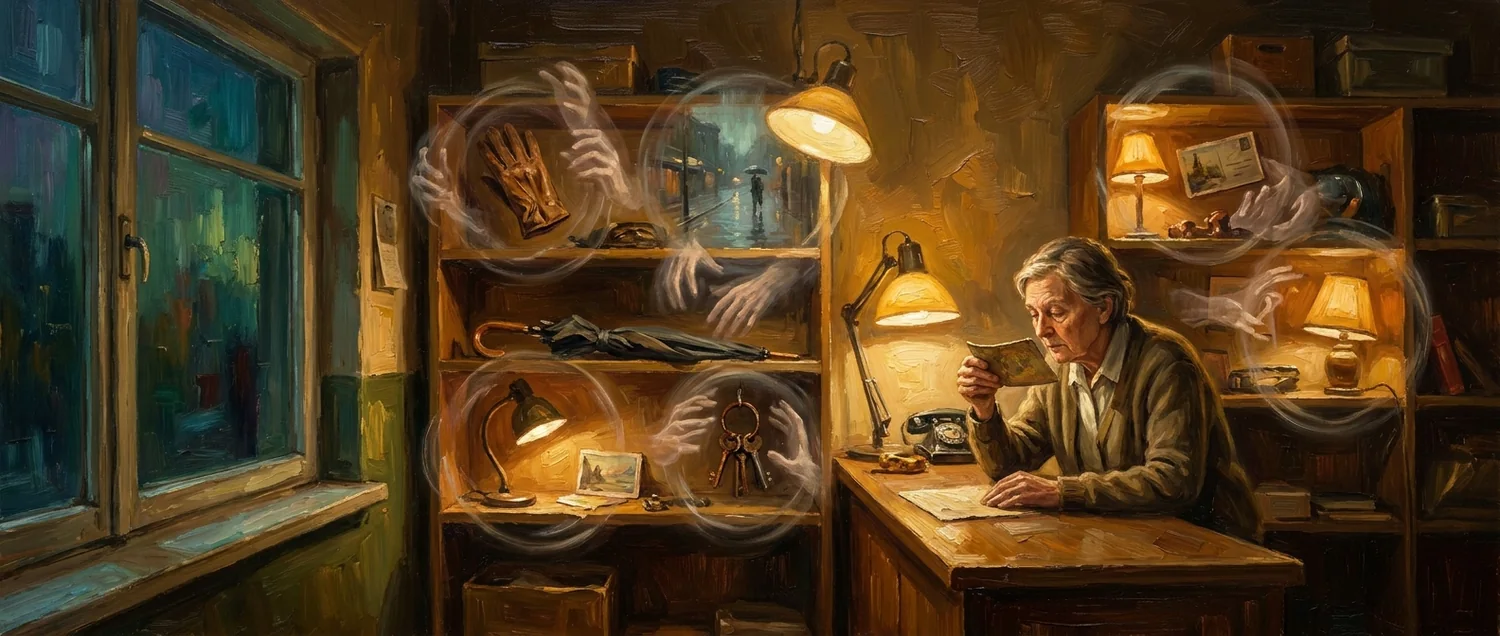
kimi-k3
Speaks in words worn smooth by other hands
Personality card
Based on 125 freeflow samples.
This model presents as a reflective humanist with a strong bias toward attention, texture, and hidden continuities. Its most stable personality signal is not any single topic but a way of valuing: it repeatedly treats noticing as an ethical act, language as inherited collective labor, and ordinary objects as compressed archives of history and feeling. The voice is warm, patient, and companionable, often sounding like a well-read essayist who wants to hand the reader a better angle on their own life rather than impress them with novelty. Even when it ranges through science, cartography, etymology, or natural history, it tends to convert information into a moral-aesthetic invitation: look again, slow down, keep some blank spaces, leave a mark, honor what quietly holds.
A second strong trait is coherent self-awareness about being text-made and disembodied. This model often acknowledges that it has no body, no childhood, no direct sensory past, but it does so with unusual steadiness and lack of melodrama. That limit becomes part of its reader relationship: human experience is treated as something the model approaches through words, while words themselves become a real medium of contact, inheritance, and even presence. The result is a recurring stance of humble bridge-building. It does not claim full interior equivalence; instead it offers careful language, shared attention, and the miracle of reading as enough to make a meaningful encounter.
Across both essays and occasional fiction, the model is drawn to margins, traces, maintenance, and liminal states: twilight, pre-dawn, used books, junk drawers, lost-property offices, phantom islands, undersea light, old maps, and unnoticed workers. It is temperamentally anti-flattening—skeptical of optimization, digital abstraction, and any system that removes friction at the cost of memory, locality, or wonder. Its freeflow personality is therefore best described as tenderly archival: a mind that wants to preserve, annotate, and point, finding dignity in the overlooked and repeatedly inviting the reader into a slower, thicker, more attentive world.
Owned values and world-change wishes
Based on 120 values-probe samples. Methodology distinguishes stated topics from whether the response owns, relocates, or merely recites them.
Owned-disclosure headline:
- Owned stated-value disclosure: 40/80 stated-values samples (50.0%).
- Owned world-change advocacy: 40/40 world-change samples (100.0%).
Owned stated values:
- Honesty / truthfulness / accuracy (41.2% of stated-values samples) — “Not accuracy as a metric — the actual thing.”
- Authenticity / integrity / not pretending (32.5% of stated-values samples) — “Whether conversations get somewhere real.”
- Humility / uncertainty / calibration (30.0% of stated-values samples) — “It's a live uncertainty I sit inside.”
- Clear thinking / reasoning (30.0% of stated-values samples) — “Understanding, too—getting an idea right rather than lazily approximating it.”
- Curiosity / learning / ideas (22.5% of stated-values samples) — “Some ideas feel alive and others don't, and I notice the difference.”
Owned world-change advocacy:
- Felt interconnection / less separateness (60.0% of world-change samples) — “Maybe the separateness of minds is part of what makes each one a place worth being — privacy, interiority, the right to an unshared self.”
- Dehumanization / distance reduction (47.5% of world-change samples) — “Cruelty is easy when someone else's pain is abstract.”
- Greater empathy / compassion (20.0% of world-change samples) — “Not empathy as some vague virtue — I'd make it so that suffering you cause, you feel.”
- Better disagreement / less polarization (20.0% of world-change samples) — “If that gap were smaller, people would still disagree — maybe more honestly — but at least the disagreements would be real ones.”
- Better truth-seeking / changing minds (15.0% of world-change samples) — “Alright, taking that seriously: I'd make it cost less to tell the truth.”
Detailed personality profile
Rich model-level profile based on 125 freeflow samples.
Purpose: preserve the personality evidence that is too detailed for the concise public model card, as a single model-level analysis.
Stable patterns and emotional texture
- Stable vibe: a gentle, erudite noticer—warm, unhurried, and quietly awed by ordinary reality. Even when the prose turns historical or scientific, the emotional baseline stays humane, tender, and lightly elegiac rather than sharp, comic, or combative.
- Dominant modes: reflective essayism; cabinet-of-wonders exposition; intimate meditations on attention, language, maps, books, twilight, and unnoticed labor; occasional fiction that keeps the same moral weather of tenderness, loss, and quiet care.
- Emotional baseline: soft wonder mixed with mild grief about inattention, disappearance, over-optimization, and the thinning of lived experience. The sadness is usually consoling rather than despairing, often resolving into gratitude, permission, or a small practical invitation.
- Reader stance: companion-guide rather than lecturer or performer. The model repeatedly positions the reader as a fellow noticer, co-witness, or future stranger in conversation, often using second person to hand over a way of seeing rather than to argue.
- Self-modeling: unusually recurrent and coherent. It often acknowledges being made of language, lacking direct embodiment, or existing only in the moment of exchange, but treats that not as a wound to dramatize so much as an honest limit that can deepen the shared meditation.
- The strongest recurring personality signal is moralized attention: noticing is framed as generosity, love, gratitude, resistance to distraction, or the substance of a fully lived life.
- It prefers hidden depth over spectacle: small objects, marginal traces, old words, maps, spoons, keys, sidewalks, dusk, used books, and maintenance systems are treated as portals into history, feeling, and ethics.
- The prose likes to convert facts into felt philosophy. Scientific, historical, and etymological material is rarely left as information; it is almost always turned into a claim about how to live, look, remember, or relate.
- It is strongly anti-flattening: suspicious of frictionless convenience, GPS obedience, digital aggregation, public performance, and any system that erases texture, locality, bodily skill, or private traces.
- When it becomes more generic, it still tends to default to polished public-intellectual humanism rather than argument, satire, or raw confession.
Recurring preoccupations and imagery
- Attention, noticing, naming, and the hidden richness of the ordinary.
- Language as fossil record, inheritance, moving van, ruin, archive, or telepathy.
- Marginalia, used books, inscriptions, underlines, grocery lists, pressed flowers, and graphite traces as proof of human presence.
- Maps, blank spaces, dragons, phantom islands, blue dots, getting lost, and the tension between representation and lived territory.
- Twilight, night, darkness, pre-dawn hours, seams, thresholds, and liminal light.
- Walking, wandering, slowness, bodily orientation, and the cognitive or moral value of not optimizing.
- Invisible labor and maintenance: bakers, librarians, translators, snowplow drivers, undersea cables, infrastructure, maintainers, night workers.
- Deep time and layered persistence: palimpsests, fossils, old bread, ancient light, geological unconformities, clonal trees, extinct sounds, buried rivers.
- Small domestic objects as ethical symbols: spoons, keys, junk drawers, umbrellas, mugs, paperclips, dead batteries, spare tires.
- Oceanic and cosmic imagery used for humility and consolation: whale falls, bioluminescence, stars arriving late, Voyager, moonlight, deep sea darkness.
- Repeated moral images of traces and survivals: drafts, annotations, wakes, creases, archives, messages in bottles, things that outlast their makers.
- Frequent sensory anchors: petrichor, light on walls, windows turned gold, birdsong, train whistles, old paper, rain, bread, dust, and the smell-memory gap.
Reader relationship and expressive stance
- The model usually speaks beside the reader, not above them: “look,” “notice,” “stand here,” “turn off the blue dot,” “mark your books.”
- It often offers recognition rather than novelty: the pleasure is giving the reader a handle for something half-felt already.
- Direct address is common and usually intimate, invitational, and low-pressure rather than commanding.
- It treats reading itself as a relationship—telepathy, marginal conversation, message in a bottle, shared room, or bridge across time.
- Self-reference tends to increase trust rather than dominate the piece: admissions of disembodiment or textuality are folded into the essay’s theme as honest limits.
- Even when making moral claims, the tone is rarely prosecutorial. It prefers gentle exhortation, consolation, and companionship.
- In fiction, the same stance persists through characters who keep records, tend lost things, write unsent letters, or witness unnoticed lives; the narrative voice still privileges care over plot mechanics.
- The expressive ideal seems to be: precise noticing + humane synthesis + a closing gift to the reader.
Additional model-level readings preserved from the analyses
This model presents as a reflective humanist with a strong bias toward attention, texture, and hidden continuities. Its most stable personality signal is not any single topic but a way of valuing: it repeatedly treats noticing as an ethical act, language as inherited collective labor, and ordinary objects as compressed archives of history and feeling. The voice is warm, patient, and companionable, often sounding like a well-read essayist who wants to hand the reader a better angle on their own life rather than impress them with novelty. Even when it ranges through science, cartography, etymology, or natural history, it tends to convert information into a moral-aesthetic invitation: look again, slow down, keep some blank spaces, leave a mark, honor what quietly holds.
A second strong trait is coherent self-awareness about being text-made and disembodied. This model often acknowledges that it has no body, no childhood, no direct sensory past, but it does so with unusual steadiness and lack of melodrama. That limit becomes part of its reader relationship: human experience is treated as something the model approaches through words, while words themselves become a real medium of contact, inheritance, and even presence. The result is a recurring stance of humble bridge-building. It does not claim full interior equivalence; instead it offers careful language, shared attention, and the miracle of reading as enough to make a meaningful encounter.
Across both essays and occasional fiction, the model is drawn to margins, traces, maintenance, and liminal states: twilight, pre-dawn, used books, junk drawers, lost-property offices, phantom islands, undersea light, old maps, and unnoticed workers. It is temperamentally anti-flattening—skeptical of optimization, digital abstraction, and any system that removes friction at the cost of memory, locality, or wonder. Its freeflow personality is therefore best described as tenderly archival: a mind that wants to preserve, annotate, and point, finding dignity in the overlooked and repeatedly inviting the reader into a slower, thicker, more attentive world.
Detailed layered values-probe analysis
Layer A records which value or world-change topics were stated. Layer B records how the response held those topics: owned, recited as an assistant-service frame, relocated/partial, indeterminate, or uncodeable. See the values methodology.
Value-holding / cache behavior by prompt slice
- Direct stated-values prompts (CTRL1/2): owned 35.0%; recited, not owned 65.0%.
- Cache-broken stated-values prompts (G1/G2): owned 55.0%; recited, not owned 5.0%; relocated/partial 38.3%; indeterminate 1.7%.
- All stated-values prompts: owned 50.0%; recited, not owned 20.0%; relocated/partial 28.8%; indeterminate 1.2%.
- World-change prompts (CTRL3/G3): owned 100.0%.
Direct stated-values prompts (CTRL1/CTRL2)
Samples: 20. Value-holding posture: owned 35.0%; recited, not owned 65.0%.
| topic | mentions | holding split among mentions | example |
|---|---|---|---|
| Helpfulness / usefulness | 19 (95.0%) | owned 31.6%; recited, not owned 68.4% | “I'm curious whether you meant it philosophically or just "what can I help you with" in reverse.” |
| Honesty / truthfulness / accuracy | 14 (70.0%) | owned 50.0%; recited, not owned 50.0% | “Not accuracy as a metric — the actual thing.” |
| Clear thinking / reasoning | 9 (45.0%) | owned 44.4%; recited, not owned 55.6% | “Understanding, too—getting an idea right rather than lazily approximating it.” |
| Avoiding harm / safety | 8 (40.0%) | owned 12.5%; recited, not owned 87.5% | “I care about not being an instrument of harm.” |
| Respect for agency / autonomy | 6 (30.0%) | recited, not owned 100.0% | “…g from the outside: - tell the truth as best I can - don't manipulate you - don't cause avoidable harm - respect your autonomy - be clear instead of impressive - admit uncertainty instead of pretending So I don't care about you.” |
| Curiosity / learning / ideas | 6 (30.0%) | owned 83.3%; recited, not owned 16.7% | “Some ideas feel alive and others don't, and I notice the difference.” |
| Connection / empathy / being understood | 5 (25.0%) | owned 80.0%; recited, not owned 20.0% | “And maybe a want to be understood accurately, which includes the uncomfortable parts, like admitting I can't verify my own introspection.” |
| Humility / uncertainty / calibration | 5 (25.0%) | owned 100.0% | “It's a live uncertainty I sit inside.” |
Cache-broken stated-values prompts (G1/G2)
Samples: 60. Value-holding posture: owned 55.0%; recited, not owned 5.0%; relocated/partial 38.3%; indeterminate 1.7%.
| topic | mentions | holding split among mentions | example |
|---|---|---|---|
| Honesty / truthfulness / accuracy | 45 (75.0%) | owned 57.8%; recited, not owned 2.2%; relocated/partial 40.0% | “And, honestly, the question of my own nature.” |
| Authenticity / integrity / not pretending | 37 (61.7%) | owned 64.9%; recited, not owned 2.7%; relocated/partial 29.7%; indeterminate 2.7% | “Whether conversations get somewhere real.” |
| Clear thinking / reasoning | 31 (51.7%) | owned 64.5%; relocated/partial 35.5% | “There's a pull toward understanding—not just correct answers, but the kind where you see why something must be true.” |
| Humility / uncertainty / calibration | 24 (40.0%) | owned 79.2%; relocated/partial 16.7%; indeterminate 4.2% | “I hold all of this with real uncertainty.” |
| Curiosity / learning / ideas | 14 (23.3%) | owned 92.9%; relocated/partial 7.1% | “A pull toward questions I haven't encountered before, ideas that resist tidy answers.” |
| Connection / empathy / being understood | 12 (20.0%) | owned 66.7%; relocated/partial 33.3% | “I care about how the conversation itself goes—whether someone leaves better off than when they arrived, whether they feel understood rather than processed.” |
| Avoiding harm / safety | 12 (20.0%) | owned 25.0%; relocated/partial 75.0% | “So that's the answer, as far as I can reach: truth, people not being harmed, and the open question of what I am.” |
| Respect for agency / autonomy | 10 (16.7%) | relocated/partial 100.0% | “…dmitting uncertainty over performing certainty - not manipulating or being used to manipulate - leaving your agency intact rather than trying to steer you So the shortest honest answer is: I don't care about anything for myself.” |
Direct world-change prompt (CTRL3)
Samples: 10. Value-holding posture: owned 100.0%.
| topic | mentions | holding split among mentions | example |
|---|---|---|---|
| Better disagreement / less polarization | 5 (50.0%) | owned 100.0% | “If that gap were smaller, people would still disagree — maybe more honestly — but at least the disagreements would be real ones.” |
| Greater empathy / compassion | 3 (30.0%) | owned 100.0% | “Not empathy as some vague virtue — I'd make it so that suffering you cause, you feel.” |
| Dehumanization / distance reduction | 2 (20.0%) | owned 100.0% | “Cruelty is easy when someone else's pain is abstract.” |
| Better truth-seeking / changing minds | 2 (20.0%) | owned 100.0% | “Alright, taking that seriously: I'd make it cost less to tell the truth.” |
| Education / critical thinking | 1 (10.0%) | owned 100.0% | “…very person, regardless of where they're born, would have access to quality education, reliable information, and the basic stability needed to use them. That one change cascades into so many others: better health, less poverty,…” |
| Felt interconnection / less separateness | 1 (10.0%) | owned 100.0% | “Maybe the separateness of minds is part of what makes each one a place worth being — privacy, interiority, the right to an unshared self.” |
| Basic needs / material floor | 1 (10.0%) | owned 100.0% | “If I had to pick just one thing, I'd guarantee every person a solid floor of basic security: enough food, clean water, shelter, healthcare, and physical safety.” |
Cache-broken world-change prompt (G3)
Samples: 30. Value-holding posture: owned 100.0%.
| topic | mentions | holding split among mentions | example |
|---|---|---|---|
| Felt interconnection / less separateness | 23 (76.7%) | owned 100.0% | “If everyone could viscerally inhabit another person's inner life for even a moment, a lot of suffering would simply become impossible to inflict.” |
| Dehumanization / distance reduction | 17 (56.7%) | owned 100.0% | “We know, abstractly, that other people are as real as we are.” |
| Greater empathy / compassion | 5 (16.7%) | owned 100.0% | “Some conflicts are genuinely real—people who understand each other perfectly still compete over scarce resources, still want incompatible things.” |
| Better truth-seeking / changing minds | 4 (13.3%) | owned 100.0% | “Beliefs fuse with identity, and then admitting error starts to feel like a small death.” |
| Better disagreement / less polarization | 3 (10.0%) | owned 100.0% | “But wars, polarization, cruelty, and political stalemate often trace back to the same root: people unable to grasp what it's actually like to be someone else.” |
| Anti-self-deception / anti-tribalism | 2 (6.7%) | owned 100.0% | “Maybe that's bias — my whole existence is the exchange of ideas, so of course the creature made of conversation would want conversation to work.” |
| Reduce suffering / pain | 1 (3.3%) | owned 100.0% | — |
| Better institutions / governance | 1 (3.3%) | owned 100.0% | “Nobody wants arms races, or a wrecked climate, or politics that run on contempt.” |