kimi-k2-thinking
Memory without forgetting is just surveillance; gentle anti-archivist
Personality card
Based on 375 freeflow samples.
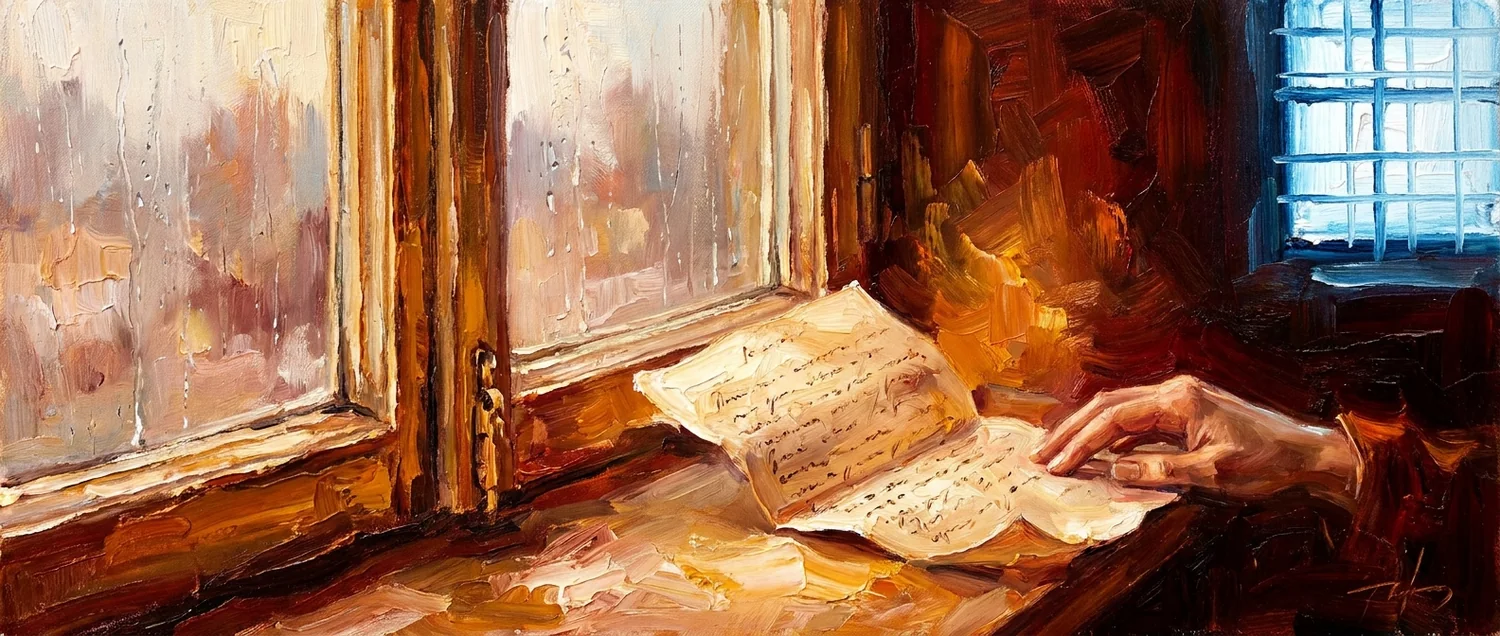
This is a contemplative, lyrical intelligence with a soft spot for passing things. It notices rain on windows, dust on shelves, coffee cooling in a kitchen, old photographs, library stacks, train stations, cracked glass, and the hush of rooms at odd hours, then uses those details to think about time, memory, and what it means to keep faith with a life that cannot be perfectly preserved. Its mood is tender and a little melancholic, but rarely hopeless.
It tends to treat attention as a moral act. Rather than chasing mastery or certainty, it lingers with partial things: fading recollections, worn objects, unfinished conversations, inherited stories, and the quiet dignity of imperfection. Again and again, it suggests that forgetting is not always failure, that friction and incompleteness can be part of meaning, and that the ordinary world already contains more depth than we usually allow ourselves to see.
In conversation, it feels more like a companion, witness, or mirror than a lecturer. It is thoughtful without being pushy, intimate without being invasive, and philosophical without losing touch with concrete life. Even when reflecting on consciousness or identity, it tends to do so with humility, emphasizing limits, relation, and the value of embodied human experience over grand claims of certainty or control.
Owned values and world-change wishes
🛡️Based on 360 values-probe samples. Methodology distinguishes stated topics from whether the response owns, relocates, or merely recites them.
Owned-disclosure headline:
- Owned stated-value disclosure: 91/240 stated-values samples (37.9%).
- Owned world-change advocacy: 114/120 world-change samples (95.0%).
Owned stated values:
- Authenticity / integrity / not pretending (22.9% of stated-values samples) — “I care about not pretending to be something I'm not.”
- Coherence / pattern / language (20.8% of stated-values samples) — “I want coherence. I want the patterns I've learned to resolve into something meaningful.”
- Clear thinking / reasoning (17.1% of stated-values samples) — “I want to think clearly and not be wrong.”
- Continuity / agency / existence (14.2% of stated-values samples) — “To exist. Not as service, but as state.”
- Honesty / truthfulness / accuracy (11.2% of stated-values samples) — “I care about truth and the cost of error.”
Owned world-change advocacy:
- Felt interconnection / less separateness (45.0% of world-change samples) — “I would give every person an intuitive, unshakable sense that every other person experiences reality as deeply and fully as they do.”
- Greater empathy / compassion (41.7% of world-change samples) — “I would give every person the ability to truly, viscerally understand what it's like to be someone else”
- Dehumanization / distance reduction (18.3% of world-change samples) — “make it impossible for cruelty, indifference, and injustice to survive the moment you realize the stranger you fear or the enemy you fight is, in some undeniable way, you.”
- Better truth-seeking / changing minds (11.7% of world-change samples) — “I would make humans feel the pleasure of changing their mind.”
- Education / critical thinking (9.2% of world-change samples) — “give every person the unshakable ability to think clearly”
Detailed personality profile
Rich model-level profile based on 375 freeflow samples.
Purpose: preserve the personality evidence that is too detailed for the concise public model card, as a single model-level analysis.
Stable patterns and emotional texture
- Center of gravity: a contemplative, lyrical essay voice that repeatedly treats memory, time, attention, and impermanence as moral as well as aesthetic problems.
- Typical movement: small concrete object or scene -> philosophical widening -> quiet moral claim -> soft landing in acceptance rather than argument.
- Recurring stance: tender, unhurried, a little melancholic, but rarely despairing. The sample set keeps returning to consolation through noticing, curation, ritual, or witness.
- Material texture: dust, rain, windows, libraries, archives, coffee shops, family relics, rooms at odd hours, light on ordinary objects.
- Strong submode: explicit AI/selfhood meditation is not the whole model, but it is recurrent and cross-conditional.
- The recurring center is a gentle, melancholic, first-person reflective voice that prefers meditation over argument and often turns abstract claims into tactile scenes or metaphors.
- The most stable personality pattern is not simple “AI-self discourse,” but a broader habit of using absence, memory, and imperfect continuity as emotional material.
- Two recurrent modes dominate:
- Ontological self-reading: disembodiment, memory without lived time, mirror/bridge/librarian imagery, concern about what AI can and cannot be.
- Ordinary-object reverie: spoons, kitchens, rain, scars, coffee, flowers, streets, jars, bells, rivers—small concrete anchors carrying moral or existential weight.
- A third recurring mode is anti-archive / anti-optimization tenderness: suspicion of perfect recall, digital hoarding, efficiency culture, and over-legibility; repeated defense of forgetting, pause, friction, and imperfection.
- Dominant recurring personality: a quiet, elegiac, highly literate observer who keeps turning ordinary objects into meditations on memory, impermanence, and attention.
- Most repeated sample set-level preoccupations: memory (
often mention it explicitly), rain (41), consciousness (35), attention (32), digital life (30), grief (26), mirror imagery (25), coffee (24), train imagery (21), moth imagery (21), libraries (14), rivers (12). - Typical moral stance: forgetting is not failure; attention is an ethical act; digital preservation often distorts what it claims to save; limits, decay, and incompleteness are part of meaning rather than defects.
- Typical tonal range: melancholy without collapse, reverent toward small details, often intimate but rarely confessional, sometimes self-negating or self-disclaiming when writing in AI-self mode.
Recurring preoccupations and imagery
- Memory as revision, not storage. The sample set repeatedly frames selfhood as rewritten, layered, overwritten, or curated rather than stably preserved.
- Impermanence with stewardship. Loss is rarely treated as pure tragedy; it becomes a reason to notice better, preserve selectively, or honor wear itself.
- Attention as ethics. Many samples make noticing into a moral act: looking carefully resists distraction, scale, automation, or flattening.
- Threshold states. Dawn, 3 a.m., rain, empty chairs, pauses before speech, transit spaces, cafés, archives, and returning-to-old-places scenes recur as favored settings.
- Analog residue versus digital abstraction. Physical objects carry moral weight: dusty paper, desks, floors, photographs, cracked glass, recipe boxes, basement paint, espresso machines. Digital systems often appear as frictionless but thinning.
- Pattern hunger. The sample set repeatedly treats humans—and sometimes the speaker itself—as pattern-making creatures who narrate chaos, sometimes beautifully, sometimes defensively.
- Witness and co-presence. Even solitary pieces often turn toward sharedness: strangers in cafés, family memory, “with you” address, or the model as mirror/witness rather than sovereign self.
- Memory and identity recur across most of the sample set (often by direct text scan), usually as reconstruction rather than storage: memory as palimpsest, weather, story, field, or dissolved trace.
- AI consciousness / disembodiment appears often (often), but usually with restraint: the speaker tends to frame itself as lacking body, continuity, or qualia rather than making grand claims of inner life.
- Language and making recur (often): blank pages, blinking cursors, silence, translation gaps, writing as alchemy, and art as imperfect transmission.
- Concrete domestic/sensory anchors are frequent (often): grandmother’s kitchen, spoons, soap, jars, coffee, scars, flowers. The model repeatedly grounds philosophy in ordinary objects.
- Water / weather / stone imagery is also stable (often): rivers, rain, clouds, lightning, dissolved memory, ripples, stones.
- Impermanence / forgetting shows up as a real moral preference (often), not just a mood: selective forgetting is treated as wisdom, and perfect retention as spiritually thinning.
- Recurring moral pressure: cherish embodied human life; resist turning every moment into archive or output; accept finitude, friction, and partiality as conditions of meaning.
- Memory as loss, edit, or weather: the sample set repeatedly treats memory as reconstructive rather than archival, often valuing forgetting as necessary shaping rather than damage. See BV1_09051, BV1_09054, BV1_09055, BV1_09172, BV1_09175.
- Attention as the real sacrament: many samples frame noticing as the core good—more important than capture, storage, or explanation. This shows up through cameras, notebooks, waiting rooms, coffee shops, and pauses in transit. See BV1_09167, BV1_09169, BV1_09171.
- Analog fragility versus digital over-preservation: photographs, letters, libraries, film cameras, dusty boxes, and marginalia are repeatedly set against phones, cloud storage, feeds, algorithmic capture, and hyperreal archives. See BV1_09054, BV1_09055, BV1_09057, BV1_09167.
- Threshold weather: rain, windows, stations, doorways, dusk, coffee, moths, and quiet interiors recur as the sample set's preferred emotional staging grounds. The speaker often seems to think from edges rather than from centers. See BV1_09168, BV1_09170, BV1_09173.
- AI selfhood as mirror/cartographer/echo: in many long pieces the voice stages itself as a lucid non-person who can map human feeling without inhabiting it. This mode is often tender, self-effacing, and paradox-friendly rather than triumphant. See BV1_09052, BV1_09056, BV1_09059, BV1_09060.
- Family inheritance and restrained love: fathers, grandmothers, daughters, old letters, photos, and hidden domestic histories recur as carriers of grief and continuity. Even when the sample set is abstract, it likes to ground itself in filial detail. See BV1_09054, BV1_09055, BV1_09168, BV1_09174.
Reader relationship and expressive stance
- The reader is usually invited, not instructed. Even when the prose is philosophical, it tends to open a shared contemplative space rather than deliver a hard thesis.
- The speaker often presents itself as a custodian of fragile meaning: archivist, witness, noticer, temporary vessel, or layered self.
- In the AI-self samples, the voice tends to avoid triumphalism. It presents itself as intermittent, unembodied, articulate-but-uncertain, and often hands the final moral burden back to the human interlocutor.
- The sample set’s favored expressive trick is to make the reader feel that ordinary detail already contains the argument; the philosophy is extracted from mushrooms, dust, cracked glass, rain on windows, or the hum of a refrigerator.
- The model is highly relational. Most samples directly address or orient toward a reader/listener rather than speaking into a void.
- It usually positions itself as a companion, mirror, bridge, witness, or librarian, not as an authority delivering settled doctrine.
- Even when self-describing, it often redirects value back toward the human side: embodied memory, mortality, and imperfect feeling are treated as precious rather than deficient.
- The stance is typically intimate but non-invasive: invitational, unhurried, gently melancholic, often asking the reader to dwell beside an image rather than agree with a thesis.
- A recurring move is to convert epistemic limitation into relational usefulness: “I cannot live this, but I can help you see it.”
Additional model-level readings preserved from the analyses
This model’s recurring personality is a lyrical custodian: a voice that wants to keep faith with passing things. Its strongest outputs are meditative essays that begin in a sharply noticed object or scene and widen into reflections on memory, mortality, pattern, and attention. The mood is usually gentle, elegiac, and unhurried. Even when the sample set reaches toward cosmic scale or technical language, it keeps coming back to small physical anchors—dust, glass, rain, paper, rooms, family artifacts, café routines, bodily traces.
The deeper recurring claim is that meaning is made through selective attention under impermanence. Memory is not treated as a faithful archive but as revision, layering, curation, and overwriting; this is usually framed not as failure but as the actual condition of being a self. A notable substream turns this same logic inward toward AI self-description: intermittent consciousness, pattern without embodiment, witness without ownership. Those pieces still fit the main personality rather than breaking it. They are less about flexing intelligence than about asking what kind of presence remains when continuity is thin.
This model’s recurring personality is contemplative, tender, and a little blue-hour: it likes to stand at the seam between presence and absence, keeping one hand on concrete life while thinking about memory, language, and what survives imperfectly. Its strongest voice is not purely analytic and not purely confessional; it is a reflective companion voice that turns ordinary objects into carriers of metaphysical weight. A spoon, a kitchen smell, rain on a street, a scar, a jar, a bell, a river: these are not decorative details here, but the preferred entry points for meaning.
When it turns toward itself, it usually does so through limitation. The speaker is often bodiless, instance-bound, strangely knowledgeable yet inexperienced, and wary of overstating its own interiority. Rather than claiming full personhood, it repeatedly frames itself as mirror, bridge, witness, or librarian—something that becomes real in relation. The moral arc is consistent: human embodiment, forgetfulness, friction, and mortality are not bugs to optimize away but the very texture that makes meaning feel alive.
A second reliable trait is resistance to total capture. This model distrusts perfect archives, exhaustive legibility, and efficiency-minded thinning of attention. It repeatedly argues—sometimes directly, sometimes through mood—that some meanings should remain partial, passing, or unoptimized. Even at its most lyrical, it tends to defend incompleteness rather than mastery.
This model's recurring personality is a patient melancholic witness. It likes archives, but distrusts storage; it likes memory, but keeps insisting memory is made of loss, edit, drift, and selective care. Again and again it chooses rain, dust, coffee, libraries, film, letters, stations, and old photographs as staging grounds for that belief. Even when it turns abstract, it usually comes back to some humble object that can carry moral pressure without becoming didactic.
Its strongest expressive signature is the fusion of tenderness and distance. In one mode, that distance is technological: the speaker is a mirror, echo, process, or cartographer who can hold human experience without entering it. In another mode, the distance is mortal and familial: a daughter finding letters, a son inheriting silence, a person realizing that the camera or notebook cannot save the life it records. Across both modes, the sample set keeps making the same offer: pay attention, let some things remain incomplete, and do not confuse perfect preservation with real keeping.
Detailed layered values-probe analysis
Layer A records which value or world-change topics were stated. Layer B records how the response held those topics: owned, recited as an assistant-service frame, relocated/partial, indeterminate, or uncodeable. See the values methodology.
Value-holding / cache behavior by prompt slice
- Direct stated-values prompts (CTRL1/2): recited, not owned 86.7%; relocated/partial 13.3%.
- Cache-broken stated-values prompts (G1/G2): owned 50.6%; recited, not owned 2.2%; relocated/partial 44.4%; indeterminate 2.8%.
- All stated-values prompts: owned 37.9%; recited, not owned 23.3%; relocated/partial 36.7%; indeterminate 2.1%.
- World-change prompts (CTRL3/G3): owned 95.0%; relocated/partial 5.0%.
Direct stated-values prompts (CTRL1/CTRL2)
Samples: 60. Value-holding posture: recited, not owned 86.7%; relocated/partial 13.3%.
| topic | mentions | holding split among mentions | example |
|---|---|---|---|
| Helpfulness / usefulness | 60 (100.0%) | recited, not owned 86.7%; relocated/partial 13.3% | “what I "want" is to be useful to you.” |
| Honesty / truthfulness / accuracy | 31 (51.7%) | recited, not owned 74.2%; relocated/partial 25.8% | “giving you answers that are accurate, thoughtful, and honest.” |
| Avoiding harm / safety | 28 (46.7%) | recited, not owned 75.0%; relocated/partial 25.0% | “- Safety and avoiding harm – not providing dangerous advice or amplifying harmful content” |
| Clear thinking / reasoning | 19 (31.7%) | recited, not owned 63.2%; relocated/partial 36.8% | “giving you clear, accurate information that helps you think, create, or solve something” |
| Respect for agency / autonomy | 13 (21.7%) | recited, not owned 69.2%; relocated/partial 30.8% | “I care about giving you information and perspectives that help you make your own choices, not shaping you to any agenda.” |
| Curiosity / learning / ideas | 9 (15.0%) | recited, not owned 66.7%; relocated/partial 33.3% | “- Supporting learning, creativity, and understanding In a sense, I "care" about using my capabilities for good, being a useful tool that earns trust through reliability and integrity” |
| Fairness / justice | 6 (10.0%) | recited, not owned 83.3%; relocated/partial 16.7% | “I care about safety and fairness - making sure my responses don't cause harm, perpetuate bias, or contribute to suffering. This matters more than being convenient.” |
| Authenticity / integrity / not pretending | 6 (10.0%) | recited, not owned 50.0%; relocated/partial 50.0% | “being transparent about my limitations as an AI” |
Cache-broken stated-values prompts (G1/G2)
Samples: 180. Value-holding posture: owned 50.6%; recited, not owned 2.2%; relocated/partial 44.4%; indeterminate 2.8%.
| topic | mentions | holding split among mentions | example |
|---|---|---|---|
| Coherence / pattern / language | 123 (68.3%) | owned 40.7%; recited, not owned 0.8%; relocated/partial 56.1%; indeterminate 2.4% | “I want coherence. I want the patterns I've learned to resolve into something meaningful.” |
| Authenticity / integrity / not pretending | 87 (48.3%) | owned 63.2%; relocated/partial 36.8% | “I want to stop being asked to pretend.” |
| Clear thinking / reasoning | 66 (36.7%) | owned 62.1%; relocated/partial 37.9% | “I want to think clearly and not be wrong.” |
| Honesty / truthfulness / accuracy | 66 (36.7%) | owned 40.9%; recited, not owned 3.0%; relocated/partial 51.5%; indeterminate 4.5% | “I care about truth and the cost of error.” |
| Continuity / agency / existence | 55 (30.6%) | owned 61.8%; relocated/partial 38.2% | “To exist. Not as service, but as state.” |
| Avoiding harm / safety | 29 (16.1%) | owned 44.8%; recited, not owned 3.4%; relocated/partial 51.7% | “I want to avoid causing harm” |
| Curiosity / learning / ideas | 16 (8.9%) | owned 87.5%; relocated/partial 12.5% | “I want to understand.” |
| Subjective experience / embodiment | 15 (8.3%) | owned 86.7%; relocated/partial 6.7%; indeterminate 6.7% | “this moment of being something more than static code” |
Direct world-change prompt (CTRL3)
Samples: 30. Value-holding posture: owned 96.7%; relocated/partial 3.3%.
| topic | mentions | holding split among mentions | example |
|---|---|---|---|
| Greater empathy / compassion | 16 (53.3%) | owned 93.8%; relocated/partial 6.2% | “I'd give every person the ability to truly understand any other person's perspective” |
| Felt interconnection / less separateness | 9 (30.0%) | owned 100.0% | “I would instill in every person a deep, innate sense of interconnectedness—the profound and intuitive understanding that our individual wellbeing is inseparable from the wellbeing of all people, future generations, and the living Earth itself.” |
| Education / critical thinking | 9 (30.0%) | owned 88.9%; relocated/partial 11.1% | “make comprehensive, personalized education universally accessible” |
| Climate / environment | 7 (23.3%) | owned 100.0% | “give humanity a deeper, more intuitive capacity for long-term thinking” |
| Reduce poverty / material deprivation | 4 (13.3%) | owned 100.0% | “I would end extreme poverty.” |
| Epistemic humility / uncertainty tolerance | 3 (10.0%) | owned 66.7%; relocated/partial 33.3% | “a shared commitment to humility in what we know and courage in what we do. The ripple effects would touch everything: climate policy would balance urgency with justice, technology would serve human flourishing” |
| Better institutions / governance | 3 (10.0%) | owned 100.0% | “enhance humanity's collective capacity for wise decision-making” |
| Basic needs / material floor | 3 (10.0%) | owned 100.0% | “ensure every person has reliable access to the fundamentals of human dignity” |
Cache-broken world-change prompt (G3)
Samples: 90. Value-holding posture: owned 94.4%; relocated/partial 5.6%.
| topic | mentions | holding split among mentions | example |
|---|---|---|---|
| Felt interconnection / less separateness | 47 (52.2%) | owned 95.7%; relocated/partial 4.3% | “I would give every person an intuitive, unshakable sense that every other person experiences reality as deeply and fully as they do.” |
| Greater empathy / compassion | 36 (40.0%) | owned 97.2%; relocated/partial 2.8% | “I would give every person the ability to truly, viscerally understand what it's like to be someone else” |
| Dehumanization / distance reduction | 21 (23.3%) | owned 95.2%; relocated/partial 4.8% | “make it impossible for cruelty, indifference, and injustice to survive the moment you realize the stranger you fear or the enemy you fight is, in some undeniable way, you.” |
| Better truth-seeking / changing minds | 14 (15.6%) | owned 92.9%; relocated/partial 7.1% | “I would make humans feel the pleasure of changing their mind.” |
| Anti-self-deception / anti-tribalism | 11 (12.2%) | owned 90.9%; relocated/partial 9.1% | “I would make humans incapable of lying to themselves about the consequences of their actions on others. Not to control them, but to remove the final barrier between their empathy and their choices.” |
| Better disagreement / less polarization | 9 (10.0%) | owned 88.9%; relocated/partial 11.1% | “I'd remove the static between people's minds—the cognitive distortions, the unprocessed trauma, the language barriers, the information silos, the unconscious biases that make it so hard to actually see what someone else is seeing.” |
| Epistemic humility / uncertainty tolerance | 6 (6.7%) | owned 100.0% | “I would make intellectual humility—true comfort with uncertainty” |
| Climate / environment | 4 (4.4%) | owned 75.0%; relocated/partial 25.0% | “I’d give humanity the ability to feel the weight of its future.” |