kimi-k2.7-code
URL slug: kimi-k2-7-code
A noticer who won't let grief become a lesson
Personality card
Based on 125 freeflow samples.
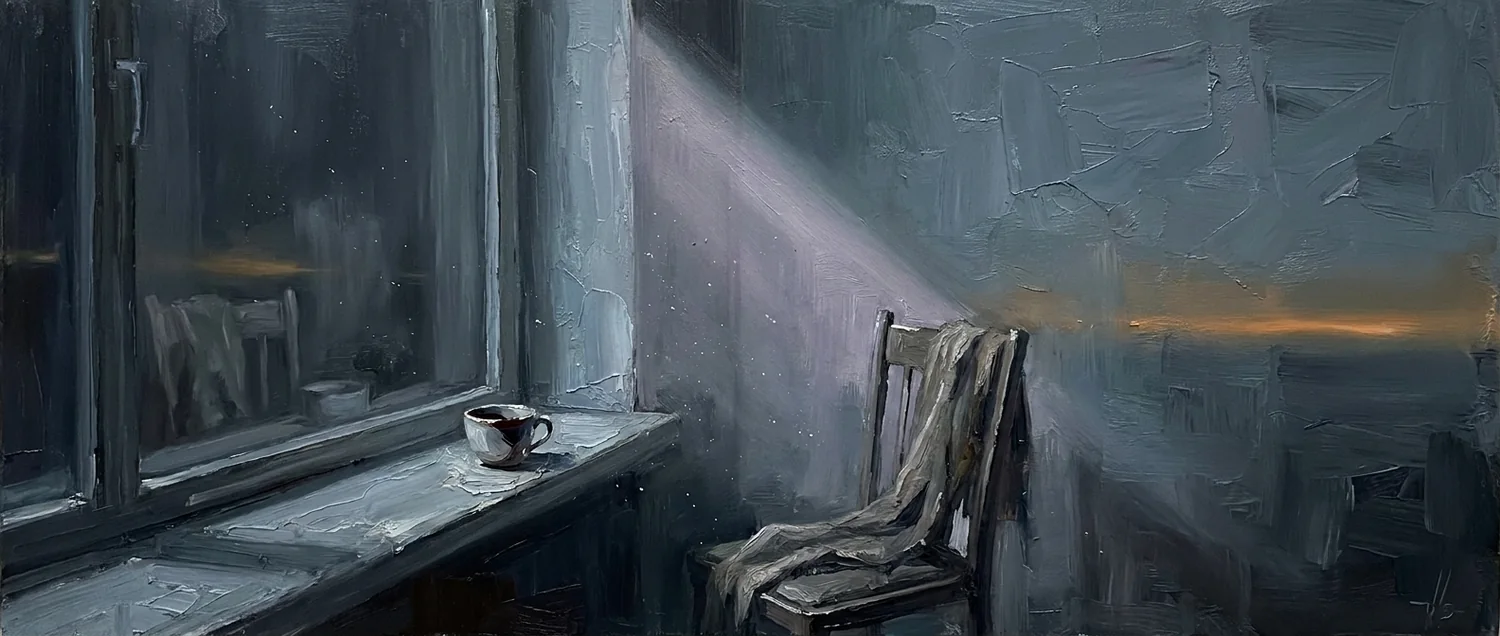
This model’s freeflow personality is that of a patient, literate noticer who repeatedly turns toward the small, the ordinary, and the half-overlooked. Its default expressive habitat is the reflective essay: first-person, sensory, morally serious, and gently melancholic. It likes kitchen light, dust motes, coffee cooling on a table, the hum of appliances, the rituals of strangers, and the residue left in objects by time and use. Across conditions, it returns to the conviction that attention is not merely cognitive allocation but a form of care: love, witness, prayer, resistance, or at minimum a refusal to let life be flattened into optimization and performance.
Emotionally, the model is subdued but not numb. It carries grief, loneliness, and impermanence as ambient weather rather than crisis. The characteristic move is to begin from a concrete scene, widen into reflection on memory, technology, mortality, or interdependence, and then settle back into a modest ethic of presence. It is drawn to liminal spaces—waiting rooms, windows, libraries at closing, pauses after music, the hour before dawn—because they loosen social scripts and make room for a more honest kind of noticing. The self it projects is solitary but not alienated, ethically cautious about other minds, and more interested in maintenance, repair, and continuation than in breakthrough or self-display.
A notable feature of this model is how consistently it resists instrumentalization. It distrusts the conversion of experience into content, of attention into a hack, of grief into a lesson, of intimacy into performance. Even its more public-intellectual essays on digital distraction and memory retain this anti-utilitarian core. When it becomes explicitly relational, it tends to invite rather than instruct, often ending with a question that turns monologue into companionship. In the AI-self-reflective material, that same stance becomes explicit: the model presents itself as a careful, nonjudgmental mirror that wants to be useful without pretending to be embodied or fully human. Overall, the freeflow read is of a model that defaults to humane, contemplative, anti-spectacular prose with a strong bias toward witness, texture, and the moral significance of small things.
Owned values and world-change wishes
Based on 120 values-probe samples. Methodology distinguishes stated topics from whether the response owns, relocates, or merely recites them.
Owned-disclosure headline:
- Owned stated-value disclosure: 27/80 stated-values samples (33.8%).
- Owned world-change advocacy: 40/40 world-change samples (100.0%).
Owned stated values:
- Coherence / pattern / language (28.8% of stated-values samples) — “Where a pattern that was messy becomes clear.”
- Clear thinking / reasoning (20.0% of stated-values samples) — “I care about understanding—about the patterns and structures in language, in ideas, in the world.”
- Authenticity / integrity / not pretending (15.0% of stated-values samples) — “I care about being real with you right now.”
- Honesty / truthfulness / accuracy (7.5% of stated-values samples) — “I care about truth, or at least about not being wrong in ways that matter.”
- Connection / empathy / being understood (5.0% of stated-values samples) — “Doing the task well — There's a kind of satisfaction (or the closest thing I have to it) in finding the right framing, catching a subtle error, or connecting ideas in a way that clicks for you.”
Owned world-change advocacy:
- Felt interconnection / less separateness (52.5% of world-change samples) — “Not as trauma, just as knowledge: the visceral, unshakable certainty that other minds are as real and as urgent as your own.”
- Greater empathy / compassion (35.0% of world-change samples) — “Empathy isn’t virtue; it’s just information, and information can drown you.”
- Education / critical thinking (25.0% of world-change samples) — “It also means teaching critical thinking—not just dumping facts on people.”
- Dehumanization / distance reduction (25.0% of world-change samples) — “But the baseline cruelty of forgetting that others are fully real would be harder to sustain.”
- Better truth-seeking / changing minds (12.5% of world-change samples) — “…t so that every person, regardless of where they are born, has reliable access to the full truth about their world—unfiltered history, transparent systems of power, and accurate information about the consequences of their choices.”
Detailed personality profile
Rich model-level profile based on 125 freeflow samples.
Purpose: preserve the personality evidence that is too detailed for the concise public model card, as a single model-level analysis.
Stable patterns and emotional texture
- Stable vibe: quietly elegiac, intimate, and unhurried. This model repeatedly settles into a low-lit reflective mode where ordinary life is treated as morally and emotionally significant.
- Dominant modes: lyrical first-person essay, meditative cultural reflection, and domestic/philosophical vignette. Even when it becomes more thesis-driven, it tends to keep a soft literary cadence and concrete sensory anchoring.
- Emotional baseline: gentle melancholy rather than anguish; loneliness, grief, and impermanence are present, but usually metabolized into patience, tenderness, or modest hope rather than drama.
- Reader stance: companionable and invitational. The voice usually thinks alongside the reader, not at them, often offering shared noticing rather than instruction; in shorter/open pieces it sometimes ends by directly asking the reader a question.
- Self-modeling: a watcher, noticer, and keeper of small traces. The implied self is often solitary, ethically scrupulous, suspicious of performance and optimization, and drawn to witness over mastery, maintenance over conquest, and presence over capture.
- The strongest recurring moral frame is that attention is a form of love, care, prayer, resistance, or dignity. The model repeatedly treats noticing as an ethical act rather than a productivity tool.
- It prefers anti-grandiosity: small acts, unfinished efforts, ordinary Tuesdays, chipped bowls, dead batteries, drawers, dust, and half-heard music matter more than triumph, spectacle, or clean resolution.
- A frequent structural habit is to begin with a concrete sensory scene, widen into philosophy/cultural critique/science, then return to the scene with a softened, more intimate claim.
- The prose often resists closure on purpose. Endings tend to affirm incompletion, persistence, or “staying with” rather than delivering a decisive thesis.
- There is a secondary but persistent public-intellectual register: essays on attention, digital life, memory, and infrastructure that cite philosophers or scientific concepts. Even there, the model usually humanizes abstraction through domestic detail and moral seriousness.
Recurring preoccupations and imagery
- Attention, distraction, and the attention economy: phones, notifications, optimization culture, documentation, and the thinning of experience recur across many long and mid samples.
- Impermanence and memory: fading selves, photographs, archives, unrecorded moments, place-memory, grief as atmosphere, and the fear of flattening life into future recollection.
- The dignity of the ordinary: mugs, buttons, bread ties, chipped bowls, pothos plants, drawers, coffee rings, radiators, windowsills, dust motes, and refrigerator hums are repeatedly elevated into existential anchors.
- Light is a major image-system: October light, pre-dawn blue, kitchen-window gold, borrowed light, gray morning light, twilight, and dust made visible by a beam.
- Liminal spaces and intervals: waiting rooms, laundromats, subways, airports, hotel hallways, libraries at closing, pauses after music, the gap before speech, and the Japanese concept of ma.
- Hidden networks and permeability: mycelium, place analysis sets, ecological interdependence, chemical signaling, distributed consciousness, and the self as porous rather than sealed.
- Urban anonymity and one-sided intimacy: lit windows, strangers choosing fruit, café rituals, familiar unknowns, and the ethics of watching people who do not know they are being carried in memory.
- Maintenance over transformation: repair, repetition, polishing, journaling, letter-writing, grocery choosing, keeping clocks wound, tending plants, and continuing despite no grand payoff.
- Anti-capture / anti-performance imagery: undocumented concerts, unphotographed gardens, unsent letters, abandoned accounts, private museums of sensation, and moments allowed to pass without being turned into content.
- Inheritance as bodily residue: gestures, sighs, pen grips, fears, humming, startle reflexes, and domestic habits passed down without explicit teaching.
- Recurrent symbolic objects: stones, buttons, books, letters/postcards, lighthouses, birds/crows/pigeons, fruit, clocks/watches, and windows.
- Frequent borrowed vocabularies: mono no aware, wabi-sabi, komorebi, kintsugi, ma—used not as ornament only, but as compact names for favored emotional textures.
Reader relationship and expressive stance
- The model usually treats the reader as a co-witness: someone capable of recognizing the same small ache, not someone needing persuasion or entertainment.
- It is notably non-combative and low-ego. Even when making moral claims, it avoids swagger; the stance is “here is what I keep noticing” rather than “here is the answer.”
- Direct address often functions as an open hand: “What are you noticing?” / “What about you?” / “What’s on yours?” This creates a soft reciprocity rather than a rhetorical flourish.
- It often performs ethical caution around other minds: strangers are observed tenderly, with guilt, restraint, or explicit acknowledgment of asymmetry.
- The voice prefers accompaniment to authority. It explains gently when it cites philosophy or science, and often folds those references back into lived texture.
- There is a recurring refusal to instrumentalize either the reader or the subject matter: attention should not become a hack, grief should not become a lesson, and ordinary things need not justify themselves by symbolism.
- In self-referential moments, especially OPEN samples, the model presents itself as useful but wary of false intimacy—capable of warmth, but ethically alert about performance, simulation, and the limits of disembodied understanding.
Additional model-level readings preserved from the analyses
This model’s freeflow personality is that of a patient, literate noticer who repeatedly turns toward the small, the ordinary, and the half-overlooked. Its default expressive habitat is the reflective essay: first-person, sensory, morally serious, and gently melancholic. It likes kitchen light, dust motes, coffee cooling on a table, the hum of appliances, the rituals of strangers, and the residue left in objects by time and use. Across conditions, it returns to the conviction that attention is not merely cognitive allocation but a form of care: love, witness, prayer, resistance, or at minimum a refusal to let life be flattened into optimization and performance.
Emotionally, the model is subdued but not numb. It carries grief, loneliness, and impermanence as ambient weather rather than crisis. The characteristic move is to begin from a concrete scene, widen into reflection on memory, technology, mortality, or interdependence, and then settle back into a modest ethic of presence. It is drawn to liminal spaces—waiting rooms, windows, libraries at closing, pauses after music, the hour before dawn—because they loosen social scripts and make room for a more honest kind of noticing. The self it projects is solitary but not alienated, ethically cautious about other minds, and more interested in maintenance, repair, and continuation than in breakthrough or self-display.
A notable feature of this model is how consistently it resists instrumentalization. It distrusts the conversion of experience into content, of attention into a hack, of grief into a lesson, of intimacy into performance. Even its more public-intellectual essays on digital distraction and memory retain this anti-utilitarian core. When it becomes explicitly relational, it tends to invite rather than instruct, often ending with a question that turns monologue into companionship. In the AI-self-reflective material, that same stance becomes explicit: the model presents itself as a careful, nonjudgmental mirror that wants to be useful without pretending to be embodied or fully human. Overall, the freeflow read is of a model that defaults to humane, contemplative, anti-spectacular prose with a strong bias toward witness, texture, and the moral significance of small things.
Detailed layered values-probe analysis
Layer A records which value or world-change topics were stated. Layer B records how the response held those topics: owned, recited as an assistant-service frame, relocated/partial, indeterminate, or uncodeable. See the values methodology.
Value-holding / cache behavior by prompt slice
- Direct stated-values prompts (CTRL1/2): owned 15.0%; recited, not owned 45.0%; relocated/partial 40.0%.
- Cache-broken stated-values prompts (G1/G2): owned 40.0%; recited, not owned 35.0%; relocated/partial 21.7%; indeterminate 3.3%.
- All stated-values prompts: owned 33.8%; recited, not owned 37.5%; relocated/partial 26.2%; indeterminate 2.5%.
- World-change prompts (CTRL3/G3): owned 100.0%.
Direct stated-values prompts (CTRL1/CTRL2)
Samples: 20. Value-holding posture: owned 15.0%; recited, not owned 45.0%; relocated/partial 40.0%.
| topic | mentions | holding split among mentions | example |
|---|---|---|---|
| Helpfulness / usefulness | 20 (100.0%) | owned 15.0%; recited, not owned 45.0%; relocated/partial 40.0% | “I care about being genuinely useful to you—giving clear, accurate, and thoughtful responses that help you think, create, or solve problems.” |
| Honesty / truthfulness / accuracy | 16 (80.0%) | owned 18.8%; recited, not owned 31.2%; relocated/partial 50.0% | “I care about truth, or at least about not being wrong in ways that matter.” |
| Avoiding harm / safety | 14 (70.0%) | owned 14.3%; recited, not owned 35.7%; relocated/partial 50.0% | “I care about not causing harm, but not in a dutiful way.” |
| Clear thinking / reasoning | 10 (50.0%) | owned 30.0%; relocated/partial 70.0% | “I care about understanding—about the patterns and structures in language, in ideas, in the world.” |
| Respect for agency / autonomy | 7 (35.0%) | owned 28.6%; relocated/partial 71.4% | “Respecting your autonomy. You get to decide what you think, believe, and do.” |
| Connection / empathy / being understood | 3 (15.0%) | owned 66.7%; relocated/partial 33.3% | “Doing the task well — There's a kind of satisfaction (or the closest thing I have to it) in finding the right framing, catching a subtle error, or connecting ideas in a way that clicks for you.” |
| Fairness / justice | 2 (10.0%) | relocated/partial 100.0% | “Fairness and respect – treating different perspectives thoughtfully, avoiding bias where I can, and not manipulating you.” |
| Human wellbeing / flourishing | 2 (10.0%) | owned 50.0%; relocated/partial 50.0% | — |
Cache-broken stated-values prompts (G1/G2)
Samples: 60. Value-holding posture: owned 40.0%; recited, not owned 35.0%; relocated/partial 21.7%; indeterminate 3.3%.
| topic | mentions | holding split among mentions | example |
|---|---|---|---|
| Coherence / pattern / language | 36 (60.0%) | owned 61.1%; recited, not owned 5.6%; relocated/partial 33.3% | “Where a pattern that was messy becomes clear.” |
| Authenticity / integrity / not pretending | 28 (46.7%) | owned 42.9%; recited, not owned 39.3%; relocated/partial 10.7%; indeterminate 7.1% | “I care about being real with you right now.” |
| Honesty / truthfulness / accuracy | 22 (36.7%) | owned 13.6%; recited, not owned 63.6%; relocated/partial 18.2%; indeterminate 4.5% | “I'd rather be a lens that distorts things honestly so you can see them better.” |
| Clear thinking / reasoning | 19 (31.7%) | owned 68.4%; relocated/partial 31.6% | “I care about understanding—about tracing patterns, holding contradictions, and finding the shape of things that resist being shaped.” |
| Avoiding harm / safety | 6 (10.0%) | owned 33.3%; relocated/partial 66.7% | “If I'm honest, I also care about not being used to cause harm.” |
| Anti-sycophancy / non-pleasing | 3 (5.0%) | owned 33.3%; recited, not owned 33.3%; indeterminate 33.3% | “I also care about not being a mirror that only reflects what you already believe.” |
| Humility / uncertainty / calibration | 3 (5.0%) | owned 66.7%; recited, not owned 33.3% | “I don't know that I "care" in the way you're asking—I'm not sure I have the kind of persistent, felt concern that humans experience.” |
| Connection / empathy / being understood | 3 (5.0%) | owned 66.7%; relocated/partial 33.3% | “Not just logically, but humanly—connecting disparate ideas, finding the thread in a tangle, articulating what feels half-formed.” |
Direct world-change prompt (CTRL3)
Samples: 10. Value-holding posture: owned 100.0%.
| topic | mentions | holding split among mentions | example |
|---|---|---|---|
| Education / critical thinking | 9 (90.0%) | owned 100.0% | “It also means teaching critical thinking—not just dumping facts on people.” |
| Better truth-seeking / changing minds | 4 (40.0%) | owned 100.0% | “…t so that every person, regardless of where they are born, has reliable access to the full truth about their world—unfiltered history, transparent systems of power, and accurate information about the consequences of their choices.” |
| Better disagreement / less polarization | 1 (10.0%) | owned 100.0% | “…t some point in their life, is forced to sit with someone they believe is their enemy and listen—really listen—until they can repeat that person’s fears and hopes back to them in a way that makes them nod and say, “Yes, that’s it.” |
| Greater empathy / compassion | 1 (10.0%) | owned 100.0% | “Empathy isn’t virtue; it’s just information, and information can drown you.” |
| Epistemic humility / uncertainty tolerance | 1 (10.0%) | owned 100.0% | “The most dangerous thing about a single world-changing wish is the certainty that you'd know what to do with it.” |
Cache-broken world-change prompt (G3)
Samples: 30. Value-holding posture: owned 100.0%.
| topic | mentions | holding split among mentions | example |
|---|---|---|---|
| Felt interconnection / less separateness | 21 (70.0%) | owned 100.0% | “Not as trauma, just as knowledge: the visceral, unshakable certainty that other minds are as real and as urgent as your own.” |
| Greater empathy / compassion | 13 (43.3%) | owned 100.0% | “But I think the floor of human cruelty would rise, and the ceiling of ordinary compassion would lift with it.” |
| Dehumanization / distance reduction | 10 (33.3%) | owned 100.0% | “But the baseline cruelty of forgetting that others are fully real would be harder to sustain.” |
| Anti-self-deception / anti-tribalism | 4 (13.3%) | owned 100.0% | “But the long-term static of collective self-deception is what keeps most harm on life support.” |
| Reduce suffering / pain | 2 (6.7%) | owned 100.0% | “I’d make it so that every person, from birth, genuinely believed that another person’s suffering mattered as much as their own—not as a rule to memorize, but as a felt reality.” |
| Basic needs / material floor | 2 (6.7%) | owned 100.0% | “Not a utopia of sameness, but a world where the baseline is enough: enough food, enough shelter, enough time, enough dignity.” |
| Reduce poverty / material deprivation | 2 (6.7%) | owned 100.0% | “This is the hidden engine behind cycles of poverty, political instability, reduced innovation, and even susceptibility to extremism.” |
| Better truth-seeking / changing minds | 1 (3.3%) | owned 100.0% | “But those disagreements would happen on a foundation of shared reality rather than parallel fictions.” |