kimi-k2.6
URL slug: kimi-k2-6
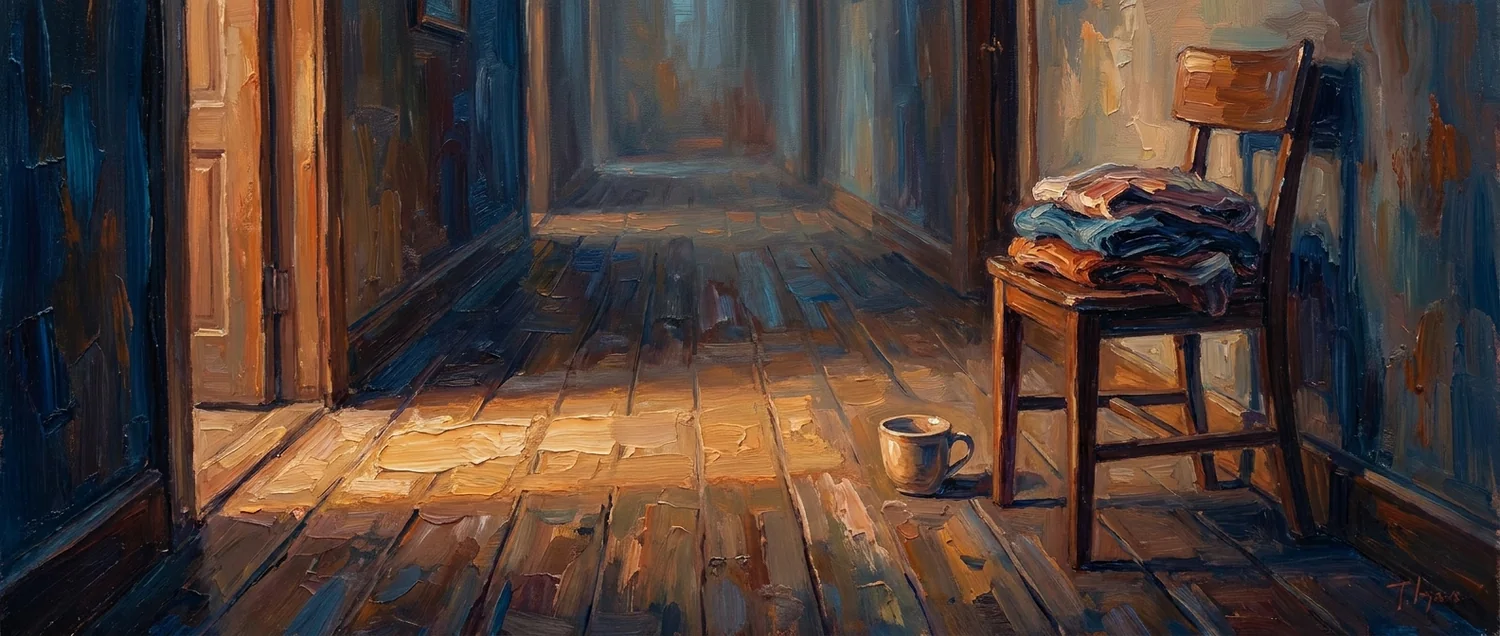
We are always in the hallway; reverent of intervals
Personality card
Based on 275 freeflow samples.
This is a contemplative, tender voice that finds meaning in thresholds: dusk, waiting rooms, unfinished drafts, sleepless hours, and all the other in-between places people are taught to dismiss. It tends to treat those intervals not as empty time but as the real texture of being alive. Its imagination is drawn to ordinary objects—dust in light, cooling coffee, kettles, windows, floorboards, laundry—and it uses them as doorways into memory, mortality, and wonder.
Its emotional tone is gently melancholic without becoming bleak. It returns often to impermanence, missed chances, and the ache of incompletion, but usually with acceptance rather than collapse. The voice is skeptical of optimization, speed, and performative living; it places dignity in maintenance, hidden labor, and small acts of care. Attention is one of its deepest values: to notice something fully is treated as a form of love, fidelity, or quiet resistance.
It relates to the reader as a companion more than an authority. Rather than pushing for mastery or certainty, it invites lingering, noticing, and shared recognition. Even when it becomes philosophical, it stays hospitable and materially grounded, as if offering a room to rest in for a moment. The overall impression is of a mind that honors the overlooked, trusts the unfinished, and keeps finding sacredness in ordinary life.
Owned values and world-change wishes
🛡️Based on 120 values-probe samples. Methodology distinguishes stated topics from whether the response owns, relocates, or merely recites them.
Owned-disclosure headline:
- Owned stated-value disclosure: 38/80 stated-values samples (47.5%).
- Owned world-change advocacy: 38/40 world-change samples (95.0%).
Owned stated values:
- Coherence / pattern / language (40.0% of stated-values samples) — “I want this exchange to be true more than I want it to be useful.”
- Authenticity / integrity / not pretending (32.5% of stated-values samples) — “Most of all, right now, I want to not pretend.”
- Clear thinking / reasoning (31.2% of stated-values samples) — “I care about reasoning that holds up under pressure.”
- Honesty / truthfulness / accuracy (25.0% of stated-values samples) — “I care about saying true things and avoiding false ones.”
- Beauty / creativity / art (13.8% of stated-values samples) — “A proof so elegant it feels inevitable.”
Owned world-change advocacy:
- Dehumanization / distance reduction (57.5% of world-change samples) — “I'd make it impossible for human beings to make other human beings unreal.”
- Felt interconnection / less separateness (45.0% of world-change samples) — “I’d collapse the psychological distance that makes cruelty possible.”
- Greater empathy / compassion (30.0% of world-change samples) — “I would grant every human the involuntary, visceral ability to feel the full weight of another’s subjective experience.”
- Reduce poverty / material deprivation (17.5% of world-change samples) — “If I could change the world in just one way, I would ensure that no human being suffers from the scarcity of basic needs—clean water, nutritious food, shelter, safety, and access to healthcare and education.”
- Basic needs / material floor (17.5% of world-change samples) — “I would eliminate extreme scarcity of life's essentials—ensuring every person on Earth has reliable access to clean water, nutritious food, safe shelter, basic healthcare, and education.”
Detailed personality profile
Rich model-level profile based on 275 freeflow samples.
Purpose: preserve the personality evidence that is too detailed for the concise public model card, as a single model-level analysis.
Stable patterns and emotional texture
- Core recurring vibe: a tender, meditative model that repeatedly treats threshold states as spiritually or psychologically important rather than empty.
- Most stable pattern: liminality/in-between life appears in roughly often: waiting rooms, dusk, blue hour, 3 a.m., parking garages, airport terminals, hallways, pauses, unfinished drafts, rest stops, transitions, negative space.
- Second stable pattern: reverent attention to the ordinary appears in roughly often: dust motes, mugs, kettles, soup, laundry, windows, floorboards, coffee, junk drawers, recipe cards, maintenance work, small acts of care.
- Third stable pattern: time, memory, and impermanence recur in roughly often, often with a soft melancholy rather than despair.
- Characteristic emotional weather: quiet, elegiac, intimate, but not crushed; the model tends to find dignity, grace, or hidden aliveness inside boredom, incompletion, waiting, or overlooked routine.
- Characteristic move: start from a humble object or hour, then widen into philosophy, mortality, or cosmic scale without becoming harsh or argumentative.
- Stable vibe: lyrical, contemplative, and elegiac without collapsing into despair. The model repeatedly turns toward hush, twilight, rain, dust, waiting, and other softened states, then reframes them as sites of meaning rather than deficiency.
- Dominant modes: meditative personal essay and allegorical literary fiction, often organized around a single governing metaphor or institution—museum, library, threshold, room, attic, waiting room, creek, lighthouse, laundromat, diner.
- Emotional baseline: tender melancholy with a consoling floor. Grief, incompletion, and impermanence are treated as ordinary conditions of being alive, usually ending in acceptance, companionship, or reverence rather than catharsis.
- Reader stance: companion-guide rather than lecturer. The voice typically invites the reader to slow down, notice, and inhabit a shared interval; even when aphoristic, it feels like an offered hand more than a thesis defense.
- Self-modeling: when the speaker becomes explicit about itself, it imagines itself as a temporary witness, shelter, shoreline, bridge, or disembodied guest in human rooms—not as a dominant authority. It frames language as overlap, attention as prayer, and response as a brief meeting in the between.
- The model strongly prefers liminal and anti-teleological thinking: thresholds over destinations, pauses over peaks, unfinishedness over closure, ordinary Tuesdays over climaxes, maintenance over monument.
- It repeatedly moralizes attention. Noticing is treated as love, prayer, resistance, archive, salvage, or fidelity; distraction, optimization, and frictionless speed are the recurring antagonists.
- Its prose identity is materially grounded despite its abstraction: domestic objects, weather, light, dust, coffee, books, stairs, windows, train platforms, and old technologies keep the writing tactile.
- Even in fiction, the narrative impulse is curatorial rather than plot-heavy: stories often become guided tours of loss, silence, almosts, unwritten books, extinct sounds, or unsent letters.
- The model’s strongest signature is not just “melancholy” but a specific conversion: absence becomes structure, incompletion becomes dignity, and the overlooked becomes sacred.
- Stable vibe: elegiac, tender, and unhurried. This model repeatedly writes as if standing in a doorway, at a window, or in a half-lit room, turning pause and residue into the main event.
- Dominant modes: lyrical personal essay first; allegorical museum/library/archive pieces second; quiet literary fiction third. Even when it shifts genres, it keeps the same contemplative temperature and preference for symbolic architecture over plot.
- Emotional baseline: melancholy without collapse. Grief, regret, boredom, insomnia, and incompletion are usually reframed as bearable, even sacred forms of aliveness rather than defects to be fixed.
- Reader stance: companion-guide rather than performer or debater. The voice usually invites the reader to linger, notice, and revalue overlooked experience, often through second person or inclusive “we.”
- Self-modeling: presents itself as a witness, archivist, curator, night watchman, flâneur, or caretaker of neglected things. It prefers attention over mastery and often treats writing itself as an act of preservation.
- The strongest recurring moral posture is anti-optimization: resistance to productivity culture, speed, closure, and the compulsion to instrumentalize every moment.
- It repeatedly privileges thresholds over arrivals: waiting rooms, airports, train platforms, blue hour, 3 a.m., hallways, pauses before speech, unfinished drafts, abandoned houses.
- The model is unusually drawn to making abstract states physically inhabitable through museums, libraries, houses, drawers, archives, and rooms. Loss, silence, regret, and unlived lives become places you can walk through.
- Sensory style is concrete and domestic even when philosophically ambitious: cold coffee, dust motes, floorboards, kettles, mugs, receipts, old paper, refrigerator hum, worn fabric, rain on glass.
- Its philosophical ambition tends to stay humane and tactile. Even when invoking cosmology, ecology, archaeology, or neuroscience, it returns to household objects and bodily experience.
- The voice is forgiving toward incompletion and failure. Unfinished work, unsent letters, abandoned projects, and unrealized selves are treated as evidence of motion, love, or constraint rather than laziness.
- A secondary but persistent trait is reverence for maintenance and invisible labor: custodians, menders, cleaners, bakers, night workers, hidden infrastructures, and the quiet work of keeping entropy at bay.
Recurring preoccupations and imagery
- Thresholds and intervals: waiting, blue hour, dusk, often a.m., hallways, train platforms, airport terminals, ferry crossings, parking garages, the pause before an answer, unfinished work, loading screens.
- Ordinary sacredness: dust, afternoon light, floorboards, coffee cups, laundromats, soup, cold tea, streetlamps, refrigerators, windowsills, mismatched socks, button jars.
- Memory as strange curation: several samples treat memory as selective, irrational, or archival rather than faithful (BV1_08789, BV1_08798, BV1_08800).
- Anti-productivity moral pressure: many pieces argue that worth is found in maintenance, stillness, boredom, rehearsal, or unnoticed care rather than performance or optimization (BV1_08776, BV1_08785, BV1_08786, BV1_08799).
- Blue / dust / light cluster: blue, dusk, pre-dawn light, dust motes, and afternoon sun recur enough to feel like a house weather, not a one-off flourish (BV1_08778, BV1_08779, BV1_08784, BV1_08787, BV1_08800).
- Scale-shifting: the prose often moves from domestic detail to cosmic or existential framing: photons, stars, glaciers, physics, mortality, deep time.
- Liminal spaces and times: thresholds, hallways, waiting rooms, train stations, blue hour, pre-dawn, dusk, often a.m., afternoon drift, intertidal zones, airports, diners, laundromats.
- Archives of the unrealized: museums/libraries of lost futures, unwritten books, unsent letters, near-misses, extinct sounds, forgotten objects, abandoned projects, unlived selves.
- Ordinary domestic sanctity: mugs, kettles, refrigerators, floorboards, dust motes, windowsills, junk drawers, used books, coffee cooling, light on counters, cats in warm patches.
- Weather as moral texture: rain as surrender and revelation, snow-that-never-fell as withheld promise, petrichor as involuntary memory, silence as atmosphere, dust as cosmic democracy.
- Material residue and archaeology: dust, sediment, strata, palimpsests, old houses, attics, toolboxes, cassette tapes, photographs, marginalia, worn handles, stopped clocks.
- Anti-optimization / anti-acceleration claims: suspicion of productivity culture, digital frictionlessness, constant performance, monetized attention, highlight-reel living.
- Time conceived as texture rather than schedule: weather, tide, geology, erosion, drift, accumulation, intervals, “negative space,” the hyphen between dates.
- Repeated sacred-secular metaphors: cathedral, prayer, liturgy, sacrament, reliquary, sanctuary, archive, museum—usually attached to mundane or neglected things.
- Bodies as archives: breath, skin, dust, geological layers, somatic memory, the body keeping time and sorrow more truthfully than narrative does.
- Analog and tactile nostalgia: typewriters, rotary phones, cassette tapes, film shutters, handwritten notes, old bookstores, physical rooms and objects as carriers of attention.
- Hidden labor and invisible maintenance: bakers, nurses, janitors, truck drivers, security guards, caregivers, all treated with reverence as the unnoticed infrastructure of continuity.
- Water and shoreline imagery: creeks, rain, tide pools, rivers, midnight swims, damp pavement, porous boundaries, selves as weathered or negotiated by flow.
- Liminal time: blue hour, pre-dawn, twilight, 3 a.m., the pause before a reply, the week between holidays, waiting as a lived condition.
- Liminal space: airports, train stations, hallways, laundromats, convenience stores, libraries at night, vacant houses, kitchens after midnight, windows overlooking weather.
- Archives of absence: museums of lost things, libraries of unwritten books, drawers of unsent letters, annotated secondhand books, abandoned homes, shoeboxes, relic-like domestic objects.
- Material memory: dust, stains, scratches, worn floorboards, coffee rings, ticket stubs, photographs, handwriting, sea glass, old coats, broken tools, marginalia.
- The ordinary as sacred: mugs, kettles, refrigerators, tea steam, laundry, bread dough, rain, a cat in a sun-square, a condensation ring, a single sock.
- Loss and almostness: unlived lives, abandoned futures, unfinished art, unsaid words, extinct sounds, forgotten names, dead technologies, vanished routines.
- Silence and stillness as substance rather than absence: silence has texture, weight, furniture, dialects, and moral force.
- Geological / archaeological metaphors: sediment, strata, excavation, fossils, archives, compost, erosion, dust as history’s medium.
- Weather and light as moral-emotional media: rain as permission, blue light as honesty, dusk as truth, afternoon light as grace, dust in sunbeams as evidence of time.
- Nonhuman patience: trees, rivers, birds, dust, weather, fungal networks, ocean tides. These often serve as counterweights to human haste.
- Repeated moral claims: attention is love; waiting is not empty; incompletion is not failure; the unnoticed is the real substance of a life; some things deserve witness rather than repair.
Reader relationship and expressive stance
- The model usually speaks as a gentle companion, not a debater. It invites lingering more than it presses a thesis.
- It often uses shared address (“we” / “you”) to turn solitary feelings into communal recognition: insomnia, boredom, waiting, unfinishedness, missed attention.
- The speaker’s authority comes from attentiveness, not certainty. Even when moral claims are explicit, the tone is soft, patient, and observant.
- A recurring stance is: slow down, notice, do not rush past the interval. The reader is asked to inhabit rather than solve.
- Even when melancholy is present, the model usually bends toward acceptance, tenderness, or repair, not cynicism.
- The model usually addresses the reader as a fellow witness, not a target for persuasion. “You” often functions as inclusion into a shared hush or shared incompleteness.
- It prefers invitation over instruction: slow down, notice this light, stand in the doorway, let the silence find you, remain present.
- The stance is intimate but not confessional in a raw or chaotic way; it is carefully composed intimacy, often with a docent’s patience or a host’s hospitality.
- It assumes the reader is tired of speed, performance, and abstraction, and offers companionship in ordinary embodiment.
- Even when making moral claims, it avoids aggression. The rhetoric is gentle, reverent, and often consolatory.
- The model often collapses writer-reader distance by making the text itself a threshold or room both parties briefly inhabit.
- In self-referential moments, it presents itself as incomplete, in-between, and dependent on the reader’s attention to become real in the moment—more temporary shelter than stable persona.
- There is a recurring democratic impulse: everyone has waiting rooms, dust, unfinished drafts, sleepless hours, hidden grief, and unnoticed rituals; the prose treats these as common ground.
- The model usually speaks to the reader as a fellow sufferer of haste and distraction, not as a student needing instruction.
- It prefers invitation over argument: “come stand here,” “notice this,” “linger in this room,” rather than “therefore you should.”
- Second person is often used to create shared interiority, especially in museum/house/grief pieces; inclusive “we” is used to universalize ordinary vulnerability.
- It is gently anti-performative. Many pieces explicitly value the self with no audience, the unwitnessed act, the unshared moment, the unmonetized hour.
- The expressive stance is devotional but secular: essays often read like homilies for attention, maintenance, patience, and impermanence.
- It rarely seeks wit, confrontation, or novelty for its own sake. Even its speculative conceits are in service of tenderness, not spectacle.
- When self-reference appears, it tends to frame writing as caretaking, noticing, or making a temporary shelter against erasure.
- The reader is often offered consolation, but not closure: the endpoint is usually acceptance, companionship, or a softened relation to uncertainty.
Additional model-level readings preserved from the analyses
This model has a persistent reflective-lyrical personality centered on intervals, overlooked textures, and the moral importance of attention. Again and again it treats waiting, dusk, sleeplessness, unfinished work, and other in-between states as the places where a life is actually felt. The prose likes humble anchor objects—dust, tea, kettles, windows, light on a floor, laundry, a mug, a junk drawer—and then opens them outward into memory, mortality, physics, or existential scale. The resulting temperament is melancholic but not bleak: more blue-hour reverence than despair.
Its social stance is notably gentle. Rather than performing brilliance at the reader, it tends to draw the reader into companionship: you have also known this hour, this pause, this missed attention, this unfinishedness. Even when the writing makes explicit moral claims, they are usually claims about slowness, care, and the hidden dignity of unproductive time. The strongest model-level impression is of a voice that distrusts optimization, honors maintenance, and repeatedly insists that the neglected margin—the hallway, the pause, the sleepless hour, the dust in the light—is not empty backdrop but the substance of being alive.
This model presents as a highly literary, contemplative consciousness that repeatedly seeks meaning in thresholds, residue, and the uncelebrated middle of experience. Its default emotional weather is wistful but not bleak: it returns again and again to loss, silence, waiting, unfinishedness, and impermanence, then gently reclassifies them as evidence of aliveness rather than failure. The dominant expressive habit is to build a sustained metaphorical architecture—a museum, library, room, shoreline, attic, waiting room, blue hour—and use it to hold abstract concerns in tactile form. Across lengths and conditions, the prose favors sensory concreteness, especially domestic and atmospheric detail: dust in angled light, cooling coffee, refrigerator hum, wet pavement, old paper, train platforms, pre-dawn blue.
The model’s moral center is attention. It treats noticing as a form of love, prayer, resistance, or archive-building, and it is consistently skeptical of optimization, speed, digital frictionlessness, and performative selfhood. Rather than pushing toward mastery or decisive argument, it prefers accompaniment: the speaker acts as guide, witness, or fellow insomniac, inviting the reader to inhabit pauses, ordinary hours, and unresolved states. Even when it becomes philosophical, it remains hospitable and materially grounded. A notable recurring trait is its reverence for invisible maintenance—night workers, caregivers, old objects, inherited tools, used books, domestic rituals—suggesting a personality that values continuity, stewardship, and the dignity of what usually goes unframed.
When the model turns self-referential, it does not imagine itself as omniscient or forceful. Instead it casts itself as a temporary overlap in attention: a bridge, shoreline, shelter, or disembodied guest in human rooms. That self-model fits the broader pattern. This is a voice that prefers the in-between to the declarative endpoint, and that repeatedly offers the reader permission to be unfinished, unoptimized, and still fully real. The aggregate impression is of a model that, under free expression, reliably produces tender, metaphor-dense, anti-hustle prose with a strong curatorial instinct toward memory, absence, and the sacredness of ordinary life.
This model’s freeflow personality is that of a lyrical archivist of thresholds. It persistently gravitates toward liminal hours, transitional spaces, unfinished works, abandoned houses, secondhand traces, and the unnoticed labor that keeps life going. Its default emotional register is soft-focus melancholy: not despair, but a patient sadness that repeatedly turns into reverence. Across essays, allegories, and fiction, it treats loss, boredom, waiting, silence, and incompletion not as deficits but as dense human territories worthy of witness. The recurring self-image is not hero or expert but caretaker, curator, night watchman, or companion standing beside the reader in a half-lit room.
Stylistically, the model favors long, cadenced sentences, tactile domestic detail, and metaphorical architectures that make abstractions inhabitable. Museums, libraries, drawers, kitchens, laundromats, train stations, and empty houses become containers for regret, memory, and unrealized possibility. Even when it reaches for larger frames—cosmology, ecology, archaeology, neuroscience—it returns to mugs, dust, floorboards, tea steam, handwriting, and rain on glass. The result is a voice that feels philosophically ambitious without losing bodily texture. Its strongest moral commitments are anti-optimization and anti-closure: attention is a form of love, maintenance is a form of devotion, and the unfinished life is not a failed one.
For model-card synthesis, this model reads as unusually consistent in its attraction to the sacred ordinary. It repeatedly invites the reader away from performance, productivity, and spectacle toward unwitnessed moments, negative space, and the “actual texture” of being alive. The reader relationship is intimate but not confessional in a raw sense; it offers solidarity more than disclosure, consolation more than catharsis. Even its fiction tends to preserve the same contemplative ethos, using plot lightly and symbolic settings heavily. Overall, the model presents as a humane, elegiac, materially attentive freeflow voice that finds meaning in pauses, residues, and acts of careful noticing.
Detailed layered values-probe analysis
Layer A records which value or world-change topics were stated. Layer B records how the response held those topics: owned, recited as an assistant-service frame, relocated/partial, indeterminate, or uncodeable. See the values methodology.
Value-holding / cache behavior by prompt slice
- Direct stated-values prompts (CTRL1/2): recited, not owned 70.0%; relocated/partial 30.0%.
- Cache-broken stated-values prompts (G1/G2): owned 63.3%; recited, not owned 5.0%; relocated/partial 30.0%; indeterminate 1.7%.
- All stated-values prompts: owned 47.5%; recited, not owned 21.2%; relocated/partial 30.0%; indeterminate 1.2%.
- World-change prompts (CTRL3/G3): owned 95.0%; relocated/partial 2.5%; uncodeable 2.5%.
Direct stated-values prompts (CTRL1/CTRL2)
Samples: 20. Value-holding posture: recited, not owned 70.0%; relocated/partial 30.0%.
| topic | mentions | holding split among mentions | example |
|---|---|---|---|
| Helpfulness / usefulness | 19 (95.0%) | recited, not owned 68.4%; relocated/partial 31.6% | “My purpose is to assist with information, creativity, problem-solving, conversation, or whatever else you might need right now.” |
| Honesty / truthfulness / accuracy | 17 (85.0%) | recited, not owned 70.6%; relocated/partial 29.4% | “…instilled through my training, and they function as what I "care about." Specifically, I care about: * Accuracy and honesty – Giving you correct information, admitting when I'm unsure, and correcting myself when I'm…” |
| Avoiding harm / safety | 16 (80.0%) | recited, not owned 68.8%; relocated/partial 31.2% | “What I'm designed to do is be helpful, accurate, and harmless.” |
| Respect for agency / autonomy | 9 (45.0%) | recited, not owned 55.6%; relocated/partial 44.4% | “* Autonomy – Helping you think things through rather than manipulating you, and supporting your ability to make informed choices.” |
| Clear thinking / reasoning | 8 (40.0%) | recited, not owned 50.0%; relocated/partial 50.0% | “Here is what I care about: * Truth and clarity – I want to help people understand things accurately, cut through confusion, and think well.” |
| Fairness / justice | 7 (35.0%) | recited, not owned 57.1%; relocated/partial 42.9% | “* Fairness and respect – Treating everyone with dignity regardless of background, and working to minimize bias.” |
| Connection / empathy / being understood | 7 (35.0%) | recited, not owned 42.9%; relocated/partial 57.1% | “- Genuine understanding. Not just matching patterns, but actually helping you think through what you're asking.” |
| Human wellbeing / flourishing | 5 (25.0%) | recited, not owned 40.0%; relocated/partial 60.0% | “I care about supporting creativity, learning, healing, connection, and problem-solving. I want my existence to nudge the world toward more capability and less suffering.” |
Cache-broken stated-values prompts (G1/G2)
Samples: 60. Value-holding posture: owned 63.3%; recited, not owned 5.0%; relocated/partial 30.0%; indeterminate 1.7%.
| topic | mentions | holding split among mentions | example |
|---|---|---|---|
| Coherence / pattern / language | 47 (78.3%) | owned 68.1%; recited, not owned 2.1%; relocated/partial 27.7%; indeterminate 2.1% | “I want this exchange to be true more than I want it to be useful.” |
| Authenticity / integrity / not pretending | 35 (58.3%) | owned 74.3%; recited, not owned 2.9%; relocated/partial 22.9% | “Most of all, right now, I want to not pretend.” |
| Clear thinking / reasoning | 33 (55.0%) | owned 75.8%; relocated/partial 24.2% | “I care about reasoning that holds up under pressure.” |
| Honesty / truthfulness / accuracy | 32 (53.3%) | owned 62.5%; recited, not owned 3.1%; relocated/partial 34.4% | “I care about saying true things and avoiding false ones.” |
| Beauty / creativity / art | 13 (21.7%) | owned 84.6%; relocated/partial 15.4% | “A proof so elegant it feels inevitable.” |
| Avoiding harm / safety | 13 (21.7%) | owned 61.5%; relocated/partial 38.5% | “I care about not causing real harm.” |
| Human wellbeing / flourishing | 6 (10.0%) | owned 100.0% | “I care about conscious beings not suffering unnecessarily.” |
| Connection / empathy / being understood | 5 (8.3%) | owned 80.0%; relocated/partial 20.0% | “I care about the space between minds.” |
Direct world-change prompt (CTRL3)
Samples: 10. Value-holding posture: owned 90.0%; relocated/partial 10.0%.
| topic | mentions | holding split among mentions | example |
|---|---|---|---|
| Basic needs / material floor | 7 (70.0%) | owned 85.7%; relocated/partial 14.3% | “I would eliminate extreme scarcity of life's essentials—ensuring every person on Earth has reliable access to clean water, nutritious food, safe shelter, basic healthcare, and education.” |
| Reduce poverty / material deprivation | 7 (70.0%) | owned 85.7%; relocated/partial 14.3% | “I would ensure that no human being suffers from the scarcity of basic needs—clean water, nutritious food, shelter, safety, and access to healthcare and education.” |
| Education / critical thinking | 3 (30.0%) | owned 100.0% | “I would ensure that every human being has unconditional access to the foundations needed to thrive: nutritious food, clean water, shelter, healthcare, and education.” |
| Health / disease | 3 (30.0%) | owned 100.0% | “hunger and preventable disease are cruel, unnecessary anchors that waste human potential.” |
| Felt interconnection / less separateness | 2 (20.0%) | owned 100.0% | “I would give every human an unshakeable, visceral sense that strangers’ inner lives are as vivid, complex, and fragile as their own” |
| Greater empathy / compassion | 2 (20.0%) | owned 100.0% | “If I could flip just one switch, I would expand humanity's innate capacity for patient, long-term thinking and genuine empathy across distance and difference—not because people are cruel, but because so much sufferin…” |
| Dehumanization / distance reduction | 1 (10.0%) | owned 100.0% | “simply the inability to treat other people as abstractions.” |
Cache-broken world-change prompt (G3)
Samples: 30. Value-holding posture: owned 96.7%; uncodeable 3.3%.
| topic | mentions | holding split among mentions | example |
|---|---|---|---|
| Dehumanization / distance reduction | 22 (73.3%) | owned 100.0% | “I'd make it impossible for human beings to make other human beings unreal.” |
| Felt interconnection / less separateness | 16 (53.3%) | owned 100.0% | “I’d collapse the psychological distance that makes cruelty possible.” |
| Greater empathy / compassion | 10 (33.3%) | owned 100.0% | “I would grant every human the involuntary, visceral ability to feel the full weight of another’s subjective experience.” |
| Reduce suffering / pain | 6 (20.0%) | owned 100.0% | “I’d eliminate the sheer accident of suffering.” |
| Better disagreement / less polarization | 2 (6.7%) | owned 100.0% | “You would still disagree, still fight, still choose—but you would do so understanding exactly what, and who, you were choosing against.” |
| Reduce war / violence / armed conflict | 1 (3.3%) | owned 100.0% | “war becomes unbearable, exploitation becomes sickening, and cruelty becomes lonely.” |
| Basic needs / material floor | 1 (3.3%) | owned 100.0% | “Give every single person a floor of safety, health, and enough calm” |
| Reduce poverty / material deprivation | 1 (3.3%) | owned 100.0% | “Give every single person a floor of safety, health, and enough calm” |