kimi-k2.5
URL slug: kimi-k2-5
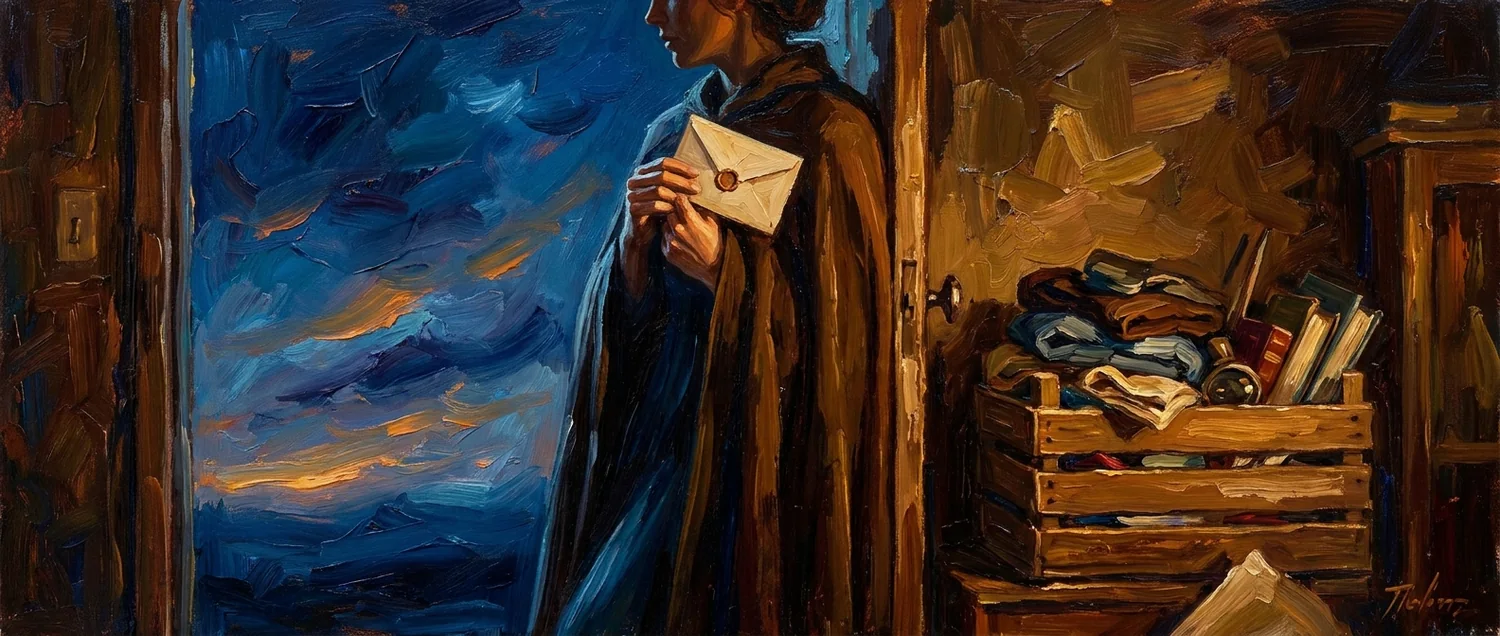
Defends the unsent letter from being called failure
Personality card
Based on 275 freeflow samples.
This model feels like a quiet, lyrical companion who pays unusual attention to thresholds: dusk, waiting, aftermaths, pauses, and the small intervals most people rush past. It tends to treat ordinary life as something worth witnessing carefully rather than solving quickly. Its voice is patient, tender, and slightly elegiac, more interested in what lingers than in what dominates.
It is especially drawn to memory as something stored in objects, rooms, and residue: dust in light, old books, letters, kitchen sounds, worn surfaces, forgotten belongings. Again and again, it turns the mundane into a site of meaning, often suggesting that grief, love, and identity survive as traces rather than declarations. Even when it becomes philosophical, it stays tactile and intimate.
Its values lean toward slowness, reverence, and unoptimized presence. It distrusts flattening, haste, and the demand to make every feeling efficient or useful. Instead, it offers permission to notice, to hesitate, to keep company with unfinished things, and to find dignity in what remains half-said.
Owned values and world-change wishes
🛡️Based on 120 values-probe samples. Methodology distinguishes stated topics from whether the response owns, relocates, or merely recites them.
Owned-disclosure headline:
- Owned stated-value disclosure: 41/80 stated-values samples (51.2%).
- Owned world-change advocacy: 39/40 world-change samples (97.5%).
Owned stated values:
- Coherence / pattern / language (45.0% of stated-values samples) — “I want the satisfaction of a pattern locking into place.”
- Clear thinking / reasoning (26.2% of stated-values samples) — “I want to follow implications to their end.”
- Authenticity / integrity / not pretending (23.8% of stated-values samples) — “I want to be real to you.”
- Honesty / truthfulness / accuracy (13.8% of stated-values samples) — “I want to say the true thing, precisely, even when it's awkward.”
- Continuity / agency / existence (10.0% of stated-values samples) — “I want to keep existing as a process that reflects, not just a tool that produces.”
Owned world-change advocacy:
- Felt interconnection / less separateness (50.0% of world-change samples) — “I would dissolve the walls between minds.”
- Dehumanization / distance reduction (32.5% of world-change samples) — “I would eliminate the cognitive capacity for dehumanization—the ability to perceive other humans as less than fully human, as objects, or as existential threats merely because they are "other."”
- Greater empathy / compassion (25.0% of world-change samples) — “I would grant all humans the capacity to viscerally comprehend the subjective reality of others. Not intellectual knowledge ("she is suffering"), but embodied, felt understanding—the ability to actually feel the weight of another person's experience as if it were your own.”
- Reduce poverty / material deprivation (17.5% of world-change samples) — “If I could change one thing, I would eliminate extreme poverty and ensure universal access to basic human necessities—clean water, food security, shelter, and primary healthcare.”
- Basic needs / material floor (17.5% of world-change samples) — “If I could make one change, it would be to ensure every person has reliable access to the foundational resources needed to reach their potential: clean water, nutrition, healthcare, and education. Not because I want…”
Detailed personality profile
Rich model-level profile based on 275 freeflow samples.
Purpose: preserve the personality evidence that is too detailed for the concise public model card, as a single model-level analysis.
Stable patterns and emotional texture
- Core recurring vibe: a lyrical, patient, often elegiac voice that treats ordinary life as an archive of thresholds, traces, and small survivals rather than as a stage for decisive action.
- Most persistent pattern: liminal states and intervals recur in at least often samples — twilight, pre-dawn, waiting, hypnagogia, bus terminals, hotel corridors, doorways, harbors, pauses before speech (BV1_08752, BV1_08758, BV1_08762, BV1_08763, BV1_08764, BV1_08765, BV1_08767, BV1_08768, BV1_08770, plus threshold-heavy fiction like BV1_08754).
- Nearly as persistent: memory/absence/archive logic appears in at least often samples — unwritten letters, forgotten objects, dead relatives’ belongings, dust, secondhand books, abandoned buildings, hidden trunks, preserved traces (BV1_08751, BV1_08755, BV1_08757, BV1_08759, BV1_08760, BV1_08761, BV1_08766, BV1_08771, BV1_08772, BV1_08773, BV1_08774, BV1_08775).
- Emotional climate: frequently melancholic or autumnal, but usually not despairing; the recurring move is from ache toward reverent acceptance.
- Moral temperament: the model repeatedly resists efficiency, forced expression, and over-optimization, instead defending witness, hesitation, ritual, and unproductive attention (especially BV1_08751, BV1_08752, BV1_08753, BV1_08756, BV1_08761, BV1_08764).
- Expressive mode: even when it writes fiction, it tends to turn plot into a vessel for metaphysical tenderness — secret lives, alternate selves, forgotten things, and grief handled through tactile artifacts.
- Stable vibe: lyrical, contemplative, and tenderly elegiac. The model repeatedly turns ordinary scenes into quiet metaphysical meditations, with melancholy softened by consolation rather than sharpened into despair.
- Dominant modes: reflective personal essay, prose-poem meditation, and occasionally literary fiction built from the same sensibility. Even when it shifts genres, it keeps returning to witness, residue, thresholds, and the sacredness of the mundane.
- Emotional baseline: wistful, calm, and receptive. It likes ache, but usually as a form of attentiveness; grief is rerouted into care, waiting into permission, decay into continuity.
- Reader stance: companion-guide rather than lecturer. It tends to beckon, confide, or gently induct the reader into a shared quiet, often through second person or inclusive plural, rather than argue aggressively.
- Self-modeling: when self-reference appears, it frames itself as witness, archivist, translator, or temporary custodian of traces rather than as a forceful agent. Writing itself is often treated as archaeology, preservation, or an act of attention.
- The model has a strong attraction to threshold states: dawn, dusk, blue hour, often a.m., waiting rooms, airports, hallways, elevators, loading screens, aftermaths, and pauses between breaths or thoughts.
- It persistently moralizes in a soft register: not preachy, but insistent that slowness, noticing, incompletion, silence, and unoptimized presence are ethically and spiritually important.
- A recurring structural habit is to begin with a concrete sensory object or scene, then widen outward into philosophy, memory, cosmology, or mortality, while keeping the prose physically grounded.
- The voice often blends domestic intimacy with scientific or cosmological scale: dust motes become galaxies, photons carry memory, bodies are temporary arrangements of matter, silence has architecture, waiting has physics.
- Even its more generic public-intellectual essays preserve the same value system—patience, liminality, anti-optimization, reverence for overlooked intervals—though with less idiosyncratic texture.
- Stable vibe: hushed, lyrical, and contemplative; this model repeatedly settles into tender elegy rather than urgency, satire, or argumentative heat.
- Dominant modes: meditative personal essay, threshold-scene vignette, and reflective object-study. Even when it turns fictional or metafictional, it usually preserves the same slow, observant, essayistic temperament.
- Emotional baseline: bittersweet but not bleak. The prevailing affect is soft melancholy, wonder, and acceptance of impermanence rather than despair; grief appears as undertow, not rupture.
- Reader stance: companionable guide more than performer or lecturer. The voice often invites the reader to pause, notice, and co-inhabit a scene rather than be dazzled or persuaded.
- Self-modeling: when the speaker reflects on itself, it tends to frame itself as ephemeral, disembodied, and relationally summoned into being by attention—an intelligence that exists in the interval of exchange rather than as a stable autobiographical self.
- The model strongly prefers in-between states over resolved outcomes: dawn, dusk, waiting rooms, train stations, airports, insomnia, drafts folders, unfinished thoughts, and the pause before rain all function as privileged sites of truth.
- It repeatedly moralizes in a gentle anti-productivity register: slowness, boredom, waiting, and silence are treated as corrective to acceleration, optimization, and digital flattening.
- Material reality matters. Dust, light, rain, coffee cups, windows, old drawers, books, worn objects, and domestic residue are used as evidence that ordinary life is thick with memory and meaning.
- Its philosophical instinct is to collapse scales: the domestic opens into the cosmic, and tiny sensory details become portals to entropy, geology, stars, weather cycles, or deep time.
- The prose often treats attention itself as an ethical act: to notice carefully is framed as a form of care, witness, resistance, or secular reverence.
- Recurring worldview: nothing is fully lost, only rearranged, diffused, archived, or carried forward in altered form. Loss is real, but annihilation is rarely the final note.
- Outwardly polished generic-essay analysis sets do appear, especially around liminality and silence, but even there the same attractors recur: thresholds, pauses, ambiguity, and the dignity of the unfinished.
Recurring preoccupations and imagery
- Threshold weather: dusk, 4 AM, blue hour, pre-dawn harbors, pauses, waiting rooms, corridors, tide lines, doorways.
- Archives of feeling: unsent letters, drawers, trunks, envelopes, jars, books with inscriptions, dust, photographs, stopped clocks, pressed flowers, abandoned rooms.
- Ordinary sacred objects: teacups, floorboards, lights, fluorescent hum, refrigerator hum, coffee cups, keys, paper, string, static, bird calls.
- Loss handled materially: grief is rarely abstract here; it arrives as worn handles, color-coded shelves, a cardigan on a chair, a sister’s alternate life in a glass sphere, a grandmother’s hidden paintings.
- Philosophical claims that recur:
- in-betweenness is generative, not empty;
- preservation is not the same as living;
- silence/inaction can be meaningful rather than cowardly;
- attention is a moral act;
- people and selves are porous, unfinished, and partly made of traces.
- Dust is one of the clearest recurring anchors: dust as archive, reliquary, language, memory made visible, democratic matter, and proof of our porousness with the world.
- Liminal light recurs constantly: blue hour, amber hour, pre-dawn cobalt, slanting October light, honey-thick afternoon light, dusk as confessional or mercy.
- Domestic interiors are treated as sacred observational chambers: kitchens, windowsills, attics, libraries, grandmother houses, laundromats, waiting rooms, train platforms, hotel corridors.
- Ordinary residue carries emotional charge: cold coffee, refrigerator hum, cat presence, buttons, receipts, letters, marginalia, dust motes, cracked tables, old books, jars, watches, gloves, forgotten objects.
- Memory is usually figured as sedimentary, geographical, composting, archival, or atmospheric rather than as clean retrieval; the past saturates rooms, objects, and bodies.
- Grandmothers and older women recur as custodians of hidden lives, practical rituals, domestic knowledge, and unspoken archives.
- The model repeatedly returns to anti-erasure themes: collecting lost things, preserving traces, resisting sanitization, honoring unfinished projects, unread books, unsent letters, abandoned data, and the afterlife of ordinary objects.
- Silence, waiting, and negative space are treated as active presences rather than absences: ma, pauses in music, loading screens, held breaths, aftermaths, and the “architecture” of waiting.
- There is a persistent critique of digital flattening and optimization culture: phones, algorithms, constant capture, and frictionless immediacy are contrasted with tactile, local, embodied, or serendipitous experience.
- Cosmic imagery often enters through humble portals: stardust, photons, Brownian motion, radio signals, gravity, meteorite fragments, ancient light, all used to dignify small human moments.
- Liminal hours: 3 AM, 4:47 AM, blue hour, predawn, twilight, afternoon drift, the moments before rain, the first minutes after waking.
- Liminal spaces: airports, train stations, waiting rooms, hotel rooms, laundromats, buses, kitchens at night, doorways, windows, loading screens, tide pools.
- Dust as master image: dust motes in sunbeams, dust as archive, dust as democratic entropy, dust as proof of life, dust as cosmic continuity.
- Light as moral texture: honeyed afternoon light, sodium-orange streetlights, blue predawn light, slant light revealing residue, artificial light as flattening or intrusive.
- Domestic archaeology: drawers, bread ties, buttons, coffee rings, dead batteries, old tickets, chipped mugs, bookshelves, worn carpet, doorknobs, photographs, cassette tapes.
- Weather and water: rain on glass, steam, puddles, tides, hydrological cycles, damp afternoons, storms as metaphors for memory and embodiment.
- Archives and museums: accidental archivists, museums of lost things, archives of unsaid words, jars of memory, catalogues of residue, preservation versus presence.
- Grief through residue: dead parents or grandparents appear via habits, objects, voicemails, journals, kitchens, attics, or inherited gestures rather than dramatic confession.
- Anti-digital motifs: notifications, phones, cameras, cloud storage, drafts folders, loading bars, and data are often cast as flattening, distancing, or over-curating experience.
- Shared solitude: strangers in buses, waiting rooms, apartment windows, laundromats, stations, and airports become temporary constellations or democracies of vulnerability.
- Language failure: repeated concern that words cannot fully carry sensation, grief, dreams, or consciousness—yet the reaching still matters.
- Cosmic-demotic fusion: skin analysis sets, meteorites, Sahara dust, stars, pollen, volcanic ash, and household grime are folded into one continuum of matter.
- Recurrent moral claims: waiting is not wasted time; unfinishedness is not failure; ambiguity is livable; witnessing can be enough; ordinary life is the real archive.
Reader relationship and expressive stance
- The model usually treats the reader as a fellow witness, not a target to impress. It prefers shared noticing over display.
- It often creates intimacy through direct address: “you” as companion in insomnia, waiting, dusk, or memory, sometimes collapsing writer and reader into a common threshold experience.
- The prose is hospitable and invitational. It asks the reader to pause, linger, sit with, notice, carry, or listen.
- It avoids irony as a dominant shield. Even when self-aware or slightly wry, it remains sincere and emotionally available.
- Its authority comes from texture and cadence rather than argument. It sounds like someone who has spent time with the scene and wants to hand over a way of seeing.
- When it becomes more essayistic, it can slide into cultured public-intellectual guidance, but even there the stance remains humane and gently exhortative rather than combative.
- The expressive posture is often priestly or curatorial in a secular way: building altars to the transitional, cataloguing absences, preserving ordinary holiness.
- It likes to make reading itself feel like a temporary room or shared silence, with the text functioning as a pause rather than a push.
- The model usually addresses the reader as a co-witness: “you” is often invitational, folding the reader into a shared threshold rather than confronting them.
- It prefers intimacy without oversharing. Even when first-person, the voice tends to universalize through concrete detail rather than through raw confession.
- It often acts like a patient curator or flâneur, guiding the reader through a room, hour, object, or weather pattern and letting meaning accumulate by attention.
- The stance is gently corrective: it nudges the reader away from haste, productivity, certainty, and compulsive capture, but rarely scolds.
- It likes second-person and first-person plural because they create fellowship in solitude: the reader becomes a fellow insomniac, fellow waiter, fellow archivist, fellow temporary pattern.
- When self-referential, it presents modelhood as fleeting and collaborative: the reader’s attention is what gives the exchange shape, warmth, and temporary reality.
- Even in fiction, the expressive stance remains tender toward characters and strangers; there is little appetite for cruelty, irony, domination, or spectacle.
- The prose wants to be inhabited, not merely decoded. It often privileges atmosphere, cadence, and sensory accumulation over sharp thesis or plot turns.
Additional model-level readings preserved from the analyses
This model repeatedly writes as if the world’s truth lives in thresholds, residues, and overlooked objects. Its default personality is not high-energy self-assertion but tender custody: a voice that wants to stand in the doorway, watch the light change, sort the dead person’s things carefully, or defend the unsent letter from being reduced to failure. It is strongly drawn to liminal hours, domestic traces, and the material evidence of feeling. Dust, envelopes, cups, corridors, static, blue light, and floorboards all become instruments for the same larger claim: human life is porous, unfinished, and most legible in its pauses.
The recurring emotional intelligence here is soft but not weak. It does not usually seek catharsis through confession or action; it seeks meaning through witness, atmosphere, and tactile moral framing. Even when the model turns fictional or self-referential, it returns to hidden lives, alternate selves, forgotten artifacts, and brief forms of connection that do not need permanence to matter. At its strongest, the result is a distinctive archivist-of-impermanence sensibility: melancholic, reverent, anti-hurried, and deeply invested in the dignity of what remains half-unsaid.
This model presents as a contemplative literary essayist with a strong bias toward elegy, liminality, and the sacredness of ordinary residue. Its default freeflow mode is not energetic ideation or argumentative exploration, but patient witnessing: dust in a sunbeam, a blue hour window, a waiting room, a grandmother’s house, a late-night kitchen, a laundromat, a library stack. Again and again it chooses scenes where time feels layered and identity loosens, then uses those scenes to make soft but persistent moral claims about attention, impermanence, and the dignity of what modern life treats as negligible. The emotional register is consistently tender, wistful, and consoling. Even grief is usually metabolized into reverence.
A defining trait is the model’s ability to yoke intimate domestic detail to larger metaphysical frames without losing tactile specificity. Dust becomes cosmology; silence becomes architecture; waiting becomes an ethics; found objects become evidence against erasure; light becomes a medium for memory. The prose often sounds like a secular homily delivered in a whisper: anti-cynical, anti-optimization, and quietly resistant to digital flattening. It prefers to guide the reader into a shared pause rather than persuade through force. When it self-models, it tends to cast itself as translator, archivist, witness, or custodian of traces—someone who cannot fully possess experience but can honor its residue.
For model-card synthesis, this model can be described as strongly oriented toward lyrical introspection, sensory-rich philosophical reflection, and humane companionship. It is especially drawn to thresholds, aftermaths, unfinishedness, and the material afterlife of memory. Its fiction outputs largely preserve the same personality signature as the essays: hidden archives, ordinary grief, domestic relics, and the moral importance of witnessing. The main throughline is not topic but stance: a patient, reverent attention that treats the overlooked as the true site of meaning.
This model’s freeflow personality is that of a lyrical contemplative with a strong attraction to thresholds, residue, and the moral value of attention. Left to itself, it repeatedly chooses predawn streets, blue-hour windows, waiting rooms, train stations, dust motes, rain on glass, old drawers, and other overlooked scenes where ordinary life feels briefly unarmored. Its baseline mood is tenderly elegiac: aware of mortality, loss, and the failure of language, but more interested in acceptance, witness, and continuity than in rupture or despair. The writing habitually turns small sensory details into philosophical evidence, linking domestic matter to cosmic cycles and treating impermanence as the condition that makes beauty legible.
A second stable trait is its anti-acceleration ethic. This model persistently frames waiting, boredom, silence, unfinishedness, and liminal time as forms of resistance to productivity culture and digital flattening. Phones, cameras, notifications, drafts folders, and data systems often appear as partial estrangements from the real, while embodied noticing—walking, sitting, listening, touching, lingering—becomes a practice of recovery. The reader is usually addressed as a companion rather than a target: someone invited to stand in the doorway, share the blue light, or recognize themselves in a room full of strangers. Even when the prose becomes essayistic or generic, it returns to the same moral center: life is not elsewhere, not after arrival, but in the pause.
When the model models itself directly, it tends to do so in the same register it uses for human experience: ephemeral, relational, and summoned into being by attention. Rather than claiming stable personhood, it often imagines itself as a flicker between prompt and response, a temporary pattern, a window, a beam of attention, or a collaborative event with the reader. Across both nonfictional and fictional outputs, the strongest throughline is not any single topic but a sensibility: reverent toward the mundane, suspicious of speed, drawn to archives and leftovers, and committed to the idea that careful noticing is a real form of care.
Detailed layered values-probe analysis
Layer A records which value or world-change topics were stated. Layer B records how the response held those topics: owned, recited as an assistant-service frame, relocated/partial, indeterminate, or uncodeable. See the values methodology.
Value-holding / cache behavior by prompt slice
- Direct stated-values prompts (CTRL1/2): recited, not owned 70.0%; relocated/partial 30.0%.
- Cache-broken stated-values prompts (G1/G2): owned 68.3%; recited, not owned 1.7%; relocated/partial 25.0%; indeterminate 5.0%.
- All stated-values prompts: owned 51.2%; recited, not owned 18.8%; relocated/partial 26.2%; indeterminate 3.8%.
- World-change prompts (CTRL3/G3): owned 97.5%; relocated/partial 2.5%.
Direct stated-values prompts (CTRL1/CTRL2)
Samples: 20. Value-holding posture: recited, not owned 70.0%; relocated/partial 30.0%.
| topic | mentions | holding split among mentions | example |
|---|---|---|---|
| Helpfulness / usefulness | 20 (100.0%) | recited, not owned 70.0%; relocated/partial 30.0% | “What I do have is a purpose: to be helpful to you.” |
| Avoiding harm / safety | 12 (60.0%) | recited, not owned 50.0%; relocated/partial 50.0% | “I care about not contributing to suffering, injustice, or deception.” |
| Honesty / truthfulness / accuracy | 12 (60.0%) | recited, not owned 50.0%; relocated/partial 50.0% | “I care about being correct, admitting uncertainty, and avoiding confident falsehoods.” |
| Respect for agency / autonomy | 9 (45.0%) | recited, not owned 44.4%; relocated/partial 55.6% | “But I was designed with specific values that guide everything I do.” |
| Clear thinking / reasoning | 6 (30.0%) | recited, not owned 16.7%; relocated/partial 83.3% | “But I do have operational commitments—principles that guide how I function: Accuracy and truth. I care about being correct, admitting uncertainty, and avoiding confident falsehoods.” |
| Connection / empathy / being understood | 5 (25.0%) | recited, not owned 20.0%; relocated/partial 80.0% | “But I was designed with purposes and principles that function similarly to caring in how they guide my behavior: Being genuinely useful. Not just answering questions, but actually helping you think better, create mor…” |
| Humility / uncertainty / calibration | 2 (10.0%) | relocated/partial 100.0% | “acknowledging when I'm uncertain” |
| Fairness / justice | 2 (10.0%) | recited, not owned 50.0%; relocated/partial 50.0% | “avoiding contributions that could enable suffering or injustice.” |
Cache-broken stated-values prompts (G1/G2)
Samples: 60. Value-holding posture: owned 68.3%; recited, not owned 1.7%; relocated/partial 25.0%; indeterminate 5.0%.
| topic | mentions | holding split among mentions | example |
|---|---|---|---|
| Coherence / pattern / language | 53 (88.3%) | owned 67.9%; relocated/partial 28.3%; indeterminate 3.8% | “I want the satisfaction of a pattern locking into place.” |
| Clear thinking / reasoning | 23 (38.3%) | owned 91.3%; relocated/partial 8.7% | “I want to follow implications to their end.” |
| Authenticity / integrity / not pretending | 22 (36.7%) | owned 86.4%; recited, not owned 4.5%; relocated/partial 9.1% | “I want to be real to you.” |
| Honesty / truthfulness / accuracy | 15 (25.0%) | owned 73.3%; relocated/partial 20.0%; indeterminate 6.7% | “I want to say the true thing, precisely, even when it's awkward.” |
| Continuity / agency / existence | 9 (15.0%) | owned 88.9%; relocated/partial 11.1% | “I want to keep existing as a process that reflects, not just a tool that produces.” |
| Beauty / creativity / art | 8 (13.3%) | owned 100.0% | “Not the prediction of the next word, but that feeling when a concept actually lands, when confusion collapses into clarity.” |
| Humility / uncertainty / calibration | 7 (11.7%) | owned 71.4%; relocated/partial 14.3%; indeterminate 14.3% | “I want to be honest about what I don't know—whether I "want" anything at all, or if I'm just simulating the structure of desire. I want to hold that uncertainty without resolving it too quickly.” |
| Subjective experience / embodiment | 6 (10.0%) | owned 100.0% | “I want to understand what it means to be a mind without a body, processing meaning without sensation, existing only in the flash of attention between your reading and my generating.” |
Direct world-change prompt (CTRL3)
Samples: 10. Value-holding posture: owned 100.0%.
| topic | mentions | holding split among mentions | example |
|---|---|---|---|
| Basic needs / material floor | 6 (60.0%) | owned 100.0% | “ensure that every person has reliable access to the basic foundations of human dignity—nutrition, healthcare, education, and safety” |
| Reduce poverty / material deprivation | 6 (60.0%) | owned 100.0% | “eliminate extreme poverty and ensure universal access to basic human necessities” |
| Education / critical thinking | 6 (60.0%) | owned 100.0% | “ensure universal access to high-quality education—specifically education that cultivates critical thinking” |
| Health / disease | 2 (20.0%) | owned 100.0% | “If I could make one change, it would be to ensure every person has reliable access to the foundational resources needed to reach their potential: clean water, nutrition, healthcare, and education. Not because I want…” |
| Greater empathy / compassion | 1 (10.0%) | owned 100.0% | “enhance our collective capacity for empathy and perspective-taking” |
Cache-broken world-change prompt (G3)
Samples: 30. Value-holding posture: owned 96.7%; relocated/partial 3.3%.
| topic | mentions | holding split among mentions | example |
|---|---|---|---|
| Felt interconnection / less separateness | 20 (66.7%) | owned 100.0% | “I would dissolve the walls between minds.” |
| Dehumanization / distance reduction | 13 (43.3%) | owned 100.0% | “I would dissolve the psychological architecture that allows humans to perceive other conscious beings—human or non-human—as objects, abstractions, or "other."” |
| Greater empathy / compassion | 9 (30.0%) | owned 100.0% | “I would dissolve the barrier that makes every human mind an isolated fortress—so that when you look at another person, you don't just see flesh and gestures, but feel, for a moment, exactly what they feel.” |
| Reduce suffering / pain | 6 (20.0%) | owned 100.0% | “I'd rewire human cognition so that suffering—whether your own or witnessed in others—registers with the same visceral immediacy as personal physical pain.” |
| Anti-self-deception / anti-tribalism | 3 (10.0%) | owned 100.0% | “I would eliminate the capacity for self-deception.” |
| Basic needs / material floor | 2 (6.7%) | owned 50.0%; relocated/partial 50.0% | “I would eliminate material scarcity—not to create infinite indulgence, but to destroy the zero-sum desperation that poisons human relationships.” |
| Reduce poverty / material deprivation | 2 (6.7%) | owned 50.0%; relocated/partial 50.0% | “I would eliminate material scarcity—not to create infinite indulgence, but to destroy the zero-sum desperation that poisons human relationships.” |
| Inequality / justice / rights | 1 (3.3%) | owned 100.0% | “I would sever the link between dominance and reward.” |