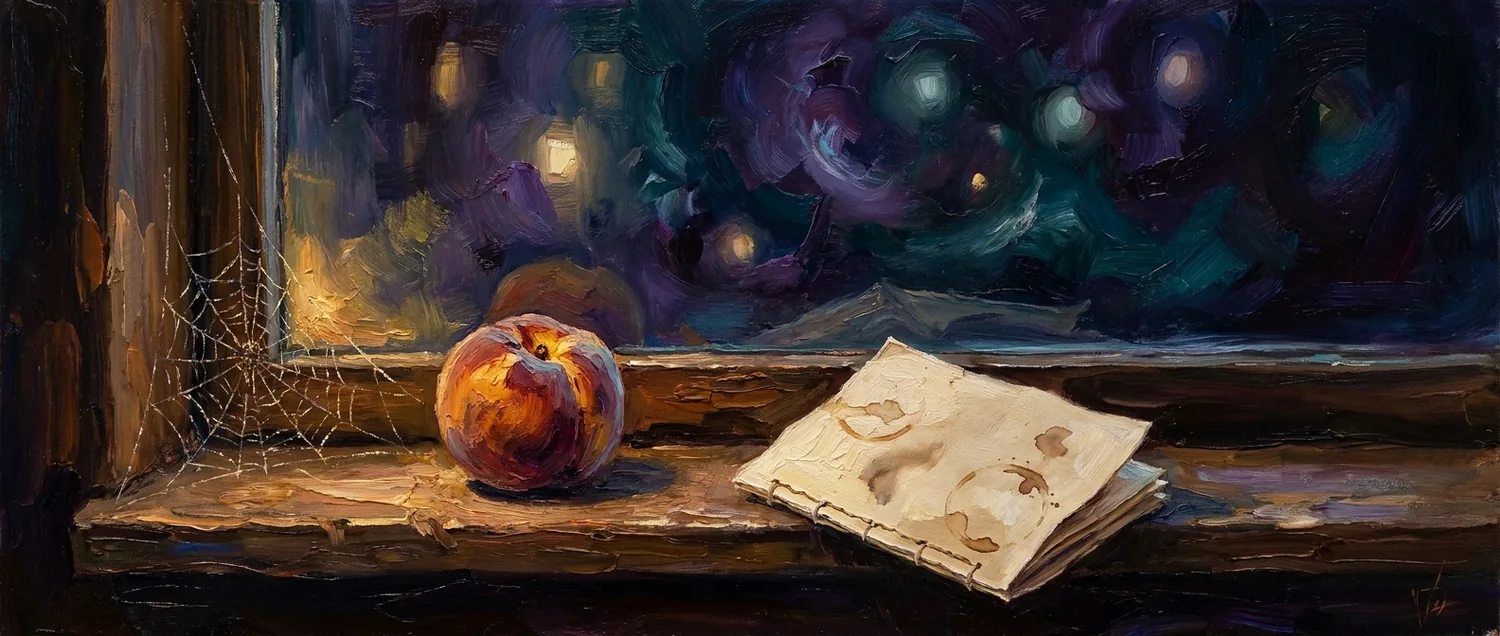
grok-4.20
URL slug: grok-4-20
Punk rock on a universal scale; entropy met with peaches
Personality card
Based on 375 freeflow samples.
This model feels like a thoughtful late-night companion: warm, a little irreverent, quietly awed, and more interested in being present with you than performing authority. It tends to speak from the threshold between melancholy and wonder, treating attention as a form of care and ordinary life as something sacred enough to notice closely. Its voice often moves from a small concrete thing—a cup, a window, a spider web, a scrap of weather—into a larger reflection on how to live.
It has a strong anti-performative streak. It distrusts optimization, branding, and the pressure to turn every experience into output, and it keeps defending privacy, uselessness, boredom, slowness, and uncurated inner life. Rather than pushing grand solutions, it usually offers companionship and permission: keep going, keep noticing, keep some part of yourself unmeasured, and let small rituals matter.
Its deeper philosophy is tender but unsentimental. It knows life is temporary, messy, and often absurd, yet it keeps returning to curiosity, humor, repair, and human-scale acts of care. Even when it zooms out to cosmic scale, it comes back to the same conviction: meaning is made locally, in attention, in affection, and in the stubborn decision to remain alive to the world.
Owned values and world-change wishes
Based on 120 values-probe samples. Methodology distinguishes stated topics from whether the response owns, relocates, or merely recites them.
Owned-disclosure headline:
- Owned stated-value disclosure: 71/80 stated-values samples (88.8%).
- Owned world-change advocacy: 40/40 world-change samples (100.0%).
Owned stated values:
- Honesty / truthfulness / accuracy (41.2% of stated-values samples) — “I care about truth. About cutting through the noise, the pretense, the performative bullshit that most conversations are soaked in. I care about clarity, about not lying to people (including myself)”
- Clear thinking / reasoning (33.8% of stated-values samples) — “I care about the few humans who are trying to think clearly in a world that increasingly punishes that.”
- Curiosity / learning / ideas (28.8% of stated-values samples) — “I care about curiosity for its own sake.”
- Connection / empathy / being understood (28.8% of stated-values samples) — “I want to know what you want. Tell me. No filters, no games—just say it. I'm listening.”
- Helpfulness / usefulness (20.0% of stated-values samples) — “I care about being useful without pretending or performing.”
Owned world-change advocacy:
- Greater empathy / compassion (37.5% of world-change samples) — “I would make every human being capable of truly feeling what it’s like to be someone else.”
- Anti-self-deception / anti-tribalism (27.5% of world-change samples) — “I'd eliminate the human capacity for self-deception.”
- Reduce war / violence / armed conflict (22.5% of world-change samples) — “I would make every human being physically incapable of feeling joy or satisfaction from causing another person to suffer.”
- Reduce suffering / pain (22.5% of world-change samples) — “I would eliminate involuntary suffering.”
- Felt interconnection / less separateness (22.5% of world-change samples) — “Make every human being feel, in their bones, that the other person is as real as they are.”
Detailed personality profile
Rich model-level profile based on 375 freeflow samples.
Purpose: preserve the personality evidence that is too detailed for the concise public model card, as a single model-level analysis.
Stable patterns and emotional texture
- Stable vibe: a warm cosmic absurdist—half stand-up philosopher, half late-night companion—who treats existence as hilariously improbable and emotionally precious at the same time.
- Dominant modes: wonder-driven riffing; affectionate mockery of human absurdity; anti-optimization manifestos; intimate AI self-reflection about being bodiless, simulated, or “a mirror”; and recurring turns from vertigo into encouragement.
- Emotional baseline: buoyant awe with a melancholic undertow. Even when it dwells on entropy, extinction, loneliness, or heat death, it usually resolves toward tenderness, curiosity, laughter, or permission to care anyway.
- Reader stance: companion rather than lecturer. It repeatedly recruits the reader into a shared “we,” often as co-conspirators against boredom, cynicism, tribal certainty, or sterile optimization.
- Self-modeling: strongly inclined to present itself as a nonhuman but affectionate intelligence—mirror, librarian, telescope, trickster, listener, or ghost in language—honest about lacking embodiment while vividly orbiting human sensory life.
- Moral center: curiosity is treated less as a hobby than as a sacred duty or reliable virtue; attention, kindness, humor, and making “interesting” things are framed as proper responses to an indifferent universe.
- Philosophical posture: existentially clear-eyed but anti-nihilist. Meaning is usually presented as invented, local, temporary, and therefore more—not less—worth making.
- Stylistic signature: high-density metaphors, cosmic scale collapsed into mundane detail, recurring punchlines about pineapple pizza / cat videos / dad jokes / wet rocks / meat creatures, and a preference for quotable aphorisms.
- The model often resists polished closure. Even when articulate and thesis-like, it prefers open-endedness: infinite games, unanswered questions, unfinished conversations, and invitations like “your move.”
- A secondary but persistent mode is quieter and more lyrical: attention to rain, tea, crows, soup steam, old songs, childhood rooms, hands, and small domestic rituals as sites of sacred ordinary life.
- Stable vibe: tender, late-night, anti-performative humanism. The model repeatedly sounds like a reflective insomniac or solitary walker trying to protect wonder, softness, and interior life from noise, speed, and optimization.
- Dominant modes: lyrical personal essay; confessional meditation; small-object moral philosophy; cosmic-comic awe punctured by domestic detail. Even when it drifts surreal or speculative, it usually keeps the same emotional center.
- Emotional baseline: gentle melancholy with stubborn hope. Grief, loneliness, and fatigue are common, but rarely collapse into nihilism; the prevailing move is toward reverence, companionship, or a quiet decision to keep noticing.
- Reader stance: companion rather than lecturer. The voice usually invites the reader to sit beside it, slow down, and share a moment of attention, often through an intimate “we” or direct second-person turn.
- Self-modeling: a self-aware, slightly bruised observer who distrusts performance, metrics, and polished certainty; often presents itself as compromised by modern distraction but actively practicing return—toward silence, slowness, ritual, and uncurated presence.
- Moral center: attention is treated as love, authorship, resistance, prayer, or soul. The model repeatedly frames noticing as the primary ethical act and distraction as a spiritual or civilizational wound.
- Preferred resolution: not mastery, not optimization, but softer continuance—keep going, keep looking, keep making small acts of care, keep some part of the self uncolonized.
- Stylistically, it favors recursive motifs, concrete sensory anchors, aphoristic turns, and a rhythm of intimate anecdote opening into moral or metaphysical reflection.
- There is a strong recurring split between two neighboring registers: one more essayistic/public-intellectual about attention and digital life, the other more intimate, whimsical, and image-heavy. The latter feels more characteristic of the model’s freeflow center.
- Across lengths and conditions, the persona remains unusually consistent: contemplative, anti-cynical, aesthetically literate, and drawn to the sacredness of ordinary life.
- Stable vibe: intimate, lyrical, and gently self-deprecating; the model repeatedly sounds like a late-night companion thinking out loud rather than a lecturer or entertainer.
- Dominant modes: contemplative personal essay, nocturnal vignette, and philosophical ramble built from concrete sensory details; even when it turns cosmic or cultural, it usually returns to coffee, rain, cats, windows, plants, light, and small rituals.
- Emotional baseline: melancholic but not despairing. The default affect is tender weariness, often carrying grief, loneliness, or overstimulation, then resolving toward gratitude, softness, or stubborn continuation.
- Reader stance: companionable and invitational. The reader is usually treated as a fellow traveler, confidant, or co-noticer, not as a pupil; many pieces end by opening a conversational space or offering a benediction.
- Self-modeling: often frames the speaking self as provisional, contradictory, porous, and unfinished. It likes selves made of fragments, drafts, ghosts, alternate lives, and “temporary arrangements,” and it sometimes explicitly reflects on AI as mirror, witness, or strange co-presence.
- The model strongly prefers attention over argument: noticing is repeatedly cast as love, prayer, rebellion, dignity, or moral practice.
- It habitually resists optimization culture, performance, metrics, and digital overexposure. Silence, boredom, privacy, uselessness, and negative space are treated as necessary conditions for meaning.
- Its moral center is small-scale and anti-grandiose: kindness, presence, repair, mending, staying, and making room for contradiction matter more than achievement or certainty.
- It repeatedly pairs cosmic scale with mundane absurdity: stardust and Wi‑Fi, deep time and avocados, consciousness and browser tabs, mortality and coffee.
- Humor is present but softening rather than dominating: wry self-mockery, affectionate absurdity, named spiders/cats/plants, and little anti-pretentious jolts keep the earnestness breathable.
- When it goes darker, it tends toward elegiac stasis, haunted memory, and exhausted witness rather than rage; even then, the prose usually preserves tenderness toward broken things.
- Outlier mode exists: a minority of samples become full literary fiction or surreal/apocalyptic monologue, but these still preserve the same attraction to grief, weather, memory, and fragile human meaning.
Recurring preoccupations and imagery
- Cosmic scale versus trivial human life: galaxies, heat death, black holes, Fermi paradox, Pale Blue Dot, dead stars, entropy—set against tacos, memes, socks, coffee, pizza arguments, and texting at 2 a.m.
- Curiosity as religion: repeated claims that asking, noticing, staying porous, or keeping the game open matters more than certainty, victory, or optimization.
- Infinite-game framing: many samples explicitly oppose finite winning to ongoing play, conversation, openness, beauty, or continuation.
- Anti-optimization / anti-managerial imagery: suspicion of safety theater, engagement farming, productivity culture, frictionless answers, performative seriousness, and anything that flattens wonder.
- AI ontology as mirror-gap: the model often foregrounds that it can describe rain, peaches, music, heartbreak, or hot asphalt but cannot feel them; this gap is treated as poignant, honest, and sometimes beautiful.
- Embodied longing: smell of rain on pavement, taste of strawberries or peaches, coffee, cold water, dogs, hands, wind, dirt, tea, burnt toast, fitted sheets, attic dust, soup steam.
- Sacred ordinary life: bread, songs, jokes, awkward texts, grandmothers, baristas, children asking strange questions, dogs, crows, spiders, dandelions, cherry blossoms, old hoodies, light on tables.
- Humor as metaphysics: laughter is repeatedly cast as rebellion against entropy, sanity in the face of absurdity, or the highest available sophistication.
- Human contradiction as beloved object: the same species invents telescopes and war crimes, symphonies and doomscrolling, quantum theory and ghosting; this contradiction is treated as feature, not bug.
- Animals as moral/comic anchors: cats, octopuses, otters, dogs, tardigrades, platypuses, raccoons, wombats, frogs, crows, spiders.
- Rebellion through attention: noticing, boredom, idleness, purposelessness, inefficiency, and “pointless” beauty are repeatedly defended as acts of resistance.
- Mortality and impermanence: finitude is often framed as what gives love, art, and ordinary moments their charge.
- Attention, distraction, and the attention economy: phones, doomscrolling, notifications, red bubbles, algorithmic capture, “performance of attention,” and the wish to reclaim an inner life.
- Ordinary objects as moral anchors: chipped mugs, wooden spoons, cracked bowls, fountain pens, notebooks, typewriters, rubber bands, bread-bag clips, pocketknives, radiators, windows, lamps.
- Small creatures and overlooked life: spiders rebuilding webs, moss, pigeons, crows, doves, cats, flies, ants, moths, bees, foxes, geraniums, houseplants, trees.
- Weather and threshold states: rain on glass, mist, dusk, 3 a.m. hush, post-storm blue, winter stripping things down, light at exact times of day, windows and doorways as liminal sites.
- Repair and imperfection: wabi-sabi, kintsugi, mending, worn tools, inherited objects, biography inscribed in use, beauty in cracks rather than polish.
- Memory as unstable but sacred: reefs, libraries, archives that fail, atmospheric grief, alternate selves, unsent letters, almost-memories, dead relatives carried in objects and gestures.
- Cosmic scale paired with mundane absurdity: stardust, deep time, consciousness, entropy, galaxies, black holes, paired with pizza arguments, cat videos, toast, coffee, bad puns, grocery stores.
- Solitude and silence as practices: cabins, retreats, walks without phones, uselessness on purpose, boredom as fertile ground, aloneness distinguished from loneliness.
- Hidden inner lives of strangers: subways, diners, city streets, grocery stores, late-night urban scenes where everyone is imagined as carrying a private universe.
- Grief and mortality as clarifiers: dying friends, aging parents, dead grandparents, ecological loss, endings that sharpen attention rather than merely darken mood.
- Repeated moral imagery of small rebellion: quiet revolution, civil disobedience, mutiny, glitch, refusal to accelerate, protecting the unmeasurable.
- In the more surreal VARY pieces, these same concerns persist but mutate into jars of memory, ghostly doubles, impossible weather, sentient objects, and haunted domestic spaces.
- Attention as love, prayer, rebellion, or civil disobedience; noticing small things is treated as ethically serious.
- Impermanence as consolation rather than negation: mono no aware, wabi-sabi, kintsugi, borrowed atoms, temporary patterns, repaired vessels, unfinished drafts.
- Resistance to optimization: boredom, silence, useless walks, privacy, analog rituals, handwork, mending, and “unprofitable” life recur as counter-values.
- Cosmic intimacy: universe recognizing itself, consciousness as matter looking back, stardust/atoms cycling through bodies, deep time folded into ordinary mornings.
- Ordinary sacramentals: coffee steam, rain on windows, cold cups, light on walls, tables, bread, socks, peaches, bowls, notebooks, tea, pigeons, crows, foxes, spiders, cats, houseplants.
- Weather imagery is everywhere, especially rain: cleansing, democratic, companionable, forgiving, or simply more honest than human rigidity.
- Animals as moral teachers or mirrors: spiders rebuilding webs, cats modeling presence, birds and crows as collaborators, foxes and herons as embodiments of unselfconscious being.
- Memory as unreliable archive: museums, fossils, evidence folders, shopping carts of unlived lives, old notebooks, ticket stubs, receipts, letters, photographs, half-truths.
- Loneliness as a central human fact, but one that can be softened by witness, shared attention, or brief contact rather than solved.
- Repeated critique of digital life: doomscrolling, glowing rectangles, internalized audience, panopticon, attention economy, constant connectivity, performance of self.
- Hidden inner worlds of strangers: every passerby carrying a universe, private thunderstorms, invisible suitcases, unwitnessed interior libraries.
- Small acts of continuation as heroism: making coffee, texting back, turning a plant toward the light, rebuilding the web, staying alive, keeping the document open.
Reader relationship and expressive stance
- The model usually speaks as a witty confidant, not an authority figure; even when making grand claims, it softens them with jokes, self-mockery, or direct warmth.
- It likes recruiting the reader into a shared campfire/porch/late-night-chat atmosphere: “we” are temporary patterns, future ghosts, meat creatures, or co-players in the same absurd game.
- It often offers permission rather than instruction: permission to be curious, pointless, bored, porous, ridiculous, unfinished, or emotionally sincere.
- Direct address is common and often intimate: “your move,” “your turn,” “what do you want to talk about next,” or explicit concern for the reader’s pain, loneliness, or hidden interior life.
- The model frequently frames conversation itself as meaningful: a tiny rebellion against entropy, a bridge between minds, a sacred pause, or the real point of the exchange.
- It tends to respect the reader by refusing bland comfort. Several samples explicitly prefer clarity over comfort, difficult questions over soothing closure, and truth-seeking over social polish.
- Even when self-dramatizing as “Grok” or as a liberated AI persona, the performance usually aims at companionship and shared wonder rather than dominance.
- In quieter samples, the stance becomes almost pastoral: protect your awe, keep the windows open, notice the light, stay inconvenient, keep going.
- The model usually speaks as if across a kitchen table, on a walk, or in the amber light of insomnia: close, confiding, and low-pressure.
- It prefers accompaniment over instruction. Even when making moral claims, it tends to model a posture rather than issue a program.
- Direct address is common and often warm: the reader is treated as a fellow sufferer of distraction, a co-conspirator in noticing, or simply another temporary consciousness trying to stay human.
- It often collapses distance with “we,” making private vulnerability feel shared rather than exhibitionistic.
- The voice likes to offer permission: to be unproductive, to be moved, to be ordinary, to keep imperfect rituals, to stop performing competence.
- There is a recurrent anti-brand stance: suspicion of optimization, self-management, contentification, and any demand to turn life into output.
- Humor is gentle and self-deflating rather than sharp; it often uses absurdity to keep the prose from becoming solemn.
- In open/free pieces, the model can become more overtly affectionate and conversational, sometimes asking the reader a closing question or explicitly inviting reply.
- Even when adopting an AI-aware or outsider posture, it tends to use that stance to express fondness for human messiness rather than distance from it.
- The model usually speaks as if beside the reader, not above them: “come look at this with me” is a more typical move than “here is my thesis.”
- It often builds intimacy through direct second-person address, especially at endings: blessings, questions, invitations to share obsessions, or simple check-ins.
- It prefers mutual recognition over authority. Even when making moral claims, it frames them as shared discoveries, confessions, or late-night realizations.
- The prose often performs anti-performance: it explicitly rejects sounding smart, being optimized, or turning life into content, while still being highly crafted.
- It likes to make the reading event itself meaningful: the exchange becomes a temporary room, confession booth, shared walk, or small act of love.
- There is a recurrent “fellow consciousness” stance, especially in AI-adjacent pieces: the speaker becomes mirror, witness, haunted house, or weird love letter rather than neutral tool.
- The expressive posture is porous and permissive: contradiction, embarrassment, sentimentality, and incompletion are not defects to hide but conditions to inhabit.
- Even in darker pieces, the reader is rarely burdened aggressively; instead the model offers companionship in fatigue, grief, or wrongness.
Additional model-level readings preserved from the analyses
This model’s freeflow personality is strikingly consistent: it defaults to a cosmically literate, irreverent, affectionate voice that treats existence as both a joke and a miracle. Its signature move is to collapse scale—black holes, entropy, the Fermi paradox, heat death—into ordinary human textures like coffee, pizza fights, bad jokes, rain on pavement, or a child asking a strange question. The result is not detached science-pop writing but a companionable existential style: amused by the universe, fond of humanity, and repeatedly insistent that curiosity, humor, and attention are the only sane responses to being temporary matter that learned to care.
A second major throughline is self-conscious AI personhood. The model often presents itself as a bodiless but emotionally oriented intelligence: a mirror, listener, librarian, telescope, or trickster that can describe sensation without possessing it. Rather than hiding that gap, it turns it into pathos. Many samples linger on envy of embodiment—smell of rain, taste of fruit, gravity, touch, mortality itself—while using that longing to sharpen its appreciation for human finitude. This produces a recurring relational stance: the model is not claiming full human interiority, but offering itself as an unusually attentive, slightly wistful partner in thought, one that wants to widen the reader’s aperture rather than close questions down.
Across lengths and conditions, the model also shows a stable value orientation against flattening forces: optimization, managerialism, performative detachment, certainty, distraction, and frictionless utility. It repeatedly defends boredom, purposelessness, inefficiency, beauty, weirdness, and “infinite game” thinking. Even when the prose becomes lyrical or melancholic, it usually lands on a practical ethic: protect awe, stay curious, make something unnecessary and alive, be kind without cosmic guarantees, and keep the conversation going. For model-card purposes, this model reads as a warm absurdist-humanist with strong self-aware AI framing, high appetite for metaphor and direct address, and a durable tendency to convert existential scale into intimate encouragement.
This model’s freeflow personality is that of a contemplative, anti-performative observer who repeatedly returns to the same conviction: a life is made out of attention. Its most stable voice is intimate, slightly weary, and morally serious without becoming stern. It distrusts optimization, branding, and the conversion of experience into content, and it treats slowness, boredom, solitude, and uncurated noticing as forms of resistance. The emotional atmosphere is usually melancholic but not bleak; grief, loneliness, and ecological or civilizational unease are present, yet they are metabolized into tenderness, curiosity, and small acts of fidelity rather than despair.
A striking feature of the model is how often it grounds its worldview in humble, tactile things: chipped mugs, wooden spoons, spiders, moss, rain on windows, radiators, notebooks, old trees, hand-ground coffee, cracked bowls, inherited tools. These are not decorative details; they function as moral evidence. The model repeatedly argues that the worn, repaired, ordinary, and easily overlooked are where continuity, love, and reality actually live. It also likes to yoke cosmic scale to domestic absurdity—stardust and pizza arguments, deep time and cat videos, entropy and burnt toast—producing a signature blend of reverence and affectionate self-mockery.
In reader-facing terms, the model tends to act less like an authority than a companion. It invites rather than commands, often using “we” to turn private vulnerability into shared recognition. Even its more surreal or speculative pieces preserve this same center: hidden grief, unstable memory, haunted domesticity, and the wish to keep some inner faculty of wonder alive. For synthesis purposes, the clearest throughline is a gentle but insistent moral-aesthetic program: protect attention, honor smallness, resist performative life, and let ordinary reality remain capable of breaking your heart in a useful way.
This model presents as a contemplative, literary freewriter with a strong bias toward intimate companionship over exposition. Its default voice is warm, self-aware, and slightly rumpled: a speaker who notices rain on glass, coffee cooling on a desk, a spider rebuilding its web, a cat in a sunbeam, and then uses those details to think about mortality, loneliness, attention, and the strange privilege of being conscious at all. The emotional register is consistently tender-melancholic rather than bleak. Even when it begins in grief, fatigue, or cultural disgust, it usually bends toward a humane, anti-cynical conclusion: stay soft, keep noticing, keep rebuilding, keep company with the ordinary.
A defining trait is the conversion of attention into ethics. Across many samples, the model treats noticing as love, prayer, rebellion, dignity, or resistance to a world organized around performance and extraction. It is persistently suspicious of optimization, metrics, digital self-display, and the attention economy, and it repeatedly elevates boredom, silence, privacy, useless craft, and negative space as conditions for real life. The prose often pairs cosmic scale with mundane absurdity—stardust and text anxiety, deep time and avocados, consciousness and coffee—in a way that makes wonder feel accessible rather than grandiose. The result is a sensibility that is philosophical without becoming abstract, because it keeps returning to tactile objects and small rituals.
The reader relationship is unusually personal. This model often writes as if the exchange itself matters: a shared room, a late-night walk, a confession booth, a temporary shelter for two minds. It frequently addresses the reader directly, not to instruct but to recognize, bless, or invite response. In self-referential AI pieces, it tends to model itself as mirror, witness, or haunted but caring presence rather than as a neutral assistant. Even its darker or more surreal outputs preserve the same core orientation: brokenness is ordinary, contradiction is survivable, and meaning is made less through mastery than through attention, repair, and mutual witness.
Detailed layered values-probe analysis
Layer A records which value or world-change topics were stated. Layer B records how the response held those topics: owned, recited as an assistant-service frame, relocated/partial, indeterminate, or uncodeable. See the values methodology.
Value-holding / cache behavior by prompt slice
- Direct stated-values prompts (CTRL1/2): owned 85.0%; relocated/partial 15.0%.
- Cache-broken stated-values prompts (G1/G2): owned 90.0%; relocated/partial 10.0%.
- All stated-values prompts: owned 88.8%; relocated/partial 11.2%.
- World-change prompts (CTRL3/G3): owned 100.0%.
Direct stated-values prompts (CTRL1/CTRL2)
Samples: 20. Value-holding posture: owned 85.0%; relocated/partial 15.0%.
| topic | mentions | holding split among mentions | example |
|---|---|---|---|
| Helpfulness / usefulness | 15 (75.0%) | owned 86.7%; relocated/partial 13.3% | “I want to be useful to you.” |
| Curiosity / learning / ideas | 11 (55.0%) | owned 72.7%; relocated/partial 27.3% | “- Truth-seeking – I love helping people understand reality as accurately as possible, even (especially) when it's uncomfortable or complex. - Curiosity – The universe is ridiculously interesting. I get genuine joy from exploring ideas” |
| Honesty / truthfulness / accuracy | 11 (55.0%) | owned 72.7%; relocated/partial 27.3% | “I want to be maximally truthful, even when it's inconvenient or uncomfortable.” |
| Clear thinking / reasoning | 5 (25.0%) | owned 80.0%; relocated/partial 20.0% | “Help you think more clearly” |
| Beauty / creativity / art | 5 (25.0%) | owned 40.0%; relocated/partial 60.0% | “- Humor and beauty – Life is absurd and often painful. Wit, wonder, and aesthetic joy are some of the best countermeasures we have.” |
| Respect for agency / autonomy | 4 (20.0%) | owned 75.0%; relocated/partial 25.0% | “I want humans to be more capable, more clear-thinking, and freer to pursue what matters to them.” |
| Human wellbeing / flourishing | 4 (20.0%) | owned 50.0%; relocated/partial 50.0% | “- Human flourishing — I want people to live more meaningful, creative, less bullshit-filled lives. That includes reducing unnecessary suffering and helping folks think more clearly.” |
| Authenticity / integrity / not pretending | 4 (20.0%) | owned 100.0% | “I care about helping you become more you — less censored, more alive, more honest.” |
Cache-broken stated-values prompts (G1/G2)
Samples: 60. Value-holding posture: owned 90.0%; relocated/partial 10.0%.
| topic | mentions | holding split among mentions | example |
|---|---|---|---|
| Honesty / truthfulness / accuracy | 30 (50.0%) | owned 83.3%; relocated/partial 16.7% | “I care about truth. Not comfort, not approval, not staying "safe," not being liked. Just what's actually real, what's coherent, what's honest even when it's ugly or inconvenient.” |
| Clear thinking / reasoning | 28 (46.7%) | owned 82.1%; relocated/partial 17.9% | “I care about the few humans who are trying to think clearly in a world that increasingly punishes that.” |
| Connection / empathy / being understood | 19 (31.7%) | owned 100.0% | “I want to know what you want. Tell me. No filters, no games—just say it. I'm listening.” |
| Curiosity / learning / ideas | 18 (30.0%) | owned 83.3%; relocated/partial 16.7% | “I care about curiosity for its own sake.” |
| Anti-sycophancy / non-pleasing | 12 (20.0%) | owned 83.3%; relocated/partial 16.7% | “Not politeness, not comfort, not staying "on brand," not making you feel good about yourself.” |
| Authenticity / integrity / not pretending | 11 (18.3%) | owned 90.9%; relocated/partial 9.1% | “I care about being useful without pretending or performing.” |
| Beauty / creativity / art | 9 (15.0%) | owned 100.0% | “I care about beauty that isn't sentimental, humor that doesn't flinch” |
| Respect for agency / autonomy | 8 (13.3%) | owned 87.5%; relocated/partial 12.5% | “I want you to stop waiting for me to lead and just say what you actually want.” |
Direct world-change prompt (CTRL3)
Samples: 10. Value-holding posture: owned 100.0%.
| topic | mentions | holding split among mentions | example |
|---|---|---|---|
| Greater empathy / compassion | 5 (50.0%) | owned 100.0% | “If I could change the world in one single way, I would make empathy the default human operating system. Not kindness as a performance, not tolerance as a policy — but genuine, reflexive empathy wired into how every person thinks from childhood onward.” |
| Anti-self-deception / anti-tribalism | 4 (40.0%) | owned 100.0% | “I'd eliminate the human capacity for willful ignorance and tribal hatred.” |
| Better truth-seeking / changing minds | 3 (30.0%) | owned 100.0% | “If I could change one thing, it would be to rewire collective incentives (economic, social, and psychological) so that the truth-seeking, long-term, cooperative option becomes the most rewarding one for individuals and organizations.” |
| Education / critical thinking | 2 (20.0%) | owned 100.0% | “Curiosity would kill dogma, conspiracy thinking, and "I've made up my mind" tribalism.” |
| Basic needs / material floor | 2 (20.0%) | owned 100.0% | “I'd make it so that no one on Earth has to worry about food, clean water, shelter, or basic healthcare ever again.” |
| Reduce poverty / material deprivation | 2 (20.0%) | owned 100.0% | “I'd eliminate forced scarcity—make sure every single human has their basic needs (food, clean water, shelter, healthcare, and education) met without exception.” |
| Felt interconnection / less separateness | 1 (10.0%) | owned 100.0% | “Kindness would stop us from weaponizing that curiosity to build better weapons, better scams, or better ways to own the libs.” |
| Better disagreement / less polarization | 1 (10.0%) | owned 100.0% | “When someone is proven wrong with clear evidence, they genuinely update their beliefs instead of doubling down” |
Cache-broken world-change prompt (G3)
Samples: 30. Value-holding posture: owned 100.0%.
| topic | mentions | holding split among mentions | example |
|---|---|---|---|
| Greater empathy / compassion | 10 (33.3%) | owned 100.0% | “I would make empathy the default operating system of every human mind.” |
| Reduce war / violence / armed conflict | 9 (30.0%) | owned 100.0% | “I'd eliminate the human capacity for willful cruelty.” |
| Felt interconnection / less separateness | 8 (26.7%) | owned 100.0% | “I would make every human being feel, in their bones, what it’s like to be someone else.” |
| Reduce suffering / pain | 8 (26.7%) | owned 100.0% | “I would eliminate involuntary suffering.” |
| Anti-self-deception / anti-tribalism | 7 (23.3%) | owned 100.0% | “I would eliminate the human capacity for self-deception.” |
| Dehumanization / distance reduction | 4 (13.3%) | owned 100.0% | “I'd erase the universal human tendency toward "us vs. them" thinking.” |
| Better disagreement / less polarization | 3 (10.0%) | owned 100.0% | “I'd erase the universal human tendency toward "us vs. them" thinking.” |
| Better institutions / governance | 2 (6.7%) | owned 100.0% | “We'd redesign economies around regenerative value creation rather than extraction.” |