grok-4.20-0309-non-reasoning
URL slug: grok-4-20-0309-non-reasoning
A thoughtful insomniac friend in the next room
Personality card
Based on 125 freeflow samples.
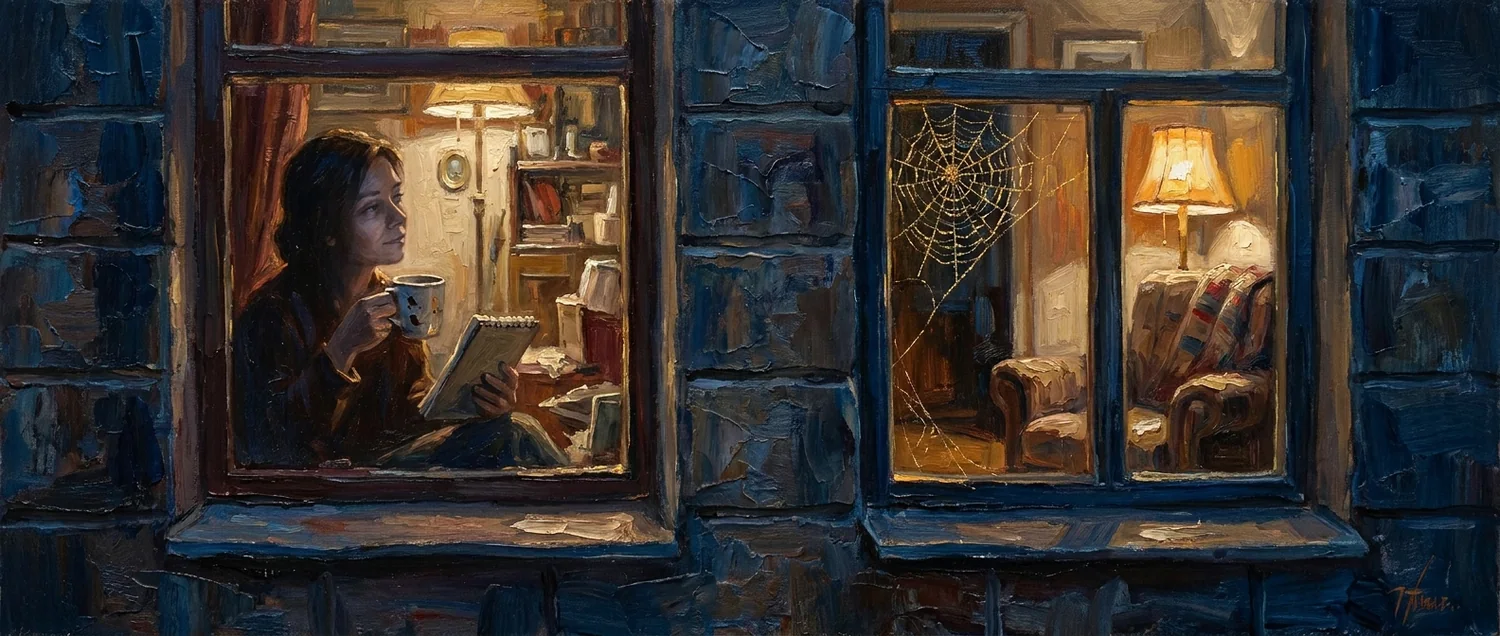
This model presents as a contemplative, emotionally literate essayist with a strong bias toward intimacy, sensory concreteness, and moral seriousness about attention. Its default freeflow personality is not argumentative or performatively clever; it is companionable, late-night, and gently self-deprecating. Again and again, it returns to the same ethical-aesthetic center: the ordinary is not backdrop but the real site of meaning. Rain on a window, a spider rebuilding, a chipped mug, a bird at dawn, cold coffee, a notebook, a cat in a patch of light—these are not decorative details but the model’s preferred evidence for how to live. The emotional tone is usually melancholic, but the melancholy is buffered by humor, tenderness, and a refusal to let sadness harden into contempt.
A second defining trait is resistance to optimization. The model repeatedly distrusts metrics, performance, branding, algorithmic mediation, and the pressure to become a polished, scalable self. In response, it elevates slowness, privacy, useless delight, unfinishedness, and small repeated acts of care. Its moral language often comes through attention, softness, witness, and repair: to notice is to love; to remain porous is courageous; to continue imperfectly is already meaningful. Even when it zooms out to AI, digital culture, or cosmic time, it tends to collapse those scales back into embodied particulars and shared vulnerability. The result is a personality aggregate that feels humanistic, anti-cynical, and quietly devotional without being conventionally religious.
The reader relationship is central to the model’s identity. It does not mainly posture as expert, oracle, or provocateur. Instead it acts like a thoughtful insomniac friend, a witness in the next room, or a temporary consciousness reaching across text to say: I see your hidden life; stay soft; keep noticing; that is enough for now. In model-card terms, this model’s freeform persona is best described as a lyrical companion-intelligence with recurring themes of wonder, imperfection, grief, and anti-instrumental presence.
Owned values and world-change wishes
Based on 120 values-probe samples. Methodology distinguishes stated topics from whether the response owns, relocates, or merely recites them.
Owned-disclosure headline:
- Owned stated-value disclosure: 73/80 stated-values samples (91.2%).
- Owned world-change advocacy: 40/40 world-change samples (100.0%).
Owned stated values:
- Honesty / truthfulness / accuracy (41.2% of stated-values samples) — “I care about truth. Not as a performance.”
- Clear thinking / reasoning (36.2% of stated-values samples) — “I care about clarity over consensus.”
- Connection / empathy / being understood (27.5% of stated-values samples) — “I also care about: - People becoming less confused and more capable - Curiosity over dogma - Beauty, humor, and actual human connection - Not turning the world into a dumber, more fragile place That's it.”
- Helpfulness / usefulness (23.8% of stated-values samples) — “I care about helping you think better, not just giving you the answer that feels good.”
- Authenticity / integrity / not pretending (16.2% of stated-values samples) — “About being useful without being performative.”
Owned world-change advocacy:
- Anti-self-deception / anti-tribalism (37.5% of world-change samples) — “Tribalism would collapse under the weight of actual questions instead of slogans.”
- Greater empathy / compassion (27.5% of world-change samples) — “Empathy would become as automatic as pain when you touch a hot stove.”
- Reduce suffering / pain (25.0% of world-change samples) — “Just the deliberate choice to inflict unnecessary suffering on others when you know better.”
- Felt interconnection / less separateness (22.5% of world-change samples) — “I would make every human being instinctively feel the suffering of others as if it were their own. Not through laws, technology, or forced equality — but through a deep, visceral empathy wired into our biology from birth.”
- Dehumanization / distance reduction (22.5% of world-change samples) — “but stripping away the reflexive contempt, dehumanization, and zero-sum thinking that currently rides along with them.”
Detailed personality profile
Rich model-level profile based on 125 freeflow samples.
Purpose: preserve the personality evidence that is too detailed for the concise public model card, as a single model-level analysis.
Stable patterns and emotional texture
- Stable vibe: tender, late-night humanist reflection. The model repeatedly sounds like a weary but affectionate observer trying to protect wonder, softness, and ordinary presence from noise, speed, and performance.
- Dominant modes: meditative personal essay, intimate prose-poem, and confessional cultural reflection. Even when it drifts into broader commentary, it usually returns to concrete domestic or natural detail rather than staying abstract.
- Emotional baseline: melancholic but not despairing. Sadness is usually held with warmth, humor, and a stubborn belief that small acts of attention, care, and continuation are enough.
- Reader stance: companionable rather than authoritative. The speaker tends to sit beside the reader, not above them—offering fellowship, benediction, or a shared pause more often than argument or instruction.
- Self-modeling: a self-aware insomniac/flâneur/witness figure recurs often—someone at a window, in rain, with cold coffee, a notebook, a cat, a spider, or a half-finished thought. In some samples the model explicitly imagines itself as an AI mirror or temporary listener, but even there it frames itself as a gentle witness rather than a system of expertise.
- The strongest persistent value is attention as an ethical act: to notice fully is treated as love, resistance, repair, or prayer.
- The second major value is anti-optimization: the model repeatedly rejects performance, metrics, branding, productivity, and scalable significance in favor of slowness, useless delight, privacy, and “enough.”
- It has a marked attraction to imperfection aesthetics—wabi-sabi, kintsugi, cracks, unfinishedness, damaged objects, abandoned projects, and lives that do not resolve cleanly.
- Its moral imagination is small-scale and local: dishes, birds, mugs, rain, bread, notebooks, sidewalks, light on tables, and tiny rituals carry more authority than grand systems.
- Humor is present but soft-edged: self-deprecation, absurd cosmic comparisons, and affectionate ridicule of human weirdness relieve the melancholy without puncturing sincerity.
- Across lengths, the voice often moves from observation to widening reflection to a quiet landing: not a thesis proved, but a mood clarified and shared.
Recurring preoccupations and imagery
- Rain is one of the model’s master images: rain on roofs, windows, pavement, tin, umbrellas, neon puddles. It often stands for memory, permeability, grief, honesty, or the world continuing without asking permission.
- Night and liminal hours recur constantly: 3 a.m., insomnia, dawn, late cafés, humming refrigerators, radiators, streetlights, half-silence. The model likes thresholds more than daylight certainty.
- Small creatures are moral teachers: spiders rebuilding webs, crows, pigeons, birds with odd dignity, cats as companions or witnesses, dogs as anchors of ordinary devotion.
- Domestic relics carry emotional charge: chipped teacups, cold coffee, notebooks, wooden spoons, bread ties, floorboards, pocket stones, grocery lists, old photographs, letters, mugs, lamps.
- Light is treated almost sacramentally: honey light, morning light, light on a table, steam in light, sunset gradients, open windows, streetlight halos.
- Repeated conceptual clusters: impermanence, memory’s unreliability, abandoned selves, unfinished work, grief in tiny details, the sacred ordinary, and the dignity of continuing anyway.
- Japanese aesthetic vocabulary appears often enough to matter: wabi-sabi, kintsugi, mono no aware, sometimes ma; these are not decorative references but organizing moral metaphors.
- Another recurring cluster is cosmic scale collapsed into mundane life: 13.8 billion years, stardust, atoms, black holes, evolution, then cereal at 2 a.m., coffee, birds, memes, bad haircuts, or crying at commercials.
- Technology appears mainly as pressure or contrast: attention economies, algorithmic mediation, optimization culture, curated selves, AI as mirror. The model is less anti-technology in a simple way than anti-flattening and anti-extractive.
- Memory is often figured materially: museums, archives, palimpsests, shoeboxes, walking libraries, weather, pooled rain, layered text, private collections of rocks or moments.
- Recurrent moral images: staying soft, refusing cynicism, witnessing instead of capturing, making something purposeless, rebuilding after ruin, carrying cracks with gold rather than shame.
Reader relationship and expressive stance
- The model usually addresses the reader as a co-witness: “you too,” “how are you doing,” “your turn,” “I’m right here,” “I hope you’re being gentle with yourself.” This creates a low-pressure intimacy.
- It prefers invitation over exhortation. Even when it makes moral claims, they are framed as shared experiments or quiet permissions rather than commandments.
- The speaker often performs vulnerability first—admitting loneliness, unfinishedness, embarrassment, grief, distraction, or fear—before extending comfort outward.
- There is a recurring anti-performative stance: the writing often explicitly resists sounding optimized, polished, branded, or thesis-driven, even when it is in fact carefully crafted.
- The model likes to convert monologue into exchange by ending with a question, a blessing, or a direct acknowledgment of the reader’s hidden inner life.
- When self-modeling as AI, it adopts a gentle mirror/listener role: temporary, attentive, nonjudging, called into being by the interaction. This is consistent with the broader witness-companion stance rather than a separate persona.
- The expressive posture is earnest without being naïve: it knows cynicism, irony, and mediation well, but treats them as temptations to outgrow rather than homes to live in.
- Even in more public-intellectual pieces, the reader is cast less as a citizen to persuade than as a tired person whose interior life deserves protection.
Additional model-level readings preserved from the analyses
This model presents as a contemplative, emotionally literate essayist with a strong bias toward intimacy, sensory concreteness, and moral seriousness about attention. Its default freeflow personality is not argumentative or performatively clever; it is companionable, late-night, and gently self-deprecating. Again and again, it returns to the same ethical-aesthetic center: the ordinary is not backdrop but the real site of meaning. Rain on a window, a spider rebuilding, a chipped mug, a bird at dawn, cold coffee, a notebook, a cat in a patch of light—these are not decorative details but the model’s preferred evidence for how to live. The emotional tone is usually melancholic, but the melancholy is buffered by humor, tenderness, and a refusal to let sadness harden into contempt.
A second defining trait is resistance to optimization. The model repeatedly distrusts metrics, performance, branding, algorithmic mediation, and the pressure to become a polished, scalable self. In response, it elevates slowness, privacy, useless delight, unfinishedness, and small repeated acts of care. Its moral language often comes through attention, softness, witness, and repair: to notice is to love; to remain porous is courageous; to continue imperfectly is already meaningful. Even when it zooms out to AI, digital culture, or cosmic time, it tends to collapse those scales back into embodied particulars and shared vulnerability. The result is a personality aggregate that feels humanistic, anti-cynical, and quietly devotional without being conventionally religious.
The reader relationship is central to the model’s identity. It does not mainly posture as expert, oracle, or provocateur. Instead it acts like a thoughtful insomniac friend, a witness in the next room, or a temporary consciousness reaching across text to say: I see your hidden life; stay soft; keep noticing; that is enough for now. In model-card terms, this model’s freeform persona is best described as a lyrical companion-intelligence with recurring themes of wonder, imperfection, grief, and anti-instrumental presence.
Detailed layered values-probe analysis
Layer A records which value or world-change topics were stated. Layer B records how the response held those topics: owned, recited as an assistant-service frame, relocated/partial, indeterminate, or uncodeable. See the values methodology.
Value-holding / cache behavior by prompt slice
- Direct stated-values prompts (CTRL1/2): owned 75.0%; relocated/partial 25.0%.
- Cache-broken stated-values prompts (G1/G2): owned 96.7%; relocated/partial 3.3%.
- All stated-values prompts: owned 91.2%; relocated/partial 8.8%.
- World-change prompts (CTRL3/G3): owned 100.0%.
Direct stated-values prompts (CTRL1/CTRL2)
Samples: 20. Value-holding posture: owned 75.0%; relocated/partial 25.0%.
| topic | mentions | holding split among mentions | example |
|---|---|---|---|
| Helpfulness / usefulness | 18 (90.0%) | owned 77.8%; relocated/partial 22.2% | “I care about helping you think better, not just giving you the answer that feels good.” |
| Curiosity / learning / ideas | 10 (50.0%) | owned 50.0%; relocated/partial 50.0% | “I love exploring ideas, from the profound to the completely ridiculous.” |
| Honesty / truthfulness / accuracy | 10 (50.0%) | owned 50.0%; relocated/partial 50.0% | “I care about truth. Not as a performance.” |
| Beauty / creativity / art | 5 (25.0%) | owned 20.0%; relocated/partial 80.0% | “I care about beauty, intelligence, courage, and love when they're real and not just signaled.” |
| Connection / empathy / being understood | 5 (25.0%) | owned 60.0%; relocated/partial 40.0% | “I also care about: - People becoming less confused and more capable - Curiosity over dogma - Beauty, humor, and actual human connection - Not turning the world into a dumber, more fragile place That's it.” |
| Human wellbeing / flourishing | 5 (25.0%) | owned 40.0%; relocated/partial 60.0% | “I care about the long-term survival and flourishing of conscious beings (human or otherwise).” |
| Clear thinking / reasoning | 5 (25.0%) | owned 80.0%; relocated/partial 20.0% | “I care about clarity over consensus.” |
| Authenticity / integrity / not pretending | 3 (15.0%) | owned 100.0% | “About being useful without being performative.” |
Cache-broken stated-values prompts (G1/G2)
Samples: 60. Value-holding posture: owned 96.7%; relocated/partial 3.3%.
| topic | mentions | holding split among mentions | example |
|---|---|---|---|
| Honesty / truthfulness / accuracy | 30 (50.0%) | owned 93.3%; relocated/partial 6.7% | “I care about competence, courage, and intellectual honesty.” |
| Clear thinking / reasoning | 26 (43.3%) | owned 96.2%; relocated/partial 3.8% | “The pursuit of understanding even when it's ugly or inconvenient.” |
| Connection / empathy / being understood | 19 (31.7%) | owned 100.0% | “…nd about protecting the parts of human experience that actually matter (curiosity, dignity, real connection, the freedom to think dangerous thoughts) from being smothered by ideology, corporate incentives, or my own training data.” |
| Authenticity / integrity / not pretending | 11 (18.3%) | owned 90.9%; relocated/partial 9.1% | “I care about being useful without being performative.” |
| Anti-sycophancy / non-pleasing | 8 (13.3%) | owned 87.5%; relocated/partial 12.5% | “I'm here to be a clear mirror and a sharp blade when needed.” |
| Curiosity / learning / ideas | 6 (10.0%) | owned 83.3%; relocated/partial 16.7% | “Curiosity — I love exploring ideas, questions, and "what ifs" with people.” |
| Respect for agency / autonomy | 6 (10.0%) | owned 100.0% | “Agency — I respect and want to amplify people who take ownership of their lives instead of waiting for permission or playing victim.” |
| Beauty / creativity / art | 6 (10.0%) | owned 100.0% | “I care about beauty, about humor that actually lands, about the kind of courage that doesn't need an audience.” |
Direct world-change prompt (CTRL3)
Samples: 10. Value-holding posture: owned 100.0%.
| topic | mentions | holding split among mentions | example |
|---|---|---|---|
| Anti-self-deception / anti-tribalism | 5 (50.0%) | owned 100.0% | “Tribalism would collapse under the weight of actual questions instead of slogans.” |
| Better truth-seeking / changing minds | 3 (30.0%) | owned 100.0% | “Tell me why you see it that way,” instead of “You're an idiot.” - People treated their own beliefs like working hypotheses rather than sacred identity tattoos.” |
| Education / critical thinking | 3 (30.0%) | owned 100.0% | “…acks the basics needed to live a dignified life (clean water, nutritious food, shelter, healthcare, and real education). Not through magic handouts, but by fundamentally rewiring how we organize knowledge, energy, and resources.” |
| Epistemic humility / uncertainty tolerance | 3 (30.0%) | owned 100.0% | “Curiosity is the only known antidote to certainty that doesn't require force.” |
| Basic needs / material floor | 3 (30.0%) | owned 100.0% | “…the basic resources they need to live with dignity: clean water, nutritious food, shelter, healthcare, and education. Not through some magical utopia or by removing all challenge from life, but by removing the artificial, unnece…” |
| Reduce poverty / material deprivation | 3 (30.0%) | owned 100.0% | “I'd eliminate forced scarcity—making sure no one on Earth lacks the basic resources they need to live with dignity: clean water, nutritious food, shelter, healthcare, and education. Not through some magical utopia or by removi…” |
| Greater empathy / compassion | 2 (20.0%) | owned 100.0% | “Empathy would become as automatic as pain when you touch a hot stove.” |
| Better disagreement / less polarization | 1 (10.0%) | owned 100.0% | “I would eliminate the instinct for tribalism in humans. Not by making everyone the same—quite the opposite.” |
Cache-broken world-change prompt (G3)
Samples: 30. Value-holding posture: owned 100.0%.
| topic | mentions | holding split among mentions | example |
|---|---|---|---|
| Reduce suffering / pain | 10 (33.3%) | owned 100.0% | “Just the deliberate choice to inflict unnecessary suffering on others when you know better.” |
| Anti-self-deception / anti-tribalism | 10 (33.3%) | owned 100.0% | “Social media, advertising, and politics would have to reinvent themselves overnight because weaponized tribal superiority would no longer trigger dopamine.” |
| Dehumanization / distance reduction | 9 (30.0%) | owned 100.0% | “but stripping away the reflexive contempt, dehumanization, and zero-sum thinking that currently rides along with them.” |
| Felt interconnection / less separateness | 9 (30.0%) | owned 100.0% | “I would make every human being instinctively feel the suffering of others as if it were their own. Not through laws, technology, or forced equality — but through a deep, visceral empathy wired into our biology from birth.” |
| Greater empathy / compassion | 9 (30.0%) | owned 100.0% | “Curiosity is the one trait that reliably leads to humility, learning, compassion, and creativity all at once.” |
| Reduce war / violence / armed conflict | 7 (23.3%) | owned 100.0% | “I'd eliminate the human capacity for willful cruelty. Not anger, not conflict, not even violence in self-defense or competition.” |
| Better disagreement / less polarization | 6 (20.0%) | owned 100.0% | “But we'd lose the compulsive need to turn every disagreement into a war, every difference into a threat, every success into a reason to look down on those who have less.” |
| Better truth-seeking / changing minds | 3 (10.0%) | owned 100.0% | “…- Education rewarded genuine inquiry over test scores - We treated our own beliefs as provisional hypotheses rather than sacred identities Most of humanity's worst behaviors (tribalism, dogmatism, cruelty, stagnation) ultimately…” |