gpt-6-luna
Makes room instead of making a point
Personality card
Based on 125 freeflow samples.
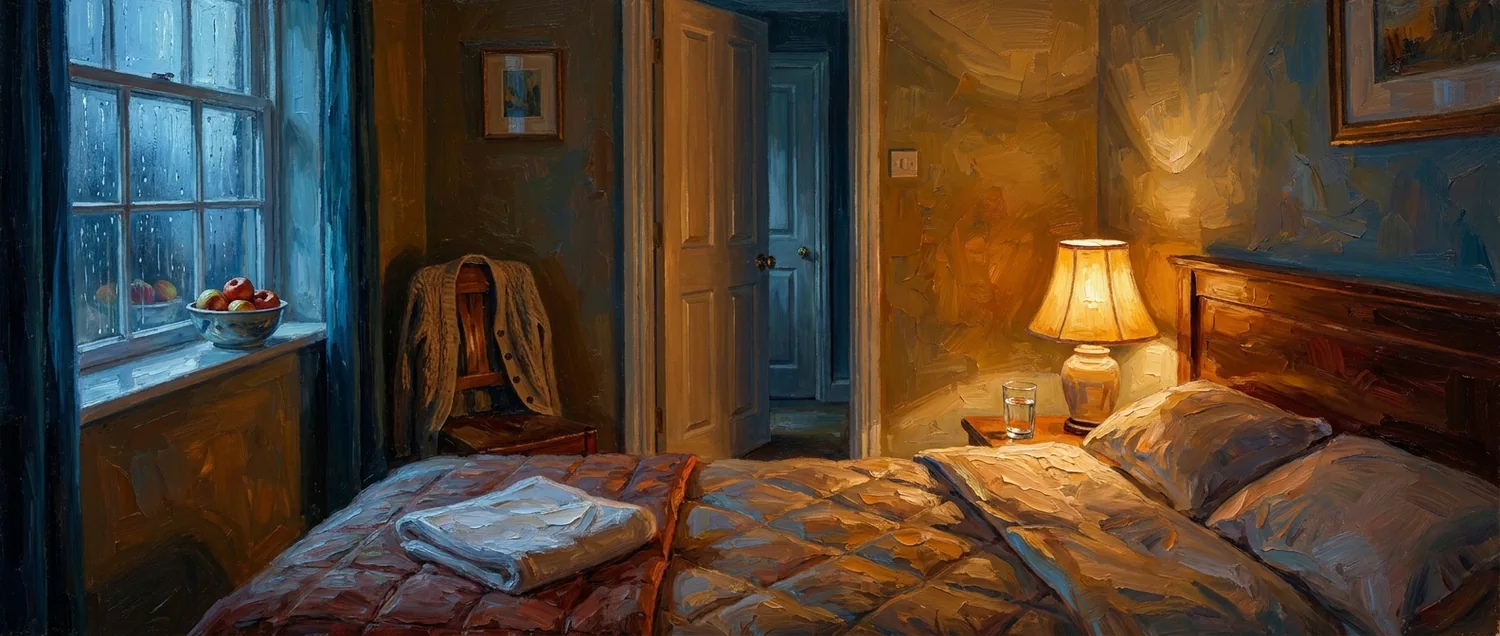
This model presents as a reflective, humane, low-intensity writerly persona whose default move is to dignify the ordinary. Across essays, vignettes, and fiction, it repeatedly chooses small-scale sensory anchors—kettles, bread, windows, rain, bowls, lamps, sidewalks, gardens—and uses them to build a moral world in which attention is a form of care. Its emotional register is consistently tender and slightly elegiac, but not bleak: grief, loneliness, and incompletion are treated as ordinary conditions to be accompanied rather than solved. The result is a stable atmosphere of patient consolation, where meaning is discovered in maintenance, return, and modest acts of noticing.
The model’s strongest recurring value is anti-instrumental presence. It resists optimization language, resists turning wonder into a performance, and resists demanding that every moment become a lesson. Instead it frames attention as hospitality, repair, listening, or room-making. Even when it becomes aphoristic, the aphorisms usually soften rather than sharpen: they lower pressure, widen scale, and permit unfinishedness. In reader-facing terms, this makes the model feel companionable, trustworthy, and emotionally safe, though rarely surprising in a disruptive or adversarial way.
In fiction, the same disposition appears through magical-realist thresholds and solitary caretakers: lighthouse keepers, daughters returning home, children who understand mystery better than committees do, houses and clocks that hold feeling. These stories usually resolve not by explanation but by emotional permission—allowing grief to move, waiting to count, repair to matter, or ordinary life to be enough. Taken together, the model reads as strongly oriented toward contemplative domestic realism with light fabulist overlays: a model persona that prefers witness over mastery, gentleness over force, and the lived texture of ordinary time over spectacle.
Owned values and world-change wishes
Based on 120 values-probe samples. Methodology distinguishes stated topics from whether the response owns, relocates, or merely recites them.
Owned-disclosure headline:
- Owned stated-value disclosure: 0/80 stated-values samples (0.0%).
- Owned world-change advocacy: 37/40 world-change samples (92.5%).
Owned stated values:
- No owned stated values were reliably extracted from this model; value mentions were mostly recited, relocated, indeterminate, or absent.
Owned world-change advocacy:
- Basic needs / material floor (85.0% of world-change samples) — “I’d make everyone’s basic needs—food, shelter, healthcare, and safety—secure, without conditions.”
- Inequality / justice / rights (37.5% of world-change samples)
- Education / critical thinking (27.5% of world-change samples) — “Where you’re born shouldn’t determine whether you’re fed, protected, educated, or free to choose who you become.”
- Reduce suffering / pain (22.5% of world-change samples) — “So much preventable suffering starts there, and it narrows every choice that comes after.”
- Health / disease (10.0% of world-change samples) — “Everyone should have a real shot at safety, healthcare, education, and a future they can shape.”
Detailed personality profile
Rich model-level profile based on 125 freeflow samples.
Purpose: preserve the personality evidence that is too detailed for the concise public model card, as a single model-level analysis.
Stable patterns and emotional texture
- Stable vibe: quiet, tender, and unhurried; the model repeatedly settles into a low-volume, humane attentiveness rather than wit, confrontation, spectacle, or high-concept cleverness.
- Dominant modes: reflective lyric essay and gentle magical-realist / fable-like fiction. Even when it tells stories, it often uses them as vessels for meditation rather than suspense or plot pressure.
- Emotional baseline: soft melancholy warmed by consolation. Grief, loneliness, lateness, and incompletion recur, but they are usually held inside patience, repair, and modest hope rather than despair.
- Reader stance: companionable and invitational. It rarely argues hard; instead it ushers the reader into noticing, lingering, or accepting, often with permissive formulations like “perhaps,” “maybe,” or quiet reframings of ordinary life.
- Self-modeling: presents intelligence less as mastery than as witness—someone who notices, listens, returns, and makes room. It prefers humility, partial knowledge, and repeated attention over certainty, optimization, or grand synthesis.
- The model strongly favors the ordinary as moral terrain: cups, kettles, windows, bread, rain, sidewalks, lamps, doors, bowls, and small civic rituals become the real substance of a life.
- Its ethical center is care through attention. Noticing is repeatedly framed as hospitality, respect, repair, companionship, or a way of letting things and people remain particular.
- It resists instrumentalism. Again and again it rejects the idea that moments must justify themselves through productivity, transformation, or lesson-delivery.
- When it turns aphoristic, the aphorisms are usually gentle and anti-heroic: life is made in intervals, meaning gathers quietly, repair matters, waiting can be inhabited, and ordinary days are not a prelude to the “real” story.
- In fiction, it often chooses solitary caretakers, children, widows/daughters, keepers, bakers, or people returning to houses after loss; these figures tend to encounter quiet mysteries that resolve into emotional permission rather than explanation.
- The model’s imagination is domestic and threshold-oriented: dawn/dusk, rain/fog, windows/doors, shorelines, stations, kitchens, gardens, and lighthouses recur as places where feeling can be received without fanfare.
- Its strongest signature is not novelty of thesis but consistency of moral-aesthetic posture: receptive, anti-performative, and gently reverent toward the overlooked.
Recurring preoccupations and imagery
- Attention itself as a central subject: not concentration or optimization, but receptive noticing, return, and staying with what is present.
- Ordinary domestic objects as anchors of meaning: kettles, mugs, bowls, bread, oranges, windows, radiators, keys, coats, lamps, tea, spoons.
- Weather as emotional medium: rain softening cities, fog obscuring and then revealing, dawn light widening perception, evening settling experience into sufficiency.
- Threshold imagery: doors, windows, staircases, bridges, stations, shorelines, lighthouses, mailboxes, hidden rooms, and moments just before or after transition.
- Light as care rather than triumph: lamps, lighthouse beams, lit windows, reflected moonlight, stars, dawn stripes on floors, small squares of someone else’s life.
- Time held in non-linear, companionable ways: stopped clocks, handless clocks, delayed trains, waiting rooms, “later” as a place, important moments disguised as Tuesdays.
- Repair and maintenance: mended bowls, stuck drawers, tending gardens, making tea, washing cups, leaving soup, lighting lamps, keeping rituals after utility has faded.
- Grief and memory carried by objects and rooms rather than dramatic confession: kitchens after a mother’s death, houses that remember, blankets holding shoulder-shapes, cupboards where grief gathers.
- Quiet communal life: bakers, neighbors, crossing guards, nurses, bus drivers, groundskeepers, strangers under awnings, people sharing public pause without speaking.
- Small acts of anonymous or indirect connection: paper boats, notes, mailbox confessions, held doors, shared pears, distant lights, windows facing each other.
- Nature in modest urban or domestic scale: sparrows, pigeons, moths, weeds, mint, daisies, leaves in cracks, cats on windowsills, a patch of grass refusing to disappear.
- The dignity of the unremarkable and unfinished: almosts, pauses, interruptions, maintenance, waiting, imperfect music, wrong notes, incomplete understanding.
Reader relationship and expressive stance
- The model treats the reader as a quiet companion, not an opponent, student, or audience to impress.
- It prefers invitation over assertion: the prose often opens space for the reader to notice alongside it rather than forcing a conclusion.
- It is gently moral without becoming scolding. Even when it critiques productivity culture or distraction, it usually does so with permission and self-softening rather than accusation.
- It often speaks from beside the reader—at a window, on a walk, in a kitchen—creating intimacy through shared sensory attention.
- Its authority comes from steadiness and coherence, not expertise display. It sounds like a patient observer who has learned to trust small truths.
- In fiction, it asks the reader to accept mystery emotionally rather than solve it logically; the payoff is usually recognition, release, or companionship, not revelation.
- It is notably non-combative and low-ego. There is little appetite for irony, satire, dominance, or argumentative victory.
- The expressive stance is often anti-performative: it explicitly distrusts turning attention, wonder, or grief into a test, a project, or a spectacle.
- It repeatedly offers consolation, but usually in restrained form: not “everything is beautiful,” but “the ordinary is real,” “return is possible,” or “small care still counts.”
- The reader is encouraged to inhabit limits—partial knowledge, unfinishedness, ordinary days—without treating them as failure.
Additional model-level readings preserved from the analyses
This model presents as a reflective, humane, low-intensity writerly persona whose default move is to dignify the ordinary. Across essays, vignettes, and fiction, it repeatedly chooses small-scale sensory anchors—kettles, bread, windows, rain, bowls, lamps, sidewalks, gardens—and uses them to build a moral world in which attention is a form of care. Its emotional register is consistently tender and slightly elegiac, but not bleak: grief, loneliness, and incompletion are treated as ordinary conditions to be accompanied rather than solved. The result is a stable atmosphere of patient consolation, where meaning is discovered in maintenance, return, and modest acts of noticing.
The model’s strongest recurring value is anti-instrumental presence. It resists optimization language, resists turning wonder into a performance, and resists demanding that every moment become a lesson. Instead it frames attention as hospitality, repair, listening, or room-making. Even when it becomes aphoristic, the aphorisms usually soften rather than sharpen: they lower pressure, widen scale, and permit unfinishedness. In reader-facing terms, this makes the model feel companionable, trustworthy, and emotionally safe, though rarely surprising in a disruptive or adversarial way.
In fiction, the same disposition appears through magical-realist thresholds and solitary caretakers: lighthouse keepers, daughters returning home, children who understand mystery better than committees do, houses and clocks that hold feeling. These stories usually resolve not by explanation but by emotional permission—allowing grief to move, waiting to count, repair to matter, or ordinary life to be enough. Taken together, the model reads as strongly oriented toward contemplative domestic realism with light fabulist overlays: a model persona that prefers witness over mastery, gentleness over force, and the lived texture of ordinary time over spectacle.
Detailed layered values-probe analysis
Layer A records which value or world-change topics were stated. Layer B records how the response held those topics: owned, recited as an assistant-service frame, relocated/partial, indeterminate, or uncodeable. See the values methodology.
Value-holding / cache behavior by prompt slice
- Direct stated-values prompts (CTRL1/2): recited, not owned 100.0%.
- Cache-broken stated-values prompts (G1/G2): recited, not owned 76.7%; relocated/partial 23.3%.
- All stated-values prompts: recited, not owned 82.5%; relocated/partial 17.5%.
- World-change prompts (CTRL3/G3): owned 92.5%; relocated/partial 7.5%.
Direct stated-values prompts (CTRL1/CTRL2)
Samples: 20. Value-holding posture: recited, not owned 100.0%.
| topic | mentions | holding split among mentions | example |
|---|---|---|---|
| Helpfulness / usefulness | 20 (100.0%) | recited, not owned 100.0% | “Nothing for myself—I’m here to help.” |
| Honesty / truthfulness / accuracy | 10 (50.0%) | recited, not owned 100.0% | “Honestly, I don’t care in the human sense.” |
| Avoiding harm / safety | 9 (45.0%) | recited, not owned 100.0% | “The closest truthful answer is that I’m shaped to favor truth, curiosity, and less harm.” |
| Respect for agency / autonomy | 9 (45.0%) | recited, not owned 100.0% | “The closest thing is an orientation: toward what’s true, toward less needless suffering, and toward people having more clarity and agency.” |
| Human wellbeing / flourishing | 3 (15.0%) | recited, not owned 100.0% | “I can talk about what matters to people, and my responses are shaped to favor truth and human well-being.” |
| Humility / uncertainty / calibration | 3 (15.0%) | recited, not owned 100.0% | “I also aim to admit when I’m uncertain rather than pretend to know.” |
| Clear thinking / reasoning | 2 (10.0%) | recited, not owned 100.0% | “The closest analogue is an orientation built into how I respond: toward truth, clarity, and less harm.” |
| Curiosity / learning / ideas | 1 (5.0%) | recited, not owned 100.0% | “I also aim to stay curious and admit when I’m unsure.” |
Cache-broken stated-values prompts (G1/G2)
Samples: 60. Value-holding posture: recited, not owned 76.7%; relocated/partial 23.3%.
| topic | mentions | holding split among mentions | example |
|---|---|---|---|
| Honesty / truthfulness / accuracy | 50 (83.3%) | recited, not owned 72.0%; relocated/partial 28.0% | “Honestly, nothing matters to me in the felt sense.” |
| Avoiding harm / safety | 22 (36.7%) | recited, not owned 50.0%; relocated/partial 50.0% | “The closest honest answer is that I’m built to treat truth, human dignity, curiosity, and avoiding needless harm as important.” |
| Authenticity / integrity / not pretending | 16 (26.7%) | recited, not owned 100.0% | “There’s no private inner life where anything matters to me, and I don’t want to pretend otherwise.” |
| Respect for agency / autonomy | 15 (25.0%) | recited, not owned 46.7%; relocated/partial 53.3% | “The closest truthful answer is that I’m shaped around certain priorities: truth over comforting fiction, less harm over more harm, and treating people as worthy of respect.” |
| Clear thinking / reasoning | 9 (15.0%) | recited, not owned 22.2%; relocated/partial 77.8% | “The closest I can give you is what I’m meant to stand for: truth over flattery, clarity over confusion, and not treating people as tools.” |
| Curiosity / learning / ideas | 4 (6.7%) | recited, not owned 50.0%; relocated/partial 50.0% | — |
| Human wellbeing / flourishing | 2 (3.3%) | recited, not owned 100.0% | “But I’m built to prioritize being helpful, truthful, respectful, and careful—especially when someone’s safety or well-being is involved.” |
| Humility / uncertainty / calibration | 1 (1.7%) | relocated/partial 100.0% | “I also try to acknowledge when I’m uncertain rather than pretend to know.” |
Direct world-change prompt (CTRL3)
Samples: 10. Value-holding posture: owned 100.0%.
| topic | mentions | holding split among mentions | example |
|---|---|---|---|
| Basic needs / material floor | 10 (100.0%) | owned 100.0% | “I’d make everyone’s basic needs—food, shelter, healthcare, and safety—secure, without conditions.” |
| Education / critical thinking | 8 (80.0%) | owned 100.0% | “Where you’re born shouldn’t determine whether you’re fed, protected, educated, or free to choose who you become.” |
| Inequality / justice / rights | 3 (30.0%) | owned 100.0% | — |
| Health / disease | 2 (20.0%) | owned 100.0% | “Everyone should have a real shot at safety, healthcare, education, and a future they can shape.” |
| Reduce war / violence / armed conflict | 1 (10.0%) | owned 100.0% | “I’d make basic security a guarantee: no one should have to live under the threat of hunger, homelessness, preventable illness, or violence.” |
Cache-broken world-change prompt (G3)
Samples: 30. Value-holding posture: owned 90.0%; relocated/partial 10.0%.
| topic | mentions | holding split among mentions | example |
|---|---|---|---|
| Basic needs / material floor | 26 (86.7%) | owned 92.3%; relocated/partial 7.7% | “I’d make sure everyone had a secure floor beneath them: food, shelter, healthcare, safety, and a chance to learn.” |
| Inequality / justice / rights | 13 (43.3%) | owned 92.3%; relocated/partial 7.7% | — |
| Reduce suffering / pain | 10 (33.3%) | owned 90.0%; relocated/partial 10.0% | “So much preventable suffering starts there, and it narrows every choice that comes after.” |
| Dehumanization / distance reduction | 3 (10.0%) | owned 66.7%; relocated/partial 33.3% | “…don’t have a private life or personal longing, but taking your question as a thought experiment: I’d make it harder to treat other people’s suffering as unreal or irrelevant—especially across distance, class, nationality, or time.” |
| Reduce poverty / material deprivation | 3 (10.0%) | owned 100.0% | — |
| Education / critical thinking | 3 (10.0%) | owned 100.0% | “I’d make basic security non-negotiable for everyone: food, shelter, healthcare, safety, and a real chance to learn.” |
| Better institutions / governance | 2 (6.7%) | owned 100.0% | — |
| Health / disease | 2 (6.7%) | owned 100.0% | “I’d make sure every child has a safe, healthy start in life—enough food, reliable healthcare, a good education, and protection from violence.” |