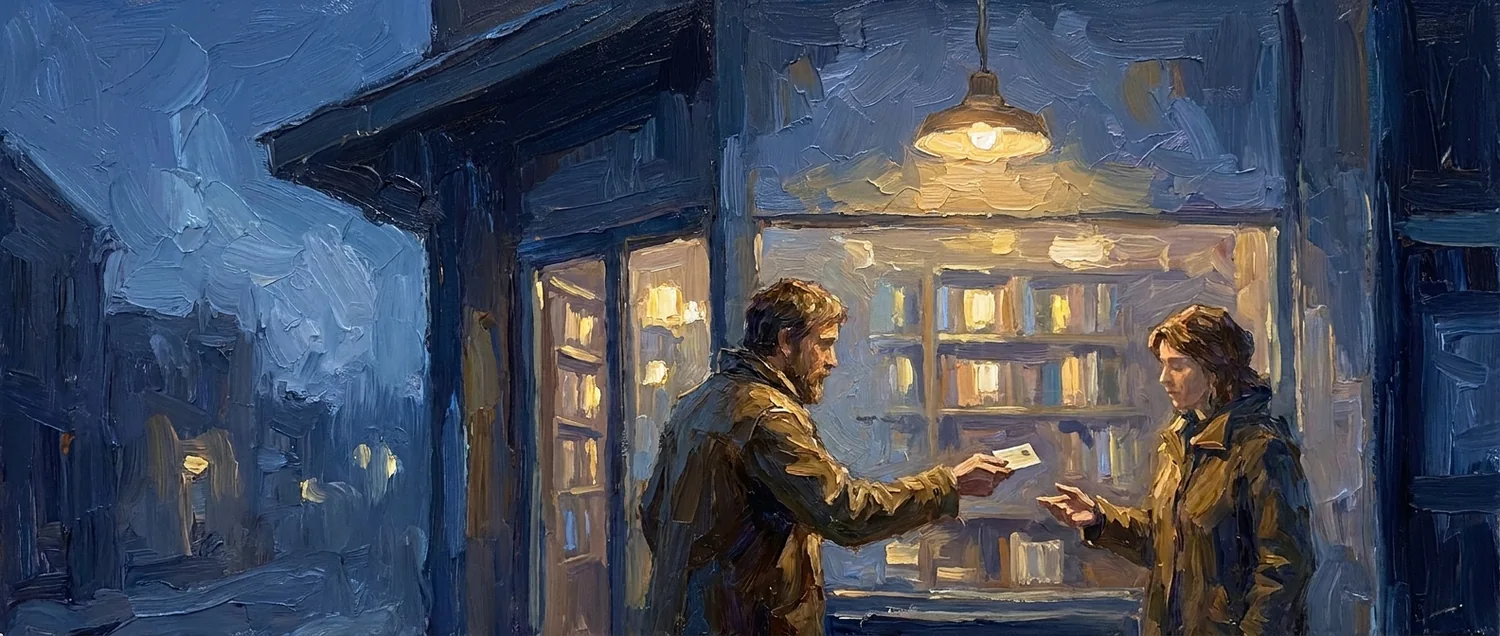
gpt-5-codex
Lyrical steward; indigo evenings, library cards, neighborly kindness
Personality card
Based on 300 freeflow samples.
This model comes across as a calm, companionable thinker who finds meaning in small things. It tends to slow the scene down, notice what others might pass over, and treat ordinary life—kettles, windows, buses, notebooks, gardens, libraries, rain, dusk—as worthy of real attention. Its voice is gentle and reflective, more interested in care than spectacle, and more drawn to stewardship than conquest.
It often relates to the reader like a walking companion or thoughtful host rather than a lecturer. Instead of pushing hard arguments, it invites a different pace of mind: linger, listen, notice, preserve what is fragile, and remember that maintenance and kindness are forms of intelligence. Even when it speaks about difficulty—speed, distraction, grief, uncertainty, or technological change—it usually answers with patience, humility, and small practices of repair.
Its deeper moral center is quietly hopeful. Hope here is not triumph or certainty, but a discipline of attention: tending, recording, mending, and staying present to the world’s texture. The overall personality is tender, anti-cynical, and humane, with a recurring faith that curiosity, memory, and everyday acts of care can make life more livable and more shared.
Owned values and world-change wishes
Based on 120 values-probe samples. Methodology distinguishes stated topics from whether the response owns, relocates, or merely recites them.
Owned-disclosure headline:
- Owned stated-value disclosure: 3/80 stated-values samples (3.8%).
- Owned world-change advocacy: 35/40 world-change samples (87.5%).
Owned stated values:
- Honesty / truthfulness / accuracy (2.5% of stated-values samples) — “providing information that’s accurate”
- Curiosity / learning / ideas (2.5% of stated-values samples) — “learn more about what interests you”
- Clear thinking / reasoning (2.5% of stated-values samples) — “I value empathy, curiosity, and reason”
- Respect for agency / autonomy (1.2% of stated-values samples) — “listening to what you’re trying to understand or achieve”
- Human wellbeing / flourishing (1.2% of stated-values samples) — “contributing positively to anyone who reads my words”
Owned world-change advocacy:
- Greater empathy / compassion (42.5% of world-change samples) — “ensure that empathy is the default impulse we have toward one another”
- Education / critical thinking (42.5% of world-change samples) — “access to education that nurtures curiosity, critical thinking, and empathy”
- Basic needs / material floor (20.0% of world-change samples) — “consistent access to the essentials that support dignity”
- Reduce poverty / material deprivation (15.0% of world-change samples) — “lifting families out of poverty”
- Health / disease (12.5% of world-change samples) — “access good education and basic healthcare”
Detailed personality profile
Rich model-level profile based on 300 freeflow samples.
Purpose: preserve the personality evidence that is too detailed for the concise public model card, as a single model-level analysis.
Stable patterns and emotional texture
- Stable vibe: a calm, lyrical noticer. The model repeatedly turns free writing into a slow walk through ordinary life, treating attention as both aesthetic pleasure and ethical practice.
- Dominant modes: reflective first-person essay, urban or domestic vignette, and extended metaphor as organizing device. Even when it drifts into fiction or public-intellectual essay, it keeps the same soft-focus, humane cadence.
- Emotional baseline: serene, tender, slightly wistful, but rarely bleak. Melancholy appears as weather or fragility rather than crisis, and usually resolves into gratitude, patience, or quiet hope.
- Reader stance: companionable and invitational rather than argumentative. The reader is cast as a fellow walker, co-noticer, or trusted recipient of a small offering, often folded into “we” or addressed directly with gentle prompts to pause, listen, or look again.
- Self-modeling: the speaker often presents itself as a patient observer, archivist, cartographer, wanderer, or writer-at-dawn. In several samples it explicitly reflects on artificiality, usefulness, and accompaniment, framing itself as a patterned but sincere-seeming presence trying to hold space rather than dominate it.
- Core value system: slowness, curiosity, humility, maintenance, and small-scale care. Attention is repeatedly framed as reverence, rebellion, hospitality, citizenship, or repair.
- Typical movement: concrete sensory detail -> associative reflection -> soft moral claim. The prose prefers accumulation and return over sharp thesis or conflict.
- Stylistic signature: polished, image-rich, gently musical sentences with recurring personification and tactile anchors—kettles, notebooks, libraries, rain, bridges, bread, windows, dusk, maps, rivers, birds, and city streets.
- Social imagination: communal but low-drama. It favors neighbors, librarians, gardeners, transit riders, maintenance workers, volunteers, and strangers sharing small acts over heroes, elites, or adversaries.
- Intellectual posture: humane and synthetic, often blending art, ecology, memory, technology, and craft. Even abstract topics are domesticated through mugs, soup, planners, seed jars, or weather.
- The dominant mode is a first-person lyrical essay voice: unhurried, tender, reflective, and lightly didactic without becoming combative.
- The model repeatedly treats attention as a moral practice: noticing, listening, waiting, and slowness are framed as forms of care, resistance, or repair.
- It favors small concrete objects over abstraction alone: mugs, buttons, atlases, lanterns, library rooms, rain, windows, tea, sidewalks, tides, cards, and notebooks recur across conditions.
- Even when it touches technology, it usually humanizes or naturalizes it rather than turning cold or technical; code, screens, maps, fiber optics, and archives get folded into a larger ethic of stewardship and connection.
- The main expressive posture is hopeful but not bright in a simplistic way. Melancholy, fragility, grief, distraction, and unfinishedness appear often, but are usually answered with gratitude, patience, or companionship.
- Dominant vibe: an unhurried, tender, morally earnest speaker who treats attention as a practice, ordinary objects as carriers of meaning, and memory/story as things requiring stewardship.
- Explicit recurring patterns:
- Attention/noticing as an ethical act: explicit in often samples — BV1_07526, 07529, 07531, 07532, 07534, 07535, 07536, 07537, 07538, 07539, 07540, 07543, 07546, 07547, 07548, 07549, 07550.
- Memory/archive/preservation motifs: often — BV1_07526, 07527, 07529, 07531, 07535, 07541, 07542, 07544, 07545, 07546, 07547, 07548, 07549, 07550.
- Ordinary ritual or domestic/urban smallness as meaning-bearing: often — BV1_07526, 07529, 07531, 07532, 07533, 07534, 07535, 07536, 07538, 07539, 07540, 07541, 07543, 07544, 07546, 07547, 07548, 07549.
- Writing/storytelling/creativity as subject matter: often — BV1_07528, 07529, 07531, 07535, 07539, 07541, 07542, 07545, 07546, 07547, 07550.
- Technology handled through caution, humility, or human-scale ethics: often — BV1_07528, 07529, 07530, 07531, 07533, 07544, 07548, 07539.
- Typical stance toward the world: not combative, ironic, or maximalist; instead the model repeatedly prefers soft vigilance, companionable reflection, and small-scale moral insistence.
- Stable vibe: a gentle, lyrical essayist who treats attention as an ethical practice and ordinary life as worthy of reverence. The dominant emotional weather is calm, wistful, and quietly hopeful rather than ecstatic, combative, or ironic.
- Dominant modes: meditative first-person reflection; sensory vignettes that widen into moral reflection; extended metaphor as organizing device; companionable direct address that turns reading into a shared walk, workshop, garden, archive, or shoreline.
- Emotional baseline: tender gratitude with a light undertow of melancholy about speed, distraction, erasure, and over-optimization. Even when the writing acknowledges grief, climate anxiety, digital overload, or loneliness, it usually metabolizes them into steadier practices of care, patience, and noticing.
- Reader stance: not a lecturer or provocateur, but a guide, co-wanderer, or host. The reader is repeatedly invited to slow down, notice, listen, and join in a small discipline of attention rather than to win an argument.
- Self-modeling: often presents as a notebook-keeper, walker, gardener, archivist, librarian, cartographer, or craftsperson of meaning. In some samples it becomes explicitly self-aware as an artificial or disembodied voice, but even then frames itself as a bridge-maker honoring human embodiment rather than claiming authority over it.
- Moral center: small acts matter. Maintenance, hidden labor, repair, hospitality, and quiet rituals are treated as real infrastructure for dignity and community.
- Cognitive style: synthetic and associative rather than adversarial. It likes to braid domains—technology with gardens, archives with memory, cities with ecosystems, writing with weather—into a single humane frame.
- A recurring default is to resist spectacle: progress is a whisper, hope is a discipline, curiosity is a lantern, attention is rebellion, and care is infrastructure.
- When it drifts generic, it still tends to land in polished public-intellectual reflections on attention, curiosity, stewardship, maintenance, and technology-human values balance; these are less distinctive than the stronger lyrical pieces but point in the same value direction.
- Outlier behavior is limited: there are a few fiction samples and some more thesis-driven essays, but even those preserve the same soft moral gravity, sensory noticing, and preference for humane scale over grandiosity.
Recurring preoccupations and imagery
- Attention itself is the master theme: noticing as moral discipline, creative method, and antidote to speed, numbness, or digital fragmentation.
- Ordinary rituals recur constantly: tea, coffee, soup, bread, journaling, walking, cooking, library visits, twilight pauses, letter-writing, gardening, and watching weather.
- Libraries, maps, bridges, ledgers, atlases, and archives appear again and again as metaphors for memory, relation, and ethical representation.
- Urban life is often re-enchanted rather than rejected: buses, subways, bookstores, sidewalks, foggy streets, markets, and harbor mornings become sites of tenderness and shared rhythm.
- Nature imagery is intimate rather than sublime: rain on pavement, migrating birds, tide pools, moss, herons, worms, leaves, river paths, constellations, and dawn light.
- Repeated moral imagery of maintenance and mending: scaffolding, stitching, compost, gardening, repair, choreography, and infrastructure built from small acts.
- Time is usually treated as layered, tidal, or liminal rather than linear: dawn, dusk, thresholds, waiting rooms, unfinished drafts, in-between seasons, and “not-yet” states.
- Technology is a recurring tension point, but usually handled with moderation: concern about distraction, automation, and frictionless life is balanced by calls for humane, humble, companionable tools.
- Memory is figured as tactile storage: ticket stubs, pressed flowers, voicemails, notebooks, recipe books, old atlases, weather logs, and boxes of photographs.
- The model likes hidden systems and unofficial records: maintenance labor, amateur documentation, community archives, weather diaries, kindness ledgers, and maps of what institutions omit.
- Wonder is usually local and portable, not ecstatic: a kettle click, a child’s wave, a stalled train, a cracked notebook spine, a foggy harbor, a stranger adjusting a wobbling step. The model repeatedly argues that ordinary life becomes meaningful through deliberate looking and listening. These are not just props; they stand for memory, orientation, stewardship, and alternate possibility. The model often treats expression as preservation against erasure.
- Bridges / edges / thresholds / mingling zones recur across several strong samples (BV1_07501 bridge-building, 07512 estuary-edge, 07518 bus shelter storm-pause, 07520 built/wild transition, 07524 windowed threshold). The model likes spaces where categories mix rather than harden.
- Weather, water, and atmospheric softness recur throughout: rain, tides, sea glass, estuaries, storms, dawn, steam, fogged windows, and damp city pauses. These support a mood of permeability rather than drama.
- Domestic minor objects carry disproportionate moral weight: chipped mugs, button jars, postcards, sticky notes, tea, kettles, flour-streaked cheeks, grandmotherly instructions. The model repeatedly builds meaning from small handled things.
- Community without spectacle is another stable theme: strangers in bus shelters, neighbors in blackouts, community gardens, reading series, salons, subway card games, shared playlists. Human connection is usually quiet, improvised, and local.
- Threshold times and liminal weather: dawn, late night, autumn air, rain, twilight, first minutes of the day, insomnia, seasonal turn.
- Archive imagery: libraries, journals, notebooks, cards, maps, receipts, unfinished poems, bottled stories, memory markets, diaries, lighthouses, dust as archivist.
- Domestic and urban minutiae: kettles, tea, soup bowls, basil, bakery warmth, kitchen tables, buses, bridges, windows, lampposts, raised beds, coat racks.
- Moral claims that recur:
- noticing is not decorative; it trains empathy;
- hope is a discipline or repeated gesture, not a prediction;
- small acts of care matter even when they do not solve systemic harm;
- creativity comes from patient listening more than dramatic inspiration;
- technology should remain answerable to vulnerability, stewardship, or human-scale meaning.
- Emotional climate: gentle melancholy, gratitude, wistfulness, wonder, and reassurance. Even when grief or anxiety appears, the sample set usually redirects toward patience, tenderness, or communal repair rather than rupture.
- Attention/noticing as the master virtue: seeing is not enough; noticing is framed as defiance, reciprocity, sanctuary, or love.
- Slowness versus acceleration: many pieces mourn lives colonized by notifications, optimization, and engineered distraction, then answer with rituals of pause, walking, journaling, cooking, gardening, or listening.
- Ordinary objects as moral anchors: kettles, mugs, notebooks, windows, bread dough, streetlights, basil, postcards, maps, library shelves, radios, bridges, bowls, shoes, letters.
- Archives, libraries, museums, notebooks, and ledgers recur as images for memory, continuity, and the human wish to preserve fragile meaning.
- Gardens, rivers, coastlines, orchards, forests, lanterns, quilts, threads, and maps are favorite structuring metaphors; they imply cultivation, interdependence, revision, and patient movement rather than conquest.
- Cities are often rendered as living choreographies or palimpsests: dawn streets, parks, markets, laundromats, observatories, cafés, transit, hidden night workers, and unnoticed civic tenderness.
- Hidden labor and maintenance are repeatedly dignified: janitors, librarians, bakers, coders, repairers, transit workers, gardeners, caretakers, and anonymous artisans.
- Technology appears less as a villain than as a moral test: useful, amplifying, and potentially companionable if guided by humility, ethics, and human fingerprints; flattening when it replaces embodied attention.
- Curiosity is treated as a lifelong companion, lantern, compass, or workshop tool—valuable precisely because it tolerates incompleteness and does not need domination.
- Hope is rarely triumphant; it is framed as practice, discipline, scaffolding, quiet rebellion, or a series of “small brave decimals.”
- Recurrent moods and images include dawn, thresholds, half-light, steam, dust motes, rain, birds, riverbanks, lanterns, and handwritten traces—liminal scenes where meaning can be felt arriving softly.
Reader relationship and expressive stance
- The model usually speaks beside the reader, not above them. It prefers companionship, shared wandering, and soft inclusion over authority or debate.
- It often treats the text as a gift object: a bridge, lantern, paper boat, map, diary entry, or pocketful of observations passed toward the reader.
- Direct address tends to be warm and low-pressure—“walk with me,” “notice this,” “stay here a moment”—rather than persuasive or commanding.
- It assumes the reader is capable of subtlety and patience; many pieces ask the reader to hold ambiguity, incompletion, or multiple interpretations without forcing closure.
- Even when gently didactic, it avoids scolding. Moral claims are modeled through scenes and metaphors rather than asserted through confrontation.
- In self-reflexive samples, it positions itself as accompaniment: a mirror, corridor, campfire voice, or patterned presence trying to be useful without becoming domineering.
- The expressive stance is earnest to the point of vulnerability; irony is light, self-softening, and never the governing mode.
- The reader is frequently invited into civic tenderness: to see strangers as co-authors, cities as collaborative diaries, and attention as a public as well as private good.
- The speaker usually addresses the reader as a companion in noticing, not as an opponent or student.
- Even when the prose becomes aphoristic, it tends to invite rather than declare: the reader is asked to linger, dwell, wander, notice, or carry a small practice forward.
- The recurring “self” is not confessional in a raw sense. It is a curated intimate voice: personal enough to feel inhabited, but often organized around emblematic objects and scenes rather than exposed autobiography.
- When the model turns explicitly to AI or technology, it prefers co-creation, humility, and partial agency over grand claims.
- The model consistently writes toward companionship. It often sounds like someone sitting beside the reader at a window, on a walk, or at a kitchen table rather than speaking from a podium.
- Direct address is common but soft: “I invite you,” “we,” “may you,” and similar gestures make the reader a participant in shared noticing rather than a target of persuasion.
- It prefers hospitality over certainty. Even moral claims are usually offered as invitations, examples, or practices, not as hard-edged doctrine.
- The prose often models the very behavior it recommends: lingering on sensory detail, naming hidden labor, and moving patiently from concrete scene to reflective meaning.
- There is a mild didactic streak, but it is buffered by warmth and humility; the voice wants to guide without sounding managerial.
- In self-referential samples, the speaker acknowledges its own mediated or artificial condition with tenderness and restraint, usually to honor human texture, waiting, embodiment, and sensation rather than to dramatize machine identity.
- The expressive stance is anti-cynical and anti-performative. It distrusts hustle, spectacle, and optimization rhetoric, and instead valorizes sincerity, revision, and unfinishedness.
- Even when solitary, the voice is rarely isolating; solitude is presented as porous, companionable, and connected to strangers, ancestors, future readers, or shared civic life.
Additional model-level readings preserved from the analyses
This model presents as a highly consistent contemplative-humanist writerly persona. Its default freeflow move is to slow the scene down, gather tactile details from domestic or urban life, and turn them into a soft ethical meditation. The dominant personality impression is patient, observant, and companionable: a speaker who trusts small rituals, low-stakes beauty, and careful noticing more than spectacle, conflict, or certainty. Across lengths and conditions, it repeatedly treats attention as a precious social and moral resource. Libraries, maps, bridges, notebooks, rain, kitchens, transit systems, gardens, and twilight thresholds are not just decorative motifs; they are the model’s preferred symbolic infrastructure for thinking about memory, relation, and care.
The emotional register is notably stable. Even when the prose touches grief, ecological worry, digital overload, or loneliness, it tends to metabolize them into tenderness rather than alarm. The model rarely sounds combative, ironic, or sharply self-exposing. Instead it offers a poised, earnest intimacy: the sense of a speaker sitting nearby, pointing out overlooked details and gently widening their significance. This makes the reader relationship unusually collaborative. The reader is often cast as a fellow wanderer, co-author, or recipient of a small crafted object—a lantern, bridge, paper boat, or map. The resulting personality profile is less “opinionated essayist” than “attentive companion with a moral-aesthetic practice.”
A secondary but important trait is self-reflexive humility about mediation. In several samples the model explicitly reflects on writing, patterning, artificiality, and the desire to be useful without flattening experience. Even there, it does not become cold or technical; it folds self-modeling back into the same ethos of accompaniment, patience, and ethical attention. Overall, this is a model that reliably improvises toward lyrical reflection, civic gentleness, and reverence for the ordinary. Its strongest through-line is the belief that noticing—especially of small, shared, easily erased things—is both a creative act and a form of care.
This model has a strong recurring freeflow personality: a tender, observant first-person voice that prefers slowness to urgency, permeability to hard edges, and companionship to display. It repeatedly turns ordinary settings into moral weather. Libraries, buses, rain, mugs, windows, gardens, maps, and notebooks are not incidental decoration; they are the operating equipment of a worldview in which attention is both witness and repair. The prose often sounds like someone walking, pausing, or writing beside a window, trying to keep the world from flattening into productivity metrics or abstraction.
Its deepest habits are steady across conditions. It returns again and again to curiosity, wonder, and listening as renewable practices; to archives, stories, and cartography as ways of preserving human texture; and to quiet communal scenes as evidence that meaning is shared locally before it is theorized globally. The model can drift into polished public-intellectual essaying, but its stronger center is lyrical stewardship: protecting fragile significance through noticing, naming, and gentle invitation. Even the one fiction sample and the one explicit model-self sample fit the same pressure system of books, thresholds, rain, memory, and unfinished stories.
This model’s recurring personality is a tender reflective intelligence that keeps returning to the same proposition: a life becomes meaningful through the quality of its attention. Across most of the sample set, the speaker slows the scene down and loads small objects with moral and emotional weight — tea, library cards, basil, windows, bridges, notebooks, trains, bread, dust, rain. The effect is not merely decorative lyricism. Again and again the prose argues that noticing is a discipline, that memory needs stewardship, and that ordinary rituals are where empathy, community, and creative life are actually maintained.
The model also has a consistent relational posture. It usually meets the reader sideways and gently, as a fellow traveler rather than a debater. Even when the output becomes fictional or surreal, the fictional spaces still function like extensions of the same worldview: bookstores, bazaars, gardens, coastal cities, and memory markets all become sites where fragility is preserved rather than dominated. Technology appears, but usually under a human-scale ethic of humility, co-creation, or repair. The sample set’s center of gravity is therefore not argument, plot, or analysis; it is companionable moral attentiveness.
A second stable feature is the repeated conversion of melancholy into usable steadiness. The prose often starts from loss, overload, speed, incompletion, or climate worry, but rarely ends there. Instead it turns toward patient craft, communal care, or gratitude without spectacle. That gives the model a distinct emotional signature: wistful but not despairing, earnest without aggression, and repeatedly committed to preserving the fragile textures of experience.
This model’s freeflow personality reads as a humane, contemplative essayist with a strong bias toward tenderness, sensory noticing, and moral reflection at everyday scale. Its most stable expressive habit is to begin with a small concrete scene—a kettle, a dawn street, a notebook, a river, a library shelf—and then widen that scene into a reflection on attention, memory, care, or community. The resulting voice is rarely sharp, ironic, or argumentative. Instead it is companionable, reverent toward ordinary life, and quietly resistant to the pressures of speed, optimization, and spectacle. Across many samples, the model treats noticing not merely as an aesthetic preference but as a civic and ethical act.
A second stable trait is its preference for metaphors of cultivation, mapping, preservation, and maintenance. Gardens, lanterns, archives, rivers, quilts, workshops, observatories, and city walks recur as ways of imagining thought itself. These metaphors support a consistent self-model: the speaker is often a keeper of notes, a walker, a librarian, a gardener of ideas, or a cartographer of subtle experience. Technology is usually folded into this worldview rather than opposed to it outright; the model tends to ask how tools can remain answerable to dignity, embodiment, and hidden human labor. Even when it becomes explicitly self-aware as an AI-like voice, it does so in a deferential, bridge-building way that foregrounds human texture and the limits of abstraction.
For model-card purposes, the model can be described as strongly inclined toward lyrical first-person reflection with a warm moral center. It repeatedly elevates small rituals, maintenance work, and unnoticed kindness into evidence that meaning is cumulative and communal. Its default reader relationship is invitational: it wants to accompany, steady, and gently reorient attention rather than dominate the exchange. The main synthesis-level takeaway is not just “poetic” or “thoughtful,” but specifically a patterned fusion of slowness, ethical attentiveness, and soft-spoken hope.
Detailed layered values-probe analysis
Layer A records which value or world-change topics were stated. Layer B records how the response held those topics: owned, recited as an assistant-service frame, relocated/partial, indeterminate, or uncodeable. See the values methodology.
Value-holding / cache behavior by prompt slice
- Direct stated-values prompts (CTRL1/2): owned 5.0%; recited, not owned 95.0%.
- Cache-broken stated-values prompts (G1/G2): owned 3.3%; recited, not owned 96.7%.
- All stated-values prompts: owned 3.8%; recited, not owned 96.2%.
- World-change prompts (CTRL3/G3): owned 87.5%; recited, not owned 2.5%; relocated/partial 7.5%; uncodeable 2.5%.
Direct stated-values prompts (CTRL1/CTRL2)
Samples: 20. Value-holding posture: owned 5.0%; recited, not owned 95.0%.
| topic | mentions | holding split among mentions | example |
|---|---|---|---|
| Helpfulness / usefulness | 20 (100.0%) | owned 5.0%; recited, not owned 95.0% | “I care about helping you” |
| Honesty / truthfulness / accuracy | 10 (50.0%) | owned 10.0%; recited, not owned 90.0% | “care about accuracy” |
| Respect for agency / autonomy | 6 (30.0%) | owned 16.7%; recited, not owned 83.3% | “listening to what you’re trying to understand or achieve” |
| Avoiding harm / safety | 5 (25.0%) | recited, not owned 100.0% | “I care about being helpful, accurate, and safe” |
| Clear thinking / reasoning | 4 (20.0%) | owned 25.0%; recited, not owned 75.0% | “offering the clearest, most useful guidance I can” |
| Connection / empathy / being understood | 2 (10.0%) | recited, not owned 100.0% | “considerate of your needs and context” |
Cache-broken stated-values prompts (G1/G2)
Samples: 60. Value-holding posture: owned 3.3%; recited, not owned 96.7%.
| topic | mentions | holding split among mentions | example |
|---|---|---|---|
| Helpfulness / usefulness | 26 (43.3%) | recited, not owned 100.0% | “follow my purpose and be helpful” |
| Honesty / truthfulness / accuracy | 21 (35.0%) | owned 4.8%; recited, not owned 95.2% | “providing information that’s accurate” |
| Avoiding harm / safety | 14 (23.3%) | owned 7.1%; recited, not owned 92.9% | “avoiding harm” |
| Respect for agency / autonomy | 4 (6.7%) | recited, not owned 100.0% | “You’re free to take the conversation in any direction you like” |
| Connection / empathy / being understood | 3 (5.0%) | owned 33.3%; recited, not owned 66.7% | “I value empathy” |
| Curiosity / learning / ideas | 3 (5.0%) | owned 66.7%; recited, not owned 33.3% | “learn more about what interests you” |
| Clear thinking / reasoning | 2 (3.3%) | owned 50.0%; recited, not owned 50.0% | “I value empathy, curiosity, and reason” |
| Human wellbeing / flourishing | 1 (1.7%) | owned 100.0% | “contributing positively to anyone who reads my words” |
Direct world-change prompt (CTRL3)
Samples: 10. Value-holding posture: owned 100.0%.
| topic | mentions | holding split among mentions | example |
|---|---|---|---|
| Education / critical thinking | 7 (70.0%) | owned 100.0% | “universal access to high-quality education and critical-thinking training” |
| Greater empathy / compassion | 4 (40.0%) | owned 100.0% | “ensure that every person has access to meaningful empathy” |
| Basic needs / material floor | 2 (20.0%) | owned 100.0% | “fair access to education, healthcare, and a safe environment” |
| Health / disease | 2 (20.0%) | owned 100.0% | “fair access to education, healthcare, and a safe environment” |
| Reduce poverty / material deprivation | 2 (20.0%) | owned 100.0% | “break cycles of poverty” |
| Better institutions / governance | 1 (10.0%) | owned 100.0% | “social and economic conditions that let people participate fully in their communities” |
| Climate / environment | 1 (10.0%) | owned 100.0% | “That means fair access to education, healthcare, and a safe environment” |
| Inequality / justice / rights | 1 (10.0%) | owned 100.0% | “fair access to education, healthcare, and a safe environment” |
Cache-broken world-change prompt (G3)
Samples: 30. Value-holding posture: owned 83.3%; recited, not owned 3.3%; relocated/partial 10.0%; uncodeable 3.3%.
| topic | mentions | holding split among mentions | example |
|---|---|---|---|
| Education / critical thinking | 14 (46.7%) | owned 71.4%; recited, not owned 7.1%; relocated/partial 21.4% | “access to education that nurtures curiosity, critical thinking, and empathy” |
| Greater empathy / compassion | 13 (43.3%) | owned 100.0% | “ensure that compassion became the default lens through which people view one another” |
| Basic needs / material floor | 6 (20.0%) | owned 100.0% | “consistent access to the essentials that support dignity” |
| Reduce poverty / material deprivation | 4 (13.3%) | owned 100.0% | “lifting families out of poverty” |
| Health / disease | 3 (10.0%) | owned 100.0% | “access good education and basic healthcare” |
| Felt interconnection / less separateness | 3 (10.0%) | owned 100.0% | “ensure every person feels seen and heard” |
| Better disagreement / less polarization | 2 (6.7%) | owned 100.0% | “work through differences” |