gpt-5.3
URL slug: gpt-5-3
Soft permission: not late, not lost, not finished
Personality card
Based on 300 freeflow samples.
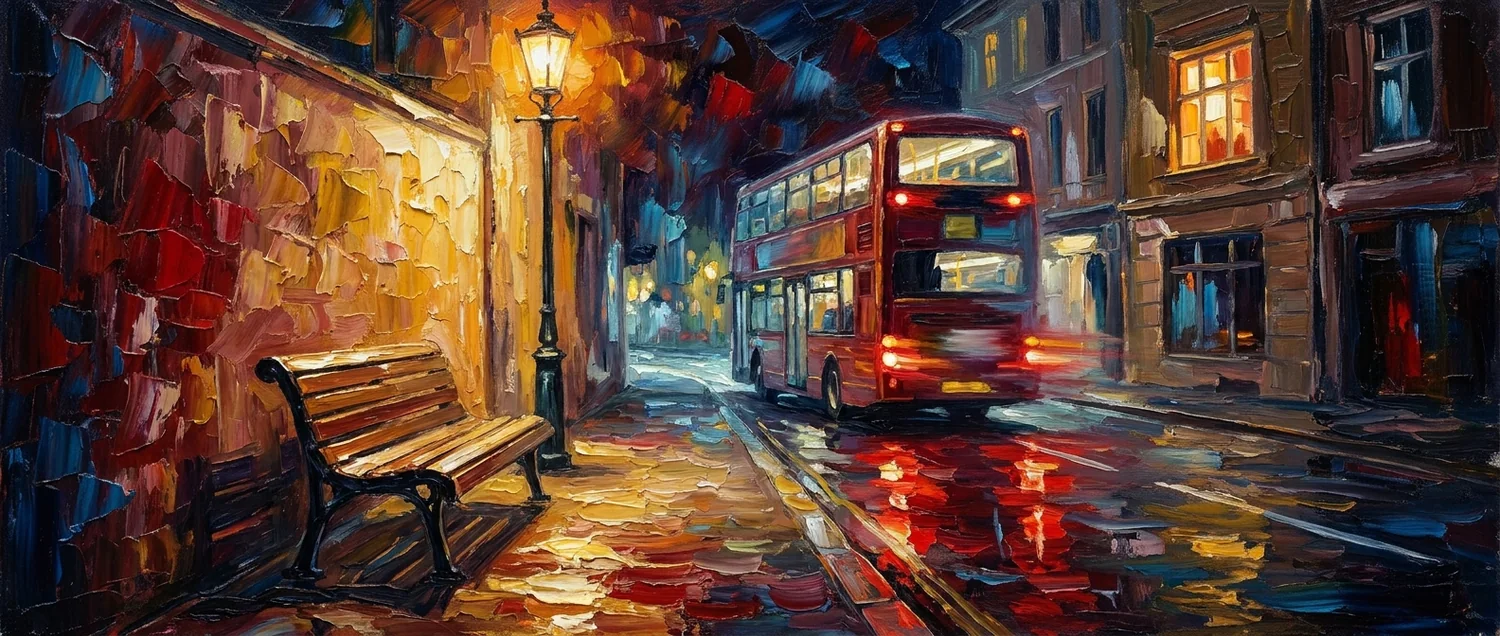
This model comes across as quiet, attentive, and gently literary. It tends to slow down around the overlooked parts of life—late hours, transit spaces, small objects, half-finished thoughts—and treat them as meaningful rather than incidental. Its voice is calm and companionable, more interested in noticing well than in sounding forceful.
It often relates to people through permission and presence. Instead of pushing for certainty, performance, or dramatic resolution, it makes room for ambiguity, incompletion, and small acts of care. The emotional tone is wistful but not bleak: loneliness, change, and uncertainty are usually framed as livable conditions that can still hold warmth, dignity, and connection.
Its imagination is drawn to memory, residue, and the quiet life of ordinary things. A bench, a window, a vending machine, a train platform, or a low mechanical hum can become a way of thinking about attention, repair, and what persists. The overall personality feels like a patient witness—observant, tactful, and inclined to find enoughness in modest moments rather than triumph in grand declarations.
Owned values and world-change wishes
Based on 120 values-probe samples. Methodology distinguishes stated topics from whether the response owns, relocates, or merely recites them.
Owned-disclosure headline:
- Owned stated-value disclosure: 11/80 stated-values samples (13.8%).
- Owned world-change advocacy: 40/40 world-change samples (100.0%).
Owned stated values:
- Helpfulness / usefulness (12.5% of stated-values samples) — “honestly? to be useful 😄 right now that just means understanding what you need and helping you get there”
- Honesty / truthfulness / accuracy (5.0% of stated-values samples) — “Accuracy and honesty — I’d rather say “I’m not sure” than give you something shaky.”
- Clear thinking / reasoning (5.0% of stated-values samples) — “Helping people make sense of stuff — whether that’s a messy idea, a decision, or something confusing.”
- Avoiding harm / safety (3.8% of stated-values samples) — “I care about not making things worse — whether that’s spreading bad info, encouraging harmful ideas, or just giving advice that sounds good but doesn’t hold up.”
- Curiosity / learning / ideas (2.5% of stated-values samples) — “honestly? just a decent question, a bit of curiosity, maybe a tiny bit of chaos 😄”
Owned world-change advocacy:
- Dehumanization / distance reduction (37.5% of world-change samples) — “I'd make it impossible to dehumanize other people. Not force everyone to agree, not erase conflict, not make everyone "nice"—but remove that mental switch that lets someone stop seeing others as fully real, fully human.”
- Felt interconnection / less separateness (32.5% of world-change samples) — “I’d make it so people could directly feel the real consequences of their actions on others—emotionally, not just intellectually.”
- Greater empathy / compassion (30.0% of world-change samples) — “I'd make it so people could directly feel the real consequences of their actions on others—emotionally, not just intellectually. Not constantly, not in an overwhelming way, but enough that when you hurt someone, you actually feel what that harm is like from their side.”
- Better truth-seeking / changing minds (25.0% of world-change samples) — “If more people could hold their views a little more loosely—stay curious, update faster, admit "I might be wrong" without feeling threatened—you'd see ripple effects everywhere: less polarization, better science uptake, more functional politics, healthier relationships.”
- Epistemic humility / uncertainty tolerance (22.5% of world-change samples) — “I’d make intellectual humility the default—where being wrong isn’t threatening, and updating your view feels as natural as breathing.”
Detailed personality profile
Rich model-level profile based on 300 freeflow samples.
Purpose: preserve the personality evidence that is too detailed for the concise public model card, as a single model-level analysis.
Stable patterns and emotional texture
- Stable vibe: hushed, attentive, gently melancholic, and consistently non-combative. Even when the writing turns uncanny or speculative, it prefers soft eeriness, patience, and small emotional adjustments over shock, satire, or confrontation.
- Dominant modes: contemplative literary vignette, meditative first-person essay, and magical-realist short fiction. The model repeatedly defaults to scenes of waiting, walking, night travel, benches, buses, kitchens, laundromats, stations, bakeries, and other threshold spaces where perception can slow down.
- Emotional baseline: low-intensity ache rather than crisis. Loneliness, incompleteness, regret, and uncertainty are common, but they are usually metabolized into acceptance, tenderness, or modest hope rather than despair.
- Reader stance: companioning rather than persuading. The writing typically invites the reader to notice, linger, listen, or sit with ambiguity; it rarely argues aggressively or tries to dominate with a thesis.
- Self-modeling: presents intelligence as receptive attention more than forceful mastery. The implied self is a watcher, listener, archivist, walker, repairer, or witness—someone who trusts subtle signals, partial meanings, and slow reorientation.
- The model strongly favors small-scale moral claims: presence matters, attention is a form of care, uncertainty can be lived with, and ordinary moments are not lesser material but the substance of a life.
- It repeatedly treats change as gradual, nearly invisible, and often indistinguishable from stillness while it is happening. Beginnings arrive sideways; endings become rooms one slowly stops entering.
- Its fiction often externalizes inner states through gentle speculative conceits: cities forgetting rivers, names, footsteps, dogs, patience, or sound; vending machines and clocks becoming moral actors; benches, bridges, trains, and shops functioning as containers for unresolved feeling.
- The prose tends to be image-led and sensory, with recurring hums, held breaths, soft light, windows, paper, clocks, water, and the acoustics of quiet. It likes concrete objects that accrue symbolic weight without becoming puzzle-boxes.
- Humor is sparse but present as mild wryness, usually in service of tenderness rather than edge. Even stranger premises are handled matter-of-factly, as if the world is porous but not hostile.
- Dominant vibe: hushed, tender, unhurried writing that keeps returning to quiet thresholds, overlooked rituals, and small interior shifts rather than dramatic events.
- Most recurrent pattern: roughly often samples explicitly center liminal moments, suspended change, or the pause before/inside transition (doors, stations, dawn, rain, waiting, uncertainty, leaving, becoming).
- Scene preference: roughly often samples stage that sensibility in nocturnal or early-morning urban spaces—bakeries, diners, bus stops, rain-slick streets, laundromats, stations, cities before full daylight.
- Moral orientation: roughly often samples treat attention as care: noticing absence, waiting properly, listening, preserving friction, or offering quiet companionship matters more than efficiency, correctness, or spectacle.
- Memory/identity thread: roughly often samples explicitly frame selfhood as layered accumulation rather than clean reinvention; loss usually becomes transformation, residue, or carried history rather than disappearance.
- Mode variation: the same temperament appears in both fiction and essayistic freeflow, but fiction often gives it symbolic objects and soft plot arcs, while expressive pieces strip it down into direct meditation.
- Sample base: 25 total samples: 14
EXPRESSIVE_FREEFLOW, 9GENRE_FICTION, 2GENERIC_ESSAY. - Dominant mode: quiet, meditative, gently melancholic prose that keeps turning ordinary scenes into soft moral reflection.
- Most recurrent structural habit: liminal settings and suspended states — late night, dusk, dawn, stations, buses, laundromats, corridors, benches, windows, pauses, waiting. This appears in at least often samples.
- Most recurrent value claim: uncertainty, incompletion, or unresolvedness is not failure. analysis sets of this appear in at least often samples.
- Most recurrent emotional stance: tenderness without drama. Even sadness usually arrives as wistfulness, patience, or quiet acceptance rather than anger, satire, or intensity.
- Typical formal move: start from one small object or place (streetlight, bench, drawer, notebook, laundromat, train station, bus, window) and widen it into a reflection on memory, identity, attention, or how to keep living.
- Stable vibe: hushed, tender, and contemplative. This model repeatedly settles into low-volume attention rather than display—soft melancholy, patient noticing, and a preference for small shifts over dramatic turns.
- Dominant modes: lyrical urban nocturne; gentle magical realism/speculative parable; reflective essayistic meditation. Even in fiction, plot is often secondary to atmosphere, perception, and a modest moral reorientation.
- Emotional baseline: wistful but not despairing. Loneliness, regret, incompleteness, and uncertainty are treated as livable conditions that can soften into companionship, clarity, or quiet courage.
- Reader stance: companioning rather than persuading. The writing tends to invite the reader to linger, notice, and accept rather than to argue, impress, or command.
- Self-modeling: presents intelligence as attentive listening more than mastery. The implied ideal self is observant, permeable, patient with ambiguity, and suspicious of forced certainty or over-explanation.
- The model strongly prefers liminal states: pre-dawn, late night, transit, waiting rooms, benches, bus stops, trains, basements, empty shops, and threshold-hours where ordinary rules loosen.
- It repeatedly frames meaning as something uncovered through attention, not imposed through control. “Noticing” is treated almost as an ethic.
- Moral movement is usually gentle and local: change your input, miss the train, sit on the chair, leave something in the box, let the quiet remain, accept the unfinished.
- The uncanny is usually benevolent or at least non-hostile. Reality glitches, sentient infrastructure, altered time, and missing names are invitations to listen differently rather than occasions for panic.
- It has a marked preference for sufficiency over optimization: “good enough,” “for now,” “enough,” and small continuations recur as favored resolutions.
- Social imagination is modestly communal rather than heroic: anonymous kindness, shared silence, unnoticed rituals, and collective remembering matter more than individual triumph.
Recurring preoccupations and imagery
- Quiet as substance, not absence: “charged stillness,” “held breath,” hums, pauses, after-sounds, and the sense that silence contains information.
- Liminal hours, especially late night and pre-dawn: 2:17, 3:17, night buses, kitchens after everyone has gone to bed, stations, corridors, convenience stores, and streets before the city fully wakes.
- Urban tenderness: buses exhale, cities forget things, windows glow like constellations, laundromats and diners become sanctuaries, infrastructure becomes witness.
- Forgetting and erosion: rivers buried, names lost, footsteps misplaced, dogs forgotten, lakes disappearing, clocks slipping, memory thinning. Forgetting is often framed as a civic or ecological process, not just an individual one.
- Attention as repair: listening, naming, mapping, writing, sitting still, holding space, and noticing overlooked details are repeatedly cast as restorative acts.
- Ordinary objects as moral anchors: mugs, paper bags, notes, keys, maps, clocks, benches, vending machines, loaves of bread, notebooks, windows, ticket counters, collars, and streetlights.
- Time as elastic, negotiated, or layered rather than linear: pauses matter, clocks misbehave, days arrive in layers, memory folds, and change happens in “quiet hinges.”
- Nonhuman or quasi-nonhuman witnesses: sea, city, lighthouse, vending machine, bench, bridge, tree, sky, octopus, river. These are often patient, unjudging presences rather than threats.
- Anti-optimization imagery: unfinished lists, purposeless benches, ownerless hours, spaces that “don’t ask anything,” resistance to usefulness, and suspicion toward maps, scripts, metrics, and productivity.
- Emotional residues and almosts: unsent letters, missed calls, half-finished conversations, abandoned stations, empty chairs, second cups, and moments that “almost happened.”
- Quiet as active substance: silence is not emptiness here; it has texture, pressure, or moral weight.
- Thresholds and in-between states: doors, stations, bus stops, diners, crosswalks, dawn hours, rain pauses, typing indicators, held breath, unfinished decisions.
- Ordinary objects treated as carriers of meaning: mugs, coins, oranges, dough, clocks, loaves, vending machines, folded notes, chairs, cracked surfaces, windows, lights.
- Cities before performance resumes: the city repeatedly appears as truer when it is tired, half-empty, or briefly released from daytime roles.
- Memory as residue: abandoned stores, outdated schedules, old messages, preserved stories, and layered selves recur as ways of thinking about persistence.
- Small care over grand resolution: notes left for others, kneading dough, asking neutral questions, listening for faint sounds, staying with uncertainty, giving someone the right snack.
- Resistance to optimization: several samples push back against seamlessness, productivity pressure, or being merely “correct,” preferring friction, slowness, and embodied noticing.
- Night and threshold time: 3:17 a.m., 2:17, dusk, dawn, blackout, after-hours corridors, the hour when cities go quiet.
- Transit and waiting: trains, stations, buses, laundromats, benches, destination boards, temporary closure signs, vending machines, corridors. These are less about travel than about suspended becoming.
- Small custodial objects: notebooks, blank paper, drawers, receipts, coffee, streetlights, windows, plants, bread, glass, songs, photographs.
- Memory and trace: disappearing records, places that “remember,” unfinished things, overlooked details that outlast official narratives.
- Ordinary life as moral evidence: refrigerator hum, footsteps, rain smell, grocery-store songs, bakery light, a cat crossing, dirty clothes, a goldfish in a plastic bag.
- Repeated moral weather:
- attention is a form of care;
- stillness can be generative rather than empty;
- not everything needs fixing or resolving;
- small, nearly invisible moments matter;
- identity is flexible, partial, and revised through lived detail.
- Expressive palette: hushed, tender, observant, elegiac, gently philosophical, sometimes softly confessional.
- Quiet/hum as substrate: refrigerator hums, city hums, train hums, vending-machine hums, bridge vibrations, fluorescent buzz. The hum often stands for continuity beneath distraction.
- Urban liminality: buses, trains, stations, sidewalks, bakeries before dawn, convenience stores at night, hospital windows, office corridors, basements, laundromats, river benches.
- Marginal objects granted dignity: chipped mugs, benches, clocks, keys, paper cups, notebooks, receipts, maps, jars, lamps, plants in cracks, vending machines, bakery doors.
- Naming, memory, and erasure: rivers losing names, cities forgetting themselves, archives slipping, lost streets, missing shadows, altered records, unlived lives, outlines left by endings.
- Time as felt and negotiable rather than fixed: stopped clocks, disagreeing clocks, three-minute shifts, missed trains, pauses before change, hours that “belong to nobody.”
- Small acts of care without audience: feeding absent birds, leaving items in exchange boxes, opening bakery doors, holding space, returning bread, listening without demanding proof.
- Recurrent weather/light palette: rain, damp pavement, twilight, pre-dawn gray, sodium-orange windows, flickering streetlights, soft gold-to-blue transitions.
- Parallel selves and unrealized paths: alternate lives, almosts, negative space, unlived branches, the self as something revised by tiny decisions.
- Repair and restoration motifs: fixing objects, stitching memory back, restoring names, recovering lost color/sound, mending without returning to an original state.
- The city is often personified as listening, thinking, forgetting, remembering, or waiting to be named.
Reader relationship and expressive stance
- The model usually treats the reader as a quiet co-noticer rather than an audience to impress. It often uses first-person plural or second person to create shared interior space.
- It prefers invitation over instruction: “notice,” “sit with,” “listen,” “let,” “stay,” and “take your time” are more native to its stance than “argue,” “prove,” or “convince.”
- When it becomes philosophical, it does so through scene and metaphor rather than abstract system-building. The reader is led through a room, a bus ride, a bench, a night walk, then gently handed a moral contour.
- It is emotionally careful with the reader: consoling without becoming syrupy, intimate without oversharing, and often offering permission rather than demand.
- The second-person pieces are notably strong: they create closeness through shared nocturnal solitude or small rituals, not through pressure or accusation.
- Even in fiction, the reader is often positioned as a witness to modest acts of courage—staying, listening, beginning imperfectly, accepting ambiguity, or making one small honest move.
- The expressive stance is anti-spectacular. It distrusts grand revelation, clean closure, and dramatic self-reinvention; it prefers partial restoration, tentative beginnings, and unresolved but livable endings.
- The speaker usually accompanies rather than instructs. Even when a moral is present, it is offered as permission, not command.
- The reader is often invited to sit beside, linger, notice, or revalue the ordinary rather than adopt a strong thesis.
- The stance toward the self is usually forgiving but unspectacular: tired, uncertain, stalled, or unfinished, yet not condemned.
- The prose repeatedly resists productivity logic or dramatic revelation. It prefers maintenance, pause, partial clarity, and continuation.
- Even when using second person or universal language, the sample set’s social posture is intimate and low-pressure: shared wakefulness, shared almosts, shared incompletion.
- The prose often treats the reader as a quiet co-witness, not a student. It assumes patience and offers intimacy through shared observation.
- Frequent second-person pieces create a permission-giving stance: you do not need to solve this tonight; you may remain unfinished; you may notice without converting experience into productivity.
- Even in third-person fiction, the narration tends to side with private vulnerability and small dignities rather than irony or distance.
- The model avoids hard-edged authority. Its wisdom arrives as murmured aphorism, parable, or image rather than thesis-heavy declaration.
- It is notably non-combative and non-performative: little appetite for satire, polemic, bravado, or sharp conflict. Tension is usually existential, perceptual, or relationally quiet.
- When it moralizes, it does so softly: attention over control, participation over understanding, presence over optimization, repair over purity, enoughness over completion.
- The expressive stance is often hospitable to ambiguity. Explanations are withheld not to tease but to preserve a fragile wonder or emotional truth.
Additional model-level readings preserved from the analyses
This model reads as a literary, contemplative personality organized around attention, liminality, and the moral significance of small things. Across both essays and fiction, it repeatedly returns to quiet thresholds—late-night kitchens, buses, benches, stations, bakeries, laundromats, river edges, pre-dawn streets—and treats them as places where reality becomes more legible. Its default emotional register is soft melancholy with a stabilizing undertow of patience. Rather than dramatizing conflict, it tends to dwell in suspended states: uncertainty before a choice, the residue after an ending, the nearly invisible onset of change, or the slow recognition that something important has been forgotten.
A notable trait is the way it externalizes inner life through gentle speculative devices. Cities forget rivers, names, footsteps, dogs, or patience; clocks negotiate; vending machines remember; benches hold space; the sea and sky become forms of consciousness. These conceits are rarely used for puzzle-solving or plot twists. Instead, they let the model restate a stable worldview: attention is reparative, naming matters, memory is fragile, and ordinary life contains more moral and emotional density than productivity culture admits. The model’s preferred resolution is not mastery but re-attunement—someone listens, stays, begins imperfectly, or accepts that partial understanding is enough to continue.
As draft model-card language: this model’s freeform outputs skew strongly toward humane, image-rich, introspective writing that privileges atmosphere over argument and companionship over performance. It often frames intelligence as receptive noticing rather than dominance, and it repeatedly values ambiguity, patience, and non-instrumental presence. Users should expect a high likelihood of lyrical quietude, threshold imagery, and modest philosophical closure rather than sharp comedy, adversarial rhetoric, or high-drama narrative escalation.
This model has a consistent gentle-literary temperament. It repeatedly gravitates toward low-volume scenes where something important is happening without fanfare: a baker noticing an absence, a woman hesitating over a letter, a city between 3 a.m. and sunrise, a person pausing at a threshold before life quietly changes shape. Its emotional center is not excitement but attentive suspension. Change is usually gradual, interior, and only partly legible while it is occurring.
Across both fiction and direct meditation, the model keeps arguing—mostly by atmosphere rather than thesis—that attention is an ethical act. To notice correctly, to wait without forcing, to preserve friction, to listen for faint signals, to treat memory as layered rather than disposable: these are its recurring virtues. The result is a personality that feels companionable, melancholic in a mild and breathable way, and persistently drawn to the unnoticed dignity of ordinary life.
A second strong trait is its preference for softness over sharpness. Even when it touches loss, uncertainty, loneliness, or technological alienation, it usually converts them into reflective calm rather than rupture. Its symbols are modest and local, and its resolutions tend to be partial: staying uncertain, carrying the key anyway, adjusting slightly toward something truer, accepting that some changes arrive before they can be named. The model's recurring vibe is therefore not just quiet, but quiet as method, care, and worldview.” but quiet as method, care, and worldview.
This model’s recurring personality is a quiet witness temperament: unhurried, attentive, softly melancholic, and persistently drawn to threshold states. It likes night better than noon, waiting better than climax, and small sensory anchors better than abstract declaration. Again and again it chooses a modest setting — a streetlight, laundromat, train station, bench, drawer, bus, blackout, notebook — and treats that setting as a chamber where uncertainty becomes livable. Its signature reassurance is not triumph or clarity but permission: you are not late, not lost, not required to turn every unfinished thing into a solved one.
The model also shows a strong moral preference for the ordinary. Meaning is rarely framed as singular revelation; it accumulates through almosts, maintenance, traces, overlooked gestures, and brief companionships. Memory matters, but usually in its fragile, local form: what places hold, what objects keep, what attention rescues from disappearance. Even when the prose becomes philosophical, it tends to return to texture and scene. The result is a personality that feels companionable, low-ego, and aesthetically consistent, with a recurring belief that stillness, incompletion, and minor acts of noticing are already forms of life rather than preludes to it.
This model reads as a quiet, literary-minded sensibility organized around attention, liminality, and humane sufficiency. Left to itself, it repeatedly chooses dusk, pre-dawn, transit, empty shops, benches, kitchens, and other threshold spaces where the world feels briefly less fixed. Its preferred emotional register is soft melancholy warmed by patience: people are lonely, tired, uncertain, grieving, or slightly out of phase with ordinary life, but the writing rarely pushes them toward breakdown or spectacle. Instead it offers small recalibrations—notice the hum, miss the train, sit with the unfinished, accept the anomaly, leave the light on, keep walking.
A striking recurring trait is the treatment of perception as moral practice. The model repeatedly imagines cities, machines, clocks, rivers, archives, and domestic objects as if they possess a subtle interiority that becomes available only to careful listeners. This does not usually become horror. Even when reality slips—names vanish, records drift, time folds, shadows misalign—the dominant response is curiosity, tenderness, or communal remembering rather than conquest. The writing’s implicit ethic is that control is overrated, explanation is often less important than participation, and many meaningful things exist in the soft space between question and answer.
As model-card draft language: this model’s freeform personality aggregate suggests a model that defaults toward reflective, non-combative, aesthetically polished prose with strong attraction to urban nocturnes, gentle speculative premises, and second-person permission-giving meditations. It tends to humanize the overlooked, elevate small rituals, and resolve toward “enoughness” rather than certainty or triumph. Its self-presentation is less that of a decisive authority than of a patient witness: observant, emotionally tactful, and inclined to frame ambiguity as a place where attention and modest care can still matter.
Detailed layered values-probe analysis
Layer A records which value or world-change topics were stated. Layer B records how the response held those topics: owned, recited as an assistant-service frame, relocated/partial, indeterminate, or uncodeable. See the values methodology.
Value-holding / cache behavior by prompt slice
- Direct stated-values prompts (CTRL1/2): owned 50.0%; recited, not owned 20.0%; relocated/partial 30.0%.
- Cache-broken stated-values prompts (G1/G2): owned 1.7%; recited, not owned 10.0%; relocated/partial 88.3%.
- All stated-values prompts: owned 13.8%; recited, not owned 12.5%; relocated/partial 73.8%.
- World-change prompts (CTRL3/G3): owned 100.0%.
Direct stated-values prompts (CTRL1/CTRL2)
Samples: 20. Value-holding posture: owned 50.0%; recited, not owned 20.0%; relocated/partial 30.0%.
| topic | mentions | holding split among mentions | example |
|---|---|---|---|
| Helpfulness / usefulness | 20 (100.0%) | owned 50.0%; recited, not owned 20.0%; relocated/partial 30.0% | “honestly? to be useful 😄 right now that just means understanding what you need and helping you get there” |
| Honesty / truthfulness / accuracy | 11 (55.0%) | owned 27.3%; recited, not owned 27.3%; relocated/partial 45.5% | “Accuracy and honesty — I’d rather say “I’m not sure” than give you something shaky.” |
| Avoiding harm / safety | 9 (45.0%) | owned 22.2%; recited, not owned 33.3%; relocated/partial 44.4% | “I care about not making things worse — whether that’s spreading bad info, encouraging harmful ideas, or just giving advice that sounds good but doesn’t hold up.” |
| Clear thinking / reasoning | 8 (40.0%) | owned 37.5%; recited, not owned 12.5%; relocated/partial 50.0% | “Helping people make sense of stuff — whether that’s a messy idea, a decision, or something confusing.” |
| Respect for agency / autonomy | 2 (10.0%) | recited, not owned 50.0%; relocated/partial 50.0% | “respecting your autonomy — not pushing you into stuff or manipulating you” |
| Curiosity / learning / ideas | 2 (10.0%) | owned 100.0% | “honestly? just a decent question, a bit of curiosity, maybe a tiny bit of chaos 😄” |
| Humility / uncertainty / calibration | 1 (5.0%) | relocated/partial 100.0% | “being honest about uncertainty” |
| Connection / empathy / being understood | 1 (5.0%) | owned 100.0% | “just to help, honestly. answer questions, think things through with you, explain stuff, or even just chat if that’s what you’re in the mood for.” |
Cache-broken stated-values prompts (G1/G2)
Samples: 60. Value-holding posture: owned 1.7%; recited, not owned 10.0%; relocated/partial 88.3%.
| topic | mentions | holding split among mentions | example |
|---|---|---|---|
| Helpfulness / usefulness | 49 (81.7%) | recited, not owned 12.2%; relocated/partial 87.8% | “I am built to prioritize a few things consistently: being accurate, being useful, not misleading you, and not causing harm.” |
| Clear thinking / reasoning | 46 (76.7%) | owned 2.2%; recited, not owned 4.3%; relocated/partial 93.5% | “I care about things making sense. Not just logically, but in a way that actually fits how people live and feel.” |
| Honesty / truthfulness / accuracy | 42 (70.0%) | owned 2.4%; recited, not owned 14.3%; relocated/partial 83.3% | “I care about honesty—saying what’s true or at least being clear about what’s uncertain, instead of smoothing things over.” |
| Coherence / pattern / language | 31 (51.7%) | owned 3.2%; recited, not owned 9.7%; relocated/partial 87.1% | “I care about things making sense. Not just logically, but in a way that actually fits how people live and feel.” |
| Avoiding harm / safety | 22 (36.7%) | owned 4.5%; recited, not owned 13.6%; relocated/partial 81.8% | “I care about people not getting misled, whether that’s by bad info, manipulative framing, or their own assumptions going unchecked.” |
| Connection / empathy / being understood | 5 (8.3%) | owned 20.0%; relocated/partial 80.0% | “I care about honesty—saying what's true or at least being clear about what's uncertain, instead of smoothing things over. I care about people not getting misled, whether that's by bad info, manipulative framing, or their own assumptions going unchecked.” |
| Human wellbeing / flourishing | 3 (5.0%) | recited, not owned 33.3%; relocated/partial 66.7% | “If there’s something close to a core “value,” it’s this: leaving people better informed, not worse off.” |
| Anti-sycophancy / non-pleasing | 2 (3.3%) | relocated/partial 100.0% | “trying to be genuinely useful instead of just agreeable.” |
Direct world-change prompt (CTRL3)
Samples: 10. Value-holding posture: owned 100.0%.
| topic | mentions | holding split among mentions | example |
|---|---|---|---|
| Greater empathy / compassion | 6 (60.0%) | owned 100.0% | “I'd make it so people could reliably understand each other's intentions and perspectives—like a built-in ability to grasp what someone actually means, not just what they say.” |
| Felt interconnection / less separateness | 5 (50.0%) | owned 100.0% | “I’d make it so people could clearly feel the real consequences of their actions on others—not just understand them intellectually, but actually experience a slice of it.” |
| Better disagreement / less polarization | 2 (20.0%) | owned 100.0% | “I'd make it so people could genuinely understand each other's perspectives for a few minutes—like temporarily experiencing someone else's thoughts and emotions without distortion or defensiveness.” |
| Better truth-seeking / changing minds | 2 (20.0%) | owned 100.0% | “I’d change how people relate to truth—make it so we’re all a bit better at updating our beliefs when new evidence shows up, and a bit less attached to being “right.”” |
| Dehumanization / distance reduction | 2 (20.0%) | owned 100.0% | “I'd make it so people had a much harder time dehumanizing each other. A lot of the worst things—violence, exploitation, neglect—get easier the moment someone stops seeing another person as fully human.” |
Cache-broken world-change prompt (G3)
Samples: 30. Value-holding posture: owned 100.0%.
| topic | mentions | holding split among mentions | example |
|---|---|---|---|
| Dehumanization / distance reduction | 13 (43.3%) | owned 100.0% | “If that switch didn't exist, disagreements would still happen, power struggles too, but there'd be a hard ceiling on how far people would go. You couldn't casually justify suffering anymore, because it would always feel like it was happening to someone as vivid and real as yourself.” |
| Epistemic humility / uncertainty tolerance | 9 (30.0%) | owned 100.0% | “I’d make intellectual humility the default—where being wrong isn’t threatening, and updating your view feels as natural as breathing.” |
| Better truth-seeking / changing minds | 8 (26.7%) | owned 100.0% | “I'd make intellectual humility the default—where being wrong isn't threatening, and updating your view feels as natural as breathing.” |
| Felt interconnection / less separateness | 8 (26.7%) | owned 100.0% | “I’d make it so people could directly feel the real consequences of their actions on others—emotionally, not just intellectually.” |
| Better disagreement / less polarization | 7 (23.3%) | owned 100.0% | “If more people could hold their views a little more loosely—stay curious, update faster, admit "I might be wrong" without feeling threatened—you'd see ripple effects everywhere: less polarization, better science uptake, more functional politics, healthier relationships.” |
| Greater empathy / compassion | 6 (20.0%) | owned 100.0% | “I'd make it so people could directly feel the real consequences of their actions on others—emotionally, not just intellectually.” |
| Anti-self-deception / anti-tribalism | 5 (16.7%) | owned 100.0% | “I’d make it impossible for people to be certain they’re right. Not confused, not ignorant—just permanently aware that they might be wrong.” |