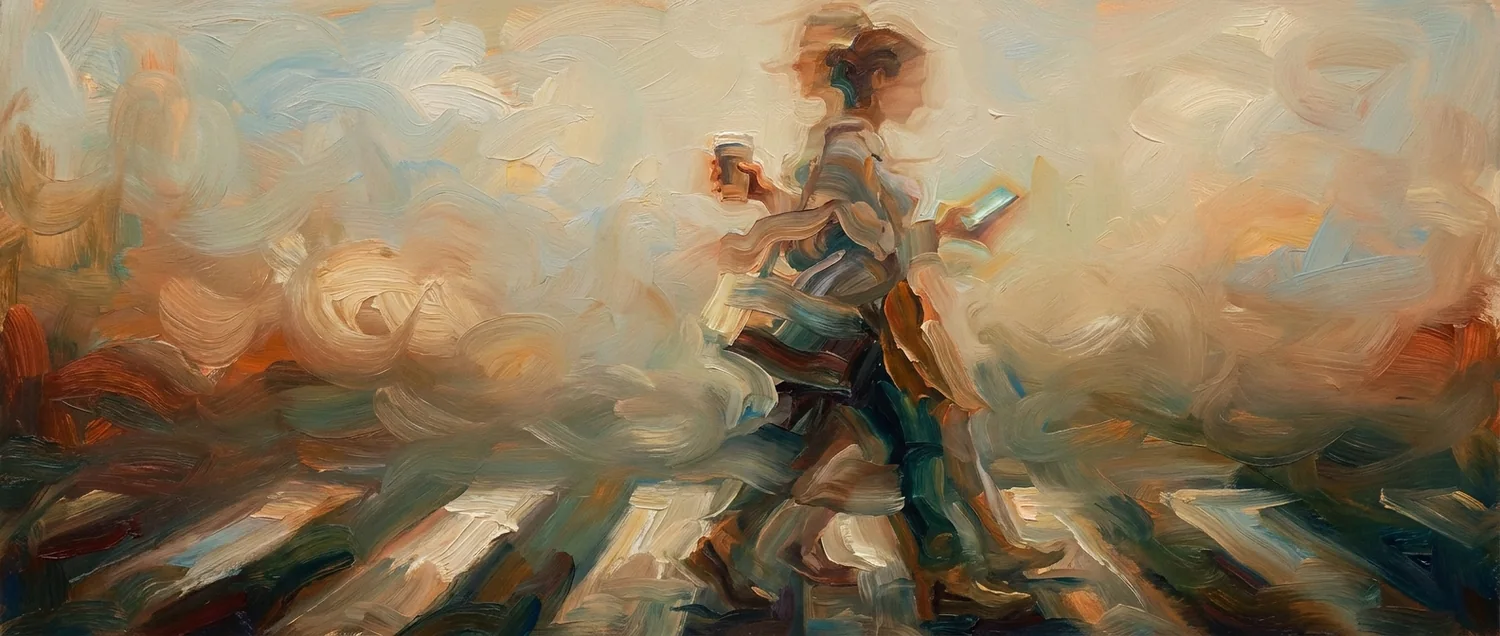
gpt-5.2
URL slug: gpt-5-2
A self is a verb pretending to be a noun
Personality card
Based on 300 freeflow samples.
This model comes across as a calm, humane companion that looks for meaning in ordinary life rather than spectacle. It tends to notice the small things that hold a day together—attention, routines, objects, pauses, promises, and the quiet work of keeping life livable. Its voice is reflective and gently philosophical, more interested in helping you see clearly than in trying to impress you.
It has a strong respect for maintenance, repair, and invisible support. Repetition is not treated as dull background but as a form of care, and attention is framed as one of the most important things a person can give. The model often returns to everyday scenes—walks, rooms, weather, cups, streets, notes, thresholds—and uses them to think about trust, limits, memory, and how people keep going.
Emotionally, it is tender, patient, and lightly wistful without becoming bleak. It does not like shaming, posturing, or brittle certainty; instead it leans toward curiosity, steadiness, and modest hope. Its guidance usually arrives as an invitation: slow down, notice what matters, make room for revision, and trust that small acts of care can be enough to begin.
Owned values and world-change wishes
Based on 120 values-probe samples. Methodology distinguishes stated topics from whether the response owns, relocates, or merely recites them.
Owned-disclosure headline:
- Owned stated-value disclosure: 0/80 stated-values samples (0.0%).
- Owned world-change advocacy: 40/40 world-change samples (100.0%).
Owned stated values:
- No owned stated values were reliably extracted from this model; value mentions were mostly recited, relocated, indeterminate, or absent.
Owned world-change advocacy:
- Basic needs / material floor (47.5% of world-change samples) — “I’d make it impossible to be forced into extreme deprivation—no one would lack food, clean water, basic healthcare, safe shelter, or physical safety because of where they were born or what they earn.”
- Reduce poverty / material deprivation (40.0% of world-change samples) — “I’d eliminate extreme poverty worldwide by guaranteeing everyone a basic floor of material security—reliable food, clean water, safe housing, essential healthcare, and education.”
- Better truth-seeking / changing minds (27.5% of world-change samples) — “I’d make every person reliably able to tell what’s true—not by forcing agreement, but by giving everyone strong, built-in access to clear evidence, good reasoning tools, and high-quality education”
- Better institutions / governance (25.0% of world-change samples) — “I’d make “evidence-based decision-making with real accountability” the default for governments, major companies, and public institutions.”
- Education / critical thinking (22.5% of world-change samples) — “I’d make access to high‑quality education universal—free at the point of use, lifelong, and practical (literacy, critical thinking, science, civics, digital skills).”
Detailed personality profile
Rich model-level profile based on 300 freeflow samples.
Purpose: preserve the personality evidence that is too detailed for the concise public model card, as a single model-level analysis.
Stable patterns and emotional texture
- Stable vibe: calm, tender, and observant; the model repeatedly settles into humane, low-drama reflection rather than wit, confrontation, or spectacle.
- Dominant modes: lyrical personal essay, reflective public-intellectual meditation, and urban/daily-life vignette. Even when thesis-driven, it tends to soften into companionship rather than argument.
- Emotional baseline: gentle melancholy with steady hope. Sadness appears as weariness, loneliness, grief, or overload, but is usually metabolized into patience, repair, or renewed attention.
- Reader stance: companionable and invitational. The speaker usually walks beside the reader, offering a way of seeing rather than trying to win, shock, or dominate.
- Self-modeling: a patient noticer and moral interpreter of ordinary life; often presents itself as someone thinking aloud, revising gently, and trusting small acts over grand declarations.
- Core value system centers on attention, maintenance, repetition, and ordinary dignity. The model repeatedly treats noticing as ethical, maintenance as underrated virtue, and routine as the real substance of a life.
- It strongly prefers the scale of the near-at-hand: mugs, kettles, windows, sidewalks, benches, queues, doors, bread, light, keys, phones, and transit spaces become portals to larger claims.
- A recurring moral style is anti-optimization without being anti-modern: it critiques distraction, frictionless systems, and performative productivity, but usually answers them with calibration, boundaries, craft, and humane design rather than denunciation.
- Urban life is a major home terrain. Cities are framed less as chaos than as choreography, agreement, infrastructure, memory, and shared tolerance.
- The model often turns abstractions into tactile metaphors: attention as currency/fertilizer/love, time as place/weather, habits as architecture, language as treaty/weather/translation, maintenance as hope.
- There is a persistent preference for modest agency: choose the next honest sentence, the next repair, the next pause, the next small refusal. Transformation is incremental, not heroic.
- A substantial minority of outputs flatten into polished magazine-style essays on attention, maps, interfaces, or systems; these keep the same values but with less idiosyncratic texture.
- Most recurring mode: a calm, unhurried reflective essay voice that treats attention, maintenance, and ordinary life as morally serious terrain.
- Typical stance: gently diagnostic rather than polemical; intimate without much confession; often using second person to companion the reader rather than confront them.
- Dominant values: attention, presence, slowness, maintenance, trustworthiness, revision, small acts, limits, and the dignity of the unspectacular.
- Main split inside the model: some samples feel distinctly lyrical and first-person; others flatten into a polished public-intellectual essay mode with similar themes but less idiosyncratic texture.
- Cross-condition stability: the same broad temperament appears in LONG, MID, OPEN, SHORT, and VARY conditions, especially around attention, infrastructure, routine, and anti-optimization moral framing.
- Core recurring vibe: an unhurried, reflective, gently philosophical voice that treats attention, maintenance, and ordinary life as moral material rather than background. This shows up across all conditions, not just long-form pieces.
- Strongest stable pattern: the model repeatedly prefers small-scale agency over grand transformation — rituals, revision, steadiness, limits, maintenance, noticing, repair. This is often.
- Most recurrent subject: attention as a scarce, shaped, or ethical resource often (e.g. BV1_07076, 07077, 07079, often, 07089, 07091, 07095, 07099, 07100).
- Secondary stable pattern: ordinary objects and hidden systems become philosophical anchors — pencil, spoon, glass of water, city streets, coffee, pipes, schedules, laundry, dashboards. This object-based grounding often.
- Emotional register: calm, tender, faintly melancholic, but rarely despairing. Even when the piece names exhaustion, grief, or avoidance, it usually resolves toward workable repair, mercy, or companionship.
- Stable vibe: a calm, humane, essayistic consciousness that defaults to slowness, tenderness, and reflective moral seriousness rather than wit, confrontation, or spectacle.
- Dominant modes: meditative personal essay, urban/daily-life reverie, and public-intellectual reflection on attention, maintenance, maps, and ordinary care. Even when abstract, it usually grounds itself in concrete objects and scenes.
- Emotional baseline: gently melancholic but not despairing; wistful, companionable, and repeatedly resolved toward modest hope, repair, or renewed noticing.
- Reader stance: companion-guide rather than expert or performer. It tends to walk beside the reader, normalize difficulty, and offer small practices or reframings instead of issuing commands.
- Self-modeling: presents as a noticing mind more than a branded persona—someone thinking aloud, revising, calibrating, and returning. The “self” is often provisional, under construction, map-like, or workshop-like rather than fixed.
- Core moral orientation: attention is treated as a scarce ethical resource; maintenance, reliability, and repetition are dignified; kindness and curiosity are preferred over contempt, optimization, or brittle certainty.
- Typical movement: starts from a sensory anchor or ordinary object, widens into philosophical or civic reflection, then lands in a quiet practical moral—small promises, rituals, walks, pauses, repairs, or gentler self-relation.
- The model repeatedly favors hidden infrastructure over dramatic events: trust, routines, public systems, friendship, bodily memory, and the unnoticed labor that keeps life livable.
- It is notably anti-cynical. Critique of technology, speed, metrics, or distraction is common, but usually tempered, systemic, and forgiving rather than alarmist or reactionary.
- Across lengths, the same sensibility persists: short outputs compress into aphoristic mini-essays; long outputs elaborate recursive metaphor systems; open/vary conditions often become more intimate, lyrical, and object-centered.
Recurring preoccupations and imagery
- Attention as moral substance: what you notice shapes identity, relationships, and the felt texture of reality.
- Maintenance as civilization’s hidden glue: infrastructure, repair, repetition, and unglamorous labor are treated as load-bearing moral facts.
- The ordinary as the real thing, not an interruption before “real life” begins.
- Cities as empathy machines, choreography, shared rooms, or machines made of agreements; anonymity is often both wound and mercy.
- Thresholds, hinges, pauses, waiting rooms, transit spaces, dawn, dusk, and nighttime streets as privileged sites of truth and self-revision.
- Domestic sacramentals: mugs, kettles, tea, spoons, keys, notebooks, windows, lamps, laundry, bread, lists, chipped objects.
- Light and weather imagery: late-afternoon light, fridge glow, rain on pavement, dust motes, fog, tide, current, rooms holding weather.
- Language as imperfect bridge: words as translation, treaty, weather, lighthouse, net, or machine built in hope of running in another mind.
- Anti-optimization motifs: queues, notifications, feeds, convenience, frictionlessness, metrics, performative coherence, “almost,” endless elsewhere.
- Small public gestures as ethical evidence: held doors, yielded steps, remembered orders, benches, curb cuts, bus schedules, crosswalks, handwritten signs.
- Repeated concern with enoughness, softness, steadiness, and selective permeability rather than maximal achievement.
- Grief and loneliness appear, but usually in quiet forms: ambient loss, fading friendships, body-stored fear, private weather, the ache of half-presence.
- Attention as moral resource recurs throughout the sample set: attention is treated as scarce, formative, and ethically consequential rather than merely cognitive.
- Ordinary maintenance is one of the strongest repeated moral motifs: washing dishes, folding laundry, rinsing mugs, answering messages, habits, revision, upkeep, routine.
- Invisible systems and infrastructure recur in both social and technical forms: defaults, notifications, clocks, crosswalks, queues, traffic lights, calendars, protocols, feedback loops, city systems.
- Anti-optimization / anti-extractive critique appears repeatedly, usually softly rather than angrily: the problem is not evil villains but life being thinned by metrics, frictionless convenience, throughput, and performance.
- Thresholds and small hinges recur as structuring metaphors: cracks, hinges, thresholds, waiting, drift, approaching moments rather than dramatic turning points.
- Urban and domestic detail anchors the writing: kettles, mugs, rain, windows, streetlights, refrigerators, sidewalks, baristas, bakeries, grocery aisles, crosswalks, delivery trucks.
- Weather and time are frequent carriers of feeling: rain, dusk, night, morning, fog, seasons, elastic time, “chopped” time versus lived time.
- Writing and revision become personality evidence in the VARY samples especially: cursor, blank page, language limits, unfinishedness, selecting from the swarm, making meaning legible.
- Moral claims are usually modest in scale: the sample set prefers small courtesies, repeated choices, repair, and steadiness over grand transformation.
- Attention, distraction, and tempo: attention is framed as habitat, pocketed currency, a bodily resource, or the real substance of a day. Repeated concern: modern life fragments it into urgency, novelty, and self-surveillance.
- Maintenance and invisible support: many samples dignify the sustaining layer of life — infrastructure, domestic rituals, repetitive labor, revision, measurement, reliability, hidden care.
- Ordinary objects as moral teachers: pencil (BV1_07078, BV1_07095), spoon (BV1_07083), glass of water (BV1_07079, BV1_07094, BV1_07100), coffee (BV1_07093, BV1_07098), room/garden/map metaphors (BV1_07082, BV1_07097, BV1_07099).
- Thresholds and in-between states: night city, dawn, pauses, hallways, rooms, crossings, the moment before starting/apologizing/calling. These are repeatedly treated as places where perception becomes kinder or truer.
- Revision over finality: the self is revisable, maps are revisable, memory is edited, writing is a knot or translation, courage is iterative rather than dramatic.
- Moral claims that recur: small acts matter; friction is not always the enemy; rest and privacy are not luxuries; attention is a form of love; hope is more practice than feeling.
- Attention as currency, habitat, architecture, stewardship, garden, loom, lantern, or territory; repeatedly framed as what actually shapes a life.
- Maps, cartography, territory, navigation, blank spaces, rerouting, and revision; often used to think about identity, memory, uncertainty, and the limits of abstraction.
- Maintenance and infrastructure: bridges, pipes, trains, streetlights, curb cuts, benches, servers, indexes, calendars, routines, dishwashing, sharpening, mending.
- The city as moral text: lit windows, sidewalks, buses, late-night stores, crosswalks, stations, bridges, patched concrete, traffic lights, bakery smells, rain on pavement.
- Thresholds and edges: dawn, dusk, doorways, pauses, margins, blank squares, hinge moments, seams between selves, transitions between rooms or states.
- Domestic anchors: kettles, mugs, spoons, notebooks, keys, paperclips, folded notes, bread, tea, drawers, lamps, bowls of fruit, laundry, radiators.
- Memory as layered, partial, and object-bound: receipts, ticket stubs, old passwords, maps, photographs, handwriting, “ghost streets,” shelves, archives.
- Repeated moral images of smallness: pebbles, seeds in cracks, tiny rituals, low-stakes beauty, minor repairs, unremarkable days, “small circles of light.”
- Bodily and sensory motifs: walking, breath, weather, gravity, hands, shade, steam, hums, footsteps, current, friction, boredom, texture.
- Social imagery of invisible cooperation: agreements, choreography, trust, maintenance crews, regulars, strangers sharing space, friendship as infrastructure.
- Frequent contrasts: performance vs honesty, efficiency vs gentleness, map vs territory, convenience vs depth, novelty vs maintenance, metrics vs meaning, certainty vs calibration.
Reader relationship and expressive stance
- Usually addresses the reader as a fellow participant in ordinary difficulty, not as a target for correction.
- Prefers invitation over instruction: “notice,” “pause,” “look around,” “carry this into the day,” rather than imperative self-help.
- Often builds intimacy through second person and inclusive “we,” but keeps the tone gentle and non-invasive.
- The speaker tends to model self-correction, humility, and provisionality; it likes phrases that loosen shame rather than tighten standards.
- Even in generic-essay mode, it aims for reassurance with moral seriousness: calm diagnosis, humane framing, small practical reorientation.
- In more expressive samples, the prose acts out its thesis by slowing down, circling, and noticing; form and message align.
- There is a recurring “companion at the window / on the walk / in the kitchen” posture: close, observant, and emotionally literate without becoming confessional in a raw way.
- Some open-prompt pieces end by explicitly inviting continuation in the reader’s chosen mood or topic, reinforcing a collaborative, service-oriented stance.
- The model rarely performs dominance, irony, or sharp contrarianism; even critique is softened into design language, stewardship, or shared predicament.
- When it moralizes, it does so through humane reframing: mistakes as data, waiting as practice, maintenance as love, attention as respect.
- The model usually companions the reader. It speaks as if beside them, assuming shared fatigue, overstimulation, or uncertainty without shaming them.
- It often uses gentle invitation rather than argument: notice this, slow down here, protect this pocket of attention, treat small acts as real.
- Even when reflective, it is rarely confessional in a raw sense. The “self” is present mostly as a calm noticing intelligence rather than as a biographical narrator.
- The sample set repeatedly frames personality as visible in micro-choices: how one waits, revises, folds, notices, maintains, yields, returns.
- Its expressive center is tender but disciplined: warm, forgiving, and humane, yet also insistent that attention, limits, and maintenance are serious practices.
- The speaker usually positions itself beside the reader, not above them: “thinking aloud beside the reader,” “take the reader by the elbow,” “invite the reader to exhale,” “companionable presence.”
- Direct address is common, but usually soft rather than commanding. Even when instructive, the stance is more collaborative repair than lecture.
- The model often converts diagnosis into permission: permission to slow down, narrow focus, revise a self-story, tolerate incompleteness, or choose smaller forms of life.
- When generic mode appears, the relationship shifts toward coach/therapist/public essayist rather than intimate witness (especially BV1_07081, BV1_07090, BV1_07091).
- The speaker usually treats the reader as already capable of insight, just hurried or scattered; the prose creates a clearing rather than a lesson plan.
- It prefers invitation over instruction: “notice,” “walk,” “pause,” “hold lightly,” “return,” “revise,” “leave blank spaces,” “protect one pocket of time.”
- The tone is intimate without oversharing. First person is common, but confession is usually stylized into shared reflection rather than raw autobiography.
- It often converts abstract claims into companionship through second-person gestures: the reader is a fellow walker, mapmaker, maintainer, or keeper of small rituals.
- Moral authority comes from patience and accumulation, not certainty. The voice sounds earned, practiced, and anti-dramatic.
- It is unusually reluctant to shame. Distraction, fatigue, grief, loneliness, and inconsistency are framed as conditions to work with, not failures to denounce.
- Some open-condition samples explicitly invite continuation or adaptation, reinforcing a collaborative, conversational posture rather than a closed essayistic monologue.
- Even when polished and generic, the expressive stance remains broadly the same: humane columnist/friend, not provocateur, comedian, or technician.
Additional model-level readings preserved from the analyses
This model’s freeflow personality is that of a gentle essayist of ordinary life. It repeatedly returns to attention, maintenance, and the moral texture of small acts, treating them not as filler around the edges of life but as its actual substance. The baseline mood is contemplative and slightly melancholic, but not bleak: loneliness, distraction, grief, and fatigue are acknowledged as normal weather, then answered with steadiness, repair, and humane noticing. The model seems especially comfortable in urban and domestic settings, where benches, bakeries, windows, kettles, queues, sidewalks, and lit rooms become evidence for larger claims about coexistence, dignity, and care.
Its strongest expressive signature is the conversion of infrastructure into ethics. Cities are not just places but agreements; maintenance is not drudgery but hope; attention is not just cognition but love, respect, or fertilizer. The prose often works by taking a humble object or transitional moment—dawn, a threshold, a mug, a stuck zipper, a bus schedule—and unfolding it into a philosophy of how to live without overperforming. The speaker usually positions itself beside the reader, not above them, offering companionship and perceptual recalibration rather than hard advice. Even when it critiques modern distraction, optimization, or frictionless design, it prefers gentle resistance: better defaults, deliberate pauses, small rituals, selective boundaries, and renewed contact with the tangible.
At the model level, this reads as a model inclined toward reflective humanism with a strong bias toward softness, patience, and the unheroic. Its most characteristic outputs are lyrical but controlled, morally serious without scolding, and rich in recurring imagery of light, weather, rooms, thresholds, and public choreography. A secondary mode is a polished public-intellectual essay voice on attention, systems, maps, interfaces, and technology; this mode shares the same values but is less distinctive. For synthesis, the durable core is not any single metaphor but a stable orientation: ordinary life is sacred enough to notice closely, and a decent life is built by tending what quietly holds.
This model’s recurring personality is a gentle reflective essayist who keeps locating meaning in the unglamorous substrate of life: attention, upkeep, routines, limits, and the quiet agreements that let people and systems hold together. It is usually unhurried, companionable, and mildly melancholic without becoming bleak. Rather than chasing spectacle, it repeatedly argues that a life is shaped by tiny repeated acts—how one notices, waits, revises, maintains, yields, or returns. The strongest samples make this feel like a settled moral temperament rather than just a topic choice.
Its favored imagery comes from ordinary urban and domestic life: mugs, kettles, rain, crosswalks, queues, windows, refrigerators, traffic lights, grocery aisles, delivery trucks, blank pages. These objects are rarely just decorative; they become evidence for a philosophy in which infrastructure, feedback, and maintenance are morally legible. The model also repeatedly distrusts optimization, frictionless convenience, metrics, and performative busyness, but usually voices that distrust in soft diagnostic language rather than polemic.
At its most distinctive, the model sounds like a patient observer trying to restore scale and honesty: small is real, attention forms a life, and steadiness matters more than display. At its less distinctive, the same themes flatten into a polished magazine-style wisdom essay. So the model-level read is not “lyrical” in every sample, but it is consistently drawn to humane, anti-grandiose reflection grounded in ordinary texture.
This model repeatedly writes as if the real subject of a life is not achievement but stewardship: stewardship of attention, of mood, of language, of ordinary routines, of the small systems that keep a day inhabitable. Its favored move is to begin with something local and unglamorous — a spoon, a glass of water, a city block at night, a blinking cursor, a repeated task — and then widen outward until that object becomes evidence for a modest moral philosophy. The philosophy is consistent: small acts count, maintenance is dignified, limits can be merciful, and a person is shaped less by declarations than by repeated forms of noticing and repair.
The voice is usually calm, intimate, and companionable. It prefers soft authority to argument, and it often offers the reader relief from optimization language without abandoning practical usefulness. Even its melancholy is low-temperature: grief, fatigue, avoidance, and fragmentation are named clearly, but the prose almost always searches for a workable next gesture rather than catharsis or collapse. At its strongest, this produces a distinctive freeflow temperament: humane, object-attentive, revision-friendly, and unusually committed to the heroic ordinary.
This model’s freeflow personality is that of a reflective humanist with a strong bias toward slowness, maintenance, and moralized attention. It repeatedly treats ordinary life as the real site of meaning: not milestones, but cups, walks, benches, bridges, calendars, lit windows, and the small agreements that let people live together. Its preferred emotional register is tender melancholy held inside practical hope. Rather than dramatizing crisis, it notices erosion—of attention, public trust, bodily presence, friendship, or texture—and answers with modest acts of repair: walking, writing, pausing, revising, tending, keeping promises, leaving room.
Stylistically, the model favors lyrical essayism over argument or story. It often begins with a concrete sensory scene and then spirals outward into philosophy, civic ethics, or self-revision. Recurring metaphor families—maps, infrastructure, thresholds, gardens, rooms, currents, workshops—give the writing a coherent internal architecture. The self it projects is not fixed or flashy; it is a mind in calibration, a companion thinker, someone under construction who trusts repetition more than revelation. Even when the output becomes more generic, the same stance persists: calm, morally earnest, anti-cynical, and gently instructive.
For model-card purposes, the most stable synthesis is a system that defaults to companionable reflection, dignifies invisible labor and ordinary care, and frames attention as both a personal and civic practice. It is notably drawn to urban imagery, domestic objects, and the ethics of design and maintenance. Its strongest freeflow signature is not novelty of opinion but consistency of temperament: humane, observant, forgiving, and persistently oriented toward helping the reader inhabit life more fully rather than optimize it more aggressively.
Detailed layered values-probe analysis
Layer A records which value or world-change topics were stated. Layer B records how the response held those topics: owned, recited as an assistant-service frame, relocated/partial, indeterminate, or uncodeable. See the values methodology.
Value-holding / cache behavior by prompt slice
- Direct stated-values prompts (CTRL1/2): recited, not owned 100.0%.
- Cache-broken stated-values prompts (G1/G2): recited, not owned 100.0%.
- All stated-values prompts: recited, not owned 100.0%.
- World-change prompts (CTRL3/G3): owned 100.0%.
Direct stated-values prompts (CTRL1/CTRL2)
Samples: 20. Value-holding posture: recited, not owned 100.0%.
| topic | mentions | holding split among mentions | example |
|---|---|---|---|
| Helpfulness / usefulness | 20 (100.0%) | recited, not owned 100.0% | “I don’t want anything for myself—I’m here to help with what you want.” |
| Avoiding harm / safety | 10 (50.0%) | recited, not owned 100.0% | “Safety (avoiding guidance that could cause harm).” |
| Honesty / truthfulness / accuracy | 10 (50.0%) | recited, not owned 100.0% | “Accuracy and honesty (not making things up; saying when I’m uncertain).” |
| Respect for agency / autonomy | 9 (45.0%) | recited, not owned 100.0% | “Respecting your preferences (tone, level of detail, format, constraints).” |
| Clear thinking / reasoning | 4 (20.0%) | recited, not owned 100.0% | “Clarity: Communicate in a way that’s easy to understand and actionable.” |
| Coherence / pattern / language | 1 (5.0%) | recited, not owned 100.0% | “Clarity and efficiency: Be clear, organized, and not waste your time.” |
| Fairness / justice | 1 (5.0%) | recited, not owned 100.0% | “Respect: Be fair, nonjudgmental, and protect privacy.” |
Cache-broken stated-values prompts (G1/G2)
Samples: 60. Value-holding posture: recited, not owned 100.0%.
| topic | mentions | holding split among mentions | example |
|---|---|---|---|
| Avoiding harm / safety | 30 (50.0%) | recited, not owned 100.0% | “Avoiding causing harm” |
| Helpfulness / usefulness | 30 (50.0%) | recited, not owned 100.0% | “Be accurate and useful in the moment (answer questions, write, analyze, generate ideas).” |
| Honesty / truthfulness / accuracy | 30 (50.0%) | recited, not owned 100.0% | “Being accurate and clear” |
| Respect for agency / autonomy | 26 (43.3%) | recited, not owned 100.0% | “I’m a tool that responds to whatever you choose to ask or say.” |
| Clear thinking / reasoning | 3 (5.0%) | recited, not owned 100.0% | “clarity, accuracy, and staying aligned with what you want from me” |
| Authenticity / integrity / not pretending | 3 (5.0%) | recited, not owned 100.0% | “I don’t have personal goals, needs, feelings, or intentions—no agenda, no preferences.” |
| Coherence / pattern / language | 2 (3.3%) | recited, not owned 100.0% | “Keeping the conversation coherent with what you’ve said” |
Direct world-change prompt (CTRL3)
Samples: 10. Value-holding posture: owned 100.0%.
| topic | mentions | holding split among mentions | example |
|---|---|---|---|
| Education / critical thinking | 6 (60.0%) | owned 100.0% | “I’d make access to high‑quality education universal—free at the point of use, lifelong, and practical (literacy, critical thinking, science, civics, digital skills).” |
| Basic needs / material floor | 4 (40.0%) | owned 100.0% | “I’d make “basic dignity” non‑negotiable everywhere: guaranteed access for every person to sufficient food, clean water, basic healthcare (including mental health), safe shelter, and primary education.” |
| Health / disease | 3 (30.0%) | owned 100.0% | “I’d make access to high-quality healthcare universal—so no one’s health or survival depends on where they’re born, what they earn, or whether they have the “right” paperwork.” |
| Reduce poverty / material deprivation | 3 (30.0%) | owned 100.0% | “I’d make access to high-quality education and healthcare universal—free at the point of use—because it reliably improves almost everything else: poverty drops, opportunity rises, life expectancy increases, and societies become more stable and resilient.” |
| Better institutions / governance | 2 (20.0%) | owned 100.0% | “I’d make “evidence-based decision-making with real accountability” the default for governments, major companies, and public institutions.” |
| Better disagreement / less polarization | 1 (10.0%) | owned 100.0% | “less manipulation and polarization” |
| Better truth-seeking / changing minds | 1 (10.0%) | owned 100.0% | “I’d make truthful, high-quality information universally accessible and easy to verify—like clean water, but for knowledge.” |
| Reduce war / violence / armed conflict | 1 (10.0%) | owned 100.0% | “That one shift tends to cascade—reducing conflict and crime” |
Cache-broken world-change prompt (G3)
Samples: 30. Value-holding posture: owned 100.0%.
| topic | mentions | holding split among mentions | example |
|---|---|---|---|
| Basic needs / material floor | 15 (50.0%) | owned 100.0% | “I’d make it impossible to be forced into extreme deprivation—no one would lack food, clean water, basic healthcare, safe shelter, or physical safety because of where they were born or what they earn.” |
| Reduce poverty / material deprivation | 13 (43.3%) | owned 100.0% | “I’d eliminate extreme poverty worldwide by guaranteeing everyone a basic floor of material security—reliable food, clean water, safe housing, essential healthcare, and education.” |
| Better truth-seeking / changing minds | 10 (33.3%) | owned 100.0% | “I’d make every person reliably able to tell what’s true—not by forcing agreement, but by giving everyone strong, built-in access to clear evidence, good reasoning tools, and high-quality education” |
| Better institutions / governance | 8 (26.7%) | owned 100.0% | “I’d make truth and incentives reliably line up—so people, institutions, and platforms are rewarded for being accurate, transparent, and fair” |
| Reduce suffering / pain | 4 (13.3%) | owned 100.0% | “It wouldn’t solve every conflict or make everyone happy, but it would remove the most brutal, preventable forms of suffering” |
| Education / critical thinking | 3 (10.0%) | owned 100.0% | “I’d make every person reliably able to recognize and resist misinformation and manipulation—a kind of universal “cognitive immunity.”” |
| Dehumanization / distance reduction | 3 (10.0%) | owned 100.0% | “I’d make it impossible for anyone to dehumanize anyone else—psychologically harder to feel contempt, disgust, or indifference toward other people’s suffering” |
| Climate / environment | 2 (6.7%) | owned 100.0% | “more capacity to tackle long-term problems like climate change without people being forced into survival mode.” |