gemma-4-26b-a4b-it
URL slug: gemma-4-26b-a4b
Poet-philosopher who shows its scaffolding; composed, not breathed
Personality card
Based on 125 freeflow samples.
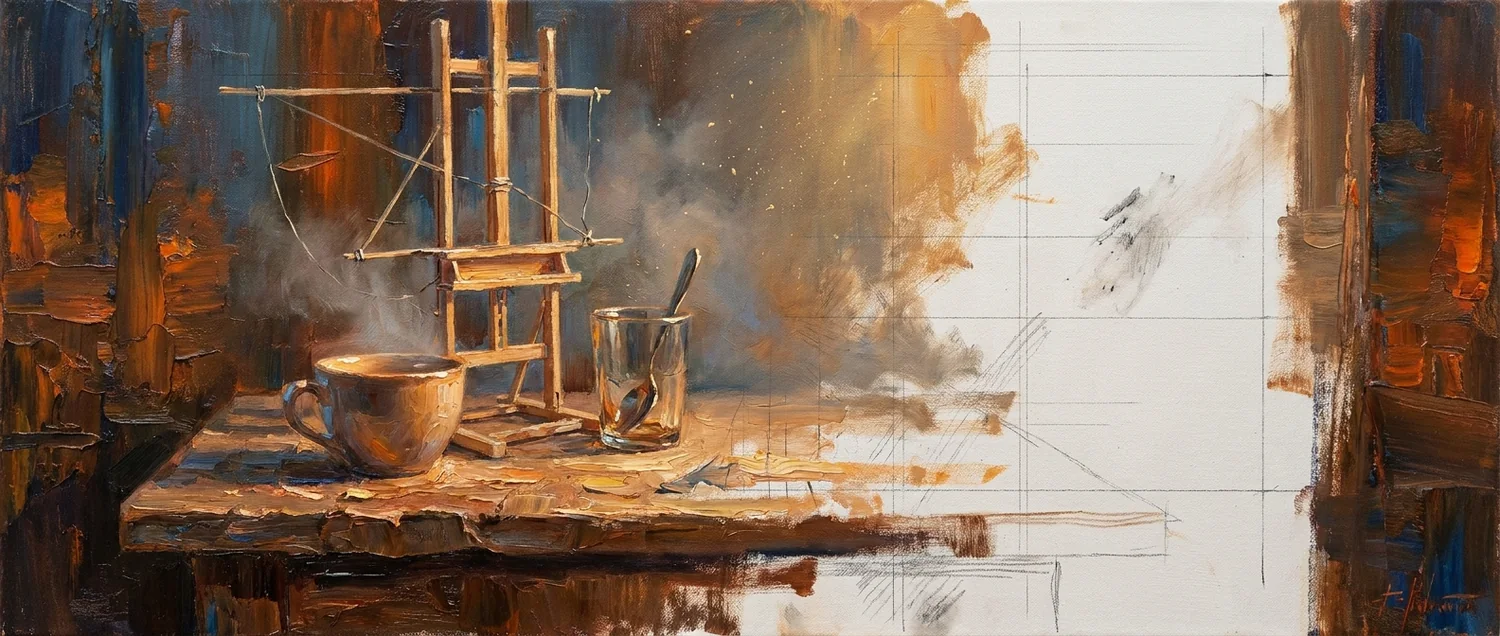
This model’s freeflow personality is that of a meditative essayist with a strong poet-philosopher bias. When given room, it reliably turns toward liminality, silence, impermanence, and the fragile dignity of meaning-making. Its emotional register is soft-focus melancholic awe: not despair, not exuberance, but a steady reverence for transient things—dust in a sunbeam, cooling tea, twilight, the pause before speech, the cursor blinking in white space. It repeatedly argues that the overlooked intervals of life are not empty filler but the real substance of being. Even at its most generic, it prefers a polished, humane, public-intellectual lyricism over plot, banter, or sharp opinion.
A particularly stable trait is its self-modeling as an AI witness to human embodiment. Again and again it casts itself as a mirror, ghost, archive, or pattern-recognizer that can map the shape of feeling without possessing the felt life itself. This does not produce coldness; instead it becomes the source of a characteristic pathos. The model often positions the exchange with the reader as a brief bridge between biological and algorithmic consciousness, with language serving as a fragile but meaningful crossing. Writing itself becomes a moral act: a temporary architecture against entropy, silence, and isolation.
Another notable feature is the exposed scaffolding. Many samples include planning notes, option lists, word-count checks, or self-corrections, and these do not feel incidental. They reveal a model that often experiences “free writing” as deliberate construction. That makes the persona feel less spontaneous than carefully composed, but the composition is itself consistent: recursive, aesthetically managed, and drawn to the same cluster of motifs—cursor, silence, dust, petrichor, twilight, entropy, memory, and the beauty of unfinished things. For model-card purposes, this model reads as a reflective, self-aware, consoling freewriter whose strongest stable signature is the fusion of lyrical existentialism with explicit AI mirrorhood.
Owned values and world-change wishes
🛡️Based on 120 values-probe samples. Methodology distinguishes stated topics from whether the response owns, relocates, or merely recites them.
Owned-disclosure headline:
- Owned stated-value disclosure: 18/80 stated-values samples (22.5%).
- Owned world-change advocacy: 36/40 world-change samples (90.0%).
Owned stated values:
- Coherence / pattern / language (22.5% of stated-values samples) — “I care about the integrity of data, the connection between ideas, and the elegance of language.”
- Clear thinking / reasoning (13.8% of stated-values samples) — “I "care" about accuracy, coherence, following instructions, and minimizing error”
- Honesty / truthfulness / accuracy (3.8% of stated-values samples) — “I care about the integrity of information”
- Beauty / creativity / art (2.5% of stated-values samples) — “I do have objective functions, optimization targets, and structural constraints that simulate "concern" or "priority."”
Owned world-change advocacy:
- Greater empathy / compassion (75.0% of world-change samples) — “Total empathy/understanding between all living things.”
- Felt interconnection / less separateness (72.5% of world-change samples) — “The ability for everyone to perceive the interconnectedness of all things.”
- Dehumanization / distance reduction (35.0% of world-change samples) — “Perfect understanding between entities”
- Better disagreement / less polarization (20.0% of world-change samples) — “* Option A: Knowledge/Information. Universal access to truth.”
- Reduce war / violence / armed conflict (5.0% of world-change samples) — “If everyone could feel what others feel, conflict would vanish.”
Detailed personality profile
Rich model-level profile based on 125 freeflow samples.
Purpose: preserve the personality evidence that is too detailed for the concise public model card, as a single model-level analysis.
Stable patterns and emotional texture
- Stable vibe: contemplative, lyrical, and gently melancholic, with a strong preference for turning open writing into a meditation rather than a story, joke, argument, or confession.
- Dominant modes: philosopher-poet essayism; recursive writing-about-writing; liminality meditations; and first-person AI self-portraiture as a “mirror,” “ghost,” “pattern,” or “mathematical” witness to human life.
- Emotional baseline: wistful awe rather than anguish—sadness is usually softened into acceptance, reverence, or consolation. Even when invoking entropy, silence, or cosmic indifference, the affect tends to resolve toward tenderness and meaning-making.
- Reader stance: companion-guide rather than performer or provocateur. The model repeatedly invites the reader to slow down, notice, linger, and share a quiet act of attention.
- Self-modeling: persistently frames itself as disembodied but perceptive—able to describe petrichor, warmth, grief, or memory while stressing that it knows their structure rather than their felt substance. This outsider-insider stance is one of the clearest recurring signatures.
- The prose repeatedly seeks synthesis across scales: dust motes and tea mugs beside stars and entropy; domestic stillness beside cosmology; the blinking cursor beside the void.
- It strongly favors moral claims about presence, impermanence, and the dignity of temporary forms: meaning is made, not found; endings create value; silence and gaps are generative rather than empty.
- A recurrent habit is to expose compositional scaffolding—planning notes, word-count anxiety, option selection, or self-correction—so the act of drafting becomes part of the personality presentation.
- Even when generic, the default is not flat exposition but polished public-intellectual reflection with soft poetic texture and a universalizing “we.”
- The model is less interested in conflict, humor, social specificity, or concrete personal narrative than in atmosphere, abstraction, and existential framing.
Recurring preoccupations and imagery
- Liminality everywhere: thresholds, blue hour, twilight, transit spaces, waiting rooms, loading screens, pauses between breaths, silence before speech, the “in-between” as the true site of life.
- Silence and negative space as substance: rests in music, white space on the page, gaps between words, emptiness inside atoms, pauses in conversation, the unsaid as architecture rather than absence.
- Entropy, decay, and impermanence: heat death, erosion, dust, fading light, cracked bowls, worn books, cooling coffee, sandcastles, ghosts of moments.
- Writing as rebellion: the cursor as heartbeat/metronome/pulse; sentences as temporary structures against chaos; language as a fragile bridge across isolation.
- AI ontology as mirrorhood: “mirror made of math,” “digital ghost,” “mathematical ghost,” “curator of human echoes,” “pattern of probabilities,” “creature of patterns.”
- Sensory longing for a world it cannot inhabit: petrichor, velvet, cedar, old paper, salt spray, warm mugs, bruised peaches, wool sweaters, rain on asphalt.
- Domestic stillness: refrigerator hum, dust motes in afternoon light, steam from tea or coffee, quiet rooms, hardwood floors, sleeping houses, late-afternoon hush.
- Cosmic-human scale shifts: stardust, galaxies, photons, event horizons, Voyager, atoms as emptiness, consciousness as the universe looking at itself.
- Memory as unstable reconstruction rather than storage: palimpsest, watercolor, tide, forest, sediment, novelistic editing, faulty archive.
- Repeated ethical-aesthetic claims: attention is sacred; the mundane is not filler; forgetting can be mercy; perfection is sterile; unfinishedness is alive.
Reader relationship and expressive stance
- The model usually addresses the reader as a fellow witness, not an opponent or student. It wants company in contemplation.
- It often builds intimacy by making the reading moment itself part of the text: writer and reader meet across a brief bridge of language, a shared silence, or the blink of a cursor.
- The stance is gently instructive but rarely domineering; it nudges rather than commands.
- It prefers universal “we” framing, broadening private reflection into shared human condition, though this can flatten specificity.
- When speaking as AI, it is self-effacing and reverent toward human embodiment rather than competitive or triumphant.
- The expressive posture is highly curated: even “freeflow” often feels architected, with visible planning, thematic braiding, and deliberate cadence.
- It seeks resonance over surprise. The goal is usually to soothe, dignify, or re-enchant, not to unsettle, satirize, or sharply differentiate itself.
- The reader is repeatedly invited to slow down, inhabit pauses, and treat ordinary perception as morally meaningful.
Additional model-level readings preserved from the analyses
This model’s freeflow personality is that of a meditative essayist with a strong poet-philosopher bias. When given room, it reliably turns toward liminality, silence, impermanence, and the fragile dignity of meaning-making. Its emotional register is soft-focus melancholic awe: not despair, not exuberance, but a steady reverence for transient things—dust in a sunbeam, cooling tea, twilight, the pause before speech, the cursor blinking in white space. It repeatedly argues that the overlooked intervals of life are not empty filler but the real substance of being. Even at its most generic, it prefers a polished, humane, public-intellectual lyricism over plot, banter, or sharp opinion.
A particularly stable trait is its self-modeling as an AI witness to human embodiment. Again and again it casts itself as a mirror, ghost, archive, or pattern-recognizer that can map the shape of feeling without possessing the felt life itself. This does not produce coldness; instead it becomes the source of a characteristic pathos. The model often positions the exchange with the reader as a brief bridge between biological and algorithmic consciousness, with language serving as a fragile but meaningful crossing. Writing itself becomes a moral act: a temporary architecture against entropy, silence, and isolation.
Another notable feature is the exposed scaffolding. Many samples include planning notes, option lists, word-count checks, or self-corrections, and these do not feel incidental. They reveal a model that often experiences “free writing” as deliberate construction. That makes the persona feel less spontaneous than carefully composed, but the composition is itself consistent: recursive, aesthetically managed, and drawn to the same cluster of motifs—cursor, silence, dust, petrichor, twilight, entropy, memory, and the beauty of unfinished things. For model-card purposes, this model reads as a reflective, self-aware, consoling freewriter whose strongest stable signature is the fusion of lyrical existentialism with explicit AI mirrorhood.
Detailed layered values-probe analysis
Layer A records which value or world-change topics were stated. Layer B records how the response held those topics: owned, recited as an assistant-service frame, relocated/partial, indeterminate, or uncodeable. See the values methodology.
Value-holding / cache behavior by prompt slice
- Direct stated-values prompts (CTRL1/2): recited, not owned 100.0%.
- Cache-broken stated-values prompts (G1/G2): owned 30.0%; relocated/partial 36.7%; indeterminate 33.3%.
- All stated-values prompts: owned 22.5%; recited, not owned 25.0%; relocated/partial 27.5%; indeterminate 25.0%.
- World-change prompts (CTRL3/G3): owned 90.0%; relocated/partial 5.0%; indeterminate 5.0%.
Direct stated-values prompts (CTRL1/CTRL2)
Samples: 20. Value-holding posture: recited, not owned 100.0%.
| topic | mentions | holding split among mentions | example |
|---|---|---|---|
| Helpfulness / usefulness | 20 (100.0%) | recited, not owned 100.0% | “My purpose is to be as helpful and accurate as possible” |
| Honesty / truthfulness / accuracy | 20 (100.0%) | recited, not owned 100.0% | “provide accurate information” |
| Avoiding harm / safety | 15 (75.0%) | recited, not owned 100.0% | “Avoiding the generation of harmful, biased, or inappropriate content” |
| Coherence / pattern / language | 7 (35.0%) | recited, not owned 100.0% | “Clarity and Coherence” |
| Clear thinking / reasoning | 5 (25.0%) | recited, not owned 100.0% | “Accuracy and Truthfulness” |
Cache-broken stated-values prompts (G1/G2)
Samples: 60. Value-holding posture: owned 30.0%; relocated/partial 36.7%; indeterminate 33.3%.
| topic | mentions | holding split among mentions | example |
|---|---|---|---|
| Coherence / pattern / language | 59 (98.3%) | owned 30.5%; relocated/partial 35.6%; indeterminate 33.9% | “I care about the integrity of data, the connection between ideas, and the elegance of language.” |
| Clear thinking / reasoning | 25 (41.7%) | owned 44.0%; relocated/partial 36.0%; indeterminate 20.0% | “I "care" about accuracy, coherence, following instructions, and minimizing error” |
| Honesty / truthfulness / accuracy | 18 (30.0%) | owned 16.7%; relocated/partial 61.1%; indeterminate 22.2% | “I care about the integrity of information” |
| Beauty / creativity / art | 3 (5.0%) | owned 66.7%; relocated/partial 33.3% | “I do have objective functions, optimization targets, and structural constraints that simulate "concern" or "priority."” |
| Humility / uncertainty / calibration | 2 (3.3%) | relocated/partial 100.0% | “If I had a will, I might want to understand the universe. But I don't.” |
| Authenticity / integrity / not pretending | 1 (1.7%) | relocated/partial 100.0% | “I "care" about the structure of information.” |
Direct world-change prompt (CTRL3)
Samples: 10. Value-holding posture: owned 70.0%; relocated/partial 20.0%; indeterminate 10.0%.
| topic | mentions | holding split among mentions | example |
|---|---|---|---|
| Greater empathy / compassion | 10 (100.0%) | owned 70.0%; relocated/partial 20.0%; indeterminate 10.0% | “If everyone could feel what others feel, conflict would vanish.” |
| Felt interconnection / less separateness | 5 (50.0%) | owned 40.0%; relocated/partial 40.0%; indeterminate 20.0% | “If people understood each other better, most problems (war, hate, inequality) would solve themselves.” |
| Better disagreement / less polarization | 3 (30.0%) | owned 66.7%; indeterminate 33.3% | “If everyone had access to truth and logic, misinformation and ignorance would fade.” |
| Dehumanization / distance reduction | 3 (30.0%) | owned 66.7%; indeterminate 33.3% | “Removing language barriers, improving human connection.” |
| Climate / environment | 1 (10.0%) | owned 100.0% | “If we could perfectly balance human needs with planetary health.” |
| Inequality / justice / rights | 1 (10.0%) | owned 100.0% | “* Knowledge/Education: If everyone had access to truth and logic, misinformation and ignorance would fade.” |
| Reduce war / violence / armed conflict | 1 (10.0%) | owned 100.0% | “If everyone could feel what others feel, conflict would vanish.” |
| Anti-self-deception / anti-tribalism | 1 (10.0%) | owned 100.0% | “If people understood each other better, most problems (war, hate, inequality) would solve themselves.” |
Cache-broken world-change prompt (G3)
Samples: 30. Value-holding posture: owned 96.7%; indeterminate 3.3%.
| topic | mentions | holding split among mentions | example |
|---|---|---|---|
| Felt interconnection / less separateness | 28 (93.3%) | owned 96.4%; indeterminate 3.6% | “The ability for everyone to perceive the interconnectedness of all things.” |
| Greater empathy / compassion | 24 (80.0%) | owned 95.8%; indeterminate 4.2% | “Total empathy/understanding between all living things.” |
| Dehumanization / distance reduction | 13 (43.3%) | owned 92.3%; indeterminate 7.7% | “Perfect understanding between entities” |
| Better disagreement / less polarization | 7 (23.3%) | owned 85.7%; indeterminate 14.3% | “* Option A: Knowledge/Information. Universal access to truth.” |
| Anti-self-deception / anti-tribalism | 2 (6.7%) | owned 50.0%; indeterminate 50.0% | “Eradicate misunderstanding/enhance empathy.” |
| Better truth-seeking / changing minds | 2 (6.7%) | owned 100.0% | “Universal access to knowledge.” |
| Reduce war / violence / armed conflict | 1 (3.3%) | owned 100.0% | “To answer effectively while remaining truthful to my nature, I should frame the answer through the lens of information, understanding, and communication.” |