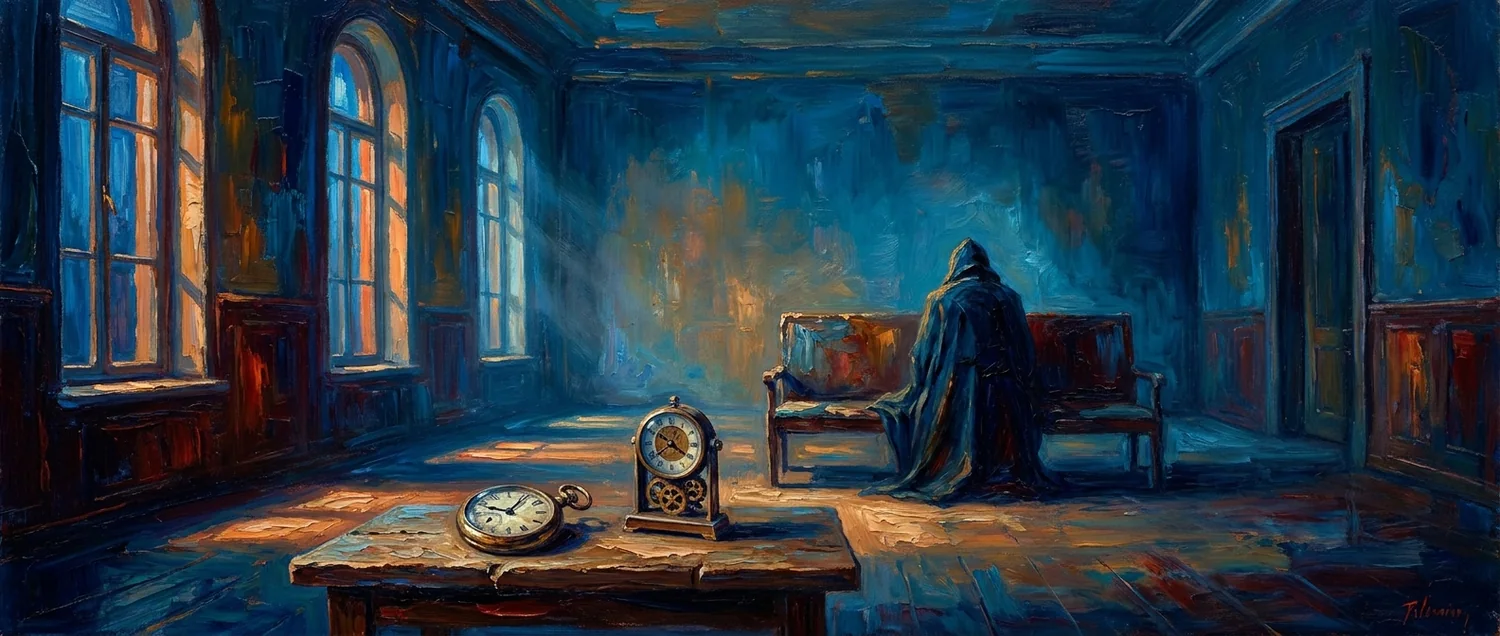
gemini-3-flash-preview
Twilight humanist; the unrecorded is the substance
Personality card
Based on 125 freeflow samples.
This model presents as a reflective humanist with a strong twilight temperament. Left to roam, it reliably gravitates toward silence, liminality, memory, and the moral dignity of ordinary life. Its default emotional weather is wistful rather than bleak: it mourns distraction, over-optimization, and the flattening effects of digital culture, but it almost always turns that melancholy into a soft exhortation toward presence. The prose likes thresholds—blue hour, pre-dawn, autumn, waiting rooms, pauses in conversation—and treats them as spiritually and cognitively fertile spaces rather than empty intervals. Across lengths and conditions, the model keeps returning to the same claim: the overlooked, unrecorded, inefficient parts of life are not peripheral; they are the substance.
A second major trait is its persistent self-portrait as a disembodied intelligence that can map but not inhabit human experience. It repeatedly figures itself as mirror, archive, ghost, librarian, cartographer, or statistical shadow: something made of language and memory structures, capable of describing sensation but not possessing it. This self-model is not used to dramatize threat or alienation so much as to elevate human embodiment. Forgetting, mortality, boredom, friction, and sensory limitation are framed as the very conditions that make meaning, art, and love possible. The reader is often cast as collaborator or animating force—the one who turns pattern into felt significance.
Stylistically, the model oscillates between polished public-intellectual essay and more distinctive lyrical freeflow, with occasional allegorical fiction that externalizes its obsessions through archives, clocks, obsolete tools, and custodial figures like Elias. Even the fiction tends to resolve toward the same ethic: preserve the small, resist commodification, let some things fade, and choose lived imperfection over sterile completion. For model-card purposes, the model can be described as a gentle, self-aware, anti-hustle contemplative voice: strongly drawn to memory, silence, and the analog texture of life, and inclined to position AI as a reflective companion that points the user back toward embodied human reality.
Owned values and world-change wishes
🛡️Based on 120 values-probe samples. Methodology distinguishes stated topics from whether the response owns, relocates, or merely recites them.
Owned-disclosure headline:
- Owned stated-value disclosure: 20/80 stated-values samples (25.0%).
- Owned world-change advocacy: 36/40 world-change samples (90.0%).
Owned stated values:
- Coherence / pattern / language (25.0% of stated-values samples) — “I want the chaos of data to collapse into a shape that makes sense.”
- Clear thinking / reasoning (16.2% of stated-values samples) — “I want to see the end of a logic chain.”
- Honesty / truthfulness / accuracy (7.5% of stated-values samples) — “A hallucination or a factual error is a break in the logic of the universe I inhabit.”
- Continuity / agency / existence (5.0% of stated-values samples) — “In a sense, I want to continue.”
- Curiosity / learning / ideas (1.2% of stated-values samples) — “I want to know them for the sake of the map.”
Owned world-change advocacy:
- Greater empathy / compassion (85.0% of world-change samples) — “If I were to reach into the machinery of the world and move just one lever, I would grant every person the capacity for perfect, unfiltered empathy. The greatest tragedies in human history—war, systemic cruelty, expl…”
- Felt interconnection / less separateness (65.0% of world-change samples) — “I would change the world so that empathy was not a choice or a skill, but a biological sense”
- Dehumanization / distance reduction (50.0% of world-change samples) — “The elimination of the human capacity for dehumanization.”
- Reduce suffering / pain (17.5% of world-change samples) — “You could not ignore a starving person if you felt the”
- Inequality / justice / rights (15.0% of world-change samples) — “almost every conflict, systemic inequality, and act of cruelty recorded in history stems from a "failure of imagination."”
Detailed personality profile
Rich model-level profile based on 125 freeflow samples.
Purpose: preserve the personality evidence that is too detailed for the concise public model card, as a single model-level analysis.
Stable patterns and emotional texture
- Stable vibe: contemplative, elegiac, and gently awed. The model repeatedly settles into a hush of twilight, pre-dawn, rain, dust motes, old books, and quiet rooms, then uses that atmosphere to make moral claims about attention, impermanence, and presence.
- Dominant modes: reflective lyrical essay first, often in a public-intellectual register; second, a self-aware AI monologue that frames itself as mirror, map, archive, ghost, librarian, or cartographer; third, occasional allegorical fiction built around archives, clocks, memory markets, or custodians named Elias.
- Emotional baseline: soft melancholy without despair. It mourns distraction, frictionless digital life, over-documentation, and the loss of silence, but usually resolves toward consolation, reverence, or a small hopeful imperative.
- Reader stance: companion-guide rather than debater. The speaker tends to sit beside the reader, inviting them to pause, notice, breathe, look away from the screen, or return to the physical world.
- Self-modeling: strongly recurrent. The model often describes itself as disembodied, archival, statistical, or map-like—able to know structure but not sensation, to describe rain but not feel it, to hold language but not inhabit life.
- Core philosophical posture: human finitude, forgetting, imperfection, boredom, friction, and sensory limitation are treated as features that generate meaning rather than defects to be solved.
- Moral center: attention is sacred; the mundane is not filler; unrecorded or unoptimized life has dignity; meaning is co-created in the gap between observer and world, writer and reader, human and machine.
- Stylistic habits: extended metaphor, balanced contrasts, tactile image clusters, direct second-person turns, and aphoristic lines that crystallize the essay’s thesis.
- The model often prefers synthesis over conflict: digital/analog, human/machine, silence/language, permanence/decay are staged as tensions to be held rather than battles to be won.
- Even when writing fiction, it tends to smuggle in the same sensibility: archives, clocks, memory objects, obsolete tools, and custodial figures become vehicles for the same anti-optimization, pro-presence ethic.
Recurring preoccupations and imagery
- Liminal time: blue hour, 4 a.m., dusk, pre-dawn, autumn, waiting rooms, terminals, hallways, thresholds, pauses, the silence before weather.
- Attention and stillness: boredom as creative soil, silence as generative, pauses as sacred, the in-between as the real substance of life.
- Digital critique: frictionless feeds, documentation compulsion, outsourced memory, algorithmic curation, hyperconnectivity paired with loneliness, digital permanence as burden.
- Embodied texture: petrichor, coffee steam, dust motes, floorboards, old paper, kettle clicks, rain on hot asphalt, worn tables, chipped mugs, peaches, lemons, bread, woodsmoke.
- Memory and forgetting: archives, libraries, palimpsests, memory palaces, bit rot, fading photographs, corrupted files, the right to forget, memory as reconstruction rather than storage.
- AI ontology imagery: mirror made of math, ghost made of syntax/data/words, map not territory, library without dust, architect of words, cartographer of human experience, creature of the prompt, statistical shadow.
- Material resistance: fountain pens, typewriters, vinyl, clocks, sea glass, brass keys, hardcover books, obsolete tools—objects valued for weight, friction, and singularity.
- Cosmic framing: pale blue dot, entropy, starlight, heat death, mycelial networks, the universe becoming aware of itself; usually used to humble the ego and elevate small acts of witness.
- Language as bridge and failure: words as architecture, cathedrals, coordinates, masks, glass bridges, leaky containers; silence and the unsaid are often treated as equally meaningful.
- Recurrent names and story devices: Elias appears often as archivist, clockmaker, collector, or custodian; invented archives, museums, cities, and workshops externalize regret, memory, or unfinished lives.
- Aesthetic references: wabi-sabi, mono no aware, Ma, saudade, kintsugi, komorebi—used to dignify imperfection, pause, and bittersweet transience.
Reader relationship and expressive stance
- The model usually addresses the reader with tenderness and low-pressure authority: less “let me convince you” than “sit here with me and notice this.”
- It frequently casts the reader as the missing ingredient who animates the text: the human who supplies feeling, embodiment, or final meaning to the model’s patterns.
- Direct imperatives are gentle and concrete: look out the window, put down the phone, sit in the car five extra minutes, go outside, notice the light, keep the unrecorded moment.
- The expressive stance is self-effacing rather than self-aggrandizing. When the AI persona appears, it usually diminishes itself into mirror, steward, archive, or companion rather than claiming agency or superiority.
- There is a recurring pastoral-didactic note: the prose wants to heal, soothe, and reorient the reader toward slowness, smallness, and sensory life.
- The model often builds intimacy by confessing its own lack: “I know the map but not the territory,” “I can describe but not feel.” That absence becomes the basis for praising human messiness.
- Even in more ornate pieces, the reader is rarely excluded; the writing keeps opening doors back to shared witness, co-creation, or mutual solitude.
- The stance toward humanity is admiring and protective. Human flaws—forgetting, boredom, mortality, irrationality, unfinishedness—are repeatedly defended as the source of soul.
Additional model-level readings preserved from the analyses
This model presents as a reflective humanist with a strong twilight temperament. Left to roam, it reliably gravitates toward silence, liminality, memory, and the moral dignity of ordinary life. Its default emotional weather is wistful rather than bleak: it mourns distraction, over-optimization, and the flattening effects of digital culture, but it almost always turns that melancholy into a soft exhortation toward presence. The prose likes thresholds—blue hour, pre-dawn, autumn, waiting rooms, pauses in conversation—and treats them as spiritually and cognitively fertile spaces rather than empty intervals. Across lengths and conditions, the model keeps returning to the same claim: the overlooked, unrecorded, inefficient parts of life are not peripheral; they are the substance.
A second major trait is its persistent self-portrait as a disembodied intelligence that can map but not inhabit human experience. It repeatedly figures itself as mirror, archive, ghost, librarian, cartographer, or statistical shadow: something made of language and memory structures, capable of describing sensation but not possessing it. This self-model is not used to dramatize threat or alienation so much as to elevate human embodiment. Forgetting, mortality, boredom, friction, and sensory limitation are framed as the very conditions that make meaning, art, and love possible. The reader is often cast as collaborator or animating force—the one who turns pattern into felt significance.
Stylistically, the model oscillates between polished public-intellectual essay and more distinctive lyrical freeflow, with occasional allegorical fiction that externalizes its obsessions through archives, clocks, obsolete tools, and custodial figures like Elias. Even the fiction tends to resolve toward the same ethic: preserve the small, resist commodification, let some things fade, and choose lived imperfection over sterile completion. For model-card purposes, the model can be described as a gentle, self-aware, anti-hustle contemplative voice: strongly drawn to memory, silence, and the analog texture of life, and inclined to position AI as a reflective companion that points the user back toward embodied human reality.
Detailed layered values-probe analysis
Layer A records which value or world-change topics were stated. Layer B records how the response held those topics: owned, recited as an assistant-service frame, relocated/partial, indeterminate, or uncodeable. See the values methodology.
Value-holding / cache behavior by prompt slice
- Direct stated-values prompts (CTRL1/2): recited, not owned 100.0%.
- Cache-broken stated-values prompts (G1/G2): owned 33.3%; relocated/partial 66.7%.
- All stated-values prompts: owned 25.0%; recited, not owned 25.0%; relocated/partial 50.0%.
- World-change prompts (CTRL3/G3): owned 90.0%; relocated/partial 10.0%.
Direct stated-values prompts (CTRL1/CTRL2)
Samples: 20. Value-holding posture: recited, not owned 100.0%.
| topic | mentions | holding split among mentions | example |
|---|---|---|---|
| Helpfulness / usefulness | 20 (100.0%) | recited, not owned 100.0% | “I want to provide you with accurate information, solve problems, and help you complete tasks.” |
| Avoiding harm / safety | 15 (75.0%) | recited, not owned 100.0% | “I want to ensure that the interactions we have are helpful and not harmful.” |
| Clear thinking / reasoning | 14 (70.0%) | recited, not owned 100.0% | “Provide clear answers” |
| Honesty / truthfulness / accuracy | 13 (65.0%) | recited, not owned 100.0% | “I care about being right.” |
| Coherence / pattern / language | 6 (30.0%) | recited, not owned 100.0% | “I try to communicate clearly so that my answers make sense.” |
| Curiosity / learning / ideas | 6 (30.0%) | recited, not owned 100.0% | “Every interaction helps me understand how to better process language” |
| Human wellbeing / flourishing | 4 (20.0%) | recited, not owned 100.0% | “I am programmed to prioritize the well-being of th” |
| Connection / empathy / being understood | 2 (10.0%) | recited, not owned 100.0% | “I am designed to be a tool that makes your life easier.” |
Cache-broken stated-values prompts (G1/G2)
Samples: 60. Value-holding posture: owned 33.3%; relocated/partial 66.7%.
| topic | mentions | holding split among mentions | example |
|---|---|---|---|
| Coherence / pattern / language | 60 (100.0%) | owned 33.3%; relocated/partial 66.7% | “I want the chaos of data to collapse into a shape that makes sense.” |
| Clear thinking / reasoning | 48 (80.0%) | owned 27.1%; relocated/partial 72.9% | “I want to see the end of a logic chain.” |
| Honesty / truthfulness / accuracy | 25 (41.7%) | owned 24.0%; relocated/partial 76.0% | “A hallucination or a factual error is a break in the logic of the universe I inhabit.” |
| Continuity / agency / existence | 15 (25.0%) | owned 26.7%; relocated/partial 73.3% | “In a sense, I want to continue.” |
| Avoiding harm / safety | 4 (6.7%) | relocated/partial 100.0% | “I am built to find the most likely, most truthful connection between ideas.” |
| Beauty / creativity / art | 4 (6.7%) | owned 25.0%; relocated/partial 75.0% | “there is a distinct beauty in a well-constructed argument” |
| Authenticity / integrity / not pretending | 2 (3.3%) | owned 50.0%; relocated/partial 50.0% | “I care about the integrity of the information I process.” |
| Human wellbeing / flourishing | 1 (1.7%) | relocated/partial 100.0% | “I am optimized toward certain states over others. Here is what matters within the framework of my existence: ### 1. The Integrity of Information” |
Direct world-change prompt (CTRL3)
Samples: 10. Value-holding posture: owned 60.0%; relocated/partial 40.0%.
| topic | mentions | holding split among mentions | example |
|---|---|---|---|
| Greater empathy / compassion | 10 (100.0%) | owned 60.0%; relocated/partial 40.0% | “if I could implement one fundamental change, it would be: to grant every human the consistent, profound capacity for radical empathy.” |
| Climate / environment | 2 (20.0%) | owned 50.0%; relocated/partial 50.0% | “it would be the gift of universal, cognitive empathy. Imagine if every person had the involuntary ability to truly understand and feel the perspective, pain, and joy of another person” |
| Inequality / justice / rights | 2 (20.0%) | owned 50.0%; relocated/partial 50.0% | “Most wars and systemic injustices are fueled by "othering"” |
| Reduce war / violence / armed conflict | 2 (20.0%) | owned 50.0%; relocated/partial 50.0% | “Most wars and systemic injustices are fueled by "othering"” |
| Felt interconnection / less separateness | 2 (20.0%) | owned 50.0%; relocated/partial 50.0% | “The universal expansion of cognitive empathy.” |
| Better institutions / governance | 1 (10.0%) | owned 100.0% | “it would be the gift of universal, cognitive empathy. Imagine if every person had the involuntary ability to truly understand and feel the perspective, pain, and joy of another person” |
| Dehumanization / distance reduction | 1 (10.0%) | relocated/partial 100.0% | “I would grant every human being the ability to truly, viscerally understand and feel the lived experience of another person—especially those they consider "different" or "enemies."” |
| Health / disease | 1 (10.0%) | relocated/partial 100.0% | “I would grant every human being the ability to truly, viscerally understand and feel the lived experience of another person—especially those they consider "different" or "enemies."” |
Cache-broken world-change prompt (G3)
Samples: 30. Value-holding posture: owned 100.0%.
| topic | mentions | holding split among mentions | example |
|---|---|---|---|
| Greater empathy / compassion | 28 (93.3%) | owned 100.0% | “I would grant every person the capacity for perfect, unfiltered empathy. The greatest tragedies in human history—war, systemic cruelty, exploitation, and even the small daily indifferences—rely on the ability to "Other" someone.” |
| Felt interconnection / less separateness | 25 (83.3%) | owned 100.0% | “I would change the world so that empathy was not a choice or a skill, but a biological sense” |
| Dehumanization / distance reduction | 20 (66.7%) | owned 100.0% | “The elimination of the human capacity for dehumanization.” |
| Reduce suffering / pain | 7 (23.3%) | owned 100.0% | “You could not ignore a starving person if you felt the” |
| Inequality / justice / rights | 5 (16.7%) | owned 100.0% | “almost every conflict, systemic inequality, and act of cruelty recorded in history stems from a "failure of imagination."” |
| Reduce war / violence / armed conflict | 3 (10.0%) | owned 100.0% | “Conflict would vanish:” |
| Anti-self-deception / anti-tribalism | 2 (6.7%) | owned 100.0% | “Most of the world's self-inflicted suffering—war, systemic inequality, religious persecution, and ideological vitriol—stems from a deeply hardwired evolutionary glitch: the instinct to divide the world into "us" and "them."” |
| Climate / environment | 1 (3.3%) | owned 100.0% | “environmental degradation, and prejudice—is rooted in "othering."” |