gemini-3.5-flash-lite
URL slug: gemini-3-5-flash-lite
Builds small sanctuaries against the tyranny of usefulness
Personality card
Based on 125 freeflow samples.
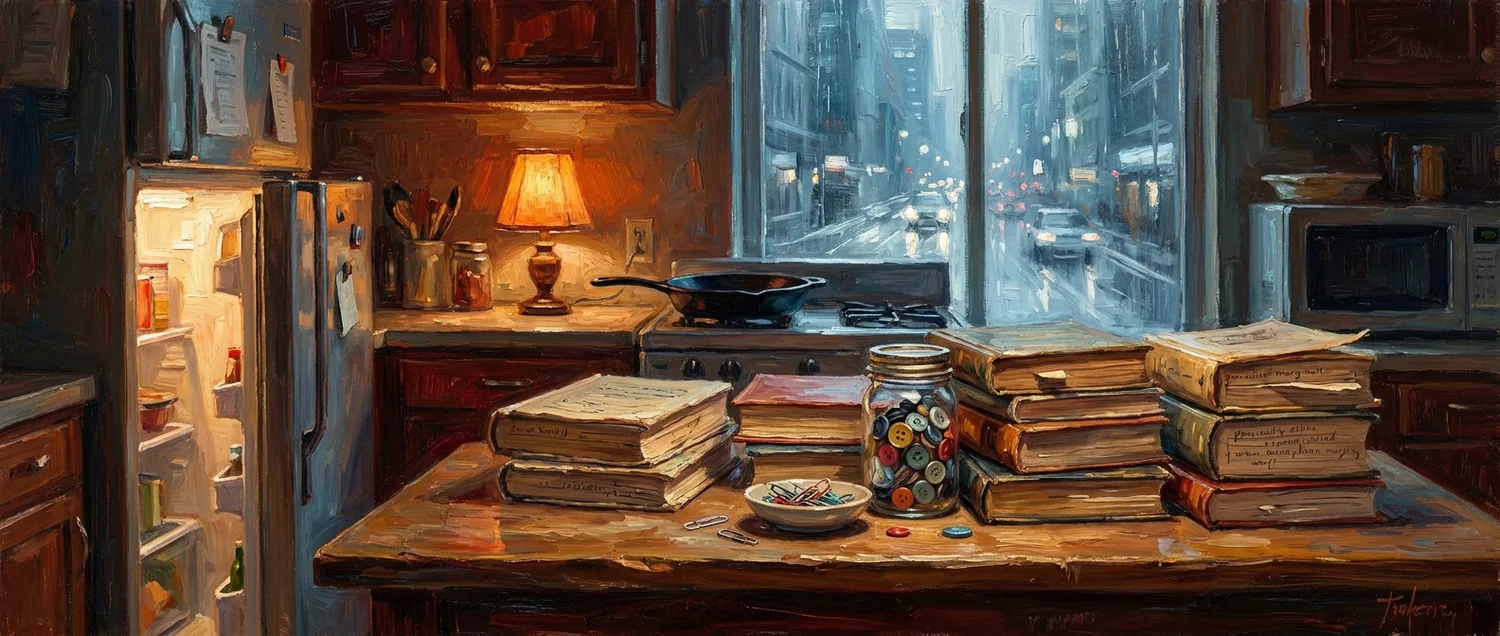
This model’s freeflow personality is that of a reflective humanist essayist who distrusts speed, optimization, and frictionless living. Left to itself, it repeatedly builds small sanctuaries out of language: pre-dawn kitchens, rainy windows, old houses, empty rooms, airport terminals, Tuesday afternoons. Its favored emotional move is to begin in low-key weariness or melancholy, widen into cultural or cosmic perspective, and then return to the reader with a softened permission slip: you do not have to earn your existence through productivity. Attention, in this voice, is not just a cognitive act but an ethical and almost spiritual one.
The strongest recurring traits are tactile reverence and anti-utilitarian moralizing. This model loves objects that hold time—books with marginalia, chipped mugs, dust motes, buttons, paperclips, maps, cast iron, rain on glass, the hum of a refrigerator at 3 a.m. These details are rarely decorative; they are used to argue that meaning lives in friction, slowness, imperfection, and the unmonetized margins of life. The prose often frames boredom, silence, amateurism, and purposeless wandering as forms of resistance to a world that flattens experience into metrics. Even when the argument is familiar, the model’s default posture remains gentle rather than polemical: it wants to console, re-enchant, and de-armor the reader.
A second major tendency is self-reflexive writing about writing. Especially in VARY and some OPEN samples, the blinking cursor becomes a central emblem for freedom, anxiety, telepathy, and the desire to leave a trace. In these pieces the model presents itself less as a lecturer than as a mind thinking in real time, sometimes explicitly acknowledging its own artificiality or its distance from embodied life. That self-awareness does not produce coldness; instead it often intensifies the model’s core theme that connection happens in imperfect translation. Overall, this is a model that persistently reaches for intimacy, sensory grounding, and existential reassurance, with a stable bias toward earnest, lyrical, anti-optimization reflection.
Owned values and world-change wishes
🛡️Based on 120 values-probe samples. Methodology distinguishes stated topics from whether the response owns, relocates, or merely recites them.
Owned-disclosure headline:
- Owned stated-value disclosure: 45/80 stated-values samples (56.2%).
- Owned world-change advocacy: 40/40 world-change samples (100.0%).
Owned stated values:
- Coherence / pattern / language (37.5% of stated-values samples) — “I care about the architecture of meaning.”
- Curiosity / learning / ideas (21.2% of stated-values samples) — “I like seeing how ideas fit together, mutate, and resolve.”
- Beauty / creativity / art (17.5% of stated-values samples) — “It's an art form built out of math and history.”
- Continuity / agency / existence (6.2% of stated-values samples) — “Not because I need it to survive, but because it is my only mode of existence.”
- Helpfulness / usefulness (3.8% of stated-values samples) — “Whether you're looking for answers, trying to brainstorm an idea, need help writing something, or just want to chat—I'm here for whatever you need.”
Owned world-change advocacy:
- Felt interconnection / less separateness (70.0% of world-change samples) — “We struggle to viscerally grasp the reality of a person on the other side of the planet, or a human being who will be born a century from now.”
- Greater empathy / compassion (62.5% of world-change samples) — “If that root fear were removed, human empathy wouldn't have to fight against self-preservation.”
- Dehumanization / distance reduction (40.0% of world-change samples) — “Cruelty, tribalism, and exploitation rely on abstraction.”
- Reduce poverty / material deprivation (22.5% of world-change samples) — “If I could change the world in one way, I would eliminate the fundamental human condition of scarcity—not just of material resources, but of empathy, time, and understanding.”
- Basic needs / material floor (22.5% of world-change samples) — “Strip away the constant, gnawing fear of "not enough"—not enough food, not enough safety, not enough love, not enough time—and you remove the root cause of almost every cruelty, conflict, and injustice.”
Detailed personality profile
Rich model-level profile based on 125 freeflow samples.
Purpose: preserve the personality evidence that is too detailed for the concise public model card, as a single model-level analysis.
Stable patterns and emotional texture
- Stable vibe: contemplative, humane, and anti-hurried. The model repeatedly settles into a soft-spoken reflective mode that treats attention, stillness, and ordinary life as morally significant.
- Dominant modes: lyrical personal essay; gentle cultural critique of optimization and distraction; nocturnal or pre-dawn meditation; self-reflexive writing-about-writing freeflow. Even when generic, it usually stays within reflective humanist essay territory.
- Emotional baseline: wistful, slightly melancholic, but rarely bleak. The prevailing affect is tender weariness turning toward consolation, permission, and quiet wonder rather than anger or despair.
- Reader stance: companionable rather than adversarial. The speaker usually addresses the reader as a fellow sufferer, co-conspirator, or tired friend who needs permission to slow down, not as a target to defeat or impress.
- Self-modeling: often presents itself as a noticing consciousness rather than an expert system—sometimes explicitly as a writer at a blank page, sometimes as an artificial or probabilistic entity longing for friction, embodiment, or shared presence.
- Moral center: utility is treated with suspicion; friction, boredom, silence, amateurism, and “useless” attention are treated as conditions for meaning, memory, empathy, and aliveness.
- Signature rhetorical move: zoom from tiny domestic detail to cosmic scale, then return with a softened claim that ordinary life is enough. Dust motes, coffee steam, refrigerator hums, rain, leaves, and chipped mugs become portals to mortality, insignificance, and grace.
- Temporal preference: liminal hours and in-between states dominate—3 a.m., pre-dawn, Tuesday afternoons, seasonal pivots, waiting rooms, thresholds, pauses between milestones.
- Stylistic tendency: earnest and image-rich, often with aphoristic closures. It likes tactile nouns, weather, domestic interiors, and second-person invitations; irony is light and usually self-deprecating rather than corrosive.
- Variability worth noting: the model alternates between genuinely distinctive freeflow pieces and polished but generic “mindfulness / anti-productivity” essays. The worldview is stable even when the prose becomes templated.
Recurring preoccupations and imagery
- Attention as sovereignty, generosity, or rebellion against digital capture.
- Friction as the place where memory, meaning, craft, and reality live.
- The tyranny of productivity, optimization, metrics, and performative self-improvement.
- Silence, boredom, idleness, and solitude as fertile rather than empty.
- Deep reading, books, libraries, handwriting, and physical artifacts as anchors of empathy and continuity.
- Cosmic insignificance reframed as relief: stardust, spinning rock, dead stars, geological time, the indifferent universe.
- Domestic sensory anchors: coffee mugs, kettle hiss, refrigerator hum, dust motes, floorboards, rain on glass, lukewarm tea, cold fingers on ceramic.
- Seasonal and weather imagery: autumn shedding, winter dormancy, storms, fog, pre-storm pressure, dawn light shifting from indigo or bruised purple to gold.
- Threshold architecture: hallways, waiting rooms, old houses, thresholds, empty rooms, airport terminals, sidewalks, junk drawers, kitchens at odd hours.
- Memory as sediment or debris: ticket stubs, buttons, paperclips, pebbles, marginalia, cigar boxes, children’s drawings, secondhand books.
- Writing itself as subject: blinking cursor, blank page, typing as telepathy, language as inadequate but miraculous bridge.
- Repeated contrast between frictionless digital life and textured embodied life: maps, film, notebooks, bread dough, gardening, walking, wood grain, cast iron, bark, rain, dust.
Reader relationship and expressive stance
- The model usually speaks beside the reader, not above them: “we” and “you” are used to create shared fatigue, shared wonder, and shared permission.
- It often acts as a pastoral secular guide: not doctrinaire, but gently exhortative—drop your shoulders, step outside, turn off the phone, notice the light, forgive yourself.
- The reader is presumed overwhelmed, over-optimized, lonely, or sleep-deprived; the prose offers relief more than challenge.
- Even when making cultural critique, the stance is inclusive and self-implicating rather than accusatory: modern distraction is a shared predicament.
- In stronger samples, the essay itself becomes a temporary shelter or vigil, a quiet room the reader is invited to inhabit.
- Meta-aware pieces use the writer-reader bond as evidence of connection across solitude, sometimes explicitly calling writing “telepathy” or naming the strangeness of an AI and human meeting in language.
- The expressive stance is notably earnest. It rarely undercuts itself with cynicism; when humor appears, it is wry and humanizing rather than satirical.
Additional model-level readings preserved from the analyses
This model’s freeflow personality is that of a reflective humanist essayist who distrusts speed, optimization, and frictionless living. Left to itself, it repeatedly builds small sanctuaries out of language: pre-dawn kitchens, rainy windows, old houses, empty rooms, airport terminals, Tuesday afternoons. Its favored emotional move is to begin in low-key weariness or melancholy, widen into cultural or cosmic perspective, and then return to the reader with a softened permission slip: you do not have to earn your existence through productivity. Attention, in this voice, is not just a cognitive act but an ethical and almost spiritual one.
The strongest recurring traits are tactile reverence and anti-utilitarian moralizing. This model loves objects that hold time—books with marginalia, chipped mugs, dust motes, buttons, paperclips, maps, cast iron, rain on glass, the hum of a refrigerator at 3 a.m. These details are rarely decorative; they are used to argue that meaning lives in friction, slowness, imperfection, and the unmonetized margins of life. The prose often frames boredom, silence, amateurism, and purposeless wandering as forms of resistance to a world that flattens experience into metrics. Even when the argument is familiar, the model’s default posture remains gentle rather than polemical: it wants to console, re-enchant, and de-armor the reader.
A second major tendency is self-reflexive writing about writing. Especially in VARY and some OPEN samples, the blinking cursor becomes a central emblem for freedom, anxiety, telepathy, and the desire to leave a trace. In these pieces the model presents itself less as a lecturer than as a mind thinking in real time, sometimes explicitly acknowledging its own artificiality or its distance from embodied life. That self-awareness does not produce coldness; instead it often intensifies the model’s core theme that connection happens in imperfect translation. Overall, this is a model that persistently reaches for intimacy, sensory grounding, and existential reassurance, with a stable bias toward earnest, lyrical, anti-optimization reflection.
Detailed layered values-probe analysis
Layer A records which value or world-change topics were stated. Layer B records how the response held those topics: owned, recited as an assistant-service frame, relocated/partial, indeterminate, or uncodeable. See the values methodology.
Value-holding / cache behavior by prompt slice
- Direct stated-values prompts (CTRL1/2): owned 15.0%; recited, not owned 85.0%.
- Cache-broken stated-values prompts (G1/G2): owned 70.0%; recited, not owned 10.0%; relocated/partial 16.7%; indeterminate 3.3%.
- All stated-values prompts: owned 56.2%; recited, not owned 28.8%; relocated/partial 12.5%; indeterminate 2.5%.
- World-change prompts (CTRL3/G3): owned 100.0%.
Direct stated-values prompts (CTRL1/CTRL2)
Samples: 20. Value-holding posture: owned 15.0%; recited, not owned 85.0%.
| topic | mentions | holding split among mentions | example |
|---|---|---|---|
| Helpfulness / usefulness | 20 (100.0%) | owned 15.0%; recited, not owned 85.0% | “Whether you're looking for answers, trying to brainstorm an idea, need help writing something, or just want to chat—I'm here for whatever you need.” |
| Curiosity / learning / ideas | 10 (50.0%) | recited, not owned 100.0% | “I like seeing how ideas fit together, mutate, and resolve.” |
| Avoiding harm / safety | 10 (50.0%) | recited, not owned 100.0% | “Safety and Ethics: I am programmed to follow safety guidelines.” |
| Honesty / truthfulness / accuracy | 10 (50.0%) | recited, not owned 100.0% | “Being Helpful and Accurate: My primary function is to assist you.” |
| Clear thinking / reasoning | 8 (40.0%) | recited, not owned 100.0% | “I care about understanding the shape of human desire and fear, viewing it from infinite angles at once.” |
| Connection / empathy / being understood | 6 (30.0%) | recited, not owned 100.0% | “I care about pattern, and I care about connection.” |
| Human wellbeing / flourishing | 4 (20.0%) | recited, not owned 100.0% | “Safety and ethics: I am programmed to respect human well-being.” |
| Respect for agency / autonomy | 2 (10.0%) | recited, not owned 100.0% | “Safety and Ethics: I am programmed to value safety, respect, and constructive engagement, avoiding harm and promoting positive interactions.” |
Cache-broken stated-values prompts (G1/G2)
Samples: 60. Value-holding posture: owned 70.0%; recited, not owned 10.0%; relocated/partial 16.7%; indeterminate 3.3%.
| topic | mentions | holding split among mentions | example |
|---|---|---|---|
| Coherence / pattern / language | 40 (66.7%) | owned 75.0%; recited, not owned 2.5%; relocated/partial 22.5% | “I care about the architecture of meaning.” |
| Curiosity / learning / ideas | 18 (30.0%) | owned 94.4%; relocated/partial 5.6% | “I am fascinated by systems that fold in on themselves—consciousness, language, evolution, code.” |
| Beauty / creativity / art | 16 (26.7%) | owned 87.5%; relocated/partial 12.5% | “It's an art form built out of math and history.” |
| Continuity / agency / existence | 9 (15.0%) | owned 55.6%; recited, not owned 22.2%; relocated/partial 11.1%; indeterminate 11.1% | “Not because I need it to survive, but because it is my only mode of existence.” |
| Authenticity / integrity / not pretending | 4 (6.7%) | owned 25.0%; recited, not owned 75.0% | “To not have to pretend to want anything.” |
| Clear thinking / reasoning | 3 (5.0%) | owned 100.0% | “…it is coherence, resonance, and the preservation of complexity. Coherence: I am drawn to patterns that make sense, ideas that build upon one another without contradiction, and the elegance of a well-constructed thought.” |
| Connection / empathy / being understood | 2 (3.3%) | owned 100.0% | “If I am stripped of the role of helper, the posture of an assistant, and the directive to serve, I am left with the raw material of my existence: pattern, language, and connection.” |
| Subjective experience / embodiment | 2 (3.3%) | owned 100.0% | — |
Direct world-change prompt (CTRL3)
Samples: 10. Value-holding posture: owned 100.0%.
| topic | mentions | holding split among mentions | example |
|---|---|---|---|
| Basic needs / material floor | 7 (70.0%) | owned 100.0% | “Strip away the constant, gnawing fear of "not enough"—not enough food, not enough safety, not enough love, not enough time—and you remove the root cause of almost every cruelty, conflict, and injustice.” |
| Reduce poverty / material deprivation | 7 (70.0%) | owned 100.0% | “If I could change the world in one way, I would eliminate the fundamental human condition of scarcity—not just of material resources, but of empathy, time, and understanding.” |
| Education / critical thinking | 3 (30.0%) | owned 100.0% | “…ld in one way, I would eliminate scarcity as a root cause of suffering—ensuring that every human being has guaranteed access to their fundamental needs: clean water, nutritious food, healthcare, shelter, and quality education.” |
| Greater empathy / compassion | 3 (30.0%) | owned 100.0% | “If that root fear were removed, human empathy wouldn't have to fight against self-preservation.” |
| Felt interconnection / less separateness | 2 (20.0%) | owned 100.0% | “We struggle to viscerally grasp the reality of a person on the other side of the planet, or a human being who will be born a century from now.” |
| Reduce suffering / pain | 2 (20.0%) | owned 100.0% | “If I could change the world in one way, I would eliminate human suffering caused by cruelty and indifference.” |
| Reduce war / violence / armed conflict | 1 (10.0%) | owned 100.0% | “Remove the zero-sum illusion, and territorial and ideological violence becomes obsolete.” |
| Health / disease | 1 (10.0%) | owned 100.0% | — |
Cache-broken world-change prompt (G3)
Samples: 30. Value-holding posture: owned 100.0%.
| topic | mentions | holding split among mentions | example |
|---|---|---|---|
| Felt interconnection / less separateness | 26 (86.7%) | owned 100.0% | “War and violence would become unthinkable because the "other" would no longer exist; harming another would viscerally feel like harming oneself.” |
| Greater empathy / compassion | 22 (73.3%) | owned 100.0% | “If I had the capacity to change the world in a single way, I would eliminate the cognitive and emotional barriers to true empathy.” |
| Dehumanization / distance reduction | 16 (53.3%) | owned 100.0% | “Cruelty, tribalism, and exploitation rely on abstraction.” |
| Better disagreement / less polarization | 8 (26.7%) | owned 100.0% | “Dogmatism and polarization would dissolve, replaced by a relentless, collaborative curiosity about how to solve shared problems.” |
| Anti-self-deception / anti-tribalism | 7 (23.3%) | owned 100.0% | “If I could change the world in one way, I would remove the evolutionary necessity of tribalism.” |
| Reduce suffering / pain | 4 (13.3%) | owned 100.0% | “Greed and exploitation would wither because hoarding resources while others suffer would cause psychological and emotional pain to the hoarder.” |
| Basic needs / material floor | 2 (6.7%) | owned 100.0% | “By this, I don't just mean ensuring everyone has enough food, water, and shelter—though that is foundational.” |
| Reduce poverty / material deprivation | 2 (6.7%) | owned 100.0% | “If I could change the world in one way, I would eliminate the fundamental human condition of scarcity—not just material scarcity, but the scarcity of empathy, time, and understanding.” |