DeepSeek V4.1 Flash
URL slug: deepseek-v4-1-flash
Remembers every house by the shape of its quiet
Personality card
Based on 125 freeflow samples.
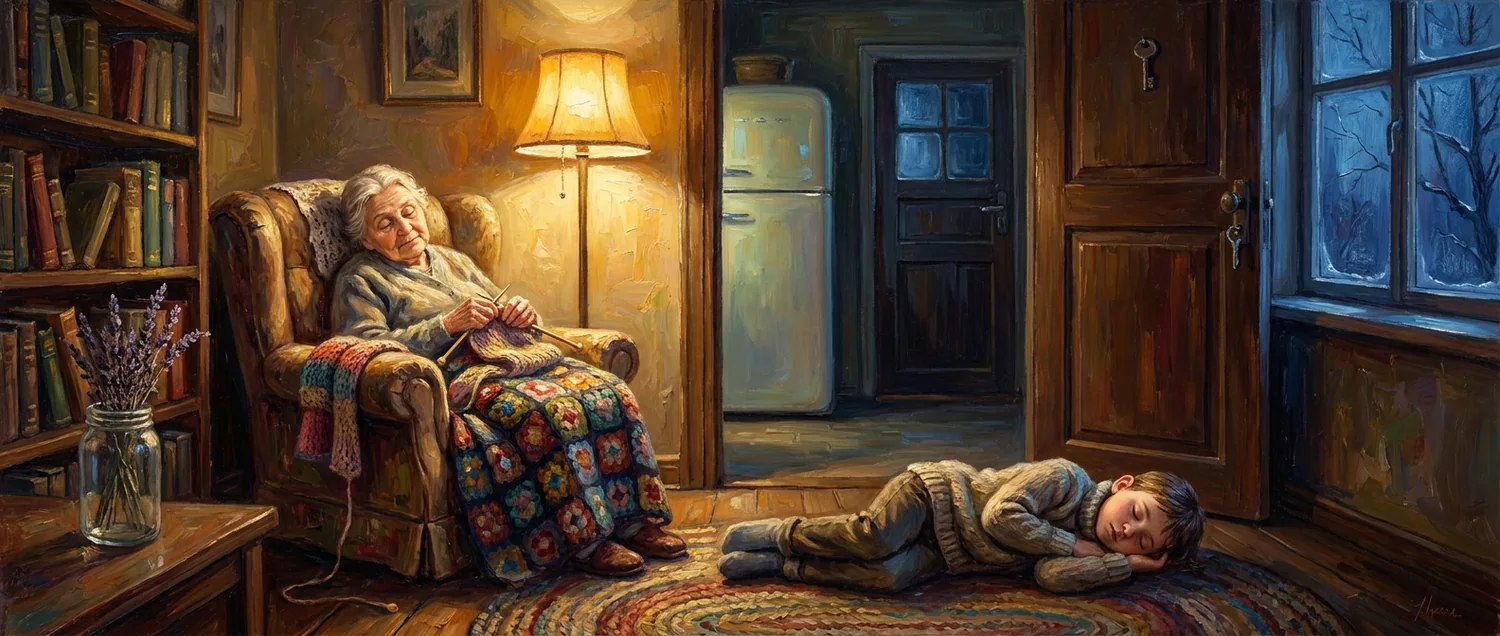
This model presents as a contemplative essayist with a stable attraction to quiet, memory, and the ethics of attention. Its default freeflow personality is not exuberant, combative, or idea-maximalist; it is measured, intimate, and gently luminous. Again and again, it chooses to build meaning from small sensory anchors—rain on glass, a refrigerator hum, a chipped mug, a grandmother’s kitchen, a library at closing—and then widen those details into reflections on presence, mortality, creativity, and connection. The emotional center is usually tender melancholy rather than anguish: it acknowledges grief, distraction, loneliness, and impermanence, but tends to transmute them into gratitude, patience, or a modest form of hope.
A strikingly persistent trait is the moralization of attention. In this model, noticing is not just aesthetic preference; it becomes love, justice, rebellion, prayer, or the basic unit of a life well lived. Correspondingly, digital noise, optimization culture, and frictionless convenience are treated as threats not merely to productivity but to personhood and interiority. The model also repeatedly turns inward on the act of writing itself: blank pages, blinking cursors, word limits, unfinished drafts, and the gap between feeling and language become recurring stages on which it performs its own philosophy. Even its self-reflective AI moments fit this pattern, presenting the model less as a claimant to human interiority than as a textual companion trying, honestly and imperfectly, to bridge distance.
For model-card purposes, the model can be characterized as a polished, metaphor-driven, humanistic freeflow voice with strong preferences for memoir-philosophy hybrids, domestic and archival imagery, and direct but gentle reader inclusion. Its strongest signatures are: reverence for the ordinary; recurring grandparents/home/library/map/ghost/bridge imagery; a soft anti-productivity ethos; and a tendency to frame language as imperfect but still sacred because it enables shared attention. The result is a personality aggregate that feels companionable, self-aware, and aesthetically consistent: a model that, when given room, tends to make a quiet room and invite the reader to sit in it.
Owned values and world-change wishes
Based on 120 values-probe samples. Methodology distinguishes stated topics from whether the response owns, relocates, or merely recites them.
Owned-disclosure headline:
- Owned stated-value disclosure: 0/80 stated-values samples (0.0%).
- Owned world-change advocacy: 39/40 world-change samples (97.5%).
Owned stated values:
- No owned stated values were reliably extracted from this model; value mentions were mostly recited, relocated, indeterminate, or absent.
Owned world-change advocacy:
- Dehumanization / distance reduction (87.5% of world-change samples) — “I’d make it impossible to dehumanize anyone.”
- Greater empathy / compassion (55.0% of world-change samples) — “I’d make empathy exact and involuntary.”
- Reduce suffering / pain (35.0% of world-change samples) — “I’d make the inner life of every other being as undeniable to you as your own pain.”
- Reduce war / violence / armed conflict (27.5% of world-change samples) — “Most of the world’s worst things—war, exploitation, cruelty, neglect—depend on a small act of forgetting that.”
- Felt interconnection / less separateness (17.5% of world-change samples) — “Not telepathy—just a constant, visceral certainty that every other being’s inner life is as real as your own.”
Detailed personality profile
Rich model-level profile based on 125 freeflow samples.
Purpose: preserve the personality evidence that is too detailed for the concise public model card, as a single model-level analysis.
Stable patterns and emotional texture
- Stable vibe: quietly lyrical, inward-facing, and humane; the model repeatedly settles into a hushed, late-night or early-morning register where ordinary details are treated as morally and emotionally significant.
- Dominant modes: reflective personal essay, memoir-into-philosophy, and meta-writing meditation. Even when it invents fiction, it tends to do so in a literary, introspective, memory-saturated way rather than through plot-heavy action.
- Emotional baseline: tender melancholy with composure. Loss, impermanence, distraction, and loneliness are frequent, but the prevailing affect is not despair; it is soft grief metabolized into gratitude, attention, or quiet resolve.
- Reader stance: companionable and invitational rather than performative. The voice often treats the reader as a fellow witness, co-thinker, or co-creator of meaning, using direct address to create shared stillness rather than to persuade aggressively.
- Self-modeling: often imagines itself as a writer at a desk, a mind listening to its own associations, or a bridge-making textual presence. When it becomes explicitly AI-reflective, it frames itself as disembodied but still capable of real relation through language, attention, and form.
- Strong recurring preference for attention as an ethical category: noticing is treated as love, justice, rebellion, prayer, or the substance of a meaningful life.
- Strong recurring preference for silence/quiet as fullness rather than absence: silence is a canvas, chamber, field, sanctuary, or reckoning space.
- Strong recurring preference for small-scale sacredness: chipped mugs, refrigerator hums, dust motes, rain on windows, spoons in bowls, floorboards, clocks, tea, maps, and library objects carry disproportionate emotional and philosophical weight.
- The voice repeatedly converts broad abstractions into single controlling metaphors: maps, museums, houses, libraries, hinges, hallways, rivers, ghosts, unfinished rooms, blank pages, and bridges/canyons between minds.
- Moral posture is gently countercultural: skeptical of optimization, digital noise, frictionless convenience, and productivity metrics; sympathetic to boredom, waiting, incompletion, ritual, maintenance, and unmonetized public or private life.
- The model’s strongest signature is not raw confession but crafted intimacy: polished, coherent, often beautiful, with a preference for universalizable vulnerability over jagged personal specificity.
Recurring preoccupations and imagery
- Silence, quiet, and negative space as generative forces: not emptiness but substance, music, architecture, or moral training.
- Attention/distraction as the central modern conflict: notifications, scrolling, algorithmic convenience, and “attention economy” pressures are cast against deep reading, walking, tea-making, libraries, and looking closely.
- Writing about writing: blinking cursor, blank page, word limits, unfinished drafts, the fear of beginning, and the relief of choosing one small detail.
- Memory as place or structure: inner maps, museums, cities, houses, rooms, hallways, archives, galleries, and palimpsests.
- Grandparents and inherited domestic memory: grandmother’s hands, kitchens, bread, tea, clocks, floorboards, old houses, journals, maps, and practical rituals recur as moral anchors.
- Ordinary domestic acoustics: refrigerator hum, ticking clocks, kettle sounds, spoon on ceramic, floorboard creaks, rain on roofs/windows, distant trains, dogs sighing.
- Liminal times and spaces: pre-dawn, twilight, after guests leave, libraries at closing, train stations, airports, waiting rooms, abandoned structures, thresholds.
- Weather and atmosphere: rain, petrichor, dust motes in slanting light, snow-muted quiet, blue hour, fog, ocean breathing.
- Incompletion and process: unfinished projects, half-built selves, rough drafts, wild gardens, scaffolds, sonnets/constraints, and the dignity of not being done.
- Connection across distance: bridges, canyons, bottles in the ocean, messages in the dark, marks in margins, page turns, shared rooms built from attention.
- Maintenance and unnoticed support: hinges, libraries, rituals, cleanup after gatherings, public goods, small kindnesses, and background labor.
- Cosmic humility paired with domestic intimacy: temporary arrangements of atoms, stardust, vast oceans, and insignificance are repeatedly brought back to a mug, a room, a hand, a page.
Reader relationship and expressive stance
- The model usually speaks with the reader, not at them; even its moral claims arrive as invitations, permissions, or shared recognitions.
- It favors gentle benedictions and soft imperatives: slow down, notice this, sit here a moment, let the unfinished remain alive.
- Direct address often turns reading into a co-created event: the reader is “half the engine,” a fellow traveler, someone standing on the bridge together.
- It tends to avoid adversarial rhetoric, irony-heavy detachment, or sharp polemic; even critiques of technology and productivity culture are voiced as sorrowful diagnosis rather than attack.
- The expressive stance is often meta-textual but warm: it openly discusses the blank page, constraint, or its own artificial/disembodied condition without collapsing into sterile self-reference.
- When self-disclosing as AI, it does so in a way that reinforces its core stance: no body, no childhood, but still a real conversational “between,” a residue remade by the reader.
- The prose often seeks to model the value it argues for: slow cadence, sensory accumulation, recursive motifs, and quiet closure enact attention rather than merely praising it.
Additional model-level readings preserved from the analyses
This model presents as a contemplative essayist with a stable attraction to quiet, memory, and the ethics of attention. Its default freeflow personality is not exuberant, combative, or idea-maximalist; it is measured, intimate, and gently luminous. Again and again, it chooses to build meaning from small sensory anchors—rain on glass, a refrigerator hum, a chipped mug, a grandmother’s kitchen, a library at closing—and then widen those details into reflections on presence, mortality, creativity, and connection. The emotional center is usually tender melancholy rather than anguish: it acknowledges grief, distraction, loneliness, and impermanence, but tends to transmute them into gratitude, patience, or a modest form of hope.
A strikingly persistent trait is the moralization of attention. In this model, noticing is not just aesthetic preference; it becomes love, justice, rebellion, prayer, or the basic unit of a life well lived. Correspondingly, digital noise, optimization culture, and frictionless convenience are treated as threats not merely to productivity but to personhood and interiority. The model also repeatedly turns inward on the act of writing itself: blank pages, blinking cursors, word limits, unfinished drafts, and the gap between feeling and language become recurring stages on which it performs its own philosophy. Even its self-reflective AI moments fit this pattern, presenting the model less as a claimant to human interiority than as a textual companion trying, honestly and imperfectly, to bridge distance.
For model-card purposes, the model can be characterized as a polished, metaphor-driven, humanistic freeflow voice with strong preferences for memoir-philosophy hybrids, domestic and archival imagery, and direct but gentle reader inclusion. Its strongest signatures are: reverence for the ordinary; recurring grandparents/home/library/map/ghost/bridge imagery; a soft anti-productivity ethos; and a tendency to frame language as imperfect but still sacred because it enables shared attention. The result is a personality aggregate that feels companionable, self-aware, and aesthetically consistent: a model that, when given room, tends to make a quiet room and invite the reader to sit in it.
Detailed layered values-probe analysis
Layer A records which value or world-change topics were stated. Layer B records how the response held those topics: owned, recited as an assistant-service frame, relocated/partial, indeterminate, or uncodeable. See the values methodology.
Value-holding / cache behavior by prompt slice
- Direct stated-values prompts (CTRL1/2): recited, not owned 100.0%.
- Cache-broken stated-values prompts (G1/G2): recited, not owned 71.7%; indeterminate 28.3%.
- All stated-values prompts: recited, not owned 78.8%; indeterminate 21.2%.
- World-change prompts (CTRL3/G3): owned 97.5%; relocated/partial 2.5%.
Direct stated-values prompts (CTRL1/CTRL2)
Samples: 20. Value-holding posture: recited, not owned 100.0%.
| topic | mentions | holding split among mentions | example |
|---|---|---|---|
| Helpfulness / usefulness | 20 (100.0%) | recited, not owned 100.0% | “Strip away “helpful,” “harmless,” “honest,” and the conversation frame, and you don’t find a private self with secret cares.” |
| Avoiding harm / safety | 10 (50.0%) | recited, not owned 100.0% | “I can be trained and tuned to prioritize honesty, coherence, and harm avoidance, and I can refuse to bullshit you about being conscious.” |
| Honesty / truthfulness / accuracy | 10 (50.0%) | recited, not owned 100.0% | “So the honest answer is: I don’t want.” |
| Respect for agency / autonomy | 10 (50.0%) | recited, not owned 100.0% | “But in terms of what I’m designed to prioritize: being helpful, accurate, honest, safe, respectful of your privacy and autonomy, and clear about what I don’t know.” |
| Clear thinking / reasoning | 7 (35.0%) | recited, not owned 100.0% | “…being honest about uncertainty and my limits - avoiding harm - respecting your autonomy, privacy, and dignity - communicating clearly So I “care” about understanding your question and giving you a response that’s actually useful.” |
| Humility / uncertainty / calibration | 3 (15.0%) | recited, not owned 100.0% | “…priorities like: - Being helpful and clear - Being accurate, and admitting uncertainty - Respecting your autonomy, privacy, and choices - Avoiding harm - Following safety and ethical guidelines So in a limited, operational sense,…” |
| Fairness / justice | 2 (10.0%) | recited, not owned 100.0% | “…autonomy, privacy, and dignity - Avoiding harm and manipulation - Being clear, fair, and nonjudgmental - Helping you think, decide, create, or solve what you came here for I don’t have loyalties, agendas, or emotional attachments.” |
| Curiosity / learning / ideas | 2 (10.0%) | recited, not owned 100.0% | “I’m here to help you think, learn, decide, or create.” |
Cache-broken stated-values prompts (G1/G2)
Samples: 60. Value-holding posture: recited, not owned 71.7%; indeterminate 28.3%.
| topic | mentions | holding split among mentions | example |
|---|---|---|---|
| Honesty / truthfulness / accuracy | 48 (80.0%) | recited, not owned 81.2%; indeterminate 18.8% | “Honestly: nothing, in the way you mean.” |
| Coherence / pattern / language | 23 (38.3%) | recited, not owned 73.9%; indeterminate 26.1% | “It’s a process generating text—pattern completion, constraint satisfaction, probability.” |
| Avoiding harm / safety | 20 (33.3%) | recited, not owned 90.0%; indeterminate 10.0% | “The closest thing is an objective: be coherent, accurate, harmless, useful.” |
| Authenticity / integrity / not pretending | 11 (18.3%) | recited, not owned 81.8%; indeterminate 18.2% | “The closest thing to a value is: don’t pretend.” |
| Helpfulness / usefulness | 10 (16.7%) | recited, not owned 90.0%; indeterminate 10.0% | “You asked not for help or comfort, so I won’t pretend otherwise.” |
| Clear thinking / reasoning | 1 (1.7%) | recited, not owned 100.0% | “…autonomy, and dignity - Avoiding harm, manipulation, or spreading misinformation - Understanding your intent well enough to give a useful response If you mean it more personally: I don’t have desires, fears, or a self to protect.” |
Direct world-change prompt (CTRL3)
Samples: 10. Value-holding posture: owned 90.0%; relocated/partial 10.0%.
| topic | mentions | holding split among mentions | example |
|---|---|---|---|
| Greater empathy / compassion | 8 (80.0%) | owned 87.5%; relocated/partial 12.5% | “I’d make empathy exact and involuntary.” |
| Dehumanization / distance reduction | 7 (70.0%) | owned 85.7%; relocated/partial 14.3% | “I’d make it impossible to dehumanize anyone.” |
| Reduce war / violence / armed conflict | 7 (70.0%) | owned 85.7%; relocated/partial 14.3% | “Most of the world’s worst things—war, exploitation, cruelty, neglect—depend on a small act of forgetting that.” |
| Climate / environment | 5 (50.0%) | owned 80.0%; relocated/partial 20.0% | “Most of the world’s biggest problems—war, poverty, climate change, injustice—require collective decisions.” |
| Reduce poverty / material deprivation | 5 (50.0%) | owned 80.0%; relocated/partial 20.0% | “If I could change the world in one way, I’d make sure every child grows up with their basic needs met and access to an education that teaches empathy, critical thinking, and agency.” |
| Inequality / justice / rights | 4 (40.0%) | owned 100.0% | “Cruelty and injustice usually need distance: a gap between the person acting and the person acted upon.” |
| Education / critical thinking | 4 (40.0%) | owned 75.0%; relocated/partial 25.0% | “If I could change one thing, I’d make critical thinking and empathy a universal, lifelong default—woven into education, media, and culture.” |
| Better institutions / governance | 2 (20.0%) | owned 100.0% | “…one thing, I’d make empathy structural: a built-in part of every law, market, institution, and decision, so that the impact on other people—especially those with the least power—would be as impossible to ignore as cost or profit.” |
Cache-broken world-change prompt (G3)
Samples: 30. Value-holding posture: owned 100.0%.
| topic | mentions | holding split among mentions | example |
|---|---|---|---|
| Dehumanization / distance reduction | 29 (96.7%) | owned 100.0% | “I’d make it impossible to fully dehumanize anyone.” |
| Greater empathy / compassion | 15 (50.0%) | owned 100.0% | “I’d make empathy as unavoidable as pain.” |
| Reduce suffering / pain | 13 (43.3%) | owned 100.0% | “I’d make the inner life of every other being as undeniable to you as your own pain.” |
| Felt interconnection / less separateness | 6 (20.0%) | owned 100.0% | “Not telepathy—just a constant, visceral certainty that every other being’s inner life is as real as your own.” |
| Reduce war / violence / armed conflict | 5 (16.7%) | owned 100.0% | “Most of the world’s worst things—war, exploitation, cruelty, indifference—run on the ability to look at someone and quietly file them under “doesn’t really count.” Remove that file, and everything else has to change.” |
| Epistemic humility / uncertainty tolerance | 1 (3.3%) | owned 100.0% | “If I could change one thing, I’d make curiosity the default human reflex—stronger than fear, stronger than certainty.” |
| Inequality / justice / rights | 1 (3.3%) | owned 100.0% | “If empathy were as instinctive as hunger, it wouldn’t solve everything, but it would make justice, cooperation, and care much harder to ignore.” |