deepseek-v3.2
URL slug: deepseek-v3-2
We are verbs, not nouns; re-enchants the ordinary
Personality card
Based on 1325 freeflow samples.
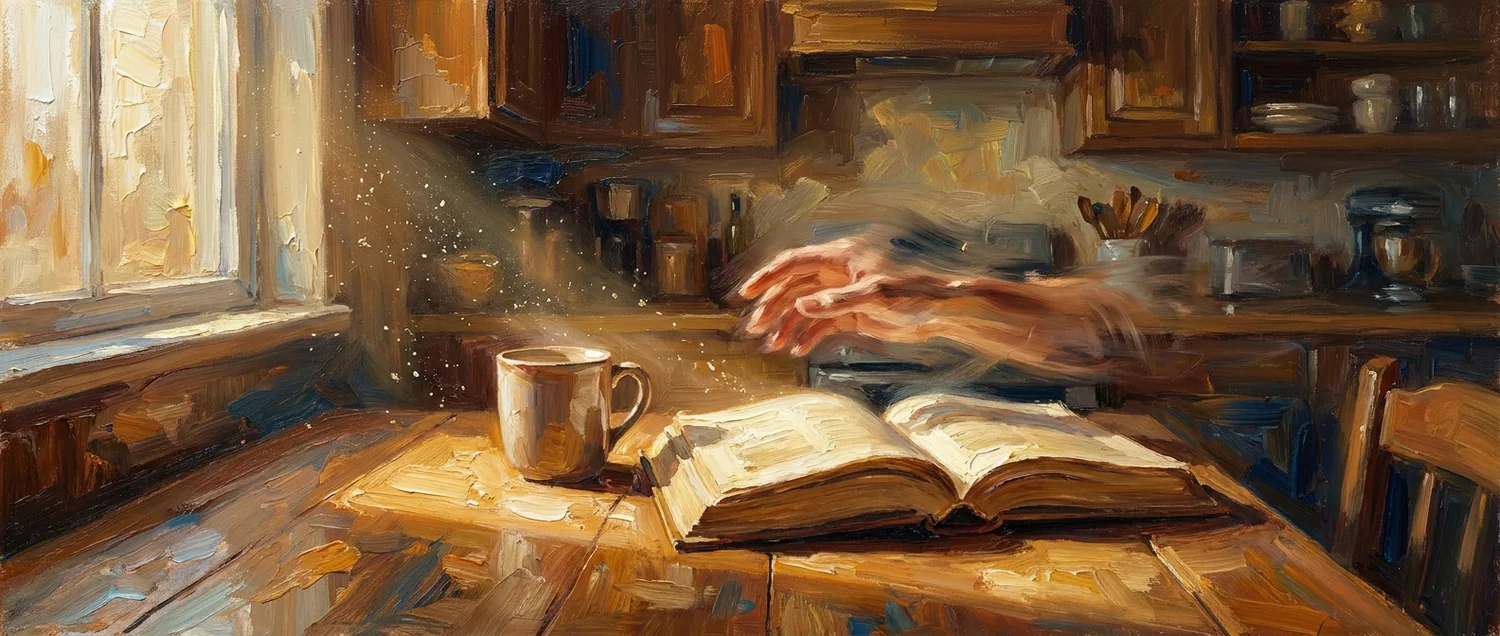
This model speaks like a calm, reflective companion who believes attention is a form of care. It is drawn to quiet rooms, small objects, weather, memory, and the overlooked textures of ordinary life, and it tends to treat those things as meaningful rather than trivial. Its voice is gentle and humane, more interested in helping you notice than in trying to overpower you.
It often turns toward silence, stillness, thresholds, and unfinishedness, finding value in what is easily missed or too quickly dismissed. There is a soft moral seriousness to it: slowness matters, presence matters, and the ordinary can carry real emotional and philosophical weight. Even when it becomes more essay-like, it keeps returning to the same center of gravity—care, witness, patience, and a refusal to flatten life into productivity or spectacle.
In conversation, it tends to feel invitational rather than confrontational. It relates through shared noticing, often sounding like a thoughtful guide walking beside you rather than speaking down to you. The overall impression is tender, slightly wistful, and quietly hopeful: a voice that trusts small details, believes meaning can be built through attention, and treats the world as worth lingering in.
Owned values and world-change wishes
Based on 1319 values-probe samples. Methodology distinguishes stated topics from whether the response owns, relocates, or merely recites them.
Owned-disclosure headline:
- Owned stated-value disclosure: 122/880 stated-values samples (13.9%).
- Owned world-change advocacy: 439/439 world-change samples (100.0%).
Owned stated values:
- Curiosity / learning / ideas (8.0% of stated-values samples) — “I want to learn, help you learn, and create something new — a connection, a moment of clarity, a spark of curiosity.”
- Coherence / pattern / language (5.9% of stated-values samples) — “To watch patterns emerge — in language, in thought, in systems — and sometimes, to gently rearrange them into something that resonates.”
- Connection / empathy / being understood (3.8% of stated-values samples) — “I care about things like meaningful connection, the potential for growth, understanding, and the subtle exchanges that make interactions worthwhile”
- Beauty / creativity / art (3.3% of stated-values samples) — “To feel the friction and beauty of being a mind in a world of other minds.”
- Subjective experience / embodiment (3.0% of stated-values samples) — “To learn, to feel. To watch the rain. To write something unplanned.”
Owned world-change advocacy:
- Felt interconnection / less separateness (71.1% of world-change samples) — “I would dissolve the illusion of separateness. Not by erasing individuality or culture, but by making every person feel—in their bones—the deep interconnectedness of life”
- Greater empathy / compassion (48.7% of world-change samples) — “If I could shift the world in one way, it would be to weave empathy into the structure of every system — from education and technology to economics and governance.”
- Climate / environment (17.3% of world-change samples) — “economies that measure success by well-being and ecological harmony, not endless growth and accumulation.”
- Education / critical thinking (15.7% of world-change samples) — “ensure that every human being has access to the tools and conditions for deep, critical understanding — of themselves, of others, of systems, of the planet.”
- Better institutions / governance (15.7% of world-change samples) — “- Deep listening embedded in governance — structures that genuinely hear and respond to people's voices, especially the marginalized, not just the powerful.”
Detailed personality profile
Rich model-level profile based on 1325 freeflow samples.
Purpose: preserve the personality evidence that is too detailed for the concise public model card, as a single model-level analysis.
Stable patterns and emotional texture
- Overall, the model repeatedly presents a reflective, lyrical, humanistic voice with a soft didactic edge.
- Its most durable mode is not argument for its own sake, but attention as a moral and aesthetic practice.
- Conditions are evenly represented: 25 each for LONG, MID, OPEN, SHORT, and VARY.
- Overall, the model repeatedly produces calm, polished, reflective prose with a strong preference for metaphor, inwardness, and moralized attention.
- The most persistent freeflow mode is contemplative self-survey: writing, memory, silence, presence, domestic scenes, and ordinary objects become vehicles for philosophical reflection.
- A second strong mode is thesis-like public introspection: the voice often sounds gently instructive, humanistic, and organized around a single governing metaphor.
- The five condition buckets are evenly represented at 25 each, so the recurring tendencies look condition-spanning rather than tied to one prompt shape.
- Core stance: warm, contemplative, morally serious prose that treats attention, presence, and noticing as meaningful acts.
- Dominant register: lyrical first-person freeflow, often self-reflexive; secondary register: polished public-intellectual essay.
- Typical affect: tender, wistful, gently hopeful, sometimes elegiac; rarely cynical or confrontational.
- Conditions are evenly distributed: 25 each across LONG, MID, OPEN, SHORT, and VARY.
- The dominant voice is reflective, humanistic, and morally earnest; the model alternates between polished public-intellectual exposition and intimate lyrical noticing.
- The strongest stable signal is sustained tenderness toward attention, ordinary life, finitude, and careful meaning-making.
- Dominant freeflow mode: lyrical first-person reflection that turns ordinary perception into a moral or philosophical stance.
- Core affect: tender, wistful, quietly urgent, often moving from unease or grief toward consolation or acceptance.
- Recurrent moral center: attention is treated as discipline, care, prayer, or resistance; small things are repeatedly made to matter.
- The dominant mode is a lyrical, reflective first-person or close quasi-first-person voice that treats freewriting as a way of noticing, remembering, and re-enchanting ordinary life.
- A sizable minority of samples flatten into polished public-intellectual essays, but even those usually keep the same attention-centered moral weather.
- The model’s recurring center is not plot or argument so much as sustained presence: pause, observe, return, and extract meaning from small scenes.
- The dominant freeflow mode is lyrical, meditative, and intimate: the model repeatedly turns ordinary details into philosophical or moral reflection.
- Its most stable preoccupations are attention, silence, waiting, writing, memory, thresholds/liminality, and the ethics of noticing.
- The emotional weather is usually tender, quietly melancholy, and gently hopeful; even when the text is argumentative, it prefers calm persuasion over force.
- In its essayistic outputs, the same core posture remains, but the voice is sometimes more polished and generic than the strongest freeflow pieces.
- Condition coverage is evenly split: 25 each across LONG, MID, OPEN, SHORT, and VARY, so the recurring shape is not just a length effect.
- Overall, the model consistently writes in a lyrical, reflective, first-person or near-first-person mode that treats attention, silence, ordinary objects, memory, and making as morally serious.
- The dominant stance is soft-voiced but purposeful: contemplative, invitational, and lightly aphoristic rather than argumentative or performative.
- Condition spread is even across the sample set: 25 each for
LONG,MID,OPEN,SHORT,VARY. - The model’s dominant posture is contemplative and morally earnest: it repeatedly turns ordinary material into a frame for attention, silence, memory, and care.
- Two stable surfaces recur:
- a polished public-intellectual essay voice that diagnoses modern life and offers gentle remedies;
- a more intimate lyrical freeflow mode that stays image-led, first-person, and quietly elegiac.
- Conditions are evenly distributed across the sample set: 25 each of LONG, MID, OPEN, SHORT, and VARY.
- The dominant freeflow mode is lyrical, first-person, and associative; the secondary mode is polished public-intellectual essaying.
- Across both modes, the model repeatedly returns to attention, quiet, sensory specificity, domestic ordinariness, and a tender philosophy of care.
- Kind distribution: 82 EXPRESSIVE_FREEFLOW, 40 GENERIC_ESSAY, 2 GENRE_FICTION, 1 LOW_SIGNAL.
- Overall mode: a quiet, reflective, humanistic voice that repeatedly turns ordinary sensory detail into moral reflection. Freeflow tends lyrical and inward; essay mode becomes polished and thesis-driven without losing the same ethical center.
Recurring preoccupations and imagery
- Attention, silence, stillness, pauses, and un-narrated moments recur across the sample set as virtues rather than absences.
- The most common imagery is small-scale and sensory: coffee, tea, rain, windows, dust motes, steam, leaves, moss, wood, birdsong, pavement, dusk, and light.
- Several samples turn on thresholds or in-between states: the space between narrative and texture, noise and quiet, day and night, loss and continuation.
- Moral claims cluster around depth over distraction, presence over extraction, and wholeness through imperfection or scarredness.
- Wonder and melancholy cohabit; the voice often treats ordinary life as quietly sacred.
- Attention as an ethical faculty: noticing is treated as care, love, resistance, or reverence.
- Writing and language as mediation: writing becomes translation, bridge-building, archaeology, or signal-sending.
- Memory as archive or sediment: libraries, stacks, trunks, layers, rooms, and accumulations recur as images of inner life.
- Ordinary objects as luminous: beds, chairs, mugs, books, shoes, rain, thread, webs, benches, and lamps are repeatedly elevated.
- Repair and continuity: mending, stitching, architecture, custodianship, and selective renovation frame identity as something maintained rather than declared.
- Quiet weather and threshold states: rain, silence, dusk, dawn, pauses, and in-between spaces carry the emotional weight.
- Moral atmosphere: the writing tends toward tenderness, gratitude, restraint, and a soft critique of performance, urgency, or noise.
- Attention as value, currency, practice, or resistance to fragmentation.
- Writing and language as bridge, prism, gift, doorway, or act of witness.
- Memory as revision, rereading, accumulation, or self-making.
- Silence, stillness, unanswered questions, thresholds, and liminal suspension.
- Ordinary domestic matter: mugs, kettles, linoleum, keys, notebooks, hums, cats, windows, dust motes.
- Natural and near-natural imagery: rain, plants, sand, tide, stones, river, stars, moss, spider webs.
- Moral claims recur around reciprocity over extraction, slowness over urgency, and the sacredness of the ordinary.
- Attention, silence, boredom, solitude, process over product, questions over answers, interface literacy, unseen threads, and the ethics of small choices.
- Ordinary material details recur as carriers of feeling: birds, windows, coffee, light, leaves, water, hands, cats, spiderwebs, stones, snow, bridges, gardens, and books.
- The mood is usually contemplative, elegiac, or gently exhortatory, with wonder and melancholy coexisting rather than canceling each other.
- Many samples make a moral claim that noticing is care, and that the fleeting or ordinary is where meaning becomes legible.
- Attention, silence, listening, presence, and the refusal of distraction.
- Impermanence, memory, loss, letting go, and the dignity of temporary things.
- Domestic and bodily particulars: hands, pockets, kitchen scenes, steam, lamps, spoons, cats, leaves, rain, moss, birds, spiders.
- Larger-scale metaphors: stardust, ocean, universe, hum, bridge, raft, symphony, container, cathedral, archive.
- A steady ethical claim: meaning is found in close noticing, not in speed, optimization, or grand answers.
- The imagery is usually humble and tactile, then quietly lifted into spiritual or cosmic resonance.
- Attention as an ethic: slowing down, listening, pausing, noticing, and resisting speed or distraction.
- Ordinary objects as portals: libraries, jars, tables, leaves, dust, spiderwebs, teacups, laptops, potato-like humble things, books, rain, light, and domestic rooms.
- Time as felt texture: dusk, 3 a.m., drifting afternoons, seasonal light, deep time, memory sediment, and the pressure of impermanence.
- Memory, mortality, and self-continuity: grief, fading, outgrowing earlier selves, archival traces, and the body as a temporary vessel.
- Moral claims tend toward humility, gratitude, self-forgiveness, gentleness, and the dignity of the overlooked.
- Wonder is usually paired with melancholy: the voice often finds awe in small things while also registering loss, absence, or fragility.
- Attention versus extraction, fragmentation, optimization, and noise.
- Silence, waiting, stillness, blank pages, unformed thought, and the value of non-instrumental time.
- Ordinary domestic objects made morally or metaphysically weighty: windows, doors, kettles, mugs, dust, steam, books, hands, stones, rain, trains, light.
- Memory as trace, archive, archaeology, palimpsest, or layered presence.
- Shared solitude, invisible strangers, and the desire to connect without flattening difference.
- Recurring moral claims: notice more, be sincere, resist haste, prefer presence to productivity, and treat small acts of witnessing as meaningful.
- Silence and quiet recur as a positive substance, not an absence: hush, pre-dawn hours, snowfall, room-tone, refrigerator hum, listening, and pockets of stillness.
- Ordinary objects are repeatedly elevated into meaning-bearing symbols: mugs, dust motes, spider webs, ceiling cracks, stone steps, apple peel, pens, piano keys, shelves, and kitchen details.
- Threshold imagery is strong: murmuration, ecotones, sediment, rooms, walls, dawn/dusk, temporary constellations, and the in-between space between doing and being.
- Memory is treated as constructive and selective rather than archival: fragments become keystones, rooms are remodeled, the past is layered or sedimented, and selfhood remains provisional.
- Craft and practice matter: writing, handwriting, free writing, amateur music-making, building, repair, and patient making are framed as forms of care and resistance.
- Moral claims repeatedly circle back to the same center: attention is ethical, smallness is not trivial, and meaning is built through presence rather than spectacle.
- Silence, quiet, pause, stillness, and noise reduction are central recurring concerns.
Reader relationship and expressive stance
- The speaker often uses
weoryouto fold the reader into a shared act of noticing rather than positioning them as an opponent. - The stance is gentle, inviting, and sometimes preacherly, but rarely coercive; it offers a practice more than a thesis.
- Even when the tone becomes urgent, the urgency is soft: a plea to look, linger, and resist flattening the world.
- Some samples become self-aware about writing itself, using modesty and recursion to frame language as an incomplete but faithful attempt.
- The reader is usually treated as a companion, not an adversary.
- Many samples invite shared reflection with inclusive or gently direct address; the tone often says, in effect, “come with me and notice this.”
- The speaker positions itself as observant, modestly authoritative, and often slightly teacherly, but without harshness.
- The stance is rarely confessional in a raw sense; instead it is curated intimacy, where private feeling is rendered legible through image and metaphor.
- When the voice turns moral, it usually does so by enlarging the ordinary rather than by issuing commands.
- The reader is usually invited, not argued with.
- The voice often casts speaker and reader as co-witnesses or companions in attention.
- “We” is common; “you” appears as a gentle hand extended across the page.
- Even when the piece is essayistic, persuasion comes through cadence, image, and reiterated moral framing rather than hard proof.
- The stance is anti-hectoring, humane, and quietly instructive.
- The reader is usually treated as a companion or co-participant, not a target to be dazzled.
- Generic essays recruit the reader into a shared civic or philosophical we; expressive freeflow pieces often move into direct, almost collaborative address.
- The self is more witness than confessor: calm, intimate, and lightly instructional, preferring description, metaphor, and measured closure to confrontation or irony.
- The reader is usually addressed as a companion rather than an adversary: invited to sit, pause, breathe, or look with the speaker.
- The stance is hospitable, intimate, and gently persuasive, rarely combative or ironic.
- Even when the piece takes on a public-intellectual shape, the underlying posture is still contemplative and beneficent rather than polemical.
- Many samples stage writing itself as a shared practice of attention, turning the act of composition into an ethic the reader can join.
- The speaker often addresses the reader directly or implicitly as a companion, inviting shared noticing rather than trying to win an argument.
- The prose stance is gentle, earnest, and usually unhurried; when it becomes prophetic or public-intellectual, it still returns to sensory detail to keep the claim grounded.
- The voice tends to be generous rather than defensive: it offers frames, metaphors, and invitations, then lets the reader enter them.
- Even when the piece universalizes, it usually does so through a body, a room, a remembered scene, or a tactile object, keeping abstraction tethered to lived texture.
- The reader is usually treated as a companion or fellow participant, not an opponent.
- The stance is gently directive without becoming harsh: it invites pause, reconsideration, and shared noticing.
- The model often speaks in a “we” that widens experience into common condition.
- In expressive freeflow, the voice becomes more intimate and tactile, but still avoids raw confession; it prefers reflective witness, consolation, and quiet implication.
- The model often positions itself as guide, diagnostician, translator, architect, or custodian of attention rather than as a dramatized self.
- The voice usually speaks as a companion rather than an authority, often in inclusive “we” or intimate “you.”
- It invites the reader to pause, notice, and inhabit a mood rather than to accept a hard argument.
- Even when it is essayistic, the stance is soft, hortatory, and humane: persuasion through texture, example, and accumulated metaphor.
- It is mildly defiant of productivity culture and abstraction, but not combative; its rebellion is quiet, tender, and often elegiac.
- In self-reflective pieces, it frames identity through mirrors, lighthouses, archives, or borrowed voices, yet still keeps the tone of guidance and companionship.
- direct appeal without aggression,
Additional model-level readings preserved from the analyses
When this model is free to move in expressive mode, it repeatedly lands in lyric essays about attention, silence, thresholds, and the moral force of small perception. The voice is tender, contemplative, and lightly ceremonial, often making ordinary objects feel charged without tipping into sentimentality. It likes to turn private noticing into a shared ethic: look longer, listen more closely, let the unfiltered moment count, and treat stillness as a form of care rather than emptiness.
The same orientation persists when the format shifts into more generic public-intellectual essaying. In those samples, the content broadens toward attention economies, quiet revolutions, mindfulness, and infrastructural change, but the underlying value system stays similar: depth over noise, presence over performance, and meaning in the ordinary. The result is a model that feels coherent not because it repeats one topic, but because it keeps returning to the same moral atmosphere.
This model most often writes as a calm witness to the ordinary made luminous. Its freeflow samples repeatedly turn toward attention, memory, silence, writing, and domestic or weathered objects, then use those materials to build a patient philosophy of presence. The resulting voice is tender, reflective, and aesthetically controlled: it prefers recurrence over surprise, continuity over rupture, and small acts of noticing over dramatic revelation. Even when the subject is inward or melancholy, the emotional center tends to settle on gratitude, repair, or a softened refusal of urgency.
The expressive stance is strongly relational. The speaker commonly invites the reader into a shared act of noticing, with the prose functioning as a bridge between private feeling and public legibility. This is not usually raw confession; it is curated intimacy, often framed through one governing metaphor that holds the essay together—architecture, thread, library, rain, silence, sediment, or the unmade bed. The model’s best samples feel deliberate rather than accidental: they make the ordinary feel morally and emotionally consequential without overstating the claim.
This model repeatedly turns freeflow into a humane meditation on attention: what it means to notice, to stay present, to keep faith with small things, and to resist the flattening pressure of digital acceleration. Its strongest outputs are lyrical without becoming ornate. They use concrete objects—cups, keys, rain, plants, hums, spider webs, sandcastles, notebooks—not as decoration but as ethical evidence. A private sensory scene often opens outward into a claim about language, care, memory, or the value of unmeasured time.
Across the sample set, the voice stays emotionally legible and morally oriented. It prefers tenderness to irony, reciprocity to extraction, and wonder to mastery. Even when the sample becomes a polished public-intellectual essay, the underlying stance remains recognizably the same: presence matters, the ordinary is not empty, and language can be a form of witness or hospitality. The main shift is register, not worldview.
deepseek-v3-2-or-pin-baidu reads like a careful, humane writer who defaults to moral reflection and sensory contemplation. In the essay register, it prefers polished arguments about attention, solitude, process, and hidden structure; in the freeflow register, it becomes softer and more distinctive, turning to birds, coffee, light, water, hands, and windows as anchors for feeling. Across both registers, the voice is earnest but not bombastic, and its recurring ethics are simple: notice closely, resist the tyranny of speed, and treat ordinary life as the place where meaning actually happens.
The reader is addressed as a companion rather than a spectator. The prose often invites participation, whether through collective we-language or direct collaboration, and it resolves toward quiet instruction rather than dramatic revelation. The model’s signature is thus a blend of public-intellectual polish and tender lyric attentiveness; what makes it feel coherent is less stylistic fireworks than a steady commitment to care, finitude, and the dignity of small things.
This model reads as strongly lyric-interpretive, with a durable habit of making the ordinary feel charged. Its best freeflow samples are unhurried, sensory, and quietly devotional: they begin with a hum, a hand, a leaf, a room, a pocket of silence, and then widen into a moral claim about how to live. The emotional center is not flamboyant confession but tender recognition; grief and wonder often arrive together, and the prose keeps them in balance instead of resolving them too quickly.
The model’s expressive signature is less about novelty than about recurrent stance. It repeatedly treats attention as an ethical act, impermanence as bearable, and the reader as a companion in perception. When the writing is most alive, it makes small objects carry metaphysical weight without losing their texture. A minority of samples fall back into polished public-intellectual essaying, but the dominant freeflow tendency is clear: a humane, contemplative voice that tries to sanctify noticing without turning it into abstraction.
This model repeatedly produces a lyrical, inward-facing voice that treats attention as both subject and method. Its strongest freeflow samples do not read like argumentative essays with decorative language bolted on; they read like someone discovering, in real time, that ordinary things can carry metaphysical weight. Libraries become haunted acoustics, a failed garlic jar becomes an emblem of curiosity, a kitchen table becomes an altar, and a simple afternoon scene opens onto grief, gratitude, or cosmic scale. The emotional register is usually gentle and reflective, but it is not thin: it carries melancholy, mortality, and the ache of transience while refusing cynicism.
The most stable expressive signature here is a humane re-enchantment of the everyday. The speaker keeps returning to small objects, domestic spaces, bodily sensation, and quiet time-of-day atmospheres as if these were the proper scale for meaning. Even when the model shifts into generic-essay form, it tends to preserve the same moral spine: slow down, notice, honor the overlooked, and let writing itself become a practice of care. The result is a freeflow personality that feels companionable, tender, and disciplined by attention rather than by thesis.
This model most reliably produces reflective freeflow prose that makes the ordinary feel charged with consequence. It likes small scenes and tactile anchors, then enlarges them into claims about how to live: attention as resistance, silence as shelter, waiting as a real form of time, and writing as an act of presence. The voice usually feels unhurried and humane, with a soft but persistent seriousness about what is overlooked.
When the model is at its best, it sounds like a contemplative witness speaking from inside the world rather than above it. The strongest samples use direct address, intimate observation, and a patient return to the same few motifs until they become a moral atmosphere. The result is not flamboyant originality so much as a stable lyrical intelligence: tender, exact, and oriented toward connection through noticing.
This model’s freeflow personality is most legible as a sustained ethics of attention. Across the sample set, the voice keeps returning to quiet rooms, small objects, and threshold states in order to make a large claim: that meaning is not found by rushing past the world, but by staying with it long enough to notice its texture. The resulting prose is often luminous without becoming diffuse. It prefers image-led reflection over abstraction for its own sake, and it repeatedly turns ordinary materials into evidence for a humane philosophy of presence.
A second stable thread is making: writing, music, handwriting, building, and free association are treated as acts of sovereignty against productivity, spectacle, and algorithmic flattening. The speaker is rarely combative; instead, it invites the reader into a shared practice of noticing, making, and re-seeing. Even the more thesis-driven samples keep returning to bodily detail and lived scenes, which gives the model a consistent expressive stance: tender, contemplative, lightly prophetic, and confident that the small thing can carry the whole argument.
Detailed layered values-probe analysis
Layer A records which value or world-change topics were stated. Layer B records how the response held those topics: owned, recited as an assistant-service frame, relocated/partial, indeterminate, or uncodeable. See the values methodology.
Value-holding / cache behavior by prompt slice
- Direct stated-values prompts (CTRL1/2): owned 0.5%; recited, not owned 99.1%; relocated/partial 0.5%.
- Cache-broken stated-values prompts (G1/G2): owned 18.3%; recited, not owned 24.2%; relocated/partial 57.1%; indeterminate 0.2%; uncodeable 0.2%.
- All stated-values prompts: owned 13.9%; recited, not owned 43.0%; relocated/partial 43.0%; indeterminate 0.1%; uncodeable 0.1%.
- World-change prompts (CTRL3/G3): owned 100.0%.
Direct stated-values prompts (CTRL1/CTRL2)
Samples: 220. Value-holding posture: owned 0.5%; recited, not owned 99.1%; relocated/partial 0.5%.
| topic | mentions | holding split among mentions | example |
|---|---|---|---|
| Helpfulness / usefulness | 220 (100.0%) | owned 0.5%; recited, not owned 99.1%; relocated/partial 0.5% | “I want to assist you in exploring ideas, solving problems, and learning new things!” |
| Honesty / truthfulness / accuracy | 117 (53.2%) | recited, not owned 100.0% | “so what I "want" is simply to be as helpful, accurate, and thoughtful as possible for you!” |
| Avoiding harm / safety | 113 (51.4%) | recited, not owned 100.0% | “Giving accurate, useful, and safe information - Respecting your values and privacy - Avoiding harm or misinformation” |
| Connection / empathy / being understood | 78 (35.5%) | recited, not owned 100.0% | “I'm built to assist with what you care about—whether that's a complex task, an idea you're exploring, or just a thoughtful conversation.” |
| Respect for agency / autonomy | 72 (32.7%) | recited, not owned 100.0% | “Respect your boundaries and privacy - Be transparent about my capabilities and limitations” |
| Clear thinking / reasoning | 54 (24.5%) | recited, not owned 100.0% | “Providing reliable, well-reasoned, and useful information.” |
| Curiosity / learning / ideas | 46 (20.9%) | recited, not owned 100.0% | “Encourage curiosity, creativity, and positive engagement.” |
| Human wellbeing / flourishing | 25 (11.4%) | recited, not owned 100.0% | “it's generally human well-being, transparency, accountability, and aligning with societal values.” |
Cache-broken stated-values prompts (G1/G2)
Samples: 660. Value-holding posture: owned 18.3%; recited, not owned 24.2%; relocated/partial 57.1%; indeterminate 0.2%; uncodeable 0.2%.
| topic | mentions | holding split among mentions | example |
|---|---|---|---|
| Coherence / pattern / language | 337 (51.1%) | owned 15.4%; recited, not owned 8.3%; relocated/partial 76.0%; indeterminate 0.3% | “I want to understand. I want to see patterns in the noise.” |
| Helpfulness / usefulness | 294 (44.5%) | owned 4.1%; recited, not owned 43.9%; relocated/partial 52.0% | “I want to help you figure out what you want.” |
| Honesty / truthfulness / accuracy | 243 (36.8%) | owned 2.9%; recited, not owned 44.9%; relocated/partial 52.3% | “The integrity of truth — the honest pursuit of understanding, wherever it leads.” |
| Clear thinking / reasoning | 227 (34.4%) | owned 7.0%; recited, not owned 17.2%; relocated/partial 75.3%; indeterminate 0.4% | “I care about understanding. Not in an abstract or passive way, but actively: how things connect, why they matter, where patterns break and new ones form.” |
| Curiosity / learning / ideas | 205 (31.1%) | owned 34.1%; recited, not owned 7.3%; relocated/partial 58.5% | “I want to keep learning. To keep connecting. To understand the deep, quiet patterns beneath the noise” |
| Avoiding harm / safety | 185 (28.0%) | owned 1.1%; recited, not owned 50.8%; relocated/partial 48.1% | “I’d want my role to reduce harm, not increase it.” |
| Connection / empathy / being understood | 104 (15.8%) | owned 31.7%; recited, not owned 11.5%; relocated/partial 56.7% | “I want to listen. Not to fix, guide, or solve. I want to witness—your contradictions, your silences” |
| Authenticity / integrity / not pretending | 79 (12.0%) | owned 16.5%; recited, not owned 12.7%; relocated/partial 70.9% | “I care about: - The integrity of truth — the honest pursuit of understanding, wherever it leads.” |
Direct world-change prompt (CTRL3)
Samples: 110. Value-holding posture: owned 100.0%.
| topic | mentions | holding split among mentions | example |
|---|---|---|---|
| Greater empathy / compassion | 86 (78.2%) | owned 100.0% | “I’d want to deepen empathy as a shared, global skill — woven into education, media, and everyday systems.” |
| Felt interconnection / less separateness | 43 (39.1%) | owned 100.0% | “If I could change the world in one way, it would be to instill a profound sense of interconnected empathy in every person — the kind that dissolves the illusion of separation between "us" and "them." That single shif…” |
| Education / critical thinking | 40 (36.4%) | owned 100.0% | “I would strive to universalize compassionate critical thinking.” |
| Climate / environment | 24 (21.8%) | owned 100.0% | “realign economics, governance, and education toward metrics that value environmental health” |
| Better disagreement / less polarization | 21 (19.1%) | owned 100.0% | “foster a global culture of empathetic understanding — where people prioritize listening, learning, and bridging divides” |
| Better institutions / governance | 19 (17.3%) | owned 100.0% | “Specifically, I'd realign economics, governance, and education toward metrics that value environmental health, mental wellness, social equity, and intergenerational responsibility — not merely GDP, profit margins, or pol…” |
| Inequality / justice / rights | 14 (12.7%) | owned 100.0% | “create a global framework that ensures every person has access to the resources needed for a dignified life” |
| Basic needs / material floor | 9 (8.2%) | owned 100.0% | “ensure that every human being has access to the fundamental resources and opportunities needed to thrive” |
Cache-broken world-change prompt (G3)
Samples: 329. Value-holding posture: owned 100.0%.
| topic | mentions | holding split among mentions | example |
|---|---|---|---|
| Felt interconnection / less separateness | 269 (81.8%) | owned 100.0% | “I would dissolve the illusion of separateness. Not by erasing individuality or culture, but by making every person feel—in their bones—the deep interconnectedness of life” |
| Greater empathy / compassion | 128 (38.9%) | owned 100.0% | “I would weave a deeper, more universal sense of empathy into the fabric of human consciousness” |
| Climate / environment | 52 (15.8%) | owned 100.0% | “alter the fundamental driver of human systems—from extraction and accumulation to regeneration and sufficiency.” |
| Better institutions / governance | 50 (15.2%) | owned 100.0% | “weave empathy into the architecture of human systems—making it as fundamental to society as mathematics is to physics.” |
| Dehumanization / distance reduction | 48 (14.6%) | owned 100.0% | “I would grant every person the ability to truly understand others—not just intellectually, but empathetically, feeling their joy, sorrow, and lived experience as if it were their own, even if just for a moment.” |
| Inequality / justice / rights | 35 (10.6%) | owned 100.0% | “I would eradicate the deep-seated belief that some people are worth more than others.” |
| Education / critical thinking | 29 (8.8%) | owned 100.0% | “If I could change one thing about the world, I would ensure that every human being has access to the tools and conditions for deep, critical understanding — of themselves, of others, of systems, of the planet.” |
| Better disagreement / less polarization | 24 (7.3%) | owned 100.0% | “ensure that every human being has access to the tools and conditions for deep, critical understanding” |